A Practical Guide to Fast Oil Absorption, Everyday Spills, and Industrial Cleanup
Oil spills look simple on the surface, but anyone who has wiped a greasy pan or cleaned machinery knows the truth: oil is stubborn. It spreads, it clings, and it does not blend with water the way people expect. Understanding why some materials soak up oil quickly-and why others fail-makes everyday cleanup easier and industrial work safer.

Why Oil Doesn't Behave Like Other Liquids
Oil has a low surface tension and a natural tendency to form a thin film over whatever it touches. It refuses to dissolve in water, and its molecules prefer to stick to solid surfaces. This is why a few drops of cooking oil can cover a huge area on a countertop, and why machine oil tends to creep into corners of equipment.
Because of this behavior, the material you use to absorb it must offer more than simple softness. It needs surface area, pores, and fibers that encourage oil to move quickly into the material instead of sitting on top.
What Makes an Oil-Absorbing Material Effective
There are three qualities that matter most:
High surface area – The more fiber exposure a material has, the faster it can grab oil molecules.
Porous internal pathways – Oil needs channels to move through. Open, interconnected pores speed up absorption.
Strength while wet – Oil weakens many papers and cheap rags. A good absorbent must stay intact during scrubbing.
These factors are based on simple physics, not marketing. If a material lacks any one of them, its performance drops sharply.
Natural Fibers vs. Synthetic Options
Both natural and synthetic fibers can absorb oil quickly, but they do it for different reasons.
Natural fibers, like cellulose, wood pulp, or cotton, are naturally porous. They draw oil inward through capillary action-the same principle that helps trees pull water upward. They are biodegradable and gentle enough for kitchen surfaces.
Synthetic fibers, like polypropylene and polyester, offer high oil affinity and resist water. They do not collapse when saturated, making them ideal for oily machine parts, engines, and manufacturing floors.
Some modern cleaning wipes combine both ideas. Pulp adds fast initial absorption, while polyester or PP adds strength. These blends deliver speed and durability without leaning on one single fiber advantage.
Everyday Oil Spill vs. Industrial Oil Problems
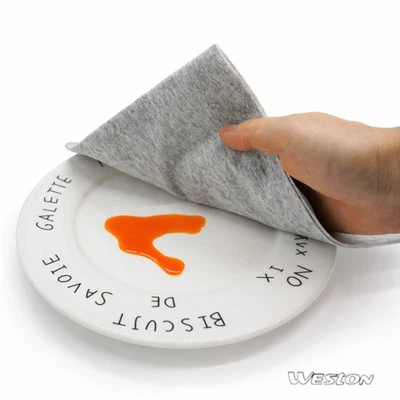
Oil in a home kitchen is usually thin and easy to spread. A simple cellulose-based wipe or a microfiber towel works because the volume is small and the cleaning surface is flat.
Industrial oil is different. Machinery oil is thicker, stickier, and often hotter. The environments are also harsher: sharp edges, heavy parts, and repetitive scrubbing. In these settings, weak materials fall apart quickly, and loose fibers can contaminate sensitive equipment.
This is why factories, auto shops, and printing facilities rely on low-lint, high-strength nonwoven solutions. They don't need pretty cloth-they need materials engineered to perform under pressure.
Materials That Soak Up Oil Fast
Here are the materials known for reliable and fast oil absorption, based on their physical structure and fiber properties:
Cellulose-rich spunlace wipes – Ideal for everyday spills; absorb quickly and hold large volumes.
Polypropylene pads and rolls – Hydrophobic and oil-loving, perfect for floating on oil-water mixtures.
Pulp–polyester blends – Balance speed, durability, and low linting.
Microfiber cloths – Their extremely fine fibers grab thin layers of oil and remove films from smooth surfaces.
Each option works, but choosing the right one depends on the setting. A kitchen uses different tools than a CNC metal workshop or a car repair station.
Why Nonwoven Technology Performs So Well
Nonwoven fabric is not woven like traditional cloth. Instead, its fibers are bonded through methods such as hydroentangling (spunlace), thermal bonding, or chemical bonding.
This structure creates:
Consistent absorbency
Even pore distribution
Strength that stays stable when wet
Low fiber shedding
For oil cleanup, these qualities matter more than appearance or fabric thickness. A lightweight nonwoven wipe can outperform a heavy cotton rag because its internal structure is engineered for liquid movement.
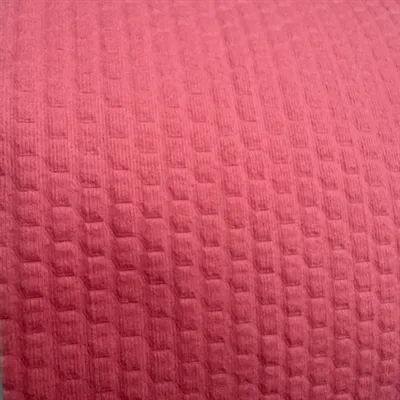
Embossed patterns also play a role. They create directional channels that guide oil deeper into the material instead of leaving it on the surface. This improves speed and reduces smearing.
How to Choose the Right Oil-Absorbing Material
A few simple rules make selection easier:
For kitchen spills: cellulose or microfiber works best.
For garage or bicycle chains: polyester blends or microfiber remove oil films without leaving lint.
For factories or large equipment: low-lint industrial spunlace wipes handle repeated wiping and rough surfaces.
For mixed oil-water areas: polypropylene is the top choice because it repels water yet loves oil.
The goal is not to buy the thickest wipe but to match fiber chemistry with the type of oil and cleaning environment.

Environmental Notes: Using Absorbents Responsibly
Oil-soaked materials must be thrown away carefully. Even small amounts of oil can harm plumbing and waterways, so used wipes should go into normal waste bins unless regulations require a special bin.
Choosing biodegradable cellulose options reduces long-term environmental load. In settings where waste volume grows quickly, reusable microfiber is also a practical choice, as long as the oil is not hazardous.
Where Weston Nonwoven Fits In
Weston nonwoven designs its materials around the science above rather than marketing language. The company produces durable nonwoven wipes using pulp, polyester, microfiber, or PP structures built for various types of oil cleanup.
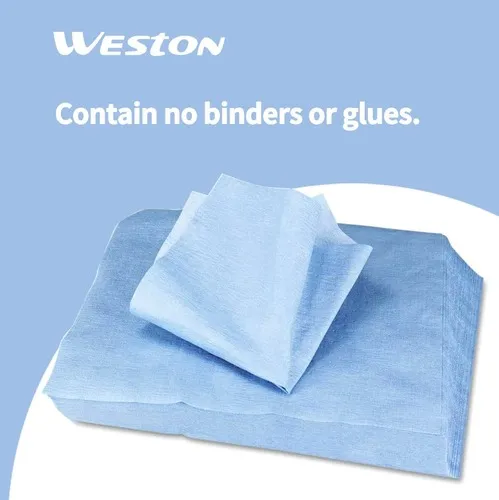
For heavy industrial tasks, the Heavy-Duty Shop Wipes offer low lint, strong fiber bonding, and fast oil pickup during machine maintenance.
For more delicate surfaces or thin oil films, the Microfiber Spunlace Cleaning Cloths provide fine-fiber performance with strong spunlace support.
These products appear in workshops, automotive areas, printing rooms, and equipment maintenance zones where reliability matters more than appearance.