The Physics of the Spill: Why Some Fabrics "Drink" Oil While Others Just Smear It
We have all been there. You are cooking, and a splash of olive oil hits the counter. Or maybe you are in the garage, and a bit of motor oil drips onto the concrete. Instinctively, you grab the nearest cotton dish towel or paper napkin to wipe it up.
But instead of disappearing, the oil just spreads. It smears into a wider, thinner, shinier mess. You aren't cleaning; you are just rearranging the grease.
Why does this happen? Why does a towel that soaks up water instantly seem to fail so miserably when faced with oil? The answer isn't about the quality of your towel-it's about the fundamental chemistry of the fibers. Finding a fabric that actually absorbs oil requires looking for a material that breaks the rules of traditional textiles.
The "Water Bias": Understanding Polarity
To understand why oil is so hard to clean, you have to look at the molecular level. Most natural fabrics we have used for centuries, like cotton and linen, are chemically "polar." They are hydrophilic, meaning they love water. Their molecules act like tiny magnets that snap onto water molecules.
Oil, however, is non-polar. It is hydrophobic. Oil and water don't mix because they are chemically incompatible.
When you use a standard cotton cloth on an oil spill, the cotton fibers are indifferent to the oil. If the cloth is even slightly damp, the water molecules essentially put up a "No Vacancy" sign, blocking the oil from entering the fibers. To catch the grease, you need a material that is Oleophilic-oil-loving.

The Industrial Solution: Polypropylene and Nonwovens
If you look at how professionals handle massive oil spills in the ocean, they aren't using giant cotton balls. They use synthetic sorbents, primarily made from Polypropylene (PP).
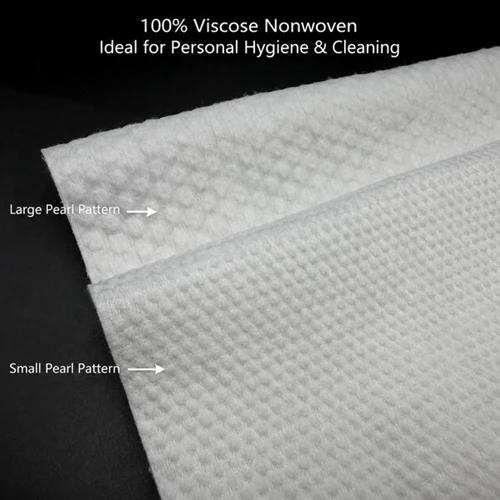
Polypropylene is a plastic-based fiber that is naturally hydrophobic. It hates water but bonds instantly with oil. Because it is synthetic, manufacturers can engineer the physical structure of the fabric to maximize absorption. This is often done through nonwoven technology-essentially matting fibers together rather than weaving them.
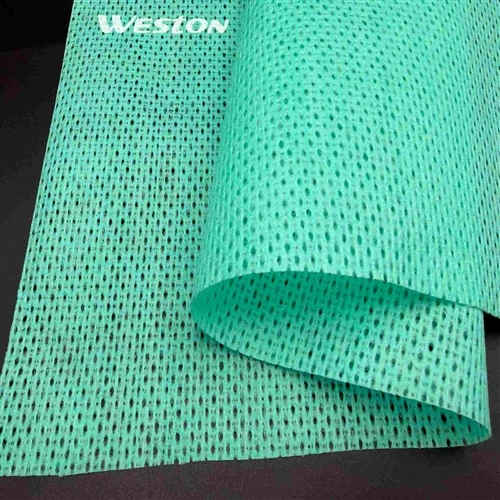
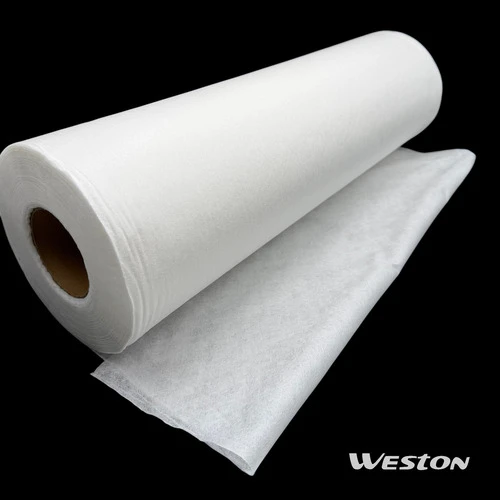
This structure creates a chaotic maze of fibers with massive amounts of surface area. In industrial settings, this is often seen in the form of Thermal Bonded Nonwoven Fabric Rolls. These materials are engineered to have high tensile strength and a specific density that allows oil to penetrate deep into the fabric matrix while shedding water.
The Pros and Cons of Synthetic Nonwovens:
Pros:
Selective Absorption: They can absorb oil while floating on water, making them essential for marine cleanup.
Capacity: High-quality nonwovens can hold 10 to 25 times their weight in oil.
Speed: The wicking action is immediate because there is no water barrier to overcome.
Cons:
Sustainability: They are petroleum-based products. While effective, they contribute to plastic consumption unless recycled properly.
Texture: They often feel industrial or stiff, lacking the "hand-feel" required for household dusting or automotive detailing.
The Structural Engineer: Microfiber
While nonwovens rule the industrial spill world, the king of the automotive and janitorial world is microfiber.
Microfiber isn't a specific material; it's a structural designation. It is usually a blend of polyester (which provides the scrubbing structure) and polyamide (nylon, which provides absorbency). The magic happens in the manufacturing process. The fibers are split to be thinner than a human hair-sometimes 100 times thinner.
This creates millions of tiny "hooks" and channels. Unlike a round cotton fiber that rolls over grease, a split microfiber acts like a shovel. It physically scoops up the oil molecule and traps it inside the van der Waals forces (weak electric forces) between the strands.
This is where products like Soft Multi-Color Microfiber Rags excel. The "softness" isn't just for comfort; it indicates a high density of split fibers, which translates to more surface area for trapping grease.
The Pros and Cons of Microfiber:
Pros:
Mechanical Cleaning: It removes 99% of bacteria and grease just through friction and trapping, often without needing chemical cleaners.
Reusability: Unlike industrial pads, a high-quality microfiber cloth can be washed hundreds of times (if you don't use fabric softener, which clogs the "hooks").
Versatility: It works wet or dry.
Cons:
Static: They attract everything, including lint and hair, which can be annoying if not stored correctly.
Heat Sensitivity: You cannot boil them or dry them on high heat, or the tiny plastic fibers will melt and fuse, destroying the absorbent channels.
The Natural Contender: Cotton's Place
We shouldn't write off cotton entirely. It has been the standard for centuries for a reason.
Cotton works by absorption inside the fiber (the fiber swells), whereas synthetics mostly trap liquid between the fibers. For low-viscosity liquids (like water or vinegar), cotton is fantastic.
The Pros and Cons of Cotton:
Pros:
Biodegradable: It is a natural cellulose fiber.
Heat Resistant: You can sterilize it in boiling water.
Cost: Generally cheaper than high-tech synthetics.
Cons:
The "Smear" Effect: As mentioned, it lacks the oleophilic chemistry to lock onto grease.
Retention: Once it gets wet, it stops absorbing oil.
Lint: Lower quality cotton leaves organic residue behind.

The Verdict: Selecting the Right Tool
So, what fabric absorbs oil best? It depends entirely on the scale of your mess.
If you are dealing with a heavy machinery leak, an oil change gone wrong, or a spill in a manufacturing facility, natural fibers simply cannot compete with the physics of synthetics. You need the hydrophobic power of Thermal Bonded Nonwoven Fabric Rolls. They are the heavy lifters that separate the oil from the environment efficiently.
However, for the daily "micro-spills"-the fingerprints on stainless steel, the grease on the stove, or the wax on a car-the mechanical structure of Soft Multi-Color Microfiber Rags provides the best finish. They don't just absorb; they polish.
Understanding the materials we use allows us to clean smarter, not harder. It saves time, reduces the amount of chemical cleaners we pour down the drain, and protects the surfaces we are trying to maintain.
If you are interested in testing the difference between high-grade nonwovens and standard fabrics yourself, you can request a free sample to see the absorption physics in action. Contact info@westonmanufacturing.com for more details.