What is the Raw Material of Meltblown Fabric?
Meltblown fabric is often discussed in terms of filtration efficiency, softness, or its role in masks and medical products. But these visible qualities all trace back to a more fundamental question: what is it actually made of? The answer is straightforward, yet the details behind it explain why meltblown fabric performs the way it does.
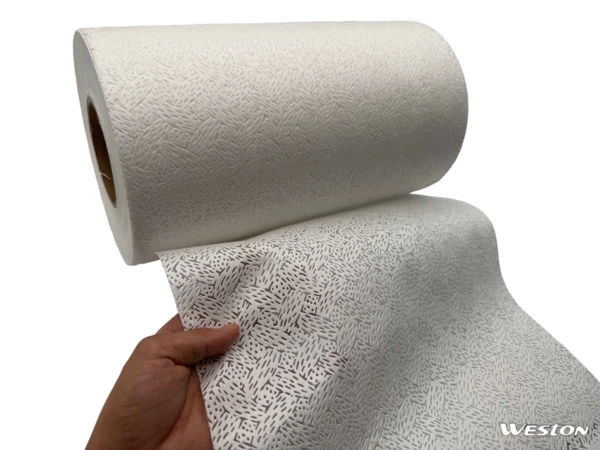
Understanding Meltblown Fabric from the Material Level
Meltblown fabric is not defined by weaving or knitting. It is formed by extruding molten polymer through very fine nozzles and stretching it into microfibers using high-speed hot air. Because of this, the raw material must meet very specific processing conditions.
At its core, meltblown fabric is a polymer-based nonwoven material. The choice of polymer determines whether the process runs smoothly and whether the final fabric achieves the desired balance between filtration and breathability.
Polypropylene: The Dominant Raw Material
Why Polypropylene is Used
The primary raw material of meltblown fabric is polypropylene (PP), a widely available thermoplastic polymer derived from petroleum. Its dominance is not accidental. PP fits the meltblown process both technically and economically.
Polypropylene melts at a relatively low temperature and flows easily when heated. This allows it to be stretched into extremely fine fibers, often in the range of 1 to 5 microns. These microfibers form a dense yet breathable structure, which is essential for filtration applications.
Another key property is its natural hydrophobicity. PP does not absorb water, making it suitable for barrier layers in medical and hygiene products. At the same time, it remains lightweight, which helps maintain comfort in end-use applications.
The Role of Melt Flow Index (MFI)
Not all polypropylene behaves the same way. For meltblown production, high melt flow index (MFI) PP is required.
A higher MFI means the material flows more easily under heat. This directly affects fiber formation. If the flow is too low, fibers become thick and uneven. If it is properly controlled, the result is a uniform web of ultra-fine fibers with better filtration performance.
In practical terms, the raw material grade determines whether the fabric feels coarse or soft, and whether it performs consistently under real conditions.
Additives: Small Components, Large Impact
Pure polypropylene alone is rarely enough for high-performance meltblown fabric. Small amounts of additives are often introduced during raw material preparation.
Electret masterbatch is used to create electrostatic charges within the fibers. This significantly improves filtration efficiency without increasing air resistance.
Antioxidants help stabilize the polymer during high-temperature processing, preventing degradation.
Functional modifiers may be added to adjust softness, color, or durability depending on the application.
These additions are not always visible, but they play a decisive role in how the fabric performs over time.
How Raw Material Affects Fabric Performance
Fiber Structure and Filtration
The fineness of meltblown fibers is directly linked to the quality of polypropylene and its processing behavior. Finer fibers create smaller pore sizes, which improves the ability to capture particles.
However, this is not a simple "finer is better" equation. Extremely fine fibers can increase resistance to airflow. The raw material must therefore support a balanced structure-dense enough to filter, open enough to breathe.
Strength and Layering
Meltblown fabric on its own is soft but relatively weak. This is a material characteristic, not a defect. To compensate, it is often combined with spunbond layers to form composite structures such as SMS (Spunbond–Meltblown–Spunbond).
In these structures, meltblown provides filtration, while spunbond layers provide strength and shape. The effectiveness of this combination still depends on the consistency of the meltblown raw material.
Are There Alternatives to Polypropylene?
There have been attempts to use alternative materials such as polylactic acid (PLA) or other bio-based polymers. These materials offer potential environmental advantages, but they introduce new challenges.
PLA, for example, has different thermal and flow properties. It is more difficult to process into stable microfibers at high speed. Costs are also higher, and large-scale consistency remains an issue.
For now, polypropylene remains the most practical choice because it aligns well with both processing requirements and performance expectations.
Common Misconceptions
It is easy to misunderstand meltblown fabric if only the surface is considered.
It is not a natural fiber material, even though it may feel soft.
Not all meltblown fabrics are equal; raw material grade and additives create significant differences.
Machinery alone does not define quality. Without the right polypropylene, even advanced equipment cannot produce consistent results.
A Practical View from Production
In real manufacturing environments, stability matters as much as performance. Consistent raw material supply, controlled MFI, and precise additive formulation all contribute to reliable output.
This is why some manufacturers focus not only on production equipment but also on upstream material selection and process control. In applications where filtration is critical, such as medical or air filtration products, even small variations can lead to noticeable differences.
In this context, materials like High-Filtration PP Meltblown Cloth developed within integrated nonwoven production systems reflect how raw material selection and processing are closely linked, rather than treated as separate steps.
Linking Meltblown to Broader Nonwoven Applications
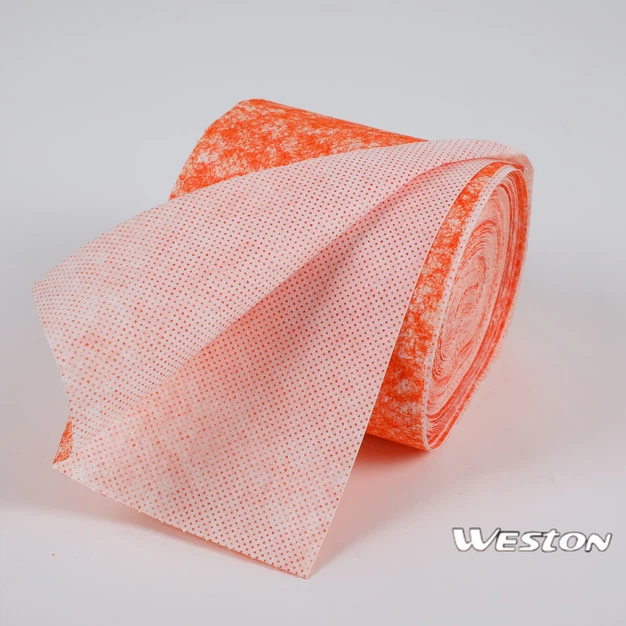
While meltblown fabric is often associated with filtration, it is only one part of the broader nonwoven category. Other processes, such as spunlace (hydroentanglement), focus more on softness, absorbency, and skin contact performance.
Manufacturers that work across multiple nonwoven technologies tend to approach materials with a wider perspective. For example, experience in spunlace production can influence how fiber uniformity and web structure are optimized in meltblown processes.
This cross-process understanding is increasingly relevant as applications demand both comfort and function, rather than one at the expense of the other.
Environmental Considerations
Polypropylene is recyclable, but it is not biodegradable. The large-scale use of meltblown products, especially in single-use applications, has raised concerns about waste management.
Efforts are being made to reduce material usage, improve recycling systems, and explore alternative polymers. However, any new solution must still meet the strict performance requirements that meltblown fabric is known for.
Balancing functionality with environmental responsibility remains an ongoing challenge rather than a solved problem.
Key Takeaways for a Clear Understanding
The raw material of meltblown fabric is not a minor detail. It defines how the fabric is formed, how it performs, and where it can be used.
Polypropylene continues to dominate because it meets the technical demands of the meltblown process while remaining cost-effective and scalable. Variations in PP grade, melt flow index, and additive formulation are what separate ordinary fabric from high-performance material.
Understanding meltblown fabric at the raw material level provides a more realistic view of its capabilities-and its limitations-without relying on assumptions or surface-level impressions.