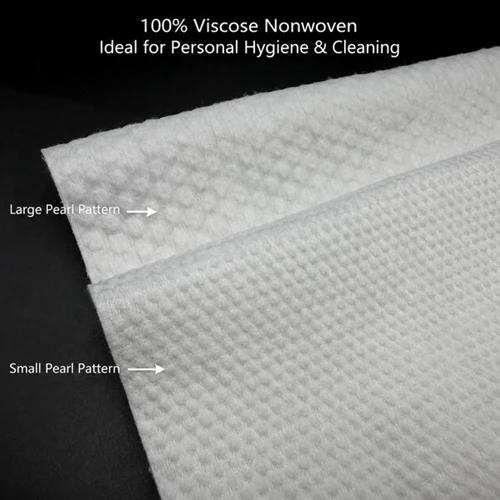
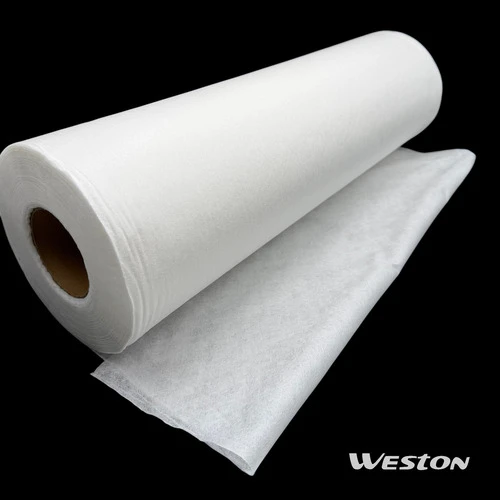
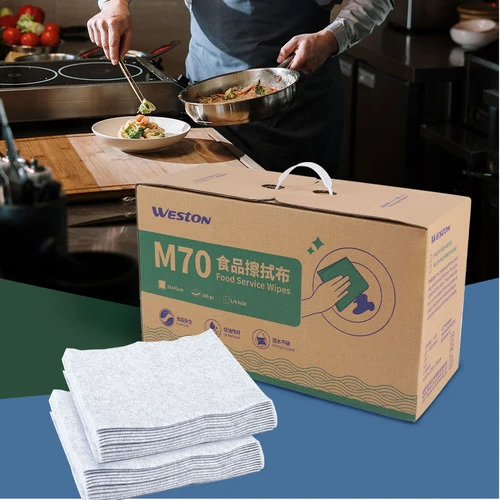
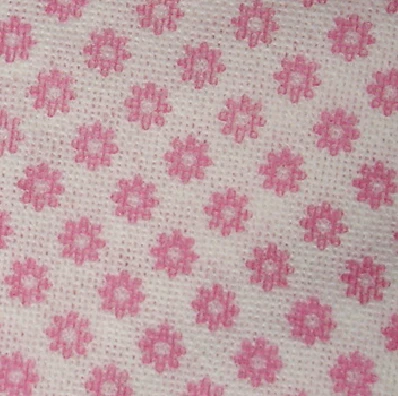
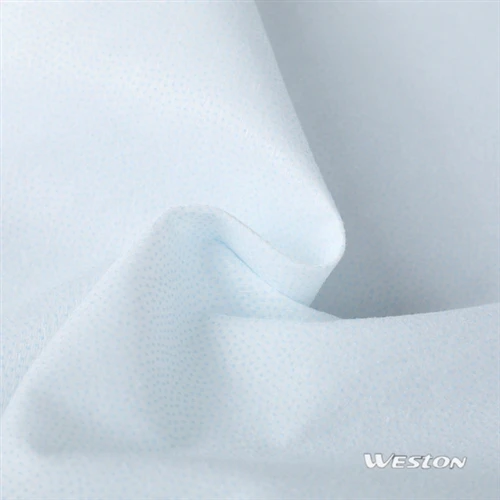
Nonwoven fabric has become a core material in modern healthcare. It is clean, consistent, and easy to engineer for specific jobs. Instead of weaving yarns like traditional textiles, nonwovens are made by bonding fibers together. This gives manufacturers a lot of control, allowing them to set fiber size, layer order, coating type, and bonding method to achieve the exact performance needed in a clinical setting.
1. Why Nonwovens Fit Medical Needs
Tunable structure: You can stack layers (for example, spunbond + meltblown + spunbond) to balance strength, filtration, and comfort.
Clean and low-lint: Reduces the risk of fibers shedding into wounds or instruments.
Consistent quality: Continuous manufacturing makes it easier to control variability.
Single-use strategy: Helps break infection chains in high-risk settings.
Compatible with sterilization: Can be designed to handle ethylene oxide, radiation, or steam (within limits).
In short, nonwovens are a platform. Engineers choose fiber type, layer count, weight, finishes, and bonding to meet clinical tasks.
2. From Risk to Material Choice: Think by Exposure
Skin contact only: Needs softness, breathability, low allergy risk, gentle adhesion if adhesive is used.
Fluid exposure: Needs hydrophobic outer layers and absorbent inner layers to move and lock fluids.
Aerosol exposure: Needs efficient filtration (including fine particles) without making breathing too hard.
Mechanical load: Needs strength, tear resistance, safe seams, and handles.
Sterilization and storage: Needs stability through the chosen sterilization method and shelf life.
3. Where Nonwovens Are Used in Healthcare
Skin and wound care: Dressings, fixation tapes, backing for bandages, skin cleaning wipes.
Patient care and bedding: Underpads, bed protectors, draw sheets, transfer sheets.
Operating room: Gowns, drapes, sterile wraps, absorbent pads, table covers.
Transport and emergency: Lightweight protective sets, wipes, disposable covers.
Infection prevention: Masks and respirators (filter layers), isolation apparel, barrier curtains.
Examples You Will Often See:
Breathable Adhesive Bandages: For everyday wound coverage and fixation.
Antiseptic Wipes for Skin: For pre-op skin prep and bedside hygiene.
Waterproof Hospital Bed Pads: To manage fluids and protect mattresses.
Patient Transfer Sheet With Handles: For safe lateral moves and repositioning.
Nonwoven Medical Protective Clothing Fabric: For gowns and isolation wear.
How Structure Drives Performance (The Science in Simple Words)

Fiber size matters: Very fine fibers create small pores and high surface area, improving filtration and capillary action for fluid control.
Layering works: Strong outer layers (spunbond) protect and add tear strength, while fine inner layers (meltblown) filter aerosols or guide fluids.
Surface energy is key: Hydrophobic finishes repel blood and other liquids, while hydrophilic finishes help absorb and move fluids.
Electrostatic charge helps: "Electret" treatment stores charges in fibers to capture fine particles without a big airflow penalty.
Breathability vs barrier: Higher breathability improves comfort but can reduce liquid barrier if not designed carefully.
Directional strength: Fiber orientation and bond pattern control strength in length vs width directions, which is important for sheets and handles.
5. Pros and Cons in Healthcare Use
Pros
Strong infection control: Due to single-use and clean manufacturing.
Customizable performance: For each department or task.
Lightweight and comfortable: Improving workflow and reducing fatigue.
Scalable production: For stable supply and emergency response.
Cons and Trade-offs
Waste volume: Single-use items increase disposal needs; recycling and energy recovery strategies are important.
Performance drift: Electrostatic filtration can weaken in hot, humid storage.
Skin sensitivity: Some patients may react to adhesives or additives; choose skin-friendly systems.
Mechanical limits: Edge seams and handles can be weak points if not reinforced and validated.
How to Manage the Trade-offs
Match product design to risk level and use time.
Validate performance after sterilization and aging.
Prefer simpler, "single-material" constructions when planning for recycling or energy recovery.
6. Practical Solutions to Common Clinical Problems
Bandage edge lifting, maceration, wrinkling: Use micro-perforated, breathable backings plus skin-friendly adhesive and rounded corners.
Product type: Breathable Adhesive Bandages.
Bed leaks, re-wet, pressure injury risk: Use tri-layer pads: soft hydrophilic top, high-absorbency core, waterproof anti-slip back sheet with low shear surface.
Product type: Waterproof Hospital Bed Pads.
Transfer risks (sudden load, grip loss, edge tears): Use strong spunbond base, wide reinforced handles, smooth corners, and test for static and dynamic loads.
Product type: Patient Transfer Sheet With Handles.
Skin prep balance (kill germs, protect skin, control residue): Use soft, low-lint substrate, proper liquid loading, controlled pH, and single-pack wipes.
Product type: Antiseptic Wipes for Skin.
Operating Room protection vs heat stress: Use SMMS structures with hydrophobic finish and targeted high-MVTR zones to keep barrier and comfort together.
Product type: Nonwoven Medical Protective Clothing Fabric.
7. How to Read Specs and Choose Wisely
Structure and weight (gsm): More layers and higher gsm can add strength and barrier, but design is more important than thickness alone.
Filtration and barrier: Look for particle and bacterial filtration values, synthetic blood penetration resistance, and hydrostatic head. Check stability after humidity/heat aging.
Breathability and comfort: Measure moisture vapor transmission (MVTR) and air resistance together; conduct user wear tests.
Mechanics: Check tensile and tear strength in both directions, seam/handle bond strength, and fatigue under repeated load.
Skin compatibility: For skin-contact products, pay attention to irritation/sensitization risks and adhesive gentleness.
Sterilization and storage: Ensure the product stays stable through the intended sterilization and within the labeled storage conditions.
8. Detailed Use Cases
Wound Coverage and Fixation
Goal: Keep the wound clean, allow vapor to escape, and hold dressings securely without skin damage.
Nonwoven role: Soft backing with micro-perforations; gentle pressure-sensitive adhesive.
Typical form: Breathable Adhesive Bandages.
Skin Cleaning and Prep
Goal: Reduce skin bioburden before procedures, avoid residue and irritation.
Nonwoven role: Soft, low-lint web that can hold a controlled dose of antiseptic.
Typical form: Antiseptic Wipes for Skin.
Bed Protection and Comfort
Goal: Manage urine, blood, and other fluids; prevent re-wet and reduce shear on the skin.
Nonwoven role: Top sheet wicks quickly; core locks moisture; back sheet blocks leaks and grips the bed.
Typical form: Waterproof Hospital Bed Pads.
Patient Transfer and Repositioning
Goal: Move patients safely with minimal strain; avoid handle and seam failures.
Nonwoven role: Strong web with reinforced bonding patterns and wide handles.
Typical form: Patient Transfer Sheet With Handles.
Protective Apparel for Staff and Visitors
Goal: Block fluids and aerosols while allowing heat and moisture to escape.
Nonwoven role: Multi-layer barrier with controlled breathability.
Typical form: Nonwoven Medical Protective Clothing Fabric.

9. Environmental Considerations
Design for less waste: Avoid unnecessary layers; use single-material laminates when possible.
Plan end-of-life: Energy recovery is often practical; explore recycling routes when clean material streams exist.
Reduce transport footprint: Compressible, lightweight packs reduce logistics emissions.
Track performance vs environment: Do not sacrifice safety; instead, optimize within safe boundaries.
10. Supplier and Manufacturing Note
Reliable performance depends on stable processes and traceability. Weston Manufacturing focuses on platform-based nonwoven solutions for clinical tasks, with application-specific designs that balance barrier, comfort, and strength across product families: Breathable Adhesive Bandages, Antiseptic Wipes for Skin, Waterproof Hospital Bed Pads, Patient Transfer Sheet With Handles, and Nonwoven Medical Protective Clothing Fabric. To discuss technical fit or request a free sample set, email info@westonmanufacturing.com.
Nonwoven fabric is more than a material; it is a toolkit for solving real hospital problems. By connecting exposure risk, patient comfort, and workflow needs to the right fiber, layer, and finish, you achieve safer care and smoother operations. Use the selection flow, check performance after aging or sterilization, and keep an eye on environmental design.