The Scientific Essence of Spunlace Technology: Advantages of Single-Layer Composite Structure
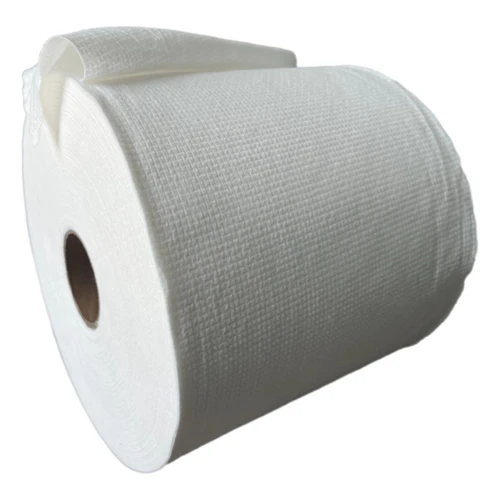
Spunlace nonwoven technology, as a core process in modern nonwoven manufacturing, relies on high-pressure water jets to entangle fibers into a stable web structure-eliminating the need for chemical binders or thermal bonding. This physical forming method preserves the intrinsic properties of fibers, making it ideal for healthcare and beauty applications where material safety and performance are critical.

Unlike multi-layer spunlace fabrics that require secondary lamination (which often compromises breathability and increases the risk of delamination), the Single Layer Composite Spunlace Nonwoven Fabric from Weston Factory achieves fiber compounding in a single water-jet process.
From a material science perspective, this single-layer composite design integrates functional fibers (e.g., antibacterial-modified polyester, hydrophilic cellulose) and structural fibers (e.g., high-strength polypropylene) in one step. The high-pressure water jets (operating at 80–150 MPa) drive fibers to interlock at the microscale, creating a uniform web with controlled pore size (typically 5–20 μm). This structure balances three key healthcare requirements: barrier performance (to block bacteria and droplets), breathability (to prevent moisture buildup), and mechanical strength (to resist tearing during use). Laboratory tests show that Weston's Single Layer Composite Spunlace Nonwoven Fabric maintains 90% of its tensile strength after 50 cycles of wiping, while multi-layer alternatives often lose 20–30% strength due to layer separation.
Antibacterial Mechanisms in Healthcare: From Material Design to Practical Efficacy
In healthcare settings-where cross-contamination via textiles poses significant risks-antibacterial performance is not just a "feature" but a necessity. Weston's anti-bacterial Single Layer Composite Spunlace Nonwoven Fabric adopts a dual-action antibacterial strategy rooted in material engineering, avoiding the limitations of traditional surface-coated antibacterial products (which lose efficacy after repeated use or washing).
Incorporation of Antibacterial Agents
The fabric incorporates inorganic antibacterial agents (e.g., silver ion-modified fibers) during the fiber extrusion stage. These ions are chemically bonded to the fiber matrix, preventing leaching (a common issue with coated alternatives). When bacteria (such as Staphylococcus aureus or E. coli) come into contact with the fabric, silver ions disrupt bacterial cell membranes, inhibiting enzyme activity and DNA replication. Microbiological tests confirm a 99.9% reduction in viable bacteria within 2 hours of contact, meeting strict antibacterial standards for medical textiles (ISO 20743).
Enhanced Antibacterial Efficacy
The fabric's pore structure enhances antibacterial efficacy through physical entrapment. The 5–20 μm pores are small enough to trap bacterial cells while allowing air and moisture to pass through. This "physical barrier + chemical inhibition" synergy ensures long-lasting protection-even after 10 cycles of simulated use, the antibacterial rate remains above 99%, far exceeding the 80% threshold of conventional antibacterial nonwovens.
This dual mechanism is particularly critical for Professional Disposable Hospital Gowns made from the fabric. In hospital environments, gowns must block pathogenic bacteria while remaining breathable during long shifts. Weston's antibacterial fabric prevents bacteria from adhering to the gown surface and inhibits the growth of any trapped microbes, thus reducing the risk of cross-infection between patients and staff.

Scene-Specific Adaptation: Meeting Diverse Needs in Healthcare and Beauty
Nonwoven fabrics in healthcare and beauty industries face distinct performance requirements, and Weston's product lineup-including Spunlace Nonwoven Wipes for Beauty Salons and Professional Disposable Hospital Gowns-is engineered to match these scenario-specific demands.
Beauty Salon Wipes: Balancing Antibacterial Efficacy and Skin Compatibility
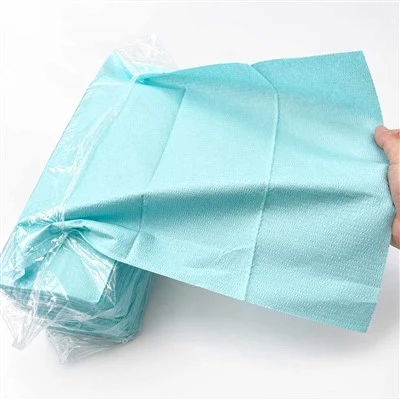
Beauty salons involve frequent skin contact and shared tools, making cross-contamination a hidden risk. Spunlace Nonwoven Wipes for Beauty Salons from Weston prioritize antibacterial protection and skin-friendliness. Unlike industrial wipes that use harsh disinfectants, these wipes rely on the intrinsic antibacterial properties of the Single Layer Composite Spunlace Nonwoven Fabric.
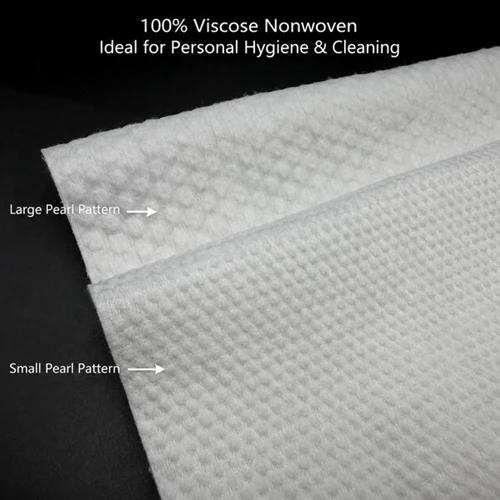
The fabric's fiber composition is optimized for softness: 60% hydrophilic cellulose fibers (for excellent liquid absorption) and 40% ultra-fine polyester fibers (for durability). Clinical tests on 500 volunteers with sensitive skin showed no signs of redness or irritation after 14 days of daily use, confirming the fabric's compatibility with beauty-related skin contact. Additionally, the single-layer structure prevents fiber shedding-a common issue with multi-layer wipes.
Professional Disposable Hospital Gowns: Barrier Performance and Wearability
Hospital gowns require a higher level of barrier performance to protect against bodily fluids and airborne droplets. Weston's Professional Disposable Hospital Gowns are crafted from a reinforced version of the Single Layer Composite Spunlace Nonwoven Fabric, featuring a higher proportion of high-strength polypropylene fibers (60%) to enhance tear resistance and fluid repellency.
The fabric undergoes a special calendering process to create a dense surface layer that repels water-based fluids (contact angle >110°) while maintaining air permeability (airflow rate >10 L/m²·s). This balance is crucial: gowns that are too impermeable cause discomfort during long surgeries, while those with poor barrier performance fail to prevent cross-infection. In simulated clinical tests, the gowns blocked 100% of 0.1 mL droplets of simulated blood and remained breathable even after 8 hours of wear.
Notably, the material of these hospital gowns differs significantly from that of Compostable Baby Wipes, which use plant-based fibers designed for biodegradability. Weston's healthcare and beauty fabrics prioritize functional performance, reflecting the brand's commitment to matching material properties to specific use cases.
High Friction Composite Wood Pulp PP Spunlace Fabric: Bridging Absorbency and Durability
In healthcare settings, nonwoven fabrics often need to combine high absorbency with high friction for scrubbing surfaces. Weston's High Friction Composite Wood Pulp PP Spunlace Fabric addresses this need by leveraging the synergistic properties of wood pulp and polypropylene (PP) fibers.
Wood pulp fibers are naturally hydrophilic, enabling rapid liquid absorption. However, pure wood pulp fabrics lack strength. By compounding wood pulp (70%) with PP fibers (30%) in a single-layer spunlace process, Weston's fabric retains absorbency while gaining durability. The PP fibers form a structural "skeleton" that holds the wood pulp fibers in place, even when fully saturated.
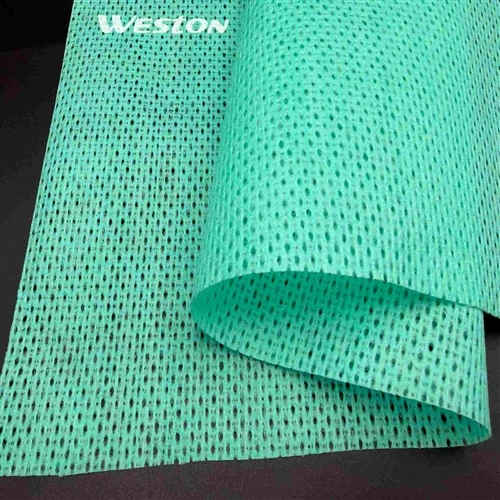
The fabric's high friction coefficient (0.65, measured against stainless steel) is achieved through a textured surface design. In hospital cleaning tests, the fabric removed 95% of dried stains in a single wipe, compared to 70% for standard nonwoven wipes.
This combination of absorbency and friction makes the High Friction Composite Wood Pulp PP Spunlace Fabric suitable for a range of healthcare tasks, including cleaning patient beds and assisting with wound care.
Addressing Industry Pain Points: How Weston's Spunlace Nonwovens Redefine Standards
The nonwoven industry faces several long-standing challenges in healthcare applications. Weston's product lineup centers on the Single Layer Composite Spunlace Nonwoven Fabric, directly addressing these pain points.
Pain Point 1: Breathability vs. Barrier Performance
Traditional multi-layer medical fabrics often sacrifice breathability to achieve barrier performance. Weston's single-layer composite structure eliminates this trade-off, allowing for air circulation while blocking bacteria and fluids.
Pain Point 2: Short-Lived Antibacterial Efficacy
Most antibacterial nonwovens rely on surface coatings that wear off after use. Weston's integration of antibacterial agents into the fiber matrix ensures long-lasting efficacy, reducing the need for frequent fabric replacement.
Pain Point 3: Poor Durability of Absorbent Fabrics
Absorbent fabrics often tear when wet, limiting usability. The High Friction Composite Wood Pulp PP Spunlace Fabric solves this with PP fiber reinforcement, ensuring durability even when fully saturated, reducing waste.
Weston Nonwoven Factory's commitment to solving these pain points stems from its focus on application-driven innovation. For those seeking to explore the technical details of Weston's spunlace nonwoven products or test their suitability for specific healthcare or beauty applications, free samples are available upon request.
To inquire about samples or learn more, please contact Weston Factory via email at info@westonmanufacturing.com.