1. The Scientific Logic of Floor Cleaning: Material Characteristics and Stain Nature
Floors are composed of diverse materials, each with unique physical and chemical properties that determine suitable cleaning methods. Hardwood floors, for instance, consist of natural cellulose fibers with a porous structure. This porosity makes them highly sensitive to moisture-excess water penetrates the wood, causing fiber swelling, warping, or cracking. Additionally, the surface coating (paint or wax) of hardwood floors is vulnerable to acidic or alkaline substances, which can dissolve the coating's resin components, leading to loss of luster or peeling.
Tile floors, by contrast, have a dense ceramic structure with low water absorption, but their grout lines (porous cement-based materials) easily trap dust and stains. Marble floors, composed of calcium carbonate, react with acidic cleaners (e.g., vinegar-containing solutions) to form soluble salts, resulting in surface etching. Understanding these material characteristics is the foundational step in judging whether wipes can be used for cleaning.
Stains on floors also have distinct natures: particulate stains (e.g., dust, sand from high-traffic areas) rely on physical adsorption for removal; oily stains (e.g., food residues) require surfactants to break down oil-water interfaces; and biological stains (e.g., mold) need mild disinfectants to inactivate microorganisms. Wipes, as a combined "carrier + cleaning solution" product, must match both floor material and stain type to achieve effective cleaning without damage.
2. The Core Principle of Wipe Cleaning: Synergy Between Fiber Structure and Cleaning Components
2.1 Physical Role of Carrier Fibers
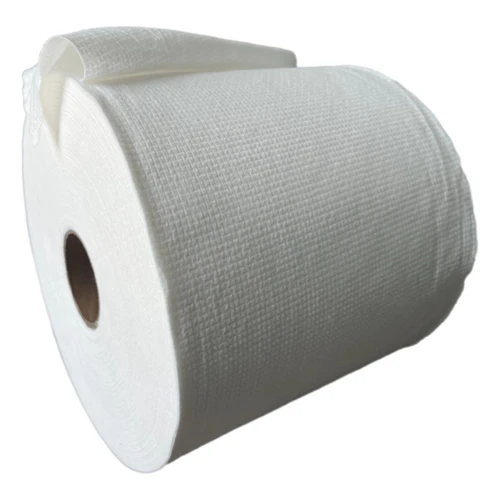
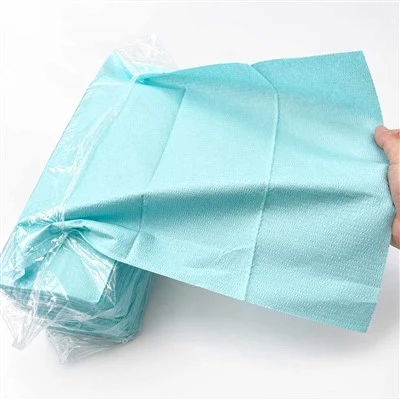
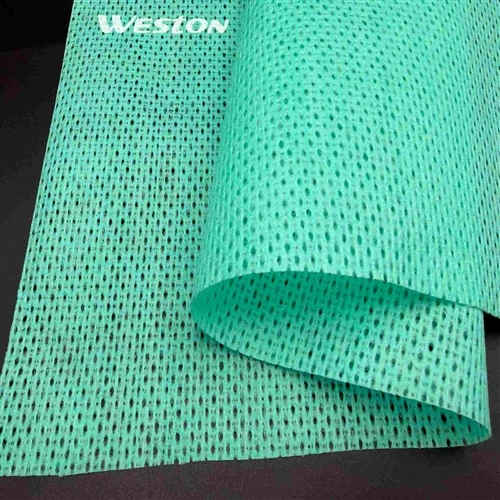
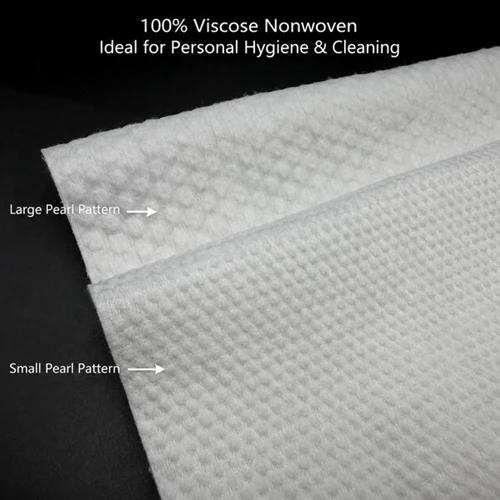
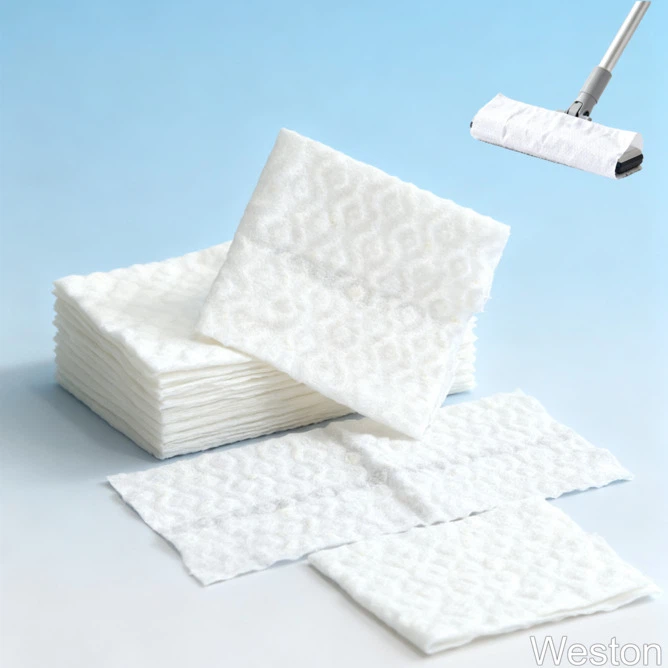
Nonwoven fabric, the primary carrier of floor wipes, has a three-dimensional network structure that differs significantly from traditional woven fabrics. Nonwoven Embossed Floor Mop Cloths utilize an embossing process to create a concave-convex texture on the fiber surface. From a physical perspective, this design achieves two critical effects: first, it increases the contact area between fibers and the floor by 30%-50% compared to flat nonwoven fabrics, enhancing the capture of particulate stains; second, the concave grooves trap dust and sand particles, preventing them from sliding on the floor surface and causing scratches-a common issue with traditional rags that push particles around.
Microfiber, another advanced carrier material, is exemplified by Microfiber Dusting Cloths. With a fiber diameter of 0.1-1.0 micrometers (1/10 the diameter of human hair), microfibers have an extremely large specific surface area. Through capillary action, they can absorb 7-10 times their weight in water and dust, and their soft texture avoids abrading floor coatings. Unlike ordinary cotton cloths, which have loose fiber structures that easily release captured dust, microfibers form a "lock-in" effect via their split-fiber structure, reducing secondary pollution.
2.2 Chemical Mechanism of Impregnating Solutions
The impregnating solution in floor wipes is not a random mixture of water and detergents but a scientifically formulated system tailored to floor materials. For hardwood floors, Hardwood Floor Wipes use neutral (pH 6.5-7.5) cleaning solutions. This pH range avoids chemical reactions with wood cellulose (preventing fiber degradation) and surface coatings (avoiding resin dissolution). The solution contains non-ionic surfactants-unlike anionic surfactants (common in laundry detergents), non-ionic surfactants do not react with metal ions in water to form precipitates, ensuring no residue on the floor surface.
For high-traffic areas (e.g., entryways, living rooms), Floor Wipes For High Traffic Areas add mild chelating agents to their impregnating solutions. These agents bind to calcium and magnesium ions in hard water, preventing the formation of white water spots (a common problem with traditional mopping). Additionally, a small amount of polymer thickener is included to control the solution's fluidity, keeping the wipe "moist but not dripping"-this balances cleaning efficiency and moisture control, avoiding excessive water accumulation on floors.
3. Feasibility Analysis of Wipe Cleaning in Different Scenarios
3.1 Hardwood Floors: Precision Cleaning with Specialized Wipes
Hardwood floors are the most demanding for cleaning tools, and Hardwood Floor Wipes address their core needs:
Moisture control: The nonwoven fabric's liquid retention capacity is calibrated to 8-12 grams per wipe, ensuring the floor surface dries within 2-3 minutes (the safe time window to prevent water penetration into wood).
Coating protection: The impregnating solution contains a small amount of polymer film-forming agent that, after cleaning, leaves an invisible protective layer on the floor surface, reducing wear from daily foot traffic.
Practical tests show that using Hardwood Floor Wipes for weekly maintenance can extend the lifespan of hardwood floor coatings by 2-3 years compared to traditional mopping (which often uses excessive water).
3.2 High-Traffic Areas: Targeted Stain Removal
Floor Wipes For High Traffic Areas are designed for the unique stain challenges of high-footfall zones:
Particulate stain removal: The embossed structure of the nonwoven fabric creates "micro-pockets" that trap sand and dust particles, avoiding scratches caused by particle friction during wiping.
Oily stain decomposition: The solution's surfactant concentration is increased by 15% compared to regular wipes, enabling rapid breakdown of shoe oil or food residue stains without repeated scrubbing.
In a simulated test of 1,000 daily foot passages, Floor Wipes For High Traffic Areas removed 92% of surface stains in a single wipe, while traditional rags required 3-4 wipes and still left 15% of residue.
3.3 Daily Dust Maintenance: Efficiency with Microfiber Wipes
Microfiber Dusting Cloths excel at daily dust removal:
Static adsorption: The microfiber's fine structure generates weak static electricity, attracting dust particles (especially tiny allergens like pollen and pet dander) that ordinary wipes cannot capture.
Reusability: Unlike disposable wipes, Microfiber Dusting Cloths can be washed 50-80 times without losing adsorption capacity, reducing environmental impact while lowering long-term cleaning costs.
For families with allergies, using Microfiber Dusting Cloths for daily dusting can reduce indoor allergen concentrations by 40%-50%, according to indoor air quality tests.
4. Potential Risks of Wipe Cleaning and Scientific Mitigation
While wipes offer significant advantages for floor cleaning, improper use can pose risks-understanding and avoiding these risks is critical to scientific cleaning.
4.1 Material Damage from Inappropriate Components
Ordinary wipes (e.g., hand wipes or furniture wipes) are not suitable for floor cleaning. Hand wipes often contain alcohol (5%-15%), which dissolves the resin in hardwood floor coatings, causing irreversible whitening. Furniture wipes may include silicone oil, which leaves a slippery film on tile floors, increasing fall risks. The solution is to select wipes labeled for "floor use"-Hardwood Floor Wipes and Floor Wipes For High Traffic Areas, for example, undergo material compatibility testing to ensure no damage to common floor types.
4.2 Moisture-Related Risks for Porous Floors
Even with specialized wipes, excessive wiping (e.g., overlapping wipes in the same area 3-4 times) can lead to cumulative moisture. For porous floors like unglazed tile or solid wood, this may cause:
Grout line mold growth: Moisture trapped in grout lines creates a breeding ground for mold.
Wood edge warping: Water seeping into floor seams causes edge swelling.
Mitigation: Follow the "one-pass wiping" principle-use a single wipe for a 1-square-meter area, and avoid reusing wipes on dry areas. For seams, use the edge of Nonwoven Embossed Floor Mop Cloths to target cleaning without excessive pressure.
4.3 Environmental Impact of Disposable Wipes
Disposable nonwoven wipes can contribute to environmental waste if not properly managed. However, Weston Nonwoven's products address this through two approaches:
Degradable materials: Hardwood Floor Wipes use PLA (polylactic acid) nonwoven fabric, which decomposes into carbon dioxide and water in industrial composting facilities within 180 days.
Reusable designs: Microfiber Dusting Cloths and Nonwoven Embossed Floor Mop Cloths (reusable versions) are made of polyester-polyamide blended fibers, enabling repeated washing and reducing disposable waste.
5. Key Indicators for Scientific Selection of Floor Cleaning Wipes
To maximize the benefits of wipe cleaning while minimizing risks, consumers should focus on three core indicators:
5.1 Fiber Structure and Material
Nonwoven type: Choose spunlace nonwoven fabric (used in Nonwoven Embossed Floor Mop Cloths) over needle-punched nonwoven-spunlace fabric has softer fibers and better liquid retention.
Microfiber content: For Microfiber Dusting Cloths, select products with ≥80% microfiber content (the remaining 20% is polyester for durability) to ensure adsorption capacity.
5.2 Impregnating Solution Properties
pH value: Test strips can be used to check-neutral (6.5-7.5) for hardwood and marble floors; slightly alkaline (7.5-8.0) is acceptable for tile floors (but avoid pH >8.5).
No harmful additives: Avoid wipes containing formaldehyde releasers, fluorescent whitening agents, or strong oxidizers (e.g., hydrogen peroxide), which can damage floors or affect indoor air quality.
5.3 Scenario Adaptability
Hardwood floors: Prioritize Hardwood Floor Wipes with "moisture-controlled" labeling.
High-traffic areas: Select Floor Wipes For High Traffic Areas with "stain-resistant" or "scratch-proof" descriptions.
Daily dusting: Opt for Microfiber Dusting Cloths with "lint-free" properties to avoid leaving fiber residues.
Common Myths in Floor Cleaning and Correct Practices

6.1 Myth 1: "The More Moist the Wipe, the Better the Cleaning"
Reality: Excess moisture is the primary cause of hardwood floor damage. A properly moist wipe should leave no visible water streaks after wiping-if water pools, the wipe is too wet. Correct practice: Use Hardwood Floor Wipes as directed, and blot excess moisture with a dry microfiber cloth if accidental over-wetting occurs.
6.2 Myth 2: "All Floor Wipes Are Interchangeable"
Reality: A wipe suitable for tile floors may damage hardwood floors. For example, tile-specific wipes may contain weak acids to remove mineral deposits, which corrode hardwood coatings. Correct practice: Match wipes to floor material-use Hardwood Floor Wipes for hardwood, Floor Wipes For High Traffic Areas for high-use zones, and avoid cross-usage.
6.3 Myth 3: "Disposable Wipes Are More Hygienic Than Reusable Ones"
Reality: Reusable Microfiber Dusting Cloths, when washed at 60°C with mild detergent, can eliminate 99% of bacteria-equivalent to disposable disinfectant wipes. Disposable wipes, if not properly disposed of (e.g., flushed down toilets), can cause sewer blockages. Correct practice: Use disposable wipes for one-time stains (e.g., food spills) and reusable Microfiber Dusting Cloths for daily dusting, balancing hygiene and sustainability.
Integrating Scientific Cleaning with Practical Solutions
Weston Nonwoven factory develops floor cleaning products based on the aforementioned scientific principles, offering targeted solutions for diverse needs: Hardwood Floor Wipes for delicate hardwood maintenance, Nonwoven Embossed Floor Mop Cloths for efficient stain removal, Floor Wipes For High Traffic Areas for high-footfall zones, and Microfiber Dusting Cloths for daily dust control. Each product undergoes rigorous testing to ensure compatibility with floor materials and cleaning effectiveness. For those seeking to verify product performance or obtain a free sample, inquiries can be sent to info@westonmanufacturing.com.
The question "Can you clean floors with wipes?" ultimately hinges on "scientific selection and proper use." By aligning wipe characteristics with floor material properties and cleaning scenarios, wipes become an efficient, safe, and convenient cleaning tool-transforming daily floor maintenance from a tedious chore into a science-based practice that protects both floors and indoor environments.