What Bio-Cellulose Is-and Why Its Nano-Network Matters
Introduction to Bio-Cellulose
Bio-cellulose is a microbial-fermented cellulose that forms an interlocked, three-dimensional nanofibrillar network. Fiber diameters span tens of nanometers, orders of magnitude finer than typical plant-derived fibers. This produces:
Hydrogel behavior with very high water content and retention.
Conformable, cohesive sheets that drape to micro-contours without fraying.
Breathable occlusion: strong water retention but meaningful oxygen permeability.
Mechanical resilience under shear and handling.
Why This Matters
The dense nano-network holds an aqueous reservoir close to the skin, sustaining a hydrated microenvironment that temporarily lowers barrier resistance, enhances mass transfer of water-soluble actives, and supports even contact across complex facial terrain.
Mechanisms that Drive Efficacy
Hydration and TEWL Control
Occlusion reduces transepidermal water loss (TEWL), raising stratum corneum hydration. Hydrated corneocytes reorganize, transiently improving diffusivity for compatible actives.
Reservoir and Release Kinetics
The network acts as a controlled reservoir. Instead of "burst release," diffusion is steadier over a 15–30 minute wear interval, assuming essence viscosity is in an optimal window.
High Real Contact Area
Conformability reduces air gaps and edge lift, which otherwise create under-dosed zones. More uniform contact improves dose delivery consistency.
Microclimate and Sensory Modulation
The cool, moist interface can calm the sensation of tightness from barrier stressors. This sensory outcome complements functional hydration.
Purity and Lint Control
Minimal loose fiber and no binder lint contribute to clean removal and compatibility with sensitive skin positioning when paired with suitable essences.
Bottom Line: Bio-cellulose "works" primarily by optimizing the delivery environment-hydration, contact, and time-so the formula can perform closer to its theoretical potential.

Where Bio-Cellulose Outperforms-and Where It Doesn't
Clear Strengths
Extended wear (20–30 min) without drying edges or slippage.
Applications prioritizing hydration-first outcomes and soothing rituals.
Programs featuring water-soluble actives that benefit from high water activity and sustained contact.
Precision fit SKUs where adherence and clean edges are part of perceived quality.
Real Constraints
Oil-dominant or very high-viscosity essences diffuse poorly through the nanofibril matrix.
For short wear (5–10 min) with simple humectants, well-engineered spunlace can close the performance gap.
Fermentation-derived membranes require rigorous process control; variability can alter thickness and feel.
End-of-life claims must be evidence-based; cellulose origin alone does not guarantee favorable disposal in all streams.
The answer to "Do they work?" is yes-when the use case aligns with their strengths. They are not universally superior for every formula or ritual.
The Physics of Delivery: Water Activity and Diffusion Windows
Water Activity (aw)
Bio-cellulose maintains a high aw interface, enabling humectant-driven hydration and transient barrier plasticization. This increases partitioning of certain actives into the corneum.
Diffusion-Viscosity Balance
If the essence is too thin, early-stage dumping and runoff waste payload. If too thick, diffusion through the nano-network slows. Target a viscosity that supports capillary flow without front-loading.
Temperature and Ionic Strength
Warmer skin and balanced electrolytes modestly increase diffusivity. Over-salting can collapse hydration layers and reduce effective release.
Barrier State
Mild pre-cleansing or gentle exfoliation may improve reception; harsh pretreatment elevates irritation risk regardless of substrate.
These parameters are tunable. A disciplined design of experiments will locate the release "sweet spot" for a given formula.
Quantifying "Works": Metrics That Correlate with User Outcomes
Hydration retention curve (mass loss vs. time) under controlled humidity/temperature.
Essence utilization efficiency: fraction transferred to skin versus remaining in mask/pouch.
Adherence uniformity: bubble incidence, edge lift, and coverage on facial landmarks.
Integrity under shear: slippage and tearing under standardized motion.
Sensory readouts: cooling duration, tack after removal, residue profile.
When bio-cellulose is correctly matched to essence and wear time, these metrics typically show superior hydration persistence, higher contact efficiency, and improved fit.
Risk Map and Mitigations
Essence-Substrate Mismatch
Risk: Poor release, greasy residue, phase separation.
Mitigation: Tune emulsifier HLB, polymer thickeners, and oil phase ratio; verify with in vitro diffusion cells.
Over-Occlusion Discomfort
Risk: Clammy feel, user discontinuation.
Mitigation: Leverage breathable occlusion; reduce heavy occlusives; balance humectants with lightweight emollients.
Edge Dryness and Uneven Dosing
Risk: Localized under-performance.
Mitigation: Optimize sachet fill volume, ensure even pre-load, refine die-cut geometry.
Handling Tears During Unfolding
Risk: Wastage, complaints.
Mitigation: Incorporate support liners or carrier meshes; adjust membrane thickness and hydration level.
Overclaiming Benefits
Risk: Regulatory challenges, credibility loss.
Mitigation: Frame claims around hydration, adherence, comfort, and measured endpoints.
Portfolio Strategy: When to Choose Bio-Cellulose
Adopt bio-cellulose when your SKU requires:
Premium sensorial differentiation (gel-like, second-skin adherence).
Longer ritual wear with steady release and cooling.
Hydration-centric outcomes that show up in TEWL or corneometry tracking.
High-value actives where improved contact and controlled release justify the substrate.
Consider Alternatives When
The ritual is short and utility-driven; a tuned spunlace can deliver comparable results at lower environmental mass.
The end-of-life narrative is central; dispersible or rapidly disintegrating webs may align better with local disposal streams.
Ultra-light travel and minimal packaging are priorities.
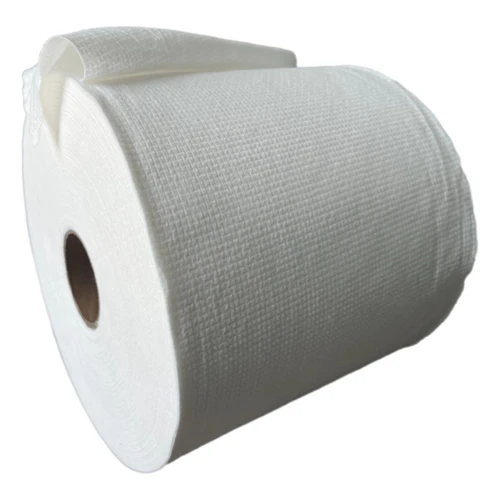
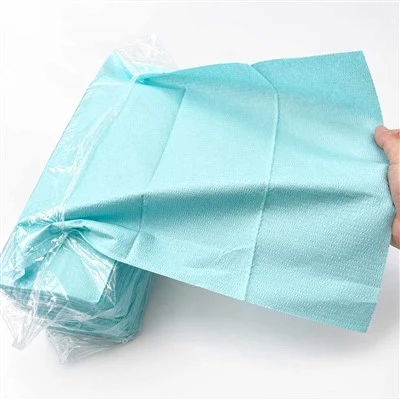
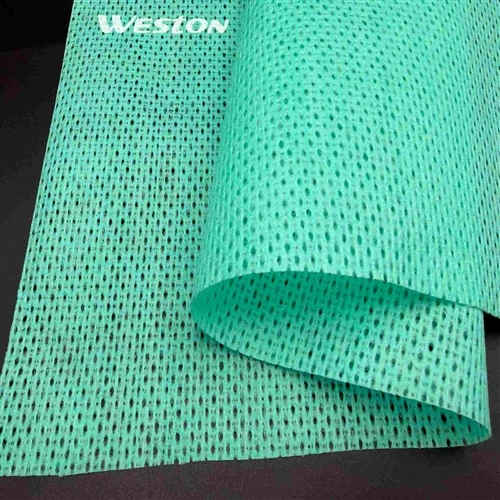
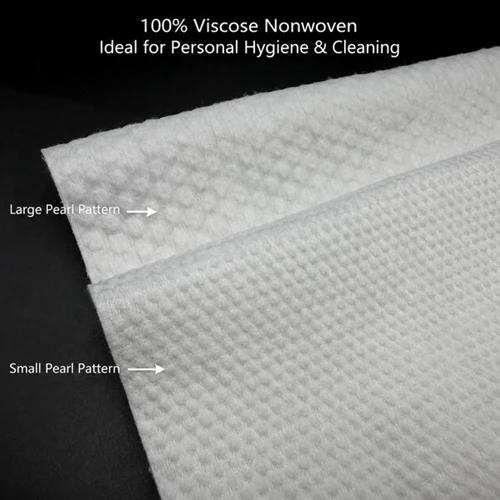
In that context, there are plant-based nonwoven platforms that can be engineered for softness, fluid control, and specific disposal intents, such as Weston's sustainable lines: Plant-Based Flushable Spunlace Fabric, Bamboo Silk Tissues, and Pulp Lyocell Spunlace.
Environmental and Operational Considerations

Material Footprint
Bio-cellulose derives from fermentation; impacts depend on media inputs, energy, purification, and transportation (water mass in hydrated masks). Evaluate total system footprint, not substrate label alone.
Packaging Geometry
Hydrated membranes benefit from trays or structured pouches to maintain shape and uniform loading. This influences logistics and shelf presentation.
Shelf-Life Stability
The substrate does not inherently preserve the essence; preservation systems, barrier films, and headspace control determine microbial stability and sensory integrity over time.
Line Compatibility
Automated pick-and-place systems should account for gel-like behavior. Tooling tolerances and unfolding mechanisms reduce handling defects.
Buyer's Testing Blueprint
Define the primary job: hydration comfort, soothing, glow, or prep for actives.
Fix a wear-time target and user ritual.
Build an essence rheology ladder and screen against the bio-cellulose matrix.
Run hydration and release curves at 5, 15, 30 minutes.
Quantify adherence uniformity with standardized imaging.
Include motion-stress tests (talking, smiling) for slippage assessment.
Conduct stability and sensory checkpoints at 0, 3, 6, 12 months.
With this blueprint, the question "Do bio-cellulose masks work?" becomes a quantifiable, category-specific answer instead of a general claim.

Practical FAQs for Professional Teams
Do bio-cellulose masks deliver better hydration than standard nonwovens?
Frequently yes over 20–30 minutes due to maintained water activity and superior contact. Effect size depends on essence design and wear conditions.
Are they effective for lipophilic or large molecules?
Indirectly. The substrate enhances conditions (hydration, time, contact). For large or oil-heavy actives, delivery strategies (e.g., emulsification, encapsulation) remain decisive.
Are they suitable for sensitive skin programs?
Their clean, low-lint structure supports sensitive-skin positioning; final suitability hinges on essence composition and preservation.
What are the main failure modes in market use?
Slippage with thin essences, edge dryness from under-fill, tearing during unfolding. Each is addressable via formulation and packaging engineering.
How should claims be framed?
Center on measurable hydration improvements, adherence/fit, comfort, and even delivery-avoid therapeutic promises detached from evidence.
Quiet Validation: A Material That Performs When the System Is Tuned
Do bio-cellulose masks work? Yes-when they are part of a coherent system: a compatible essence, an optimized membrane thickness, sound packaging, and a wear-time ritual that exploits the substrate's strengths. Their nano-network delivers breathable occlusion, real-contact conformity, and controlled release that users can feel and instruments can record.
For teams exploring adjacent nonwovens within a broader portfolio, Weston Nonwoven can support substrate selection and testing. If you require a targeted look at sustainable wipe and tissue platforms alongside premium mask programs, Weston's R&D maintains pilot access to the sustainable options referenced above. To request a free sample set and discuss specification pathways, contact info@westonmanufacturing.com.