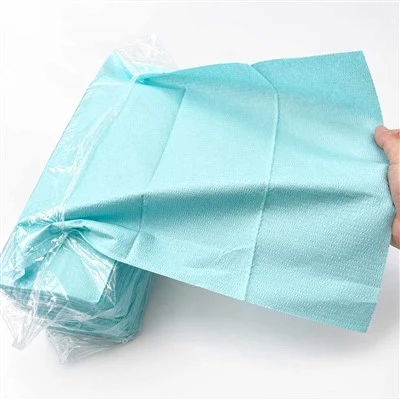
What Is Printed Spunlace Nonwoven Fabric? A Complete Breakdown
Printed spunlace nonwoven fabric is a fiber-based material bonded together with water instead of thread, then decorated with printed patterns - making it strong, absorbent, and visually customizable without ever being woven or knitted. If that sounds like a strange combination of words, it's because most people have never had a reason to break it down before. So let's actually break it down, piece by piece.
The Name Tells You Almost Everything
Three words, three separate facts.
"Nonwoven" means the fabric isn't made on a loom. There's no crossing of horizontal and vertical threads like traditional textiles. Instead, fibers are laid out loosely and bonded together directly.
"Spunlace" tells you how those fibers get bonded - using high-pressure jets of water, a process called hydroentanglement. The water forces fibers to twist around each other until they hold together on their own, without glue or heat.
"Printed" simply means a pattern or design has been applied to the surface afterward, using ink suited for fiber-based material rather than paper or woven cloth.
Put those three words together, and you get the full picture: a fabric that skips traditional weaving, bonds through water pressure, and carries a printed design. Nothing about the name is decorative - it's literally a description of the manufacturing method.
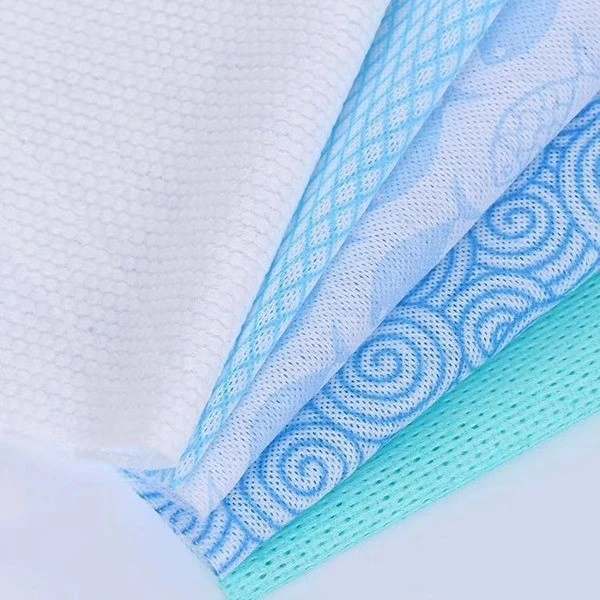
What It's Actually Made Of
The base material is usually a blend of fibers - viscose, polyester, cotton, or some combination of the three. The exact mix isn't random. Viscose tends to absorb more, which matters for wipes and skincare products. Polyester adds strength and durability, useful for industrial or medical applications. Cotton softens the feel, often used where the fabric touches skin directly.
This is worth pointing out because people sometimes assume nonwoven fabric is a single generic material. It isn't. The fiber blend is chosen deliberately based on what the final product needs to do - hold liquid, resist tearing, feel soft, or all three at once.
Why It Feels Different From Woven Fabric
Run your fingers across printed spunlace nonwoven fabric, and it feels noticeably different from cotton or polyester cloth. That's not an accident - it comes directly from how the fibers are arranged.
Woven fabric has a grid structure: threads running in fixed directions, crossing at consistent angles. Spunlace fabric has fibers scattered in multiple directions, tangled rather than aligned. That randomness is actually the point. It gives the fabric more give in different directions, better absorbency across its surface, and a texture that's often softer and more flexible than a tightly woven equivalent.
This structural difference also explains why printing behaves differently on this material. Ink doesn't sit flat on top the way it does on woven cloth - it settles into the open, uneven fiber structure, which is part of why color consistency takes more precision to get right. It's a detail easy to overlook, but it separates fabric that looks sharp from fabric that looks muddy.
A Misconception Worth Correcting
People often assume "nonwoven" is shorthand for "cheap" or "single-use." That assumption doesn't hold up once you look at where this fabric actually gets used.
Surgical dressings, medical wipes, premium skincare masks - none of these industries would tolerate a genuinely low-quality material. They use spunlace nonwoven fabric because hydroentanglement bonding, done properly, produces something durable and consistent. The "nonwoven" label describes a manufacturing method, not a quality tier. A fabric can be nonwoven and still outperform certain woven materials in strength, especially for single-layer applications where flexibility and absorbency matter more than rigidity.
How the Printing Actually Changes the Fabric
Printing isn't purely decorative, even though it looks that way at first glance. Depending on the ink and method used, printing can influence how the fabric absorbs liquid, how it feels against skin, and how visible branding or pattern details appear once the fabric is folded, packaged, or used.
Rotary screen printing tends to produce bold, consistent patterns suited for large production runs. Digital printing allows more intricate, multi-tone designs with finer detail. At Weston Nonwoven, this is where Multi-color Printed Spunlace comes into the conversation - layered color patterns require tighter control over both the fiber bonding stage and the printing stage, since any inconsistency earlier in production shows up clearly once ink is applied.

Where the Confusion Usually Comes From
Most confusion around this fabric comes from lumping it in with either paper products or standard woven textiles. It's neither. It shares some traits with both - the softness and disposability people associate with paper, and the strength and flexibility people associate with cloth - without being fully either one.
That in-between quality is exactly why it shows up in so many different industries: wipes, medical supplies, packaging liners, industrial cloths, even fashion applications. It fills a gap that neither paper nor traditional fabric fully covers on its own.
Why the Distinction Matters
Knowing what printed spunlace nonwoven fabric actually is - not just what it's used for - makes it easier to judge quality when sourcing it. Fiber blend, bonding consistency, and print precision all affect performance in ways that aren't obvious just by looking at a finished product.
For buyers comparing suppliers, that's usually the real question worth asking: not just whether a factory can print a pattern, but whether the underlying fabric was bonded consistently enough to support it. Working with an experienced Spunlace Nonwoven Fabric Manufacturer that controls fiber selection, bonding, and printing under one roof tends to be the difference between a fabric that looks good on paper and one that actually holds up in use.