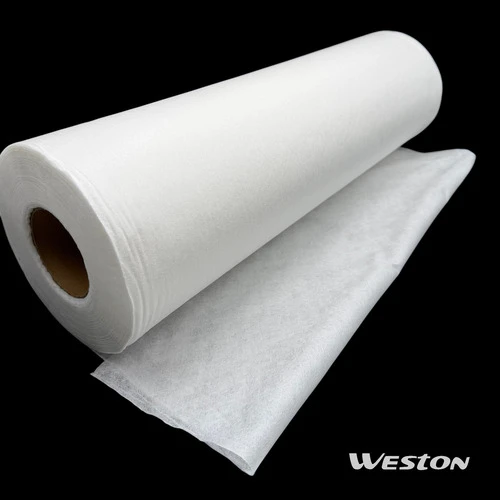
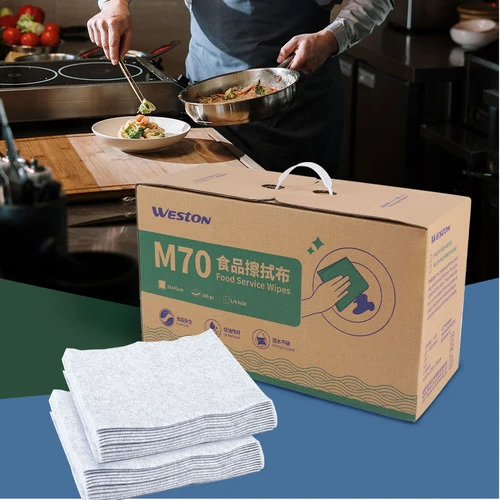
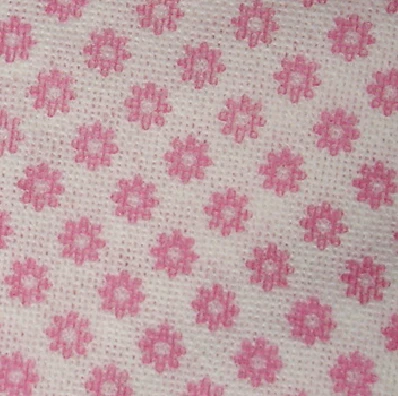
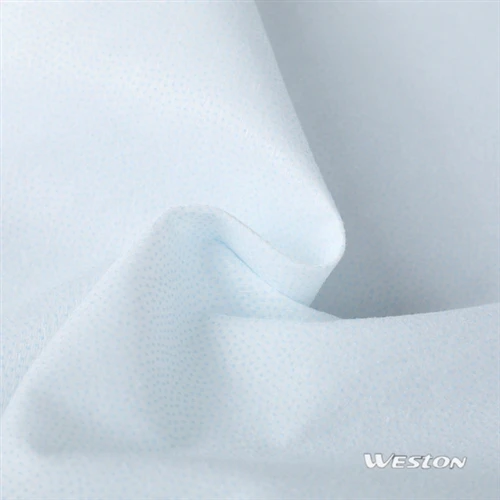
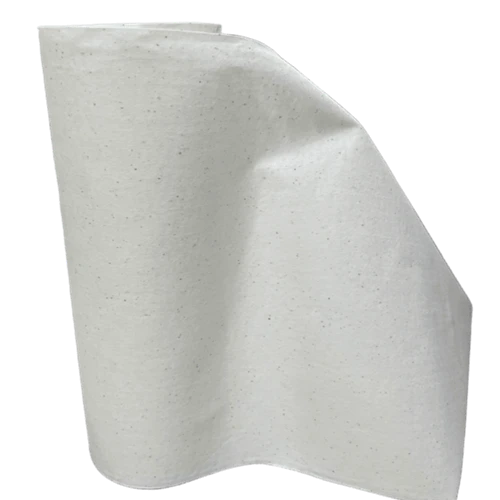
When sourcing spunlace nonwoven fabric, GSM (grams per square meter) is usually the first specification buyers ask about - and for good reason. It's the single number that says the most about how a fabric will perform: how much liquid it holds, how strong it feels when wet, how it drapes, and how much it costs per roll. But GSM never works alone. The fiber a fabric is made from, and the functional finish applied to it, shape performance just as much as weight does. This guide walks through the GSM ranges used across spunlace applications, the fiber materials available, the performance finishes that can be added, and how the three come together to define the right fabric for a specific product.
What Is GSM and Why Does It Matter?
GSM stands for grams per square meter - a straightforward measurement of how much a one-square-meter piece of fabric weighs. In spunlace production, fibers are laid into a web and bonded using high-pressure water jets (hydroentanglement), and GSM reflects how dense that fiber web is.
As a general rule:
Higher GSM means greater strength, thickness, and opacity, but higher material cost and less flexibility.
Lower GSM means a softer, lighter, more economical fabric, with a lower ceiling on tensile strength and absorbency.
GSM interacts directly with liquid absorption capacity and per-unit raw material cost - two of the biggest factors in any converting decision. And because spunlace is hydroentangled rather than chemically bonded, GSM also affects hand-feel: a 40 gsm fabric and a 100 gsm fabric made from the same fiber can feel like two completely different materials against the skin.

Spunlace GSM Ranges and Typical Applications
|
GSM Range |
Fabric Character |
Typical Applications |
|
30–45 gsm |
Lightweight, soft, low bulk |
Facial pads, thin hygiene liners, single-use cosmetic wipes |
|
45–65 gsm |
Balanced weight and absorbency |
Wet wipes, baby wipes, sheet masks |
|
65–80 gsm |
Mid-heavy, higher wet strength |
Household cleaning cloths, medical wipes, surgical drapes |
|
80–120 gsm |
Heavy-duty, high tensile strength |
Industrial wipes, automotive cloths, artificial leather base |
These ranges are a starting point rather than a fixed rule. The right GSM for any given product also depends on the fiber it's made from and any functional finish applied - which is where material choice comes in.
Beyond GSM: Matching Fiber Material to Application
GSM tells you how much fabric there is; fiber content tells you what kind of fabric it is. Weston Nonwoven produces spunlace across a range of fiber types, each suited to different performance and positioning needs:
Wood pulp / PP blend - Combines the absorbency of wood pulp with the dry strength and cost-efficiency of polypropylene. A practical choice for household and industrial wipes where budget and function both matter.
Wood pulp / Viscose blend - Softer and more absorbent than pulp/PP blends, widely used in wet wipes and baby wipes where gentle skin contact is a priority.
Bamboo fiber - A natural, breathable cellulosic fiber valued for its sustainability story and inherent softness; common in facial and baby wipe lines positioned as plant-based.
Bamboo charcoal fiber - Carries the odor-absorbing and moisture-regulating qualities associated with activated carbon, making it a natural fit for cleaning wipes and skincare products built around a "purifying" benefit.
Seaweed (alginate) fiber - A marine-derived fiber prized in the cosmetic segment for its natural moisture-retention properties, often used in premium sheet masks and hydrating facial wipes.
PLA (polylactic acid) - A plant-based, biodegradable polymer fiber, used where compostability or a lighter environmental footprint is part of the product's appeal.
Pure cotton - Hypoallergenic, breathable, and gentle; a standard choice for baby wipes, facial wipes, and medical-grade products where skin sensitivity matters.
Lyocell - Made from wood pulp through a closed-loop, low-impact process (widely known by the trademark Tencel), valued for its silky hand-feel and strong wet absorbency; common in premium wipes and sheet masks.
Many spunlace products actually blend two or more of these fibers - cotton/viscose or bamboo/lyocell, for example - to balance cost, softness, and absorbency for a specific application.
Performance Finishes: Customizing Function, Not Just Weight
Fiber and GSM define the base fabric; functional processing defines what it does. Depending on the end application, spunlace rolls can be engineered for:
Soft hand-feel - Achieved through fiber selection (cotton, lyocell, bamboo) combined with adjusted hydroentanglement settings, producing a fabric gentle enough for facial and baby-skin contact.
Hydrophilic performance - Enhanced wetting and liquid uptake, important for wet wipes, cleaning cloths, and medical dressings that need to absorb quickly and evenly.
Flame retardancy - FR-treated or FR-fiber-blended fabric for industrial, automotive, or protective applications with fire-safety requirements.
Antibacterial properties - Antimicrobial finishing, or naturally antibacterial fibers such as bamboo charcoal, for hygiene, medical, and household cleaning products where microbial control is a requirement.
These finishes can be paired with any of the fiber and GSM combinations above, so the fabric is built around the product's actual use case rather than a generic default spec.
How to Choose the Right GSM, Material, and Finish Combination
Landing on the right spunlace specification usually comes down to four questions:
- What does the fabric need to do? Prioritize absorbency for wipes, wet/dry tensile strength for industrial use, or softness for skin-contact products.
- Which fiber best supports that function - and the brand story? Natural fibers (cotton, bamboo, lyocell) support a "gentle" or "eco-friendly" position; PP blends support cost-efficiency; PLA supports biodegradability claims.
- Will it run smoothly on existing converting equipment? GSM and finish both affect how fabric folds, cuts, and feeds through packaging lines, which is worth confirming before locking in a spec.
- Does the application carry regulatory requirements? Medical and baby-care products often call for tighter GSM tolerance and verified antibacterial or hypoallergenic performance.
GSM Customization & Tolerance Standards at Weston Nonwoven
Weston Nonwoven manufactures spunlace fabric across the full 30–120 gsm range, in any of the fiber types and finishes described above, customized to order.
Standard orders: ±5% GSM tolerance
Precision / medical-grade orders: ±3% GSM tolerance
Tolerance control matters more than it might seem. Inconsistent GSM across a roll can throw off absorbency, create uneven wet strength, and cause runnability problems on high-speed converting lines. For medical and hygiene applications in particular, tighter tolerance also supports more consistent, defensible compliance.

Frequently Asked Questions
Can GSM be customized outside the ranges listed above?
Yes. The 30–120 gsm figures represent Weston Nonwoven's production range, and specific values within that range can be produced to match a buyer's target specification.
Does a higher GSM always mean better quality?
Not necessarily. Higher GSM adds strength and bulk, but it isn't automatically "better" - a facial wipe at 90 gsm would likely feel stiff and wasteful, while a 40 gsm household wipe wouldn't hold up to scrubbing. The right GSM is the one matched to the product's actual use case.
Can fiber type and performance finish be mixed and matched freely?
In most cases, yes - fiber blends and finishes such as hydrophilic treatment or antibacterial processing can typically be combined across a range of GSM values. Some combinations perform better than others for a given application, so it's worth confirming the pairing with Weston's team before finalizing a spec.
Why Choose Weston Nonwoven
- Full-range custom GSM production, from 30 to 120 gsm
- A wide fiber portfolio: wood pulp/PP, wood pulp/viscose, bamboo, bamboo charcoal spunlace, seaweed fiber, PLA, pure cotton spunlace, and lyocell spunlace
- Functional finishing options including soft hand-feel, hydrophilic treatment, flame retardancy, and antibacterial performance
- Tight tolerance control, down to ±3% for precision and medical-grade orders
Conclusion
GSM is the starting point for specifying spunlace nonwoven, but fiber material and functional finish are what turn a fabric into the right fabric for a specific product. Whether the goal is a featherlight facial wipe, a heavy-duty automotive cloth, or a medical-grade dressing with tight tolerance, matching all three variables to the intended use is what determines how the fabric actually performs.
Have a product in mind? Contact the Weston Nonwoven team to discuss GSM, fiber, and finish options, request samples, or get a custom quote.