What the Label Doesn't Tell You
Selecting wipes for homes, clinics, and pet care should be simple. It isn't. Two labels-"fragrance-free" and "unscented"-sound interchangeable yet represent different formulation philosophies, regulatory nuances, and risk profiles. The stakes are not trivial: skin barrier integrity, respiratory comfort, pet olfaction, environmental volatility, and long-term product stability all hinge on these choices. This article dissects the science, clarifies misconceptions, and frames a practical, evidence-led path to better decisions.
Definitions That Actually Matter
Fragrance-free: No added fragrance components intended to impart a smell. Natural base materials may still have a mild inherent odor, but the formula avoids perfume mixes or aroma enhancers.
Unscented: No noticeable scent to the user, often achieved by adding odor-masking agents or very low-level neutralizers that alter odor perception without presenting as a "scent."
In short: fragrance-free is about omission of fragrance. Unscented is about sensory outcome. These are connected but not identical.
The Chemistry of "Smell": More Than Perfume
Odor arises from volatile organic compounds (VOCs) evaporating from the substrate or lotion. In wipes, odor has multiple sources:
Base fibers and binders: Cellulosic and synthetic fibers carry trace monomers, residual solvents, and processing aids that can emit faint notes.
Preservatives and humectants: Benzoates, parabens, or certain isothiazolinones can have characteristic odors; glycerin and glycols often reduce volatility indirectly by modifying water activity.
Surfactants and emollients: Fatty alcohols and ethoxylates contribute neutral to waxy aromas; poorly refined oils can oxidize, generating aldehydic notes.
Oxidation by-products: Contact with air and heat creates low-level aldehydes/ketones responsible for "cardboard" or "lipstick" smells over time.
An unscented system may deploy odor scavengers (e.g., zinc salts, cyclodextrins) or low-odor preservatives, whereas a fragrance-free system relies on raw-material cleanliness, fiber selection, process hygiene, and antioxidant design to minimize baseline odor without masking.
Skin and Mucosa: The Barrier View
Fragrance-free: Reduces exposure to known sensitizers common in perfumes. Beneficial for atopic skin, infants, elderly, and compromised barriers. The trade-off: the "base" odor may be perceptible, especially if fiber or lotion purity is suboptimal.
Unscented: Sensory neutral to most users. However, odor-neutralizers or minimal fragrance tracers may be present, which could still trigger reactions in particularly sensitive individuals, though many are formulated to be low-risk.
Key point: Sensory neutrality does not guarantee reduced sensitization potential. The decisive variable is not the smell you detect, but the chemistry you do not see.
Pets Are Not Small Humans: Olfactory and Grooming Implications
Dogs and cats detect odor intensities far below human thresholds. Even "unscented" for humans may be perceptible-and distracting-for pets. This matters for:
Post-grooming behavior: Strong unfamiliar odor signatures can lead to rubbing or avoidance.
Stress signaling: Odor-active compounds may alter scent-based social cues for animals.
Licking exposure: Residual neutralizers can become oral exposures during self-grooming.
Fragrance-free approaches, when materially clean and low-VOC, often align better with pet comfort. In practice, substrate choice is crucial: low-lint, low-residual fibers shed fewer particles for inhalation or ingestion during grooming.
Respiratory Microenvironment: VOCs, Particles, and Human Comfort
Even low-level VOCs can contribute to perceived "stale air" in enclosed spaces or to discomfort in sensitive users. While most consumer wipes remain far below regulatory concern, differences add up:
Fragrance-free systems may yield slightly more recognizable base-material odor but typically lower overall VOC complexity.
Unscented systems may use neutralizers that reduce perceived odor but could increase chemical diversity, albeit at minute levels.
For settings like neonatal care, respiratory clinics, and veterinary surgeries, simpler chemistry with clean substrates is often favored.
Substrate Science: Fiber Architecture Drives Sensory Outcomes
The wipe substrate is not inert. Fiber chemistry, denier, and web consolidation influence odor, lint, handfeel, and residue.
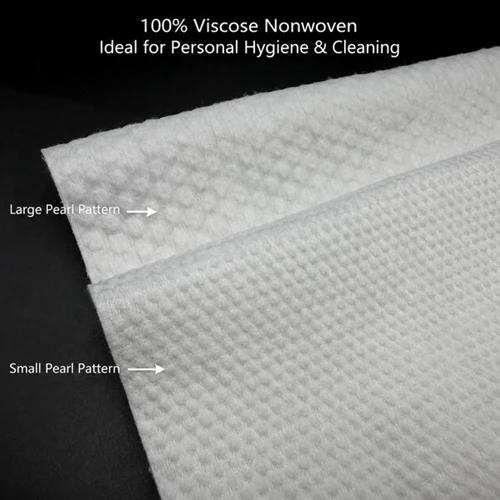
Cellulosic-synthetic blends: Viscose/Polyester spunlace remains a gold standard for softness, strength, and low fuzz.
Low-lint performance: Reduces loose microfibers that can trap and carry odor molecules or transfer to skin and fur.
Water handling: Balanced capillarity retains lotions without dripping, limiting exposure to evaporative notes.
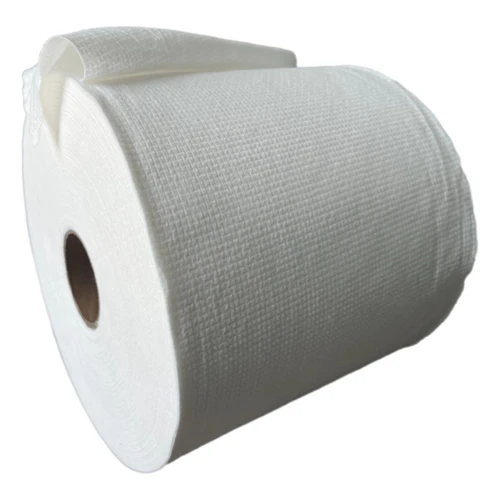
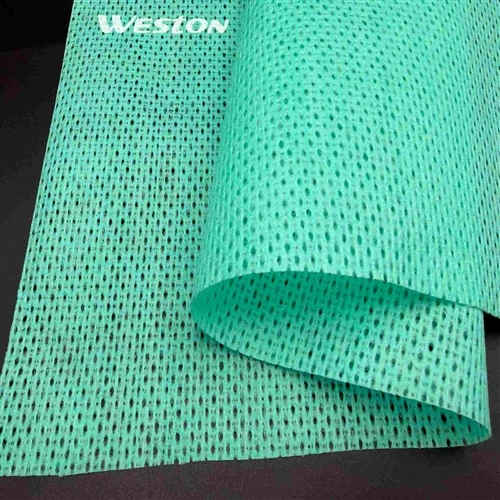
A modern benchmark is a clean, mechanically entangled web with tight fiber control, exemplified by bold materials such as Low-Lint Viscose Polyester Spunlace Nonwoven Fabric that prioritize purity and shedding resistance.
Preservation, pH, and Water Activity: Quiet Determinants of Odor
pH control: Skin-aligned pH (around 4.5–5.5 for humans, species-appropriate for pets) stabilizes emulsions and reduces base-material off-notes from hydrolysis.
Water activity (aw): Lower aw via glycols or humectant systems suppresses microbial growth and secondary malodors without heavy perfume use.
Antioxidants and chelators: Limit lipid oxidation and metallic catalysis, preventing aldehyde "fatty" notes.
A well-engineered fragrance-free formulation controls these variables to minimize odor at its source, not by masking it.
Regulatory Semantics and Practical Reality
While labeling conventions vary by market, the underlying compliance logic is consistent: fragrance-free omits intentional fragrance ingredients; unscented aims for a neutral sensory outcome. A compliant unscented product may still include odor-neutralizers classified as non-fragrance. Conversely, a fragrance-free product may retain faint raw-material odor. Precision in specification and supplier transparency is essential.
Risk–Benefit Map for Key Scenarios
Neonatal and atopic skin care: Favor fragrance-free with minimal excipients, low linting, and soft handfeel.
High-traffic public spaces: Unscented can minimize user complaints about "smell," provided low-sensitizer neutralizers are chosen.
Veterinary and home pet care: Favor fragrance-free with very clean substrates; pets' superior olfaction amplifies minor odor signatures.
Industrial and food-contact adjacencies: Low-VOC, low-lint substrates reduce contamination pathways and sensory transfer.
Unscented Without Surprises: How It's Achieved Responsibly
A robust unscented design avoids "perfume in disguise" by:
Selecting narrow-spec raw materials with low intrinsic odor.
Using non-sensitizing odor absorbers in minimal effective doses.
Implementing oxidative stability systems that do not add scent.
Rigorously controlling storage conditions and packaging oxygen ingress.
When done right, unscented need not compromise sensitivity; it just requires more upstream purity.
The Lint Factor: Why Shedding Shapes Perceived Cleanliness
Lint is not merely cosmetic. Microfibers carry trace residues and can act as odor vectors. In pet care, lint can adhere to fur and become a nuisance during self-grooming. In healthcare, lint can compromise device surfaces or wound fields.
A substrate engineered for very low shedding-such as Low-Lint Viscose Polyester Spunlace Nonwoven Fabric-supports both fragrance-free and unscented strategies by minimizing VOC carry-over and particle load.
Environmental and Sensory Durability
Headspace dynamics: The scent inside a sealed pack evolves; early VOCs equilibrate with the lotion and substrate. Materials with lower intrinsic odor stabilize faster.
Temperature excursions: Heat accelerates oxidation, creating off-notes. Packaging barrier films and antioxidants are critical.
Post-dispense persistence: Residual skin/fur scent should fade quickly; unscented neutralizers must not leave noticeable film or taste (for pets).
Selecting high-purity fibers and surfactant systems reduces drift in both smell and tactile feel over the product's life.
What "Clean" Manufacturing Really Means for Odor
Process hygiene determines baseline odor as much as formula:
Water quality: Low TOC, controlled microbiology, and stable mineral profile prevent off-odors and preserve actives.
Mixing regime: Minimized aeration and controlled shear reduce microfoam and oxidation.
Web production: Closed-loop, well-filtered systems limit carry-over volatiles; drying profiles prevent thermal degradation.
Pack-out controls: Rapid sealing under controlled headspace prevents odor ingress from ambient air.
These operational details translate directly into fragrance-free success.
Human Factors: Perception, Expectation, and Trust
Consumers often equate "no smell" with "safer," which is not universally true. Education matters:
Fragrance-free may smell faintly of fibers or base emollients. That is not a defect; it is honesty in formulation.
Unscented is a design choice for sensory neutrality. It may be ideal for mixed public environments but still merits full-ingredient transparency.
For pets, "barely there" for humans may still be noticeable. Choosing truly low-VOC systems respects animal comfort.

Decision Tree You Can Actually Use
Who is the primary user?
Sensitive human skin or pets: lean fragrance-free.
Broad public setting: consider unscented with careful neutralizers.
What is the environment?
Healthcare, neonatal, or vet clinics: simplest chemistry, low lint, controlled pH.
What substrate?
Prefer low-lint, clean spunlace with proven purity, e.g., blends like Low-Lint Viscose Polyester Spunlace Nonwoven Fabric.
What residuals are acceptable?
If none: request supplier analytics for VOCs, residual monomers, preservative profiles, and lint counts.
What's the stability requirement?
If long shelf life or warm chain: prioritize antioxidant and barrier packaging strategy; avoid unstable oils.
Pet Care Spotlight: Odor, Safety, and Compliance With Instinct
Pets experience the world primarily through scent. Wipes marketed to pet owners should respect this sensory reality:
Fragrance-free pet wipes with minimal VOCs and clean substrates better preserve natural scent cues.
Low-lint webs prevent fiber ingestion and reduce post-wipe grooming frustration.
Balanced pH and rinse-free formulas prevent skin disruption under fur.
Product archetypes like Odor-Control Pet Cleaning Wipes can be engineered without perfumes by focusing on base-material purity, odor adsorption chemistry, and oxidative control. The intent is odor control, not odor cover-up. Equally, categories like Family-safe Pet Cleaning Cloths and Pet Grooming Wipes benefit from non-reactive, residue-light ingredient choices and mechanically robust, soft, low-shedding substrates.
Edge Cases and Common Missteps
"Natural fragrance" is still fragrance. Being botanical does not negate sensitization risk.
Overuse of cyclodextrins can leave a powdery afterfeel and trap beneficial skin volatiles.
Heavy glycols can suppress odor but feel sticky on fur; balance is key.
Substrate whiteness does not equal purity; optical brighteners can carry their own odor signature.
Preservative under-dosing for "clean" labeling risks microbial bloom and malodor.
Metrics That Predict Real-World Satisfaction
VOC headspace profile: Quantify rather than assume "no smell."
Lint count under mechanical agitation: Proxy for cleanliness and pet comfort.
Oxidative induction time: Forecast shelf stability and resistance to off-odors.
Sensory panels with pet-centric protocols: Observe post-wipe behavior, not just human perception.
Applying the Science to Everyday Choices
For baby care: Choose fragrance-free, low-lint, skin-pH-aligned wipes; expect a mild "base" scent that dissipates.
For multi-user public spaces: Unscented formulations with simple neutralizers can reduce complaints without resorting to perfume.
For pets: Favor fragrance-free, low-residue systems. Look for substrates explicitly specified as low-lint spunlace and formulations that avoid strong odor-masking chemistry.
Where Substrate and Process Meet: A Practical Example
Consider a wipe platform built on Low-Lint Viscose Polyester Spunlace Nonwoven Fabric:
Viscose contributes absorbency and softness; polyester provides tensile strength and lint resistance.
Controlled entanglement and fiber sourcing reduce residual processing odors.
When paired with a minimalist, fragrance-free lotion-optimized pH, low aw, chelated water system-the result is naturally low odor without sensory tricks.
Adapt the same platform for pet care by adjusting preservative systems and surfactants proven safe for grooming contexts, yielding variants like Odor-Control Pet Cleaning Wipes, Family-safe Pet Cleaning Cloths, or Pet Grooming Wipes without imposing human-preferred scents onto animals.
Weston Nonwoven: Quiet Engineering Behind Sensory Clarity
Behind the label distinction, authentic performance starts with material science and process stewardship. Weston Nonwoven focuses on precision fiber control, clean-room-adjacent hygiene, and tight aqueous system management to produce stable, low-odor, low-lint substrates suitable for both fragrance-free and unscented designs.
Substrate portfolio: Emphasis on spunlace architecture with optimized viscose/polyester ratios for softness, tensile integrity, and minimal particle release.
Process discipline: High-purity water systems, controlled drying, and reduced thermal stress to minimize oxidation.
Application range: From sensitive-skin human wipes to pet grooming categories, enabling brands to choose sensory strategies without compromising material purity.
For inquiries or to request a free sample, contact: info@westonmanufacturing.com
Final Takeaways That Don't Fit on the Label
Fragrance-free and unscented are not synonyms. One is an ingredient claim; the other is a sensory outcome.
Odor is engineered at the source: substrate purity, water systems, oxidation control, and lint reduction. Masking is a last resort.
Pets' sensory world demands restraint. Low-VOC, low-lint, residue-light designs respect animal comfort.
Choose materials that make both strategies possible without trade-offs-clean spunlace architectures like Low-Lint Viscose Polyester Spunlace Nonwoven Fabric are foundational.
When in doubt, request data: VOC profiles, lint counts, preservative disclosures, and stability metrics. Good products withstand scrutiny.
Clarity comes from chemistry, not from the absence of smell. The smartest wipe is the one whose silence-on skin and in the air-is engineered, not perfumed.