Herbal Compress Pads | 100% Wormwood Spunlace Nonwoven by Weston | All-Natural Relief
Why Professional Buyers Are Reframing "Herbal Relief" as a High-Performance Material Question
For years, herbal compress pads were framed as folklore turned product. That view is now obsolete. In high-spec wellness, rehabilitation, and personal care channels, the relevant question is not "Do herbs work?" but "Can we translate botanical actives into stable, hygienic, reproducible material systems that deliver clinically relevant outcomes with manufacturing discipline?" This is where nonwoven engineering, fiber chemistry, and controlled-release design intersect-turning a traditional remedy into a modern category that can be modeled, validated, and scaled.
The core proposition: A 100% wormwood spunlace compress is not just a sachet of botanicals. It's a porous, capillary-active delivery substrate with a defined pore size distribution, calibrated wicking kinetics, standardized bioburden control, and predictable mechanical behavior under hydration and compression. If you're a professional buyer, your decision variables shift from "herbal story" to "material performance and production reliability." This article maps that shift-and explains why 100% wormwood spunlace nonwovens represent a decisive, future-ready platform for all-natural relief formats.
What Distinguishes a Modern Herbal Compress Pad
Material architecture: Hydroentangled nonwoven webs engineered for rapid hydration, shear stability, and sustained release.
Botanical integrity: Plant-only fiber matrices preserving native phytochemicals without polymeric binders.
Biofluid dynamics: Capillary rise and liquid distribution that determine thermal retention, diffusion, and active delivery.
Process hygiene: Controlled manufacturing environments with traceable inputs and validated cleaning regimes.
This is not "a pad with herbs." It is a reproducible medical–wellness interface that must satisfy requirements akin to wound adjuncts or dermal care textiles: purity, consistency, mechanical safety, microbiological suitability, and end-of-life responsibility.
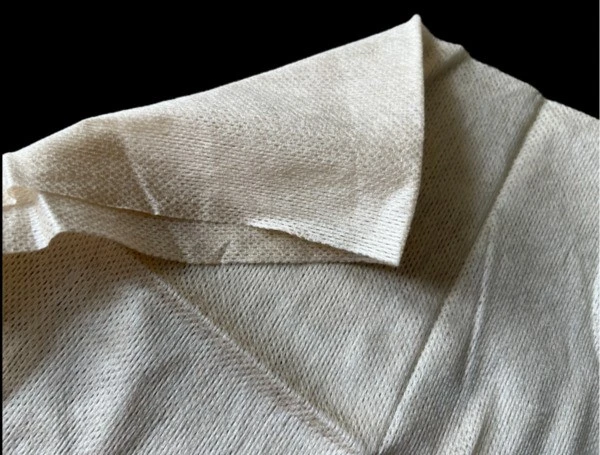
The Science of Wormwood in a Nonwoven Substrate
Wormwood (Artemisia spp.) contains sesquiterpene lactones, flavonoids, and essential oils known for aromatherapeutic and topical comfort benefits. Historically, delivery has been inconsistent: too hot, too wet, too volatile. A 100% wormwood spunlace matrix addresses three scientific bottlenecks:
Volatile retention and controlled release
Fiber packing density and tortuosity temper the volatilization of terpenoids, reducing flash-off during heating.
Hydroentanglement creates mechanical bonds without chemical binders that could occlude pores or interact with actives.
Thermal and moisture management
Optimized basis weight enables sensible heat capacity without smothering the skin.
Hysteresis in moisture uptake moderates the wet/dry cycle, extending comfort time within a skin-friendly microclimate.
Contact interface and biocompatibility
Plant-only fibers reduce the risk of occlusive reactions associated with films or coatings.
Low-lint, low-extractable profiles minimize contamination risk in hygiene-critical settings.
In short: the nonwoven is both container and instrument. It shapes how the herb behaves on the body.
Material Engineering: What "Spunlace" Contributes
Spunlace (hydroentanglement) uses high-pressure water jets to entangle fibers into a coherent web. For herbal compress applications, several parameters define quality:
Basis weight and thickness: Influence mechanical cushioning and thermal dwell. Too low, and you lose compress integrity; too high, and you impede heat flux and breathability.
Pore size distribution: Controls capillary transport and active migration; narrower distribution yields more predictable release.
Fiber length and denier: Affect entanglement cohesion, linting, and surface compliance.
Surface energy: Mediates wetting, ensuring uniform hydration and active migration to the skin interface.
Manufacturing water quality: Impacts purity and phytochemical preservation, especially for plant-derived fibers where trace ions can catalyze oxidation.
Hydroentanglement is a solvent-free means to build a stable, binderless nonwoven-critical when claiming "all-natural" without compromising material performance.
Why 100% Wormwood Matters (and When It Doesn't)
A fully botanical matrix ensures that the compress itself is a functional botanical component rather than a passive carrier. This is particularly relevant when users apply heat or moisture; the fiber mass contributes aroma and secondary actives while avoiding synthetic binder residues.
However, 100% wormwood is not categorically superior for every metric. Material science is about trade-offs:
Pros
Plant-only purity aligned with clean-label demands.
Intrinsic active contribution from the matrix itself.
Favorable end-of-life profile relative to petro-based webs.
Strong consumer-perceived authenticity and sensory value.
Cons
Batch-to-batch plant variability requires tighter process control and incoming QA.
Potentially lower tear resistance vs. reinforced blends at equal basis weights.
Thermal degradation of delicate components if end-users overheat compresses.
Moisture overloading can cause transient dimensional change without proper calendering strategy.
The right answer for a buyer is not "always 100% wormwood," but "use 100% wormwood where sensory authenticity, plant purity, and natural positioning are the differentiators, and design around mechanical needs with geometry and calendering rather than synthetic additives."
From Folklore to Spec Sheets: KPIs That Actually Matter
If you source herbal compress pads, evaluate against quantifiable parameters:
Microbial profile: Total aerobic microbial count limits, absence of specific pathogens.
Residual moisture: Tight control to prevent mold while preserving compressible loft.
Volatile retention pre- and post-sterilization or pasteurization (if applied).
Thermal stability window: Peak and sustained temperatures under standard consumer heating protocols.
Wet tensile strength and elongation: To ensure structural integrity during rehydration.
Linting index: Critical for spa and clinical settings; relates to web cohesion and fiber finishing.
Sensory reproducibility: Measured through GC-MS fingerprints of key terpenoids for batch indexing.
Allergen risk management: Material declarations and optional patch testing frameworks.
End-of-life: Biodegradability/compostability under relevant conditions and dispersibility behavior.
Professional buyers should request method details and acceptance criteria, not just marketing claims.
The Delivery Challenge: Heat, Moisture, and Time
Herbal compresses are often used warm or hot and sometimes damp. Three vectors influence performance:
Heat transfer
Objective is to reach a skin-friendly surface temperature (commonly 40–48°C) quickly and maintain it.
Web design should facilitate lateral heat distribution to avoid hot spots.
Moisture buffering
Capillary network should take up water without drips, then release it as vapor for a comfortable microclimate.
Controlled regress to ambient ensures that actives volatilize over a useful time window.
Compression dynamics
Pads must retain geometry under repeated gentle compressions.
Elastic recovery prevents "matting," which reduces breathing and active release.
In practice, mastering these vectors determines whether the product delights or disappoints.
Safety and Compliance: What a Buyer Should Expect
An herb-forward narrative does not replace a safety-forward practice. Expect and request:
Ingredient traceability: From plant source to finished pad, with documented handling.
Allergen and sensitization risk assessment: Especially relevant for essential-oil-bearing species.
Cleanliness validation: Purge/clean cycles for production lines, filtration specs for process water.
Packaging integrity: Barrier properties that balance volatile retention with moisture control.
Stability data: Accelerated and real-time studies to establish usable shelf life.
Heating guidance validation: Verification that recommended heating methods do not exceed safe temperatures or degrade actives excessively.
A credible supplier will treat these as table stakes, not "nice-to-haves."

Environmental Profile: Plant-Only and the System Boundary
Plant-only compresses resonate with sustainability goals, but scrutiny should extend beyond "biodegradable" claims. Consider:
Cultivation footprint and logistics of botanical feedstock.
Process water recycling and effluent treatment in hydroentanglement.
Energy intensity relative to drylaid alternatives.
Additive avoidance: Binder-free structures reduce chemical load.
Packaging rationalization: Right-size, right-barrier, recyclable or compostable where appropriate.
A responsible product achieves ecological gains across the full system boundary, not just via fiber origin.
Use Cases Across Channels
Spa and wellness: Fast, consistent aromatherapeutic experience with low lint and clean-labeled materials.
Physical therapy/rehab: Warm compress adjuncts for comfort; material must maintain integrity under repeated hydration cycles.
At-home care: Simple heat-and-apply with clear instructions to avoid overheating; packaging should facilitate safe consumer use.
Travel and hospitality: Single-use or short-cycle multi-use pads with odor containment and sanitary presentation.
Corporate wellness and gifting: Elevated, plant-pure positioning with reliable sensory performance.
Each channel imposes distinct packaging, labeling, and shelf-life requirements-material design must anticipate these.
Risk Management: What Can Go Wrong and How to Mitigate
Overheating by end-users: Mitigate via packaging guidance, temperature indicators, and web architecture that disperses heat.
Microbial growth in damp storage: Design for rapid drying post-use; include drying instructions or one-way use recommendations.
Allergen reactions: Provide clear ingredient disclosure and usage cautions; consider optional fragrance moderation pathways.
Sensory drift between batches: Anchor production to GC-MS-based profiles and in-process controls.
Supply volatility of botanicals: Dual-region sourcing within one species and inventory planning.
Being explicit about these risks builds trust and reduces downstream support costs.
Weston's Approach to Herbal Compress Nonwovens
Industrial-grade reliability is built into the production, not painted on with marketing. Within this framework, a plant-only spunlace compress can meet the demands of professional buyers when the factory controls input variability and validates outputs.
Fiber processing discipline: Stable basis weight and pore distribution optimized for heat and moisture management.
Hydroentanglement quality: Cohesion without binders, preserving a clean botanical interface.
Hygienic manufacturing: Defined sanitation SOPs and environmental monitoring for low bioburden output.
Analytical anchoring: Batch fingerprinting to align sensory outcomes with objective measurements.
Packaging science: Barrier specifications that retain volatiles while preventing moisture ingress.
This is how an all-natural claim becomes a reliable product line rather than a gamble.
Design Details That Separate Premium from Commodity
Edge architecture: Ultrasonic or thermally set edges reduce lint, preserve shape under heat.
Loft control: Calendering that maintains air volume without collapsing capillaries.
Thermal ramp behavior: Pads engineered to reach comfortable temperature fast and hold it without scorching.
Odor profile: Fresh, non-musty; controlled through drying and sealing discipline.
Visual quality: Color consistency without bleaching artifacts that could affect plant compounds.
When audited side-by-side, these details drive repeat purchase in professional settings.
Data-Backed Sensory: Measuring What Users Actually Experience
Subjective comfort can be tied to measurable variables:
Evaporative heat loss rates correlate with perceived warmth.
Volatile organic compound release curves correlate with perceived aroma intensity over time.
Surface roughness metrics correlate with perceived softness and skin compatibility.
Recovery after compression correlates with perceived durability.
Engineering targets for these metrics produce predictable customer satisfaction without guesswork.
Integration with Adjacent Nonwoven Platforms
Buyers often manage portfolios, not single SKUs. Material synergies matter:
A portfolio may include compress pads, sheet masks, and wipes.
Using aligned process windows and fiber philosophies reduces qualification overhead and harmonizes sensory signatures.
Cross-application synergies enable shared packaging, sterilization, and logistics practices.
Strategic sourcing is easier when platforms interlock.
Frequently Raised Buyer Questions, Answered with Rigor
Is "100% natural" compatible with industrial cleanliness?
Yes, via hygienic process controls, filtered water systems, and documented sanitation cycles.
Will plant-only webs fall apart when wet?
Not with correct fiber length, entanglement density, and calendering; wet tensile strength is a solvable parameter.
Can we keep aroma for months?
With appropriate barrier packaging, controlled storage, and minimized headspace, volatile retention can be sustained across shelf life.
Does wormwood irritate skin?
Sensitivity varies; data-driven labeling and optional patch testing are prudent. Matrix choice avoids occlusion, reducing risk of maceration-related irritation.
Are pads compostable?
Plant-only fibers are biodegradable; local conditions and standards vary. Packaging choices should align with the end-of-life story.
Benchmarking a 100% Wormwood Spunlace Compress
When evaluating a 100% wormwood compress, set thresholds for:
Basis weight and thickness suitable for target heat profile.
Linting below defined thresholds.
Microbial counts within conservative acceptance criteria.
Moisture content controlled to prevent aroma loss and microbial growth.
VOC fingerprint within a tolerance band to ensure sensory consistency.
Labeling and IFU (instructions for use) clear on heating, reuse (if any), and storage.
These practical gates keep your line reliable.
Responsible Heating and Use Protocols for End-Users
Provide unambiguous, tested guidance:
Heating modality: Clear timing for microwave or steamer; caution against dry overheating.
Temperature check: Encourage hand or forearm test before application.
Cycle count: If multi-use, specify number of cycles and re-drying requirements.
Storage: Cool, dry place; reseal packaging promptly; do not store damp.
Disposal: Plant-only materials may be disposed with organic waste where allowed.
Good instructions reduce returns and adverse reports.
The Opportunity: Clean-Label Comfort with Industrial Discipline
Herbal compresses should no longer be relegated to craft status. When engineered as spunlace nonwovens, they occupy a mature space where tactile comfort meets quantifiable quality. The market recognizes "natural," but procurement must insist on "natural with numbers." That is the differentiator.
Within this context, a platform like the 100% wormwood spunlace pad offers:
Sensory credibility grounded in plant chemistry.
Predictable performance via hydroentanglement engineering.
Purity without binders or synthetic carriers.
Sustainability aligned with plant-only inputs and solvent-free processing.
The combination is rare-and valuable.

A Note on Portfolio Breadth and Compatibility
While the focus here is on wormwood compress pads, buyers often extend programs into adjacent categories to capture economies of scope. It is feasible to align compress pads with other plant-based spunlace solutions, preserving tactile and ethical coherence across lines. Incorporating a single manufacturing partner with consistent QA frameworks can streamline onboarding for multiple SKUs, from compress pads to sheet masks or flushable substrates, each with its own compliance pathway yet shared production discipline.
Practical Sourcing Checklist for Professional Buyers
Product definition: 100% plant-fiber, binder-free spunlace compress pads with wormwood functionalization.
Performance dossier: Thermal profile, moisture management, VOC retention, tensile data, linting index.
Hygiene dossier: Microbial counts, sanitation SOPs, environmental monitoring snapshots.
Stability plan: Real-time and accelerated data, with packaging barrier rationale.
Risk disclosures: Allergen considerations and safe-use instructions.
Sustainability brief: Fiber origin, process water practices, end-of-life guidance.
Scale and lead times: Batch sizes, changeover protocols, capacity buffers.
Communication cadence: Batch COAs and sensory fingerprints included with each lot.
This structure ensures both speed and rigor.
Quietly Powerful: Material Truth Over Market Noise
The strongest products do not shout; they perform. A herbal compress pad built as a 100% plant-fiber spunlace web is a measurable achievement in materials engineering. It translates an old idea-local warmth and botanical comfort-into a repeatable, audit-ready experience. That is what professional buyers need: a product whose quality can be proven, not just promised.
For programs that prioritize plant purity and reliable sensory delivery, a 100% wormwood spunlace compress is not merely a SKU; it is a platform that aligns with wellness trends, environmental responsibility, and modern production science.
In Context: Specific Material Phrases and Why They Matter
The phrase "100% wormwood spunlace" signals binder-free, plant-only composition with the nonwoven itself as a functional botanical matrix, not an inert liner.
Spunlace hydroentanglement implies high cohesion without adding synthetic adhesives, preserving pore structure and breathability essential for heat and moisture management.
A plant-only web supports a credible sustainability story while enabling a comfortable skin interface and consistent aroma release.
These are not buzzwords. They are engineering choices with measurable consequences.
Contact and Next Steps
If you are evaluating plant-only compress pads for professional channels and require technical data, pilot runs, or quality documentation, you can request a free sample and a structured performance dossier. Contact: info@westonmanufacturing.com
Strategic Addendum: Ecosystem Compatibility
For buyers planning broader plant-based wellness portfolios, keep in mind that adjacent materials such as sheet masks and dispersible wipes can share quality frameworks and process windows. In this ecosystem perspective, the following material families may serve complementary roles within a unified sourcing strategy:
Bold sensory purity instance: 100% Wormwood Spunlace Nonwoven for compress pads where botanical authenticity drives value.
Breathable carrier option: Pulp Bamboo Fiber Spunlace for products emphasizing softness and moisture management.
Skin-contact category: 100% Natural Plant Fiber Masks aligning with clean-label facials.
Responsible disposability track: Plant-Based Flushable Spunlace Fabric for dispersible personal care applications where end-of-life matters.
Keeping these platforms coherent under one manufacturing and QA umbrella simplifies onboarding and strengthens brand consistency while preserving scientific rigor.