Wood pulp is not merely "processed wood." It is a precisely engineered assembly of biopolymers and capillary architectures, designed to move, hold, and release liquids predictably. For professional buyers, framing wood pulp as a performance material-not a commodity-opens a deeper conversation about absorbency kinetics, surface energy tuning, fiber-fiber bonding, and the way pulp integrates with nonwoven architectures to deliver measurable functionality in hygiene, wiping, filtration, and spill control.
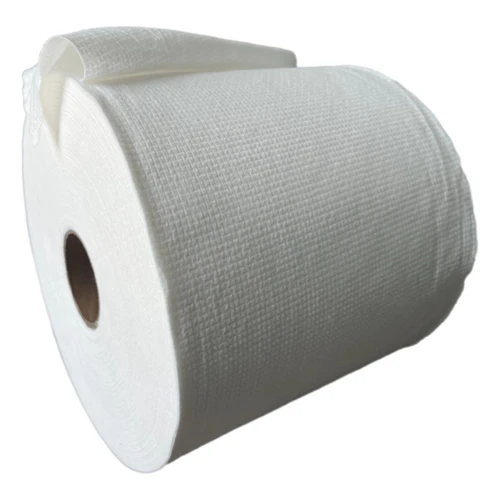
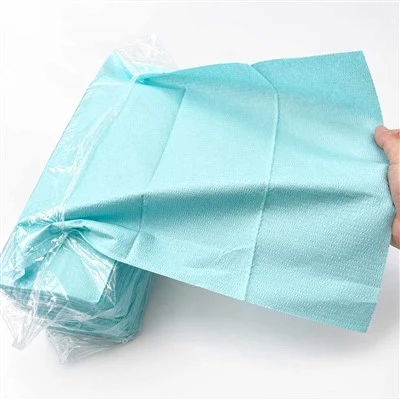
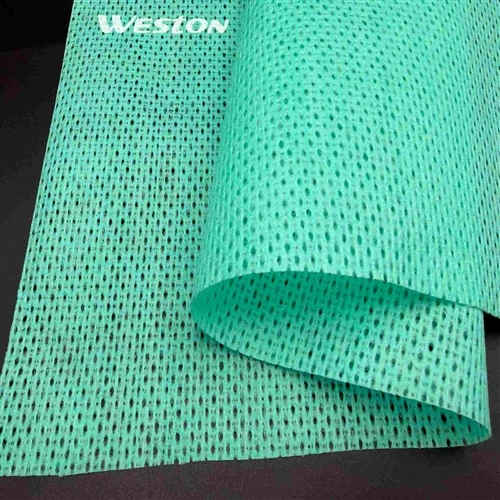
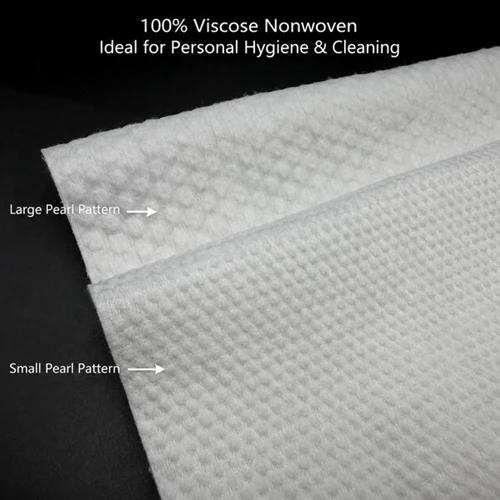
Weston Nonwoven manufactures advanced wood-pulp-centric materials, including bold, application-focused solutions such as Absorbent Nonwoven Fabric for Diaper Core, Household Cleaning Wood Pulp Spunlace Fabrics, Red Woodpulp PP Spunlace for Surface Wiping, and Efficient Oil Spill Cleanup Nonwoven Cloth.
The Molecular Architecture: What Wood Pulp Actually Contains
At its core, wood pulp is a network of semicrystalline cellulose microfibrils embedded in a matrix of hemicelluloses and, depending on the process, residual lignin. Each component has distinct roles:
Cellulose: Linear β(1→4)-D-glucan chains forming microfibrils with crystalline and amorphous domains, providing tensile stiffness and dimensional stability while allowing for swelling and hydroxyl accessibility.
Hemicelluloses: Heteropolysaccharides (e.g., xylans, glucomannans) that regulate water sorption rate, fiber flexibility, and interfiber bonding.
Lignin: A phenolic polymer that confers rigidity to native wood. Its removal increases wettability and brightness but may reduce inherent stiffness.
Extractives and ash: Low-level resins, fatty acids, and minerals, typically targeted for removal to stabilize absorbency.
The balance of cellulose purity and hemicellulose presence determines total capacity, liquid uptake speed, collapse resistance under compression, and rewet profile in hygiene products.
From Tree to Pulp: Process Pathways That Control Performance
Wood pulp is not monolithic; the pulping method sets the microstructure.
Mechanical pulps (e.g., groundwood, refiner): High yield (>90%) with most lignin retained. Useful where bulk and stiffness matter more than clean fluid handling.
Chemical pulps (e.g., kraft, sulfite): Lower yield; lignin largely removed, resulting in greater fiber flexibility and higher brightness.
Chemimechanical and semichemical pulps: Hybrids for tailored fiber length and bonding, used when a compromise of strength, opacity, and cost structure is required.
Bleaching sequences: Modify surface energy and accessibility, nudging absorbency rate and chemical compatibility.
Refining/Beating: Increases bonding area and water retention value (WRV), but must be controlled to avoid density issues.
Surface derivatization (optional): Changes absorption speed, ionic interaction, and liquid distribution.
The right pathway is application-specific. For example, a diaper core needs rapid uptake, while an oil-absorbent wipe requires selective oleophilicity.

Fiber Geometry: Length, Coarseness, and Fines
Wood sources produce differing fiber morphologies:
Softwood fibers: Longer (2–4 mm), coarser, higher aspect ratio, building bulk and tensile strength.
Hardwood fibers: Shorter (0.8–1.5 mm), finer, with higher sheet formation uniformity.
Fines and microfibrils: Increase bonding and liquid retention, but excessive fines can choke pores and slow flow.
Blends are engineered to tune wicking and collapse resistance under load-key parameters for absorbent cores, wipes, and cleanup materials.
Hydrophilicity, Capillarity, and Why Pulp "Drinks"
The wetting and transport behavior in wood-pulp-based systems is governed by:
Surface energy and contact angle: Attractive hydrogen bonding sites on cellulose and hemicellulose draw in polar liquids.
Pore size distribution: Facilitates rapid intake and longer-term holding.
Network tortuosity and connectivity: Determines wicking speed and directional flow.
Compression set and resilience: Absorbent structures must resist collapse under wet load.
Understanding these levers enables targeted designs for specific applications.
What Happens During Spunlace and Other Nonwoven Processes
When wood pulp is combined into nonwovens, process choices rewrite the performance script:
Wetlaid formation: Disperses fibers for uniform sheets, excellent for homogeneity.
Hydroentanglement (spunlace): High-pressure water jets entangle pulp with thermoplastic fibers, creating mechanical bonding without binders.
Thermal bonding: Relies on thermoplastic components for bonding nodes.
Needlepunch: Can damage fragile pulp networks, less common for pulp.
Spunlace excels by preserving the hydrophilicity of pulp while adding integrity through entanglement.
The Role of Additives-When and Why
Additives are optional but decisive for performance:
Wet-strength resins: Improve integrity under load.
Debonders/softeners: Increase softness but may reduce tensile strength.
Superabsorbent particles (SAP): Provide capacity, while wood pulp offers wicking.
Hydrophobic/hydrophilic finishes: Enable selective liquid handling.
For buyers, the question is not whether to add but whether the additive provides measurable functional gain.
Strengths and Limitations: A Balanced Technical View
Advantages of Wood Pulp
High intrinsic hydrophilicity with tunable uptake rate.
Renewable carbon backbone with predictable specs.
Excellent synergy with hydroentanglement.
Suitable for quick intake and lateral distribution.
Limitations and Trade-offs
Dimensional stability requires structural reinforcement.
Pure pulp webs can exhibit dusting if not properly entangled.
Excessive refining can choke porosity; insufficient refining may reduce wet integrity.
These should be viewed as controllable parameters.
Application Deep-Dive: Diaper Cores and High-Performance Hygiene
In modern diaper cores, pulp acts as the hydraulic engine for efficient SAP feeding:
Rapid Intake: Longer fibers create channels for instantaneous acquisition.
Distribution: Properly refined pulp spreads liquid laterally for uniform exposure.
Rewet Control: Pulp's network curbs surface rewet, protecting skin feel.
Structural Resilience: Hydroentangled structures maintain porosity under pressure.
Application Deep-Dive: Household and Institutional Wiping
Wipes are liquid-transport machines. Wood pulp contributes:
Burst Absorbency: Fast uptake for spills.
Uniform Release: Controlled dispensing for cleaning agents.
Surface Compatibility: Non-scratching with good debris entrapment.
Hydroentangled blends bring binder-free purity and consistent pore architecture to various cleaning contexts.
Application Deep-Dive: Oil and Chemical Spill Response

Raw wood pulp is hydrophilic; oil spill control requires selectivity:
Phase-Selective Blends: Combine pulp with oleophilic thermoplastics for preferential wetting.
Surface Treatments: Adjust contact angles to favor nonpolar uptake.
Structural Tuning: Optimize loft and pore-size distribution for fluid intake.
Environmental and Operational Considerations
Resource Base: Derived from managed forestry; sustainability profiles depend on practices.
Process Water and Energy: Modern mills recycle water and recover chemicals.
End-of-Life: Cellulosic fraction is biodegradable, while thermoplastic composites require waste-path planning.
Worker and User Safety: Low residual chemicals and controlled extractives favor safe use.
Quality Metrics That Matter to Buyers
Focus on:
Absorbent capacity and rate.
Rewet under standardized load.
Wet tensile and burst in relevant conditions.
Linting quantification.
Pore-size distribution and permeability.
These metrics should be tied to process controls for reliability.
Design Strategies: How to Engineer With Pulp
Stratify Layers: Use a fast-acquisition pulp layer backed by a denser distribution layer.
Blend Intelligently: Pair long-fiber softwood with fine hardwood.
Calibrate Entanglement: Adjust jet energy to lock pulp without sealing pores.
Manage Caliper: Focus on effective porosity rather than raw loft.
Temper Refining: Aim for surface fibrillation that improves bonding.
Anticipate Fluids: Set surface energy and pore size to target fluid properties.
Pilot, Then Scale: Validate on representative lines with realistic conditions.
Emerging Directions in Wood-Pulp-Based Nonwovens
Bio-based Composites: Incorporating biopolyesters with pulp for recyclability.
Functional Chemistries: Site-specific oxidation for improved uptake.
3D Patterning: Hydroembossing to create micro-channels.
Smart Absorbents: Embedded indicators for enhanced functionality.
These innovations keep pulp central to performance.
Procurement Lens: What to Ask and What to Verify
Source Consistency: Monitor ratios, mill stability, and bleaching routes.
Process Traceability: Ensure batch-level documentation links properties to settings.
Functional Validation: Request standardized test data.
Scale and Lead Time: Check for capacity buffers and contingency plans.
Compliance and Safety Files: Ensure comprehensive safety data.
Continuous Improvement: Look for evidence of process optimization.
Final Perspective: Treat Pulp as an Engineered Fluid-Handling System
Wood pulp is a composite engineered for capillarity and resilience. Nonwoven processes unlock its potential by creating high-porosity, mechanically stable webs. Real performance is a choreography of chemistry, geometry, mechanics, and process controls.
If you view wood pulp as an adjustable hydraulic network, your specifications will sharpen, your field performance will be more reliable, and your supply conversations will be more productive. For free sample requests or technical dialogues, contact: info@westonmanufacturing.com.