What Makes Breathable Cotton Nonwoven Fabric Eco-Friendly and Sustainable?
When a product claims to be "eco-friendly," the honest question is: compared to what, and by which measure? Cotton nonwoven fabric holds up well under that kind of scrutiny - not because it's perfect, but because the trade-offs are real, visible, and worth understanding. This article walks through the science, plainly.
What Is Breathable Cotton Nonwoven Fabric, Exactly?
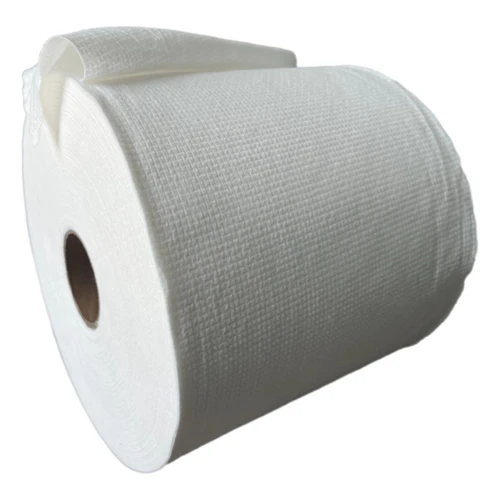
Most people encounter nonwoven fabric every day without realizing it - in baby wipes, surgical drapes, reusable tote bags, or agricultural covers. It's not woven, not knitted. Fibers are bonded together through heat, pressure, or mechanical entanglement (a process called spunlace or hydroentanglement), forming a sheet directly from fiber without any yarn stage.
The "breathable" part isn't a coating or a treatment. It's a natural result of the open fiber matrix: air and water vapor move through the structure because there are genuine microscopic gaps between bonded fibers. No chemical finishing required.
When the base fiber is cotton - especially unbleached 100% cotton - the material starts from a renewable, cellulose-based origin, which changes nearly every downstream calculation.

Cotton vs. Synthetic Nonwovens: The Core Comparison
The nonwoven market is dominated by polypropylene (PP) and polyester (PET) - both petroleum-derived, both durable, and both accumulating in the environment for centuries after disposal. Cotton sits in a different category.
|
Property |
Cotton Nonwoven |
Polypropylene Nonwoven |
Polyester Nonwoven |
|
Raw material source |
Renewable (plant fiber) |
Petroleum |
Petroleum |
|
Biodegradable |
Yes (months–years, conditions dependent) |
No (100–400+ years) |
No (100–200+ years) |
|
Microplastic shedding |
None |
Yes |
Yes |
|
Skin contact safety |
High - natural cellulose |
Moderate |
Moderate |
|
Composting potential |
Yes (untreated/unbleached) |
No |
No |
|
Carbon stored in fiber |
Yes |
No |
No |
The comparison isn't subtle. For single-use or short-cycle applications - medical wipes, hygiene products, food packaging inserts - the end-of-life difference between cotton and PP is measured in decades, not percentages.
Why Unbleached Cotton Matters
Bleaching whitens fiber using chlorine compounds or hydrogen peroxide. Both processes consume water and energy and leave behind chemical residues. Unbleached 100% cotton nonwoven skips this entirely. The result is a fabric closer to what the plant actually produces: a natural off-white material with no optical brighteners, no chlorine byproducts, and no formaldehyde-based finishing treatments.
For applications involving direct skin contact or food packaging, this matters more than it might seem. Many industrial nonwovens use formaldehyde-based binders to hold fibers together. Cotton spunlace nonwoven fabrics produced through pure hydroentanglement use only high-pressure water jets - no adhesives, no binders, no chemical crosslinkers.
The result is a fabric that is:
Free of formaldehyde
Safe for food contact (recognized by food-contact material standards)
Softer and less irritating against skin
More genuinely compostable at end of life
The Biodegradation Reality (Without the Spin)
"Biodegradable" is sometimes used loosely. Here is what it actually means for cotton nonwoven.
In active composting conditions - moisture, heat, microbial activity - untreated cotton fabric can break down to organic matter within a few months. In a sealed landfill with limited oxygen and moisture, the timeline stretches to years. In open soil or water, breakdown still happens, but more slowly than composting.
The honest benchmark is industrial composting, where cotton nonwoven performs well. The realistic worst case is still far better than any synthetic nonwoven, which doesn't biodegrade at a meaningful rate under any practical conditions.
One related point that rarely gets enough attention: synthetic nonwovens shed microplastic fibers when abraded or washed. Those particles enter waterways and persist. Cotton fibers, being cellulose, don't create this problem. For products that will be used near water, discarded in open environments, or applied in agriculture, that difference carries genuine ecological weight.
Manufacturing: Where the Footprint Gets Complicated
Cotton farming is water-intensive. Conventional cotton uses pesticides and herbicides. These are real costs that sit upstream of any finished fabric.
A few factors partially offset them:
Byproduct cotton. A significant share of cotton used in nonwoven production comes from short-staple fiber - a byproduct of spinning operations that would otherwise be discarded. Using this material gives a second life to something that already carries the farming footprint.
Spunlace processing is clean. The hydroentanglement process that produces cotton spunlace nonwoven fabrics uses water pressure rather than chemicals to entangle fibers. The water is recirculated and filtered in modern facilities. No binders, no solvents, no thermal adhesives that would complicate later composting.
No dyeing stage. Unbleached cotton nonwoven is produced and sold in its natural state. Textile dyeing is one of the most chemically intensive and water-polluting stages of fabric production. Skipping it is a genuine reduction in process impact.
Organic cotton certification (GOTS) addresses the farming footprint directly. It doesn't eliminate it, but it substantially reduces pesticide load and typically improves soil health over time.

Real Applications Where the Sustainability Argument Holds Up
The eco case for cotton nonwoven is strongest in applications where material will be disposed of after single or limited use, and where the biodegradation path is realistic.
Medical and hygiene products
Wound dressings, surgical drapes, disposable wipes, and feminine hygiene products are high-volume, single-use categories. Replacing polypropylene with cotton spunlace nonwoven fabric in these applications directly reduces the synthetic fiber load entering waste streams. The formaldehyde-free, food-contact-certified standard also makes cotton the safer choice for anything touching skin repeatedly.
Agricultural covers
Crop protection covers and row cover materials made from cotton nonwoven can be left to degrade in the field after the growing season. No collection required, no recycling infrastructure needed. The material simply becomes organic matter.
Packaging and consumer products
Food packaging inserts, produce wrapping, and bag liners are increasingly under scrutiny for single-use plastic content. Unbleached cotton nonwoven carries food-contact certification, requires no chemical treatment, and gives manufacturers a credible, document-backed alternative to synthetic options.
How to Evaluate What You're Actually Buying
Not all "cotton nonwoven" products are equivalent. A few things worth checking:
Fiber content. "Cotton-blend" nonwovens may contain polyester. For full biodegradability, look for 100% cotton.
Binder type. Hydroentangled (spunlace) products use no chemical binder. Thermally or chemically bonded cotton nonwovens may contain synthetic adhesives that affect compostability.
Certifications. GOTS (organic fiber), OEKO-TEX Standard 100 (chemical residue limits), and food-contact material certificates are third-party verified and publicly auditable. A supplier should be able to provide these on request.
Formaldehyde testing. This is a standard test in the nonwoven industry and should not require a special request from a credible nonwoven fabrics supplier.
Weston Nonwoven manufactures cotton spunlace nonwoven fabrics using 100% unbleached cotton through a pure hydroentanglement process. Products carry food-contact material certification and formaldehyde-free verification - documentation that is available to buyers as part of standard product qualification.
Certifications Worth Knowing
|
Certification |
What It Covers |
Issuing Body |
|
GOTS |
Organic fiber content + processing standards |
Global Organic Textile Standard |
|
OEKO-TEX Standard 100 |
Harmful substance limits in finished products |
OEKO-TEX Association |
|
Food Contact Certificate |
Safety for direct food packaging contact |
Varies by region (e.g., FDA, EU 10/2011) |
|
ISO 9073 series |
Physical performance of nonwoven fabrics |
ISO |
The Fiber Behind the Claim
Breathable cotton nonwoven fabric earns its sustainability positioning through a combination of factors that are independently verifiable: renewable raw material, no microplastic shedding, formaldehyde-free processing when hydroentangled, genuine biodegradability under compostable conditions, and a manufacturing process that skips the most chemically intensive stages of conventional textile production.
None of that means zero impact. Cotton farming has a footprint. Transport has a footprint. Every material does. The meaningful question is always: compared to what? For single-use applications where a synthetic nonwoven would otherwise be the default, the shift to unbleached 100% cotton spunlace is one of the more well-supported material substitutions available today.