Why Most Workshop Wipes Fail with Metal Shavings - And the Spunlace Cloth That Actually Works
There's a moment every machinist knows: end of shift, the bench is dusted with aluminum flakes and steel chips, you grab the nearest cloth - and within two swipes it's torn, smearing shavings sideways, shedding lint onto the part you just finished. The wipe failed. But here's the thing: it wasn't user error. It was material mismatch.
This isn't about brand loyalty. It's about understanding why certain cloths hold up and others fall apart - and what the fiber science actually says.

Metal Shavings Are Not Just "Dirt"
Most people treat shop cleanup like household cleaning. That's the first mistake.
Metal shavings - whether aluminum curls from a CNC turn, steel filings from a bench grinder, or cast iron dust from a brake lathe - share one property that sets them apart from ordinary debris: they have edges. A strand of steel swarf can measure as little as 0.05 mm across, but under a microscope it looks like a fragment of a razor blade. When you drag a paper towel or loosely woven rag across a surface covered in these particles, you're essentially pulling tiny knives across the fabric.
The result is predictable: tearing, fiber pull-out, and lint contamination - exactly the opposite of what a clean workshop needs.
Four Ways Standard Wipes Break Down
Testing done across industrial cleaning environments consistently shows four failure modes when conventional wipes meet metallic debris:
1. Puncture and tear. Standard paper wipes have a dry tensile strength of roughly 8–15 N/25mm. A cluster of steel shavings can generate localized stress that exceeds this threshold in a single wipe motion. Result: the cloth shreds mid-task.
2. Surface smearing. Tightly woven cotton rags push fine metallic dust into surface grain rather than lifting it. On a machined aluminum face, this can embed particles at depths of 10–30 µm - enough to affect sealing surfaces or optical finishes.
3. Fiber shedding. Loose-weave fabrics shed fibers onto the very surfaces being cleaned. In precision environments - bearing housings, valve seats, sensor mounts - even a few stray fibers can cause assembly failures.
4. Oil interaction failure. Many metal cleaning tasks involve cutting fluid or machine oil alongside the shavings. A wipe that saturates and goes limp when wet, or one that repels oil and leaves a film, fails at both ends of the spectrum. Studies on shop-floor contamination show that up to 60% of "cleaning failures" in metalworking environments involve a combination of particulate and oil - not one or the other.
The problem, in short, is that most general-purpose wipes were never designed for this combination of sharp, heavy, wet, and abrasive.
What Spunlace Actually Is - No Jargon
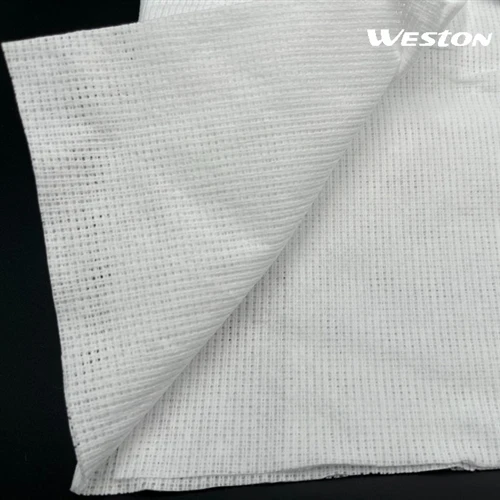
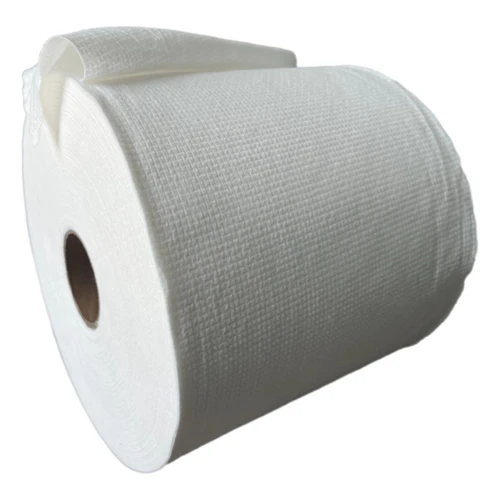
Spunlace fabric (technically called hydroentangled nonwoven) is made by shooting fine, high-pressure water jets through layers of loose fiber - typically polyester, viscose, or a blend. The jets physically tangle the fibers together without any chemical binder or thermal bonding.
Why does that matter? Because the fiber structure that results is fundamentally different from both woven cloth and paper:
No grain direction. Woven fabrics have warp and weft - a structural axis where tear can propagate. Spunlace has randomized fiber orientation, so a sharp edge that punctures one fiber can't "unzip" the cloth along a seam.
No binder to dissolve. Paper towels lose up to 70% of their dry strength when wet. Spunlace retains the majority of its tensile strength in wet conditions because the fiber entanglement - not a chemical adhesive - is what holds it together.
Low lint by design. With fibers mechanically locked rather than loosely interlaced, spunlace sheds significantly fewer particles than woven alternatives. Lab tests comparing wipe types on polished steel surfaces show spunlace leaving approximately 3–5 fiber deposits per 100 cm², versus 20–40 for standard cotton rag.
A practical comparison worth keeping in mind:
|
Wipe Type |
Wet Tensile Strength |
Lint Level |
Abrasion Resistance |
|
Paper towel |
Low (drops ~70% when wet) |
Medium |
Very low |
|
Woven cotton rag |
Medium |
High |
Medium |
|
Spunlace nonwoven |
High (retains ~80–90% when wet) |
Very low |
High |
These aren't marketing figures - they reflect standard nonwoven industry test benchmarks (EDANA/INDA test methods for tensile, lint, and abrasion).
Where the Difference Shows Up in Real Use
The gap between a standard rag and a purpose-built workshop cleaning cloth becomes most visible in three scenarios:
CNC machine wipedown after a run. Fine aluminum dust mixed with coolant is one of the toughest combinations for any wipe. The coolant makes paper wipes fall apart immediately; the aluminum particles tear cotton rags. A spunlace cloth with a polyester-viscose blend handles both: the polyester provides structural resistance, the viscose absorbs the coolant without the cloth collapsing.
Bench work with steel filings. Steel filings from hand-filing or grinding are among the sharpest shavings in a workshop. In a documented case study from a mid-size tool and die shop, switching from cotton shop towels to a 70gsm spunlace metal shavings wipes reduced cloth consumption by approximately 40% per shift, simply because the cloths survived full tasks instead of tearing halfway through.
Precision parts cleaning before assembly. Here, lint matters more than anything else. A single fiber on a hydraulic valve seat can cause a leak. Spunlace wipes that work for this application typically specify lint counts below 5 particles per cm² - achievable with a well-made hydroentangled nonwoven, not with most cotton alternatives.

Not All Spunlace Is Equal - What to Actually Look For
Spunlace is a manufacturing process, not a single product. The end result varies significantly depending on fiber blend, fabric weight, and finishing.
Fiber blend: Polyester-dominant blends (e.g., 70% polyester / 30% viscose) offer higher tear resistance and are better for abrasive applications. Viscose-heavy blends are softer and more absorbent - better for wiping down finished surfaces or soaking up coolant, but less tough against sharp chips.
Fabric weight (gsm): For heavy-duty metalworking tasks, 60–80 gsm is a practical range. Below 50 gsm, the cloth may still tear under concentrated shaving loads. Above 90 gsm, the cloth becomes stiffer and less maneuverable in tight spaces.
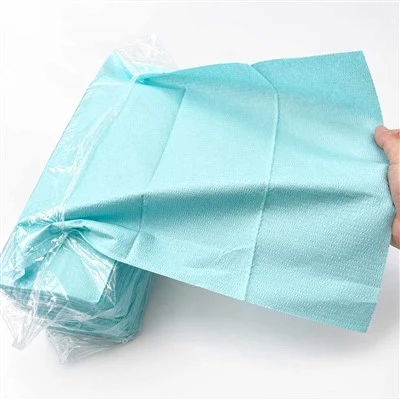
Surface texture: Embossed spunlace has a micro-textured surface that creates small channels, helping to capture and hold particles rather than pushing them around. For metal shavings wipes, embossed surface is generally preferable to flat.
Dry vs. pre-moistened: Dry spunlace cloths give the user control over what solvent or cleaner to add, which is important when working with surfaces that are sensitive to specific chemicals. Pre-moistened versions (often with isopropyl alcohol or light degreaser) suit quick post-run wipedowns but offer less flexibility.
Manufacturers who specialize in industrial textiles - such as Industrial Heavy Duty Oil Wipes Manufacturer Weston Nonwoven - typically offer technical data sheets specifying tensile strength in both dry and wet conditions, lint particle counts, and compatibility with common metalworking fluids. If a supplier can't provide those numbers, that tells you something.
The Practical Takeaway
The reason most workshop wipes fail with metal shavings has nothing to do with effort and everything to do with structure. Paper tears because it has no fiber entanglement. Woven cloth smears because it has directional structure and open weave. Spunlace works because its randomized, mechanically bonded fiber network resists puncture, retains strength when wet, and releases almost no lint onto the surfaces being cleaned.
For anyone doing regular metalwork - whether that's a single-person shop or a production floor running three shifts - the right workshop cleaning cloth is less about brand and more about understanding what the material is actually made of and whether it was designed for abrasive, oily, particulate-heavy conditions.
The physics don't change. The shavings are still sharp. The only variable is whether the cloth you're holding was built to handle them.
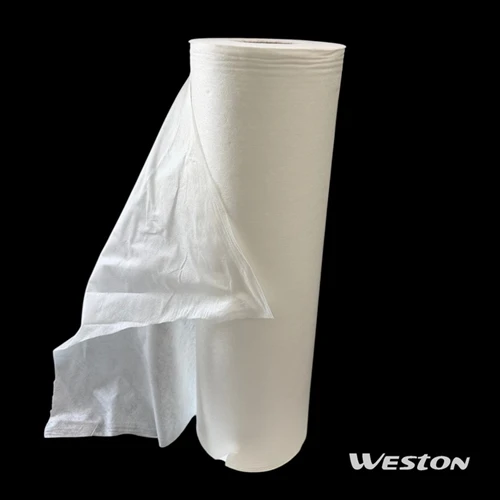
Weston Nonwoven produces hydroentangled spunlace fabrics across a range of weights and fiber blends, including rolls and pre-cut formats suited for industrial cleaning applications. Technical specifications are available on request.