There's a moment in every precision operation when cleanliness stops being a housekeeping chore and becomes a design parameter. That moment is where the ISO cleanroom standard lives. It turns "clean enough" into a quantifiable target, a shared language between engineering, QA, purchasing, and operations. If you buy, build, or validate controlled environments, understanding this standard is how you align stakeholders, control risk, and scale with confidence.
The Core Standard in One Sentence
The internationally recognized framework for cleanroom air classifications is the ISO cleanroom standard that classifies air cleanliness by airborne particle concentration. In practice, when people say "the ISO standard for cleanrooms," they mean the part of the ISO cleanroom family that assigns classes-ISO 1 through ISO 9-based on how many particles of defined sizes are allowed in each cubic meter of air.
That single statement carries a lot of power: it ties your environment to measurable particle limits, links your monitoring plan to a defensible sampling strategy, and frames every materials choice-wipes, garments, swabs, packaging-as a contributor to a particle budget you can actually manage.
How Classification Works
Particle sizes and limits: The standard uses discrete particle size thresholds (for example, 0.1 μm, 0.2 μm, 0.3 μm, up to several micrometers) and sets maximum allowable particle concentrations for each ISO class. Lower class numbers permit fewer particles-ISO 1 and 2 are extraordinarily clean; ISO 8 and 9 are far less stringent.
Sampling and statistics: You sample at defined locations, using calibrated optical particle counters, for sufficient time and air volume to make statistically meaningful conclusions. You then compare the measured concentrations to the class limits for the sizes you count.
Room states: You classify in a declared state-"as-built" (empty), "at-rest" (equipment installed, idle), or "operational" (working conditions). Your state choice must match how you intend to run and verify the room.
Locations and representativeness: Points are chosen to represent the risk across the room, factoring airflow patterns, personnel activity, and process criticality.
This is not a vague hygiene score. It is a numeric, auditable measurement framework for air cleanliness by particle concentration.
The Meaning Behind ISO 1–ISO 9
ISO 1–3: Extreme cleanliness. Particle counts are so low that even small disturbances can alter the profile. These zones are limited, expensive to maintain, and typically reserved for the most sensitive optics, nanofabrication, or metrology.
ISO 4–5: High-control environments for critical assembly, advanced electronics, and precision coating. Unidirectional airflow over critical work zones is common. Materials selection (especially wipes and garments) materially influences yield here.
ISO 6–7: Broadly used for clean assembly, medical device manufacturing steps, pharmaceutical support spaces, and precision machining near sensitive stages.
ISO 8–9: Controlled environments for general clean manufacturing and staging. Useful for pre-clean, packaging, and buffer spaces.
The class is not a badge; it's an operating decision with real implications for architecture, equipment, workflows, and consumables.

What the Standard Does-and Doesn't-Cover
What it does:
Defines classes by airborne particle concentration, based on size-specific limits.
Specifies how to sample, how much air to sample, and how to evaluate results.
Provides a common language for facility design, operations, and procurement.
What it doesn't:
It does not set rules for viable (microbial) contamination-that's another domain of control and test methodology.
It does not prescribe humidity, temperature, or electrostatic control, though these strongly influence contamination behavior.
It does not dictate cleaning methods or materials; it simply sets particle targets that your cleaning system must help you meet.
Understanding these boundaries keeps your program honest. Air classification is necessary-but not sufficient-to assure your product's cleanliness.
Why Professional Buyers Should Care
Every consumable you specify-especially wipes-either supports or sabotages your classification. The standard's particle limits translate into a surface-cleanliness economy: minimize particle generation, capture what's generated, and prevent re-deposition. That means:
Selecting fabrics engineered for low shedding and low nonvolatile residue.
Choosing edge technologies that don't unravel under scrub force.
Matching wipe chemistry to surfaces and solvents to avoid extractables, swelling, and haze.
The buying decision is a technical decision. And it pays dividends in yield, fewer deviations, and cleaner audits.
Measurement Discipline That Stands Up in the Real World
Calibration and method fidelity: Instruments must be maintained and used consistently-same flow rates, same isokinetic probes, same positioning relative to airflow.
Seasonal and shift variability: Re-verify under different loads and seasons. Human occupancy and HVAC behavior can shift particle backgrounds.
Event-driven checks: After maintenance, layout changes, or material switches, validate that particle behavior remains within class.
Trend, don't just test: A one-time pass is brittle. Ongoing trending reveals drift before it becomes nonconformance.
When you build your procedures on these habits, your classification isn't a snapshot-it's a stable operating state.
Pros and Cons of Designing to a Specific ISO Class
Advantages:
Yield protection: Lower particle baselines reduce random defects in sensitive processes.
Process headroom: Tighter control expands tolerances for sensitive steps-bonding, coating, lithography, and high-precision assembly.
Customer confidence: Demonstrable cleanliness opens doors to higher-spec work.
Constraints:
Energy and airflow cost: Higher classes demand more filtration, more stable airflow, and disciplined pressure cascades.
Training intensity: At high classes, people are the main contamination vector; procedures must be learned, practiced, and audited.
Material discipline: Not all fabrics, adhesives, labels, or lubricants are suitable; procurement must maintain tight specs and change control.
Trade-offs to weigh:
Full-room unidirectional airflow vs. localized clean zones: Localized flow often captures most of the benefit at lower footprint and energy cost.
One-size wipes vs. task-specific wipes: Consolidation simplifies inventory but forces compromises that increase contamination risk in critical tasks.
Presaturated vs. dry wiping: Presats boost consistency; dry wipes with controlled dispense add flexibility. Many operations use both, each in its best role.
Turning Particle Limits into Operational Controls
Zoning and cascades: Place cleaner cores within less-clean shells and enforce door discipline. The fewer transitions, the better.
Airflow choreography: Keep critical tasks under clean flow, with layouts that minimize turbulence, crossflows, and operator backflows.
Gowning discipline: Fabrics, donning order, and movement patterns matter as much as filter ratings.
Cleaning routines that mirror risk: More frequent, more focused cleaning where particle generation is highest.
These controls become invisible when done well-because your metrics stay boringly stable.
Materials Science of Wipes, Applied to ISO Classes
Your wipe is not a rag; it's a functional tool engineered for particle capture, solvent handling, and residue control. Choosing correctly translates directly into stable ISO performance.
Wipe families and where they fit:
Knitted polyester (often sealed-edge): Ultra-low shedding, chemically compatible, excellent for product-contact and tool-side critical zones. This is the heartland for truly critical tasks and aligns with the demands of ISO Class 4 Cleanroom Wipes.
Advanced microfiber: Micro-scale filament geometry increases contact area and submicron soil capture. When engineered for low lint with sealed edges, it excels at removing fine films and dust with fewer passes.
Meltblown polypropylene (low-lint variants): High surface area, fast uptake; best reserved for non-contact tasks unless validated for your use case and solvents due to potential residue profiles in some constructions.
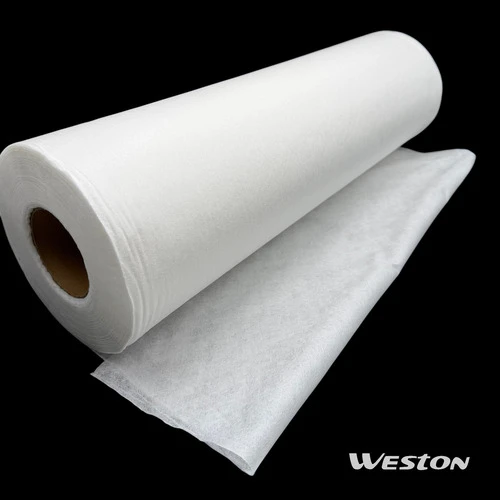
Woodpulp/spunlace blends: Strong, absorbent, and efficient for gross cleaning, prep, and equipment housings. When engineered and perforated in roll form, they serve workflow agility in printheads, rollers, and staging-see brand-neutral equivalents of Woodpulp Spunlace Perforated Roll Lint Free Wipes For Printer Cleaning.
Lyocell-enhanced nonwovens: Cellulose-derivative performance with improved lint control; useful in adjacent zones and non-product-contact tasks when validated.
Performance dimensions that matter:
Particle and fiber shedding under dry and wet abrasion.
Nonvolatile residue and solvent extractables.
Ionic cleanliness relative to your metals and dielectrics.
Edge integrity (laser- or heat-sealed edges for scrubbing).
ESD behavior under your humidity and wipe cadence.
Packaging and double/triple bagging for clean transfer.
Presaturated vs. dry strategy:
Presaturated wipes deliver dosing consistency and reduce bottle-to-surface risks. They stabilize evaporation profiles and pass counts.
Dry wipes with controlled dispense maintain flexibility for step-specific chemistries and dry-polish passes.
The right answer is rarely "one wipe for all." Assign the right wipe to each task class, and your ISO class compliance gets much easier to maintain.
A Practical Framework for Selecting Wipes by ISO Class
Define the contamination budget: Start with the allowable particle levels for your class and process. Back-solve for wipe shedding rates and usage frequency.
Map tasks into zones: Product-contact under clean flow, tool frames under flow, adjacent support, and outer staging. Each zone gets a defined wipe family.
Validate in your chemistry: Measure NVR and streaking on your actual surfaces and solvents. Lab certificates alone don't ensure field performance.
Lock edge technology: Sealed edges for any scrubbing motion in high classes; avoid perforated or cold-cut edges for critical tasks.
Standardize SKUs and motions: Fewer variables; clearer training; better results.
When you standardize this way, inspections go smoother and operators move faster with fewer mistakes.
Misconceptions That Cost Money
"More filters solve everything." Cleanliness is a system. Turbulence, people, and materials choices will defeat overbuilt filtration if mismanaged.
"If it passed once, it's fine." Classification without trending invites surprises.
"One wipe can do it all." It can't-unless you accept either unnecessary risk on critical surfaces or unnecessary time on non-critical ones.
"Dry wiping is always safer." Tribocharging and re-deposition can spike when you dry wipe in low humidity on glossy surfaces.
Clear thinking here prevents expensive fixes later.

Monitoring That Mirrors Risk
Critical zones: Higher frequency, longer sampling intervals, targeted sizes. Consider more points over product-contact areas.
Support zones: Lower frequency, sentinel locations near doors and returns.
Event logs: Correlate particle bursts with activities-door cycles, pack opening, solvent changes, equipment heat-up. Then engineer them out.
This approach builds a cause-and-effect map you can actually use.
Choosing Your Target Class Without Drama
Align your class to three realities:
Sensitivity of your product and steps: What particle sizes and counts create defects?
Volume and variability: What throughput and human activity will the space see?
Control levers you own: Airflow architecture, materials discipline, and training capacity.
Many operations find that a hybrid layout-localized high-class zones inside a more modest shell-hits the sweet spot for performance and cost.
From Paper to Practice: A Cleanroom Startup Playbook
Baseline: Measure current particle levels in candidate spaces, with and without people. Learn the native behavior before you spec.
Design-in control: Place critical tasks under unidirectional flow; shorten reach paths; seal cable penetrations; avoid particle-trapping seams.
Materials gate: Approve wipes, garments, mats, and swabs as a package-not in isolation. Test them together under motion.
SOPs with intent: Write wipe motions into procedures-directional passes, fold discipline, pass counts, and solvent dosing.
Train and audit lightly but often: Micro-corrections keep the system on track without heavy bureaucracy.
Trend from day one: Particles per sample, residues per surface, wipe consumption per task. Trends reveal both problems and opportunities to streamline.
Do this well, and your classification stays intact when the room is full, not just when it's empty.
Where Weston Nonwoven Fits
For buyers who want materials that align with the demands of the ISO cleanroom standard, Weston Nonwoven factory develops wipe systems engineered for ultra-low shedding, low residue, and disciplined packaging that respects zone hygiene.
ISO Class 4 Cleanroom Wipes: Sealed-edge, low-NVR constructions for product-contact and tool-side work under unidirectional flow.
Advanced microfiber and low-lint knits: Designed for submicron soil capture without compromising shedding behavior, ideal for film and display work in high-control zones.
Brand-neutral meltblown low-lint options: For validated non-contact tasks and solvent-compatible cleanup where speed matters.
Printer Cleaning Wipes: Efficient, strong, and absorbent rolls tailored for equipment housings, rollers, and print paths in support and staging areas.
If you need to validate fit in your process, request a free sample set at info@westonmanufacturing.com. Trials in your chemistry and motion profiles are the fastest route to confident standardization.
The Buyer's Bottom Line
The ISO cleanroom classification standard gives you a clean, shared language for air cleanliness. But language alone doesn't drive yield-choices do. The class you declare sets targets; your architecture, people, and materials either hit them or miss them.
Treat wipes as the instruments they are. Engineer your airflow, choreograph your motion, and standardize your consumables. When all three align, your room runs quiet, your metrics stay boring, and your audits become predictable.
If your next step is a materials refresh that matches the rigor of your class, Weston Nonwoven factory can help with task-specific wipe families-spanning ISO Class 4 Cleanroom Wipes for critical zones and Wood Pulp Spunlace Nonwoven Perforated Roll for robust support work. To explore options or arrange a free sample evaluation, contact info@westonmanufacturing.com.