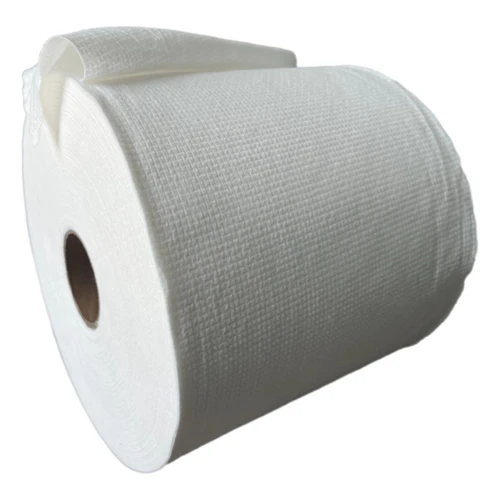
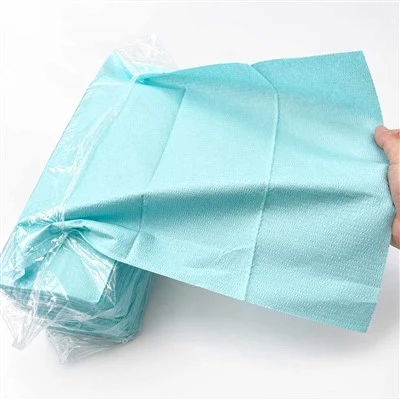
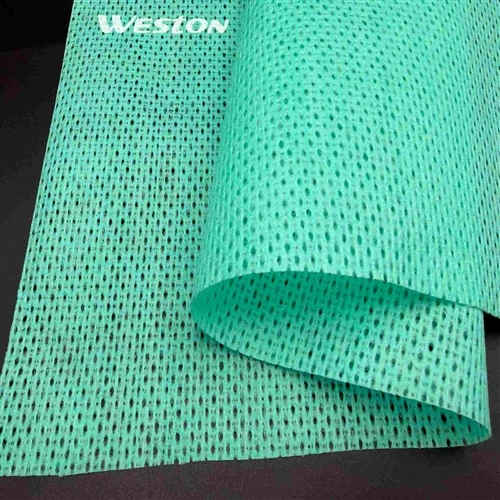
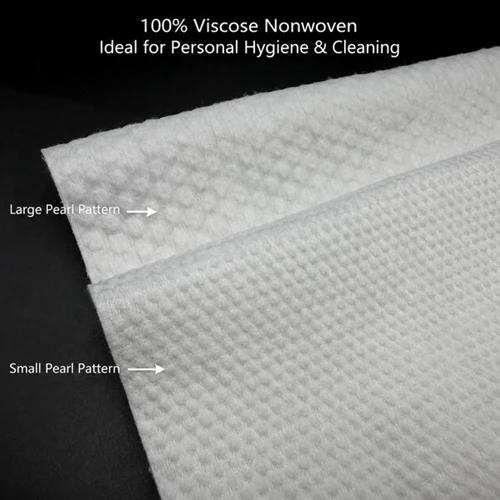
Spunlace nonwoven-also known as hydroentanglement-has become a cornerstone substrate across hygiene, beauty, medical, household, and technical wiping applications. For manufacturing procurement managers, the value proposition goes beyond "soft and strong." It hinges on process control, material traceability, sustainability, and durability in the field. This article provides a rigorous, procurement-oriented overview of the Hydroentanglement spunlace fabric manufacturing process, highlighting process steps, key control parameters, quality checkpoints, and how the right engineering decisions translate into environmental benefits and long service life. Throughout, we reference best practices implemented by manufacturers such as Weston Nonwoven to illustrate how disciplined operations convert fiber science into dependable, repeatable performance.
1) What Spunlace (Hydroentanglement) Is
Spunlace is a binder-free nonwoven created by mechanically interlocking fibers using high-energy water jets. Unlike thermal or chemical bonding, hydroentanglement relies on kinetic energy to entangle fibers within and across the web thickness. The result is a fabric that combines:
Soft hand and drape (suitable for direct skin contact).
High wet and dry strength for its basis weight.
Low lint potential when engineered correctly.
Excellent absorbency and fluid management.
Compatibility with a wide range of fibers, including plant-based and biodegradable options.
For procurement, this means a versatile platform whose performance can be tuned via fiber selection, web forming parameters, jet energy, and post-treatment-without relying on binder chemistries that may complicate recyclability or end-of-life pathways.
2) Process Flow Overview (Step-by-Step)
Below is a plain-language flow diagram to visualize the manufacturing sequence for Hydroentanglement spunlace fabric. It abstracts the core steps seen in modern lines.
Process Flow Diagram (Textual)
Raw Fiber Preparation
Fiber selection and mixing
Bale opening and blending
Humidity conditioning and contaminant control
Web Forming
Carding (single or tandem)
Crosslapping (to build basis weight and isotropy)
Direct-layering alternatives (airlay/wetlay integration when required)
Pre-wet (optional for dust suppression and web cohesion)
Hydroentanglement (Water-Jet Needling)
Multi-manifold high-pressure jets
One-sided and two-sided entanglement
Patterning drum/screen selection
Energy profiling across passes
Dewatering and Drying
Vacuum dewatering
Through-air or cylinder drying
Tension control for dimensional stability
Finishing and Functionalization
Calendering/embossing (optional)
Surface treatments (if required by application)
Slitting, sheeting, and rewinding
In-line inspection and QA
Packaging and Logistics
Roll/wipe format conversion
Cleanroom handling (for critical applications)
Traceability and palletization
3) Raw Fiber Selection and Preparation
Fiber choice underpins performance, sustainability, and regulatory compliance.
Cellulosic options (viscose, lyocell, wood pulp): Deliver high absorbency, good wet strength (particularly lyocell), skin comfort, and biodegradability. Lyocell's microfibrillar structure contributes to wet modulus and low-lint potential when properly entangled.
Synthetic options (polyester, polypropylene, bicomponent fibers): Contribute resilience, dimensional stability, and solvent compatibility; may aid thermal pattern retention if combined with light thermal calendering.
Blends: Common to balance absorbency (cellulosics) and durability (synthetics), or to optimize cost/weight. Pulp/lyocell and viscose/polyester are frequent combinations.
Additives: If used, typically limited to process aids or post-finishes compatible with the intended application (e.g., hydrophilicity control, cosmetic-grade lotions for wipes, antistatic agents for industrial formats). Procurement should ensure safety and compliance documentation for all additives.
Preparation steps:
Bale opening and blending achieve homogeneous fiber distribution.
Metal detection and contaminant removal protect downstream jets and screens.
Conditioning controls moisture to stabilize fiber handling and carding efficiency.
For wetlaid-integrated lines, fiber slurries are dispersed and refined to target fiber length distribution and formation.

4) Web Forming: Carding and Crosslapping
Carding individualizes fibers and aligns them into a thin carded web. Key levers:
Card clothing specification aligns with fiber length and denier.
Drafting settings control orientation and uniformity.
Web weight at the card exit is typically low; crosslapping builds the final basis weight and controls isotropy.
Crosslapping deposits multiple layers in a "zig-zag" manner, enabling:
Basis weight range from lightweight cosmetic pads to heavy-duty industrial wipes.
Strength balance in machine direction (MD) and cross direction (CD).
Foundation for texture and pattern fidelity during hydroentanglement.
For highest uniformity, multi-card systems feed into precision crosslappers with controlled laydown speeds and edge alignment algorithms. Procurement should look for statistical formation metrics and real-time basis weight monitoring.
5) Hydroentanglement: Core Mechanics and Controls
Hydroentanglement, or water-jet needling, delivers the defining properties of spunlace.
Mechanism:
Arrays of fine orifices eject high-pressure water micro-jets (often 30–250 bar depending on manifold and substrate) onto the moving web, imparting momentum that drives fibers into three-dimensional entanglement.
The web passes over a support (plain mesh or patterned drum). The mesh transmits water while mechanically supporting the web; patterned screens induce texture and point-bond-like effects without binders.
Multiple manifolds on each side of the web allow energy staging-lower energy early to gently consolidate, higher energy later to complete through-thickness entanglement and pattern definition.
Key control parameters:
Jet pressure and energy profile per manifold.
Orifice diameter, density, row spacing, and maintenance cleanliness.
Line speed versus total energy (kWh/kg or MJ/kg equivalent).
Support screen pattern, open area, and water drainage characteristics.
Web moisture content entering the first manifold.
Temperature and filtration of process water.
Water quality and sustainability:
Closed-loop water systems with multi-stage filtration (sand, activated carbon, microfiltration/ultrafiltration) and, where needed, reverse osmosis safeguard jet performance and reduce consumption.
Heat recovery from warm process water can lower dryer energy demand.
Proper loop management minimizes microbial growth and maintains consistent surface finish.
6) Dewatering, Drying, and Tension Control
Post-entanglement, the web carries significant water. Efficient removal is critical for energy and dimensional stability.
Vacuum slots or boxes remove bulk water immediately downstream of the last jet.
Press nips may be used cautiously; excessive compression can harden the hand and reduce bulk.
Drying options:
Through-air drying: Air passes through the web; gentler on bulk, good for lofty or textured fabrics.
Cylinder drying: Contact with heated cylinders; efficient for compact fabrics and higher line speeds.
Tension control: Closed-loop drives maintain stable web tension to avoid distortion and ensure consistent MD/CD strength balance.
Energy and environment:
Insulated dryers, variable frequency drives (VFDs), and optimized exhaust/recirculation reduce energy consumption.
Monitoring specific energy (kWh/kg) enables benchmarking and continuous improvement.
7) Finishing, Surface Engineering, and Conversion
Depending on the end use, finishing may be minimal or highly engineered.
Calendering/embossing: Adjusts thickness, surface smoothness, and tactile properties. Light calendering can reduce lint shed by consolidating stray fibers.
Functional finishes: Hydrophilicity tuning, lotion addition for cosmetic wipes, antistatic for industrial environments, or low-lint finishes. All should be evaluated for skin contact safety, VOCs, and end-of-life compatibility.
Slitting and rewinding: Precision edges reduce lint and dust. Core quality and roll geometry affect downstream runnability in high-speed converting.
Sheeting and packaging: Cleanroom or controlled environments are used for medical/cosmetic grades. For consumer wipes, flow-wrap or canister-ready rolls are prepared.

8) Quality Assurance: What Procurement Should Require
A robust QA framework ensures consistency lot-to-lot:
Basis weight (gsm): On-line sensors and off-line gravimetric checks with defined tolerances.
Tensile strength and elongation (MD/CD): Dry and wet, with test methods specified (e.g., ISO/EDANA/ASTM).
Absorbency: Total capacity (g/g), rate (s), and rewet; relevant for wiping and personal care.
Lint and particulate release: Industry-standard tests (e.g., Helmke drum, IEST protocols for critical environments).
Thickness and density: Under defined load; correlates with hand and absorbency.
Surface cleanliness/bioburden: For hygiene or cosmetic grades; includes micro limits and EO sterilization compatibility where applicable.
Visual and surface integrity: Fuzz, holes, streaks; camera inspection systems preferred.
Chemical compatibility: Spot tests with target solvents or solutions for industrial wipes.
Weston Nonwoven emphasizes traceability from fiber lots to finished rolls, with digital batch records, in-line defect mapping, and retention samples to support audits and corrective actions.
9) Durability: Translating Process into Performance
Durability in spunlace is a function of:
Fiber selection: Lyocell and certain viscose grades elevate wet strength; fine denier synthetics raise abrasion resistance.
Entanglement depth: Sufficient through-thickness entanglement reduces delamination and linting during use.
Basis weight and density: Heavier, denser webs generally resist tearing and edge fray, but must be balanced against softness and flexibility.
Finishing: Calendering and controlled embossing can lock fibers, reducing particle shed without sacrificing absorbency.
In the field, durable Hydroentanglement spunlace fabric maintains integrity when soaked, wrung, or used with common cleaning solvents. For single-use contexts, durability translates into fewer wipes needed per task, reducing overall material consumption.
10) Environmental Considerations: Design for Sustainability
Spunlace technology aligns well with environmental objectives when responsibly engineered:
Binder-free construction: Eliminates resin binders, aiding recyclability in applicable streams and improving compostability when cellulose-only blends are used.
Fiber strategy: Plant-based, renewable fibers (viscose from responsibly managed forests, lyocell with closed-loop solvent recovery, and wood pulp) improve the product's bio-based content and biodegradability.
Water stewardship: Closed-loop water recirculation, filtration, and heat recovery cut consumption and emissions.
Energy efficiency: Optimized drying, VFDs, and heat integration lower the carbon footprint per kilogram of fabric.
End-of-life: For products designed to be biodegradable, maintain compatibility by avoiding persistent finishes and synthetic-heavy blends; provide clear disposal guidance (e.g., not flushable unless certified).
Weston Manufacturing prioritizes cellulosic-rich recipes for applications where biodegradability is valued and designs finishes that do not impede end-of-life pathways.
11) Applications and Procurement Notes
Personal care and beauty: Lint-free pads and wipes require tight control of fiber length distribution, high entanglement density, and clean conversion. Cosmetic-grade compliance (ISO 22716, microbiological limits) may apply.
Household and institutional wiping: Balance absorbency and strength; consider textured patterns for debris pickup and oil handling. Verify compatibility with common cleaners and disinfectants.
Industrial wipes: Low-lint, solvent compatibility, and particle cleanliness are critical; select blends and finishes accordingly. Packaging should minimize contamination.
Medical and healthcare: Subject to regulatory oversight and sterilization methods (e.g., gamma, EO). Material selection and residuals must be compatible with sterilization and clinical use.
Procurement Checklist:
Define gsm, thickness, tensile targets (dry/wet), absorbency metrics, and lint class.
Specify fiber composition including sustainability requirements (e.g., FSC-certified viscose, lyocell content).
Request process water quality specs and environmental management certifications (e.g., ISO 14001).
Require CoA with test methods, lot traceability, and retention sample policy.
Audit finishing and conversion environments for cleanliness and foreign matter controls.
12) Text-Based Flowchart: Spunlace Manufacturing at a Glance

13) Practical Tips for Procurement Managers
Anchor specifications to performance contexts: Define not just gsm but also target tasks (oil pickup vs. aqueous spill, skin contact vs. industrial cleaning).
Validate wet performance: Request wet tensile and tear data at realistic soak times and with relevant solvents.
Inspect lint performance early: Pilot runs with your converting and end-use environments can reveal lint or edge fray issues before scale-up.
Engage on sustainability: Ask for fiber provenance (FSC/PEFC), lyocell content, and energy/water intensity benchmarks. Favor binder-free constructions for better end-of-life options.
Plan for consistency: Require SPC reports on gsm and tensile; variability often drives downstream waste and complaint rates.
Consider patterning: Emboss and pattern can enhance grip and debris capture without additives; align with your end-use ergonomics.
Spunlace (hydroentangled) nonwoven is a precision-engineered fabric platform whose performance arises from the interplay of fiber science, web formation, jet energy management, and disciplined finishing. For procurement managers, the essential questions are about traceable inputs, controlled processes, and verifiable outputs-not only initial handfeel. When the manufacturing chain is optimized-beginning with sustainable fiber choices and extending through closed-loop water systems, energy-efficient drying, and rigorous QA-the result is a Hydroentanglement spunlace fabric that is soft, strong, low-lint, and environmentally responsible.
Weston Nonwoven exemplifies this approach by aligning fiber selection with application goals, investing in water and energy stewardship, and enforcing statistical control at each step. The outcome is durable performance in both wet and dry states, with minimized environmental burden across the product life cycle. As you evaluate suppliers and specifications, prioritize binder-free constructions, sustainable fiber portfolios, robust water management, and documented quality systems. These pillars ensure that the spunlace you buy performs reliably in service while supporting your organization's sustainability commitments.