The Core Distinction: Process Fundamentals
Coated fabrics are created through a unidirectional modification of a base substrate. A liquid or semi-liquid coating material-such as solvent-based PVC, waterborne polyurethane, or heat-curable latex-is uniformly applied to the surface of a base fabric (typically woven, knitted, or nonwoven) via processes like knife coating, roller coating, or dip coating. The coating then undergoes curing (via thermal drying, UV irradiation, or chemical cross-linking) to form a contiguous, integral layer that bonds molecularly with the base. This results in a monolithic structure where the coating and base function as a single, inseparable entity.
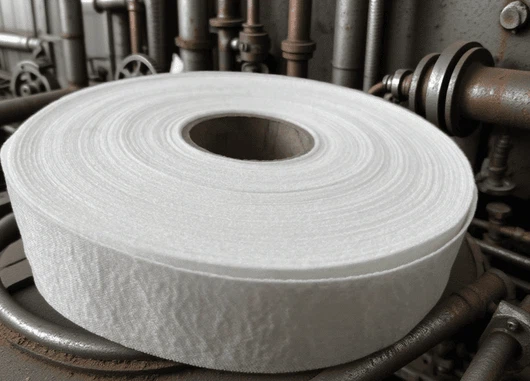
Laminated fabrics, by contrast, involve the mechanical or chemical bonding of two or more discrete layers. These layers may include fabrics, films (polyethylene, polypropylene), or nonwovens, and are joined through methods such as thermal lamination (melting of thermoplastic layers under pressure), adhesive lamination (application of reactive adhesives), or ultrasonic bonding (mechanical fusion via high-frequency vibrations). The key distinction lies in the preservation of each layer's intrinsic properties, with performance derived from the synergistic interaction of distinct components rather than molecular integration.
Performance Parameter Contrasts
In terms of barrier properties, coated fabrics exhibit homogeneous resistance to liquids and chemicals due to their continuous coating layer. For instance, PVC-coated fabrics typically demonstrate a liquid penetration resistance of less than 0.1 mL/min under standard pressure, making them suitable for scenarios requiring absolute impermeability. However, their flexibility is constrained by the coating's modulus; thick coatings may exhibit reduced elongation at break (often 10-30% for rigid coatings).
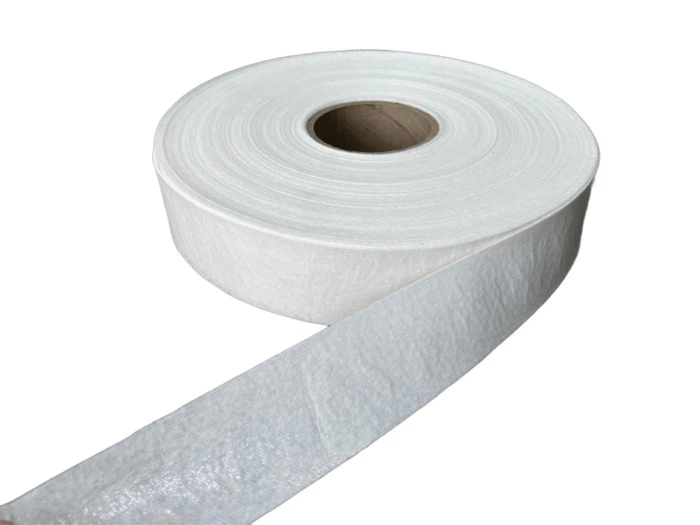
Laminated fabrics, with their multi-layer architecture, offer tunable barrier performance. A Needle Punched Laminated Polyester Nonwoven, for example, combines a needle-punched polyester nonwoven base (with inherent porosity) and a thin polyethylene film layer. This structure achieves selective permeability-allowing vapor transmission (300-500 g/m²/24h) while blocking liquid water, a trait unattainable with coated fabrics. Their tear resistance, averaging 20-50 N in the cross-machine direction, surpasses coated alternatives due to the reinforcing effect of interlayer bonding.
Application Scenarios: Boundaries and Specializations
Coated fabrics are irreplaceable in applications demanding a seamless, non-porous barrier with precise surface properties. Automotive seat covers rely on polyurethane-coated fabrics for their abrasion resistance (≥50,000 cycles per ASTM D4157) and stain repellency. Chemical processing equipment linings utilize PVC-coated fabrics for their resistance to acids (pH 2-12) and organic solvents, a performance envelope laminated fabrics cannot replicate due to potential interlayer delamination under chemical exposure.
Laminated fabrics dominate in scenarios requiring balanced multi-functionality. Industrial Packaging Laminated Nonwoven Fabric integrates a high-tensile polyester nonwoven layer with a low-density polyethylene film, achieving both puncture resistance (≥30 N) for heavy cargo and moisture barrier properties (WVTR ≤5 g/m²/24h) for humidity-sensitive goods. Meltblown Nonwoven For Disposable Wet Wipes employs lamination of meltblown microfibers with spunbond layers, balancing capillary absorption (≥8 g/g) for fluid retention and tensile strength (≥20 N/5cm) for handling durability-attributes unachievable with coated nonwovens, which would block liquid transport.
Material Integrity and Durability Mechanisms
Coated fabrics derive durability from the chemical bond between coating and substrate, but this creates a single point of failure: coating degradation (e.g., UV-induced embrittlement in unprotected PVC) directly compromises the entire structure. Their service life is typically tied to coating thickness, with 0.1-0.5mm coatings lasting 5-10 years in outdoor exposure.
Laminated fabrics utilize mechanical interlocking or adhesive bonding, distributing stress across layers. For example, Needle Punched Laminated Polyester Nonwoven employs fiber entanglement from needle punching combined with adhesive lamination, ensuring that localized damage to one layer does not propagate. This layered redundancy extends service life in dynamic applications-industrial laminates often exceed 15,000 cycles in flex testing without delamination.
For a detailed material specification sheet or to evaluate samples tailored to your application, contact us at info@westonmanufacturing.com.