ISO Class 4 is not a label-it is a promise. A promise that the air around your product carries virtually no particulate threat, that every surface is engineered for non-shedding hygiene, and that human and material behaviors are controlled to a level where "accidental" contamination becomes a statistical outlier rather than a daily risk. For a professional buyer, understanding what ISO Class 4 really means is about more than compliance or equipment lists; it is about designing a repeatable cleanliness economy-one that scales safely, audits cleanly, and sustains yield in a volatile production environment.
What ISO Class 4 Means in Practice
The air in an ISO Class 4 space holds extremely low particle concentrations-on the order of hundreds of particles per cubic meter at submicron sizes. In practical terms, this is an environment where even transient turbulence or a single poor material choice can measurably disturb the particle profile.
Humans are the primary contamination source. Every gram of fiber shed, every sweep of a cloth, every touch-point matters. ISO Class 4 is the domain where your material science choices (wipes, garments, mats, swabs) are as consequential as your filtration system.
Unidirectional airflow (UDAF) is common over critical zones, with carefully balanced velocities and a pressure cascade that isolates the cleanest core. Architectural and procedural discipline-not just filters-create the cleanliness.
"Static clean" is not enough. ISO Class 4 is a dynamic control problem: people move, tools heat and cool, solvents evaporate, charge accumulates. You manage a moving system, not a static room.
Air and Architectural Fundamentals You Can't Ignore
UDAF coverage: Critical work envelopes are typically protected by unidirectional flow across benches, hoods, or entire rooms. The goal is not maximum velocity; it is stable, uniform flow with minimal turbulence and predictable sweep of contaminants away from work.
Filtration strategy: You don't choose filters for their names-you choose for their total system performance under your airflow regime. At ISO 4, ultra-fine filtration is table stakes; equally crucial is the integrity, sealing, and leak-proof frame-to-ceiling interface.
Pressure cascade and zoning: ISO 4 cores typically sit inside cleaner-to-less-clean gradients. Door count, door-open time, and transfer choreography affect particle spikes more than many buyers expect.
Materials and finishes: Select low-shedding, non-porous, easily cleanable surfaces with rounded transitions. Every seam is a trap, every rough edge a fiber harvester.
People and motion: Ergonomics and layout are contamination controls. Short reaches, fewer pivot points, and line-of-sight tool placement reduce fabric abrasion and uncontrolled hand contact.
The Science of Surface Hygiene at ISO 4
The cleanroom wipe is a process tool, not a commodity. At ISO 4, wipe choice shapes your particle floor, your ionics background, your nonvolatile residue (NVR), and your electrostatic behavior.
Key performance dimensions:
Shedding and fiber integrity: Wipes must be truly low-lint. For the most critical ISO 4 work, sealed-edge knitted synthetics are the standard for a reason-they resist fray and resist fiber loss during aggressive strokes.
Extractables and NVR: Your wipe shouldn't bring residues to the surface you're trying to purify. Low-NVR formulations matter in optics, storage devices, microelectronics, and other residue-sensitive processes.
Ionic profile: Outgassed or leached ions can corrupt processes, corrode surfaces, or bias sensors. Know the ionics signature of your wipes and your solvents.
Absorbency and release: You need enough capillary uptake to capture micro-debris and enough controlled release to avoid streaks and re-deposition.
Tribology and texture: Micro-textured knits and microfiber geometries can improve submicron soil capture-but only if they remain ultra-low shedding.
ESD behavior: Tribocharging from wiping is a real risk. In many ISO 4 electronics workflows, pairing low-tribo wipes with controlled humidity and ESD-safe tools is essential.
Edge technology: Laser-sealed edges dramatically cut fiber release during scrubbing. Cold-cut nonwovens or perforated edges can compromise ISO 4 performance in critical zones.
Where materials fit:
Knitted polyester and advanced microfiber fabrics are go-to for the most critical ISO 4 contact tasks (especially with sealed edges).
Cellulose-derivative nonwovens-such as lyocell blends-can be surprisingly effective in non-contact or less-critical ISO 4 adjacent areas, thanks to absorbency and low lint when engineered carefully, but they must be vetted stringently before use in the most sensitive zones.
Presaturated vs. Dry: Control Beats Convenience
Presaturated wipes deliver process consistency: defined solvent volume, uniform wet-out, repeatable evaporation profiles, and a reduced risk of bottle-to-surface cross-contamination.
Dry wipes plus a controlled solvent dispenser give flexibility and may reduce chemical spend, but they rely heavily on operator discipline and dosing consistency.
At ISO 4, a hybrid pattern often wins: presats for critical tool-side work; dry wipes for non-product-contact utilities and final dry-polish passes.
Packaging, Transfer, and Point-of-Use Discipline
Layered packaging: Double- or triple-bagged formats allow peel-down at each boundary without exposing inner bags to dirtier zones.
Lot traceability: Consistent lot runs minimize variability in ionics, NVR, and particle shedding. Buyers should plan safety stock at the lot level to avoid mid-validation material changes.
Right-size the format: Oversized sheets deform easily, increasing drag and fiber stress. Choose sizes matched to reach envelopes and tool geometries.
Tool-side staging: Keep wipe packs within protected airflow. Avoid placing opened packs near turbulence sources, warm motors, or traffic aisles.
Pros, Cons, and Trade-Offs of Operating at ISO Class 4
Advantages:
Higher yield and narrower variance: Cleaner baselines translate to fewer random defects and tighter process control.
Expanded process window: Sensitive steps (bonding, coating, lithographic exposure, precision assembly) tolerate fewer unknowns.
Reputation and customer trust: Demonstrably cleaner operations open doors to premium projects.
Constraints:
Energy and airflow cost: UDAF coverage and high-efficiency filtration are power-hungry and require vigilant balancing.
Training overhead: People become process tools; onboarding and recurrent training need resourcing.
Material discipline: Buyers must manage a narrower supplier set, tighter specifications, and lot-to-lot consistency.
Hidden interactions: Solvent-wipe-surface chemistries can create residues or swelling; ESD risks rise with dry air; certain plastics leach under aggressive cleaning.
Practical trade-offs:
Max cleanliness versus operational agility: Over-specifying ISO 4 where ISO 5 suffices can constrain throughput; underspecifying risks yield.
Full UDAF room versus localized UDAF benches: Localized UDAF often captures 80–90% of ISO 4 benefit at lower energy cost for targeted processes.
Knit polyester versus advanced microfiber: Microfiber can capture submicron soils exceptionally well; knit polyester maximizes shedding control and chemical compatibility. The right answer depends on your surfaces and solvents.
A Buyer's Framework for Specifying ISO 4 Wipes

When ISO 4 is the target, wipe selection becomes a specification exercise. Build your spec around measurable attributes:
Particle and fiber release: Independent lab counts under wet and dry abrasion.
Extractables and NVR: Gravimetric residue after solvent extraction in your actual solvent system, not only water or IPA.
Ionics profile: Cations/anions relevant to your process metals and dielectrics.
Edge integrity: Laser- or heat-sealed edges preferred for scrubbing steps.
Basis weight and loft: Balance absorbency with low drag; avoid thick, fluffy constructions that snag.
Strength and abrasion resistance: Test under your real wipes-per-task count and contact pressure.
ESD behavior: Evaluate charge generation under your humidity and wipe cadence.
Pack format and cleanliness: Double-bag minimum, cleanroom-compatible interleaving, low-lint liners.
Presaturation chemistry (if used): Water grade, solvent grade, and packaging barrier compatibility to prevent evaporation and contamination.
Material Deep-Dive: Matching Fabric to Function
Knitted polyester (critical contact work)
Strengths: Ultra-low shedding, broad chemical compatibility, stable under aggressive scrub, low NVR when processed well.
Watch-outs: Lower absorbency than cellulose-based constructions; choose the right knit and finish to optimize pick-up without streaks.
Advanced microfiber (submicron soil capture)
Strengths: Increased contact points at fiber scale; exceptional pick-up of fine particles and films; can reduce wipe count per task.
Watch-outs: Must be engineered for ultra-low shedding; ensure sealed edges and validated NVR. Some microfiber blends can drag on high-gloss surfaces-pair with the right solvent.
Lyocell-containing nonwovens (adjacent-zone agility)
Strengths: High absorbency, fast uptake, soft hand; modern lyocell fibers can be engineered for low lint and reduced splintering compared with legacy cellulosics.
Watch-outs: For ISO 4 critical contact on product or tool optics, cellulose-derivative content requires stringent validation. Many buyers reserve it for anterooms, housings, and non-contact utilities where fast fluid control is prioritized.
Failure Modes Buyers Should Anticipate (and Prevent)
Edge fray: Cold-cut or perforated wipes shed under pressure. Sealed edges are not optional for critical ISO 4 scrubs.
Re-deposition: Over-wet passes can leave a thin film that later traps dust. Engineer pass counts and solvent volumes to avoid glossy residues.
Wipe chemistry mismatch: Solvents can extract plasticizers or dyes from handles, labels, and cable jackets-particles and organics follow.
Tribocharging: Dry wiping in very low humidity can charge surfaces, which then attract particles. Control humidity and consider low-tribo wipe constructions.
Pack opening in the wrong zone: A pristine wipe pack becomes a particle source if opened outside UDAF or in airflow shadows. Enforce point-of-use opening under clean flow.
Sustainability Without Sacrificing ISO 4
Material efficiency: Use microfiber or engineered knits that reduce wipes-per-task without raising shedding risk.
Right-sizing: Smaller wipes for small features; reduce waste by matching to task geometry.
Thoughtful use of lyocell blends: Where appropriate and validated (e.g., outer housings, staging, peripherals), lyocell-based wipes can reduce environmental burden while sustaining low-lint performance.
Packaging optimization: Specify recyclable secondary packaging and rational pack sizes to limit open-time waste.
Validating the Wiping Process, Not Just the Wipe
Surface-centric metrics: Focus on what matters-how much contamination remains on the surface after a defined task. Use gravimetric film residue checks, optical scatter, or application-specific surrogates where appropriate.
Task realism: Create representative motion paths, pressures, and stroke counts in validation. A lab rub test alone does not prove field performance.
Operator variation: Document best-practice motions and train for them. Even the best wipe sheds more if mishandled; even the best solvent streaks if misapplied.
Where Each Wipe Type Belongs in an ISO 4 Workflow
Product-contact, optics, and precision mechatronics: Sealed-edge polyester knits or engineered microfiber with ultra-low shedding. This is the domain of truly ISO Class 4 Cleanroom Wipes.
Tool frames, housings, and fixtures under UDAF but not in direct product contact: Low-lint polyester or microfiber options that balance absorbency with control; test NVR against your materials.
Anterooms, gowning benches, and non-contact support in the ISO 4 suite: Validated low-lint cellulose-derivative options-such as Pulp Lyocell Low Lint Wipes-can accelerate gross clean while protecting downstream zones when used correctly.
Dust-sensitive, high-gloss peripherals and displays: Advanced Microfiber Dusting Cloths with proven low-lint behavior can capture fine particulate with minimal passes and reduced streaking risk.
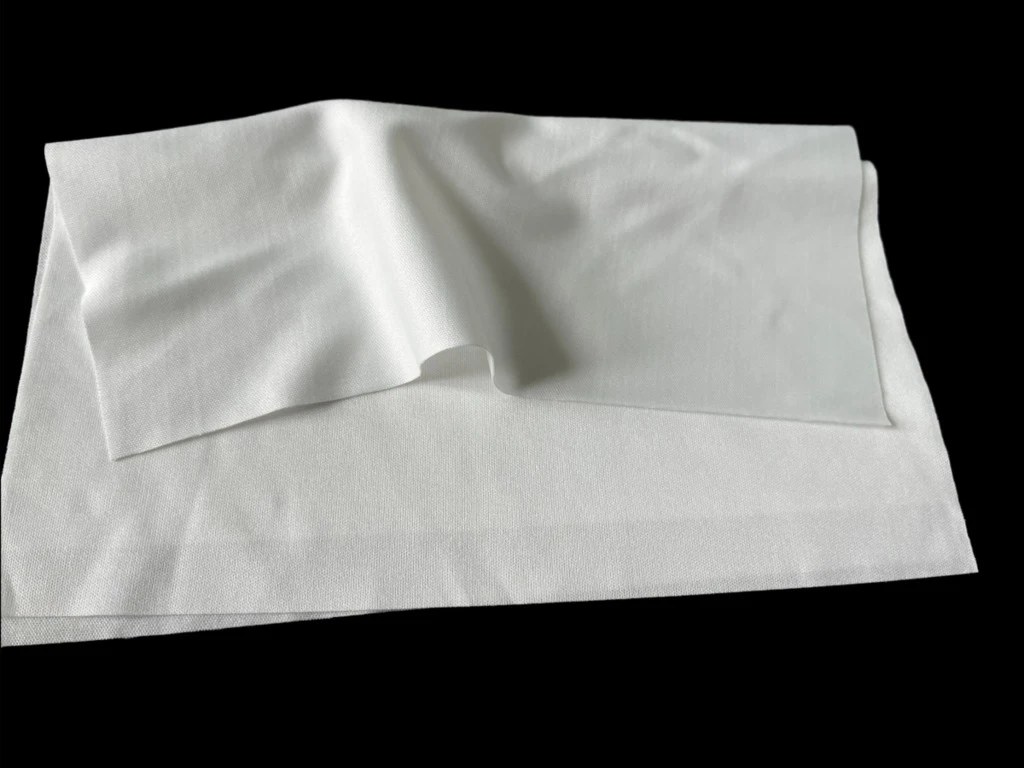
Universal maintenance and turnover cleaning: Purpose-selected Lint-Free Cleanroom Wipes that match solvent systems and surface finishes ensure stability day after day.
Procurement: Design for Control, Buy for Consistency
Start with the contamination budget: Define what your process can tolerate on the surface and in the air. Back-solve to wipe properties and usage frequency.
Minimize variation: Fewer SKUs with clear task rules beat a chaotic assortment. Variation increases training load and error rates.
Stage trials smartly: Pilot wipes and solvents in a limited cell. Measure surface residue, particle rebound, and operator time before scaling.
Enforce change control: A "same spec" from a different lot can still behave differently. Lock change control into your purchasing SOPs.
Weston Nonwoven Factory: Engineered Wipes for ISO 4 Discipline
Weston Nonwoven factory develops and manufactures wipe systems tailored for high-control environments. For ISO 4 buyers, the focus is unambiguous: ultra-low shedding, low extractables, disciplined edge technology, and packaging that respects zoning.
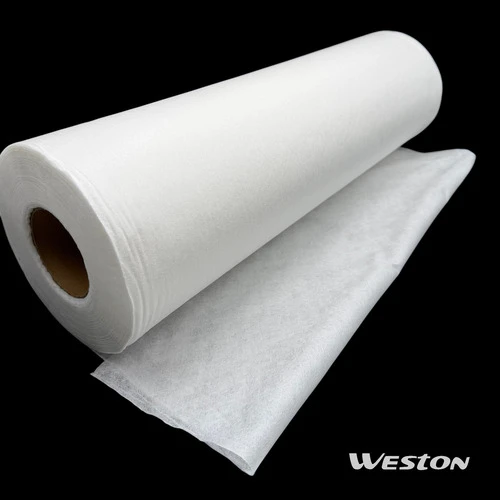
ISO Class 4 Cleanroom Wipes: Sealed-edge, low-NVR constructions built for critical contact tasks in unidirectional airflow zones.
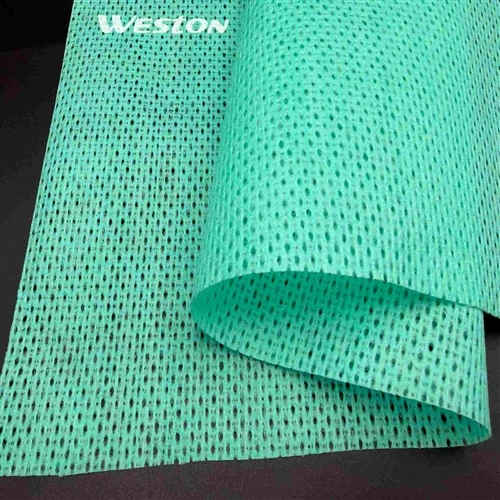
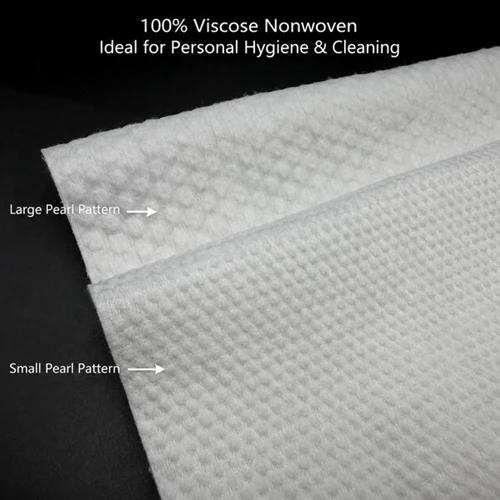
Pulp Lyocell Low Lint Wipes: Absorbent, low-lint nonwovens engineered for fast fluid control in support areas and validated adjacent tasks where cellulose-derivative control is acceptable.
Microfiber Dusting Cloths: Advanced fiber geometries for submicron capture with low drag, designed to reduce wipe counts per task.
Lint-Free Cleanroom Wipes: Versatile, low-shedding formats for daily maintenance, turnover, and cross-zone compatibility.
If you need to evaluate fit for your process, request a free sample set at info@westonmanufacturing.com. Trials are the fastest path from theory to reliable practice.
Implementation Roadmap: From Spec to Stable Operation
Phase 1: Baseline and Spec
Map critical surfaces and contact frequencies under your UDAF coverage.
Quantify current surface residues and particle rebounds after cleaning.
Draft a wipe spec (shedding, NVR, ionics, edges, pack format) aligned to your process chemistry.
Phase 2: Pilot and Validate
Run side-by-side trials with two to three candidate wipes in each task category (critical contact, tool housings, support).
Measure outcomes: surface film residuals, visual haze/streaks, particle counts during and after cleaning, operator time per task.
Lock in standard motions and pass counts; document ESD observations.
Phase 3: Scale and Govern
Standardize SKUs per zone and task; color-code or label packs to prevent mix-ups.
Train for glove technique and controlled force; monitor compliance.
Monitor trends: track wipe consumption, surface metrics, and incident reports. When metrics drift, investigate handling and lot changes first.
Frequently Clarified Points
"Can a single wipe serve all ISO 4 tasks?" Rarely. Optimize per task. Overgeneralizing forces compromises either on shedding or on absorbency and throughput.
"Is presaturated always better?" Not always. It's better for consistency in critical tasks; dry wipes retain a role for dry-polish passes and certain utilities.
"Are cellulose-based wipes banned from ISO 4?" No blanket bans exist; the issue is risk control. In many operations, carefully engineered lyocell blends are used in adjacent or non-contact tasks after validation.
"Why do edges matter so much?" Edge fibers experience the highest shear during scrubs; poor edges are a major hidden source of micro-fibers and particles.
"What is the real cost driver?" Not the wipe price-the total cost of control: yield protection, rework avoided, time per task, risk of incidents.
A Buyer's Bottom Line
ISO Class 4 is not won by filters alone. It is maintained by disciplined interactions-air with surfaces, wipes with soils, people with tools, solvents with materials. Your wipe program is one of the few levers that touches every surface and every shift. Specify precisely, validate under real conditions, and standardize relentlessly.
When you are ready to test purpose-built options, Weston Nonwoven factory can support you with targeted SKUs across critical and adjacent ISO 4 tasks-spanning ISO Class 4 Cleanroom Wipes, Pulp Lyocell Low Lint Wipes, Microfiber Dusting Cloths, and Lint-Free Cleanroom Wipes-and with packaging that respects zone hygiene. To request a free sample set for your validation plan, contact info@westonmanufacturing.com.