In the field of modern materials science, non-woven fabric has gradually become a key material in various industries due to its unique manufacturing process and diverse performance characteristics. However, for professional buyers, a crucial question often arises: Can non-woven fabric be washed? This issue is not only related to the service life and application scenarios of the material but also affects the cost control and environmental benefits of enterprises in the procurement process. To answer this question, we need to conduct an in-depth analysis from the structural characteristics of non-woven fabric, the influence of different manufacturing processes, and practical application cases.
The Structural Basis of Non-Woven Fabric Washability
Non-woven fabric, unlike traditional woven or knitted fabrics, is a sheet-like or web-like structure made by orienting or randomly arranging fibers and then bonding them through mechanical, thermal, or chemical methods. This unique structural form determines that its washability is closely related to the way fibers are bonded and the type of fibers.
Fibers used in non-woven fabric can be divided into natural fibers (such as cotton, hemp, bamboo fiber) and synthetic fibers (such as polyester, polypropylene, nylon). Generally speaking, synthetic fibers have better water resistance and chemical resistance, which lays a certain foundation for the washability of non-woven fabric. Natural fibers, on the other hand, have good water absorption, but their structural stability after washing may be affected to some extent, depending on the bonding method.
The bonding methods of non-woven fabric mainly include mechanical bonding (such as needle punching, spunlace), thermal bonding, and chemical bonding. Mechanical bonding uses physical methods to entangle fibers to form a structure. This bonding method makes the fabric have certain strength and durability. For example, spunlace non-woven fabric, which is formed by high-pressure water jets to entangle fibers, has a relatively tight structure and good structural stability, which is conducive to maintaining its performance during washing. Thermal bonding uses heat to melt the thermoplastic fibers on the surface or inside the fabric to bond the fibers. The washability of such non-woven fabric is related to the melting point of the thermoplastic fibers. If the washing temperature is too high, it may cause the bonding points to re-melt, resulting in structural damage. Chemical bonding uses adhesives to bond fibers. The washability of this type of non-woven fabric depends on the water resistance of the adhesive. If the adhesive is not water-resistant, the fabric is prone to loosening and deformation after washing.
Advantages of Washable Non-Woven Fabric
Washable non-woven fabric has obvious advantages in many application scenarios, which brings more possibilities for enterprises' production and operation.
Firstly, it can reduce the frequency of material replacement, thereby reducing procurement costs. For example, in the field of industrial cleaning, if non-woven cleaning cloths can be washed and reused, it can save a lot of expenses for enterprises compared to disposable products. Reusable Spunlace Dish Cloth for Grease is a typical representative. Its spunlace process ensures good structural stability, and after proper washing, it can still maintain good oil absorption and cleaning ability, greatly reducing the cost of long-term use.

Secondly, washable non-woven fabric is more in line with the concept of environmental protection. In the context of increasing global attention to environmental issues, reducing the use of disposable products has become an important measure for enterprises to fulfill their social responsibilities. Washable non-woven fabric can reduce waste generation and reduce the pressure on the environment. Bamboo Kitchen Cloths for Food Residue Cleanup is made of bamboo fiber, a natural and environmentally friendly material. It can be washed multiple times, not only meeting the needs of food residue cleaning but also reducing environmental pollution caused by disposable kitchen cloths.
Thirdly, in some special application scenarios, washable non-woven fabric can maintain stable performance. For example, in the medical field, some non-woven products need to be sterilized and cleaned repeatedly. Washable non-woven fabric can withstand the harsh conditions of sterilization and cleaning, ensuring the safety and effectiveness of the products.
Disadvantages of Washing Non-Woven Fabric
Although washable non-woven fabric has many advantages, in some cases, washing non-woven fabric may bring a series of problems.
Firstly, washing may lead to a decline in the performance of non-woven fabric. For non-woven fabric bonded by chemical adhesives, if the adhesive is not water-resistant, the adhesive will fail after washing, resulting in fiber shedding and reduced strength of the fabric. Even for non-woven fabric with good water resistance, after multiple washings, the fiber structure may be damaged, leading to a decrease in elasticity, water absorption, and other properties.
Secondly, the washing process may increase the cost. The washing of non-woven fabric requires special equipment and processes, which will increase the labor and energy costs of enterprises. In addition, if the non-woven fabric is damaged due to improper washing, it will also increase the replacement cost.
Thirdly, some non-woven fabric is not suitable for washing due to its application scenarios. For example, non-woven fabric used in medical protective clothing, which needs to maintain a high level of barrier performance, once washed, may damage its microporous structure, reducing the protective effect.
Weston Nonwoven's Products and Their Washability
Weston Nonwoven has always been committed to the research and development and production of high-performance non-woven fabric, and its products have excellent performance in washability.
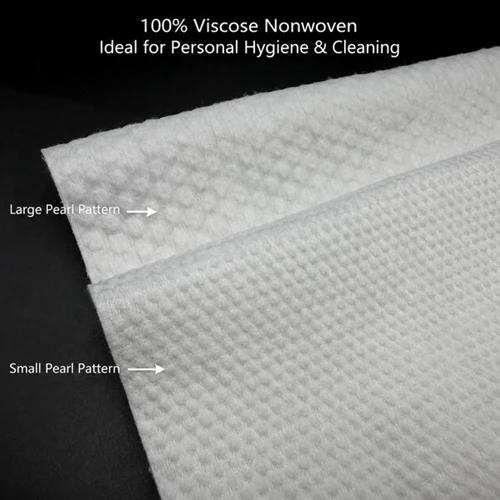
Pearl Embossed Nonwoven Fabric Rolls adopts advanced embossing technology, which makes the fabric surface have a pearl-like texture. The product uses high-quality synthetic fibers and is bonded by a special process, which has good structural stability. After multiple washings, it can still maintain its original appearance and performance, and is widely used in the fields of home textiles and packaging.
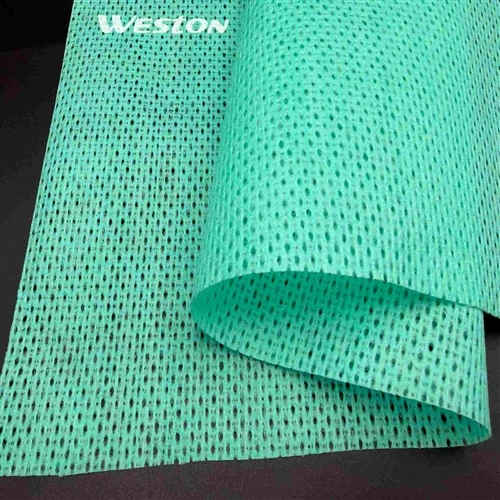
Reusable Spunlace Dish Cloth for Grease is designed for kitchen oil cleaning. The spunlace process makes the fibers closely entangled, and after washing, it can effectively remove oil stains without damaging the fabric structure. It can be reused many times, which is both economical and environmentally friendly.
Washable Microfiber Non-Woven combines the advantages of microfiber and non-woven fabric. Microfiber has strong water absorption and cleaning ability, and the special manufacturing process of non-woven fabric ensures that it can withstand repeated washing. This product is suitable for high-precision cleaning scenarios such as automotive cleaning and electronic product cleaning.
Bamboo Kitchen Cloths for Food Residue Cleanup uses natural bamboo fiber as the main raw material, which is environmentally friendly and healthy. Bamboo fiber has good antibacterial properties, and after washing, it can still maintain its antibacterial effect, ensuring food safety. It is an ideal choice for kitchen cleaning.

If you want to know more about the performance and application of these products, you can contact us through info@westonmanufacturing.com to obtain free samples and detailed information.
Practical Suggestions for Washing Non-Woven Fabric
For professional buyers, when deciding whether to wash non-woven fabric, they need to comprehensively consider the type of non-woven fabric, application scenarios, and washing conditions. Here are some practical suggestions:
First, understand the performance parameters of non-woven fabric. Before purchasing, consult the manufacturer about the washability of the product, including the maximum number of washings, suitable washing temperature, and detergent types. This can avoid performance degradation caused by improper washing.
Second, formulate a reasonable washing process. According to the characteristics of non-woven fabric, set the appropriate washing temperature, time, and rotation speed. Avoid using strong alkaline or oxidizing detergents to prevent damage to the fabric.
Third, conduct a pre-washing test. For non-woven fabric used in key application scenarios, a small number of pre-washing tests can be carried out first to observe the changes in its performance after washing, so as to determine whether it is suitable for large-scale washing.
In conclusion, whether non-woven fabric can be washed depends on multiple factors such as its structure, fiber type, bonding method, and application scenarios. Washable non-woven fabric has obvious advantages in cost reduction and environmental protection, but it is also necessary to pay attention to the possible decline in performance and increased costs. By choosing high-quality non-woven fabric products such as those from Weston Nonwoven and formulating a scientific washing process, professional buyers can give full play to the performance of non-woven fabric and achieve better economic and social benefits. For more information on non-woven fabric products and their washability, please feel free to contact info@westonmanufacturing.com to get free samples and professional advice.