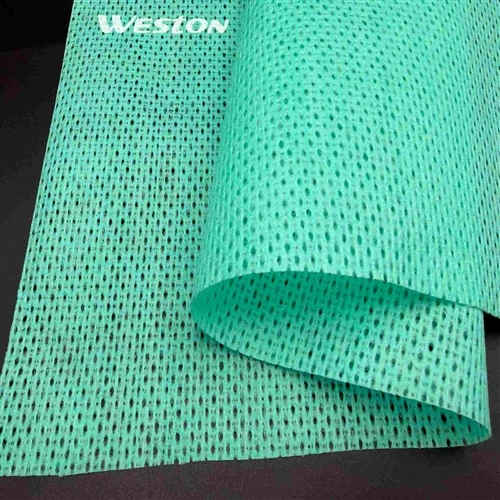
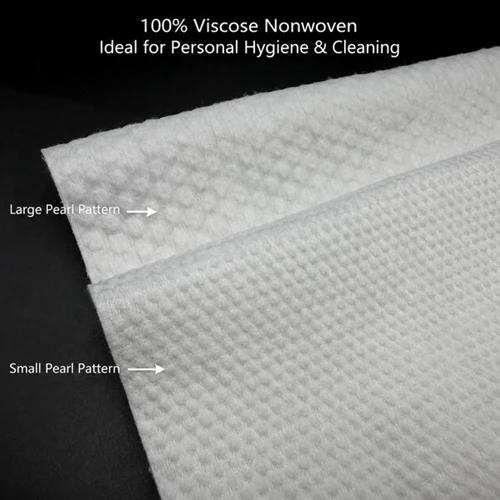
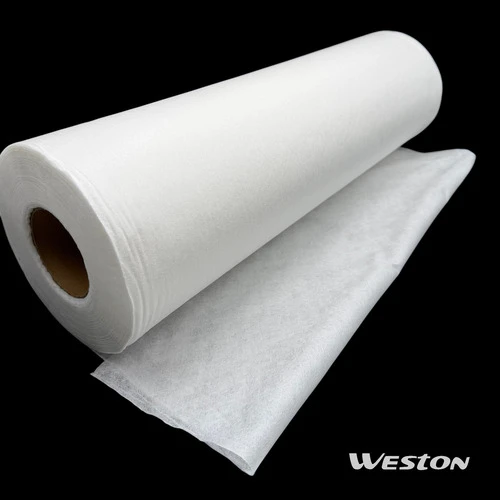
What Is a Wavy Pattern Fabric?
A wavy pattern fabric is a textile whose surface shows a ripple-like or "watered" appearance. The waves are not printed or dyed onto the fabric. Instead, they are formed by physical changes to the surface structure or by the way the fabric is constructed.
When light hits these uneven areas, it reflects differently across the surface. This variation in reflection creates the visual impression of flowing waves, giving the fabric depth, movement, and a subtle sheen.
In textile terminology, this effect is often associated with moiré, but in practice, "wavy pattern fabric" is a broader, more descriptive term that covers several production methods and fiber combinations.
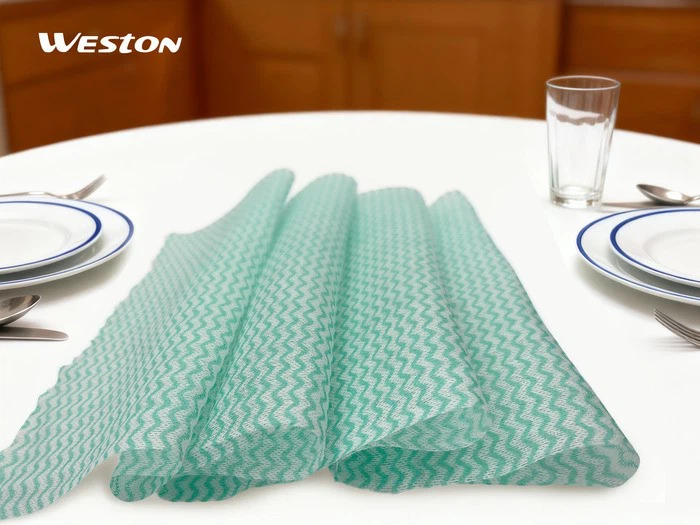
Why the Surface Looks Wavy
The wavy appearance is the result of controlled irregularity. Parts of the fabric surface are smoother or more compressed than others. These differences are usually microscopic, but they are enough to bend light in different directions.
Flat, uniform surfaces reflect light evenly and appear visually calm.
Wavy surfaces break that uniformity. The eye perceives alternating bright and dull zones, which read as ripples or watermarks.
This is why the pattern may appear to shift slightly when the viewing angle or lighting changes. The fabric itself does not move. The light does.
How Wavy Pattern Fabrics Are Made
There is no single way to create a wavy pattern. In practice, the effect comes from one of two technical routes.
Finishing-driven wavy patterns
One traditional method relies on finishing rather than weaving. The fabric is passed through heated rollers under controlled pressure. Some areas of the yarns are flattened more than others.
This uneven compression alters the surface smoothness and produces a watermark-like pattern. Because the effect is physical rather than decorative, it becomes part of the fabric surface.
This type of wavy pattern tends to be subtle and fluid rather than sharply defined.
Structure-driven or embossing-driven patterns
Another route introduces waves through surface geometry. The pattern can come from the weave itself or from embossing that reshapes the surface after the fabric is formed.
Instead of relying mainly on compression, this approach creates shallow ridges and troughs. When light hits these contours, alternating reflections form the visible wave.
In modern nonwoven and blended fabrics, this method allows surface texture to be added without changing the fiber composition.

The Role of Fiber Selection
Not all fibers respond equally to surface modification. Fiber choice strongly influences how visible and stable the wave effect will be.
Viscose-based fibers
Viscose contributes softness, drape, and a smooth hand feel. It responds well to pressure and shaping, making it suitable for forming gentle surface variations. Its ability to absorb moisture also affects how the fabric interacts with liquids.
Polyester-based fibers
Polyester adds strength, resilience, and dimensional stability. It helps the fabric maintain its shape during processing and use. Polyester also improves resistance to deformation under repeated handling.
When these fibers are combined, as in a Wavy Fabric Pattern (Viscose Polyester) structure, the result is typically a balance between softness and durability, with a surface that can hold texture without becoming fragile.
Key Characteristics of Wavy Pattern Fabrics
Although appearance is the most obvious feature, wavy pattern fabrics also show distinct physical traits.
Surface texture and contact behavior
The rippled surface increases micro-level surface area. This changes how the fabric contacts other surfaces, liquids, or particles. Even when thickness remains uniform, the textured surface behaves differently from a flat one.
Light interaction
Wavy patterns produce directional reflection. The fabric may look brighter or darker depending on viewing angle, which gives it visual depth without the use of coatings or prints.
Touch and hand feel
Most wavy pattern fabrics feel slightly different from flat fabrics. The difference is usually subtle, but it can be detected when the fabric is handled or folded.
Functional Implications Beyond Appearance
While wavy patterns are often discussed in visual terms, they can also influence performance.
Liquid interaction
Micro-variations on the surface can guide how liquid spreads or pools. In some cases, this improves wetting or pickup behavior. Actual performance depends on fiber type, bonding method, and finishing intensity.
Handling and grip
The textured surface may offer slightly higher friction than a smooth fabric. This can affect how the fabric behaves during wiping, folding, or manual handling.
Wear sensitivity
Because some wave effects rely on surface finishing, they can be more sensitive to abrasion or aggressive re-wetting. Structure-based patterns generally show better long-term stability.
Wavy Pattern Fabric vs Plain Fabric
Understanding the difference helps clarify why the pattern matters.
Surface structure
A plain fabric has a uniform surface with predictable behavior. A wavy pattern fabric introduces controlled irregularity, changing both look and feel.
Visual depth
Flat fabrics reflect light evenly. Wavy fabrics create contrast through reflection alone, resulting in a more dynamic surface.
Performance variation
Plain fabrics behave consistently across the surface. Wavy fabrics may show localized differences in contact, absorption, or friction due to their texture.
Care and Handling Considerations
Wavy pattern fabrics often require more thoughtful handling than flat textiles.
Excessive moisture can reduce contrast in some finishes
Strong abrasion may dull surface definition over time
Folding and storage can influence how the pattern is perceived
The exact care requirements depend on how the wave was created and how stable the surface structure is.
How to Identify a True Wavy Pattern Fabric
A reliable way to tell whether a fabric is truly wavy-patterned is to observe it under changing light.
If the pattern shifts with angle and has no sharp printed edges, it is likely structural.
If the surface feels subtly varied without raised embossing, the effect probably comes from compression or controlled surface modification.
Printed patterns, by contrast, remain visually fixed and flat.
How to Think About Selection and Use
Choosing a wavy pattern fabric starts with understanding the purpose.
If visual depth and surface interest matter, a wavy pattern offers more complexity than a flat textile.
If performance such as handling, wiping, or surface interaction is important, the texture may add functional value.
If durability under harsh conditions is the priority, the production method and fiber balance deserve close attention.
The pattern itself is neither purely decorative nor automatically functional. Its value depends on how and why it is used.