Does Heat Damage N95 Masks?
N95 masks became a daily necessity in healthcare and public life. They're designed to filter out tiny airborne particles, and their effectiveness depends on materials that are both delicate and highly engineered. But one question keeps coming back: can heat damage an N95 mask? The answer depends on what kind of heat, how long the exposure lasts, and which layer of the mask you're talking about.

1. Understanding What N95 Masks Are Made Of
An N95 mask is more than just fabric. It's built in layers, each serving a different role:
Outer Layer: A spunbond nonwoven that protects against splashes and larger particles.
Middle Layer: The melt-blown filter, which captures microscopic particles through both mechanical and electrostatic forces.
Inner Layer: A soft, breathable spunbond layer that touches the skin.
Among these, the melt-blown layer is the most sensitive to heat. It's made from polypropylene microfibers, which are extremely fine-about one-thirtieth the width of a human hair. These fibers are charged to attract and trap airborne particles. When exposed to high temperatures, that charge can weaken or disappear, reducing the mask's ability to block fine aerosols.
2. How Heat Affects Mask Materials
Heat acts on a mask in two ways: it can change the physical structure of the fibers and it can destroy the electrostatic charge that gives the mask its filtering power.
Polypropylene softens at around 130°C and melts near 160°C. While you're unlikely to reach those temperatures under normal conditions, even moderate heat can gradually break down the structure. More importantly, the electrostatic field inside the melt-blown layer starts to decay at much lower temperatures-sometimes as low as 80°C if combined with humidity.
That's why a mask left in a hot car or exposed to steam doesn't just lose shape. It may still look fine but filter far less effectively.
3. Common Heat Exposure Scenarios
Sunlight or a Hot Car
Leaving a mask on a car dashboard under the sun can raise its temperature well above 60°C. Over time, this weakens both the fibers and the electrostatic charge. Direct sunlight adds UV radiation, which further breaks down polymer bonds.
Steam or Boiling Water
Boiling a mask seems like an easy way to disinfect it, but steam forces moisture into the filter layer. When the fibers absorb water, the electrostatic charge dissipates, and the filter's fine web collapses slightly, letting more particles through.
Dry Heat from Ovens or Heaters
Some studies found that heating at 70–75°C for 30 minutes can disinfect an N95 without serious damage if done carefully. However, small temperature differences-just 10°C higher-can start deforming parts of the mask or melting its elastic straps.
Microwaving
Microwaving can create sparks from the metal nose bridge and unevenly heat the layers, leading to partial melting or loss of fit. It's one of the least safe options.
4. Using Heat as a Cleaning Method: Pros and Cons
|
Method |
Possible Advantage |
Risk or Limitation |
|
Controlled dry heat (≤75°C) |
Can kill most viruses for limited reuse |
Reduces filtration after several cycles |
|
Steam or boiling |
Easy and accessible |
Destroys electrostatic charge |
|
Sun exposure |
No tools required |
UV + heat degrades fibers |
|
Autoclave or sterilizer |
Effective for microbes |
Too hot for mask polymers |
Heat can disinfect in theory, but the balance between decontamination and damage is narrow. Even small variations in time or humidity can turn an effective cleaning method into one that ruins filtration performance.

5. Why the Melt-Blown Layer Is the Key
The melt-blown layer is the engine of an N95 mask. It traps particles not just by sieving but by pulling them in with static electricity. This makes it powerful against both dust and aerosols-but also fragile.
Repeated heat exposure drains that charge, like a battery that loses power. Once the charge is gone, the filter becomes little more than a fine fabric barrier. That's why keeping this layer intact is essential.
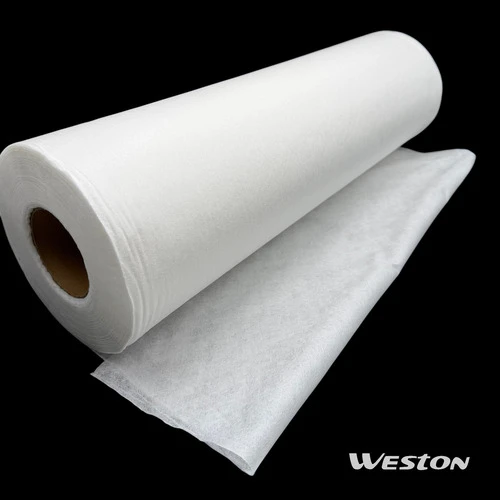
High-grade materials such as Melt Blown For N95 Respirator produced by Weston Nonwoven are engineered for controlled thermal resistance and stable electrostatic performance during manufacturing. But even industrial-quality melt-blown fabric isn't immune to damage from uncontrolled household heating or disinfection attempts.
6. Safe Ways to Extend Mask Life
If you must reuse an N95 mask, there are safer, more practical options than boiling or microwaving:
Air Drying
After limited use, store the mask in a clean paper bag at room temperature. Allow it to dry for at least 48 hours before the next use. Natural drying helps deactivate most viruses without heat stress.
Rotation Method
Keep several masks and rotate them-one per day. Each mask rests long enough for contaminants to lose viability before reuse.
Gentle Warmth
If dry heat is used, keep it strictly below 75°C and limit exposure to 30 minutes. Use an oven thermometer, not guesswork. Avoid touching the inside of the mask after heating.
Visual Inspection
Before each reuse, check for deformation, loose straps, or strange odor. If the mask doesn't fit snugly or shows visible wear, replace it.
7. The Science Behind Thermal Limits
N95 efficiency depends more on electrostatic charge than on fiber thickness. The charge allows the mask to catch tiny particles that would otherwise slip through gaps between fibers.
When heat or moisture breaks that charge, the mask's performance drops dramatically, even if the material looks unchanged. The fibers themselves can also shrink or fuse slightly under stress, disrupting airflow patterns through the filter.
Manufacturers constantly work to improve this balance. Research into thermally stable polymers, improved charging techniques, and hydrophobic coatings aims to make future respirators more resistant to heat and humidity. Nonwoven specialists, including Weston Nonwoven, continue refining melt-blown fabric technology to improve consistency and resilience without sacrificing breathability.
8. Practical Perspective
In everyday life, moderate heat exposure-such as leaving your mask near a heater or in a warm car-won't instantly ruin it. But repeated exposure adds up. The filter may lose up to half its particle-trapping ability long before the mask visibly deforms.
For healthcare or industrial use, even minor filtration loss can be critical. That's why professionals are advised to replace masks frequently rather than attempt home sterilization.
For the general public, the safest approach is simple: keep masks clean and dry, store them properly, and avoid direct heat. The structure that makes an N95 so effective is also what makes it fragile. Preserving that structure means trusting the material science behind it-and respecting its limits.