Wood pulp is the foundational building block of countless everyday products, from paper towels to industrial wipes. Yet its simplicity belies a complex interplay of chemistry, sustainability, and performance engineering. This article delves into the essence of wood pulp-its composition, processing, advantages, drawbacks, and innovative applications-underpinned by cutting-edge research and a bold, authoritative tone.

Understanding the Composition of Wood Pulp
At its core, wood pulp is derived from lignocellulosic biomass: the rigid, fibrous structure that gives trees their strength. The molecular constituents include:
Cellulose: A linear polymer of glucose units linked by β-1,4-glycosidic bonds. Cellulose imparts tensile strength and forms microfibrils that reinforce the pulp sheet.
Hemicellulose: A heterogeneous mix of shorter-chain polysaccharides (e.g., xylans, glucomannans). Hemicellulose interacts with cellulose fibrils, contributing to flexibility and water retention.
Lignin: An aromatic polymer that cements cellulose and hemicellulose in the plant cell wall. In pulp processing, lignin is partially removed to brighten fibers and increase purity.
Extractives and Ash: Minor constituents (resins, tannins, minerals) that may impact pulp's bleaching requirements and end-use performance.
This intricate composition dictates pulp characteristics such as strength, absorbency, and surface chemistry. Contemporary pulping methods-kraft, sulfite, and mechanical-selectively strip lignin and hemicellulose, tailoring fiber properties to specific applications.
The Art and Science of Pulp Processing
Transforming raw timber into functional pulp demands precise control over chemical reactions and mechanical forces:
Mechanical Pulping: Wood chips are ground or refinished under pressure to liberate fibers mechanically. Energy-intensive but retaining most lignin, mechanical pulp yields high-yield, lower-brightness fibers ideal for newsprint.
Chemical Pulping (Kraft Process): Wood chips are cooked in an alkaline solution of sodium hydroxide and sodium sulfide. This selectively dissolves lignin and hemicellulose, producing strong, bright fibers.
Bleaching: Sequential treatments with chlorine-free oxidants (e.g., peroxide, ozone) remove residual lignin, enhancing whiteness while minimizing environmental impact.
Refining and Screening: Post-bleach fibers are mechanically treated to fibrillate and homogenize length distribution, then screened to remove uncooked fragments.
Each step can be fine-tuned: adjusting cooking time, chemical concentration, temperature, and refining intensity yields pulp grades ranging from ultra-soft tissue to heavy-duty industrial fabrics.

Advantages of Wood Pulp
Wood pulp's remarkable versatility underpins its widespread use. Key benefits include:
Renewable Origin: Derived from responsibly managed forests, wood pulp is a sustainable alternative to petroleum-based polymers.
Biodegradability: Natural polysaccharide chains break down in composting or wastewater treatment, reducing environmental burden.
High Absorbency: The hydrophilic nature of cellulose and hemicellulose enables rapid fluid uptake, wicking, and retention.
Mechanical Strength: Well-processed fibers produce webs and papers with impressive tensile strength, tear resistance, and dimensional stability.
Chemical Modifiability: Surface hydroxyl groups can be functionalized-e.g., cationization, carboxymethylation-to tailor absorbency, softness, or antimicrobial properties.
These attributes make wood pulp indispensable for disposable hygiene products, specialty papers, and advanced nonwoven fabrics.
Drawbacks and Challenges
Despite its virtues, wood pulp faces limitations and trade-offs:
Energy Intensity: Mechanical pulping consumes significant electricity; chemical pulping demands heat and reagents, requiring efficient recovery systems.
Water Usage: Pulp mills generate high volumes of process water and effluent; modern mills invest in closed-loop water management but legacy facilities may lag behind.
Variability: Natural feedstocks exhibit seasonal and species-dependent fiber quality fluctuations, complicating process control and product consistency.
Resource Impact: Unsustainable forestry practices can lead to deforestation, habitat loss, and carbon emissions if not tightly regulated.
Chemical Residues: Incomplete reagent recovery or bleaching by-products (e.g., organochlorines) pose environmental concerns unless mitigated by advanced treatments.
Balancing performance targets with environmental stewardship remains the industry's central challenge.
Cutting-Edge Innovations in Wood Pulp Applications
Researchers and manufacturers are pushing wood pulp beyond traditional domains:
Nanocellulose: Through high-shear or enzymatic treatment, cellulose microfibrils and nanocrystals exhibit ultrahigh strength-to-weight ratios, enabling lightweight composites and barrier films.
Biodegradable Packaging: Pulp-derived molded fiber trays and films offer compostable alternatives to plastics for food service and logistics.
Smart Wipes and Tissues: Functional additives (e.g., antibacterial agents, encapsulated actives) integrate with spunlaced pulp webs to deliver targeted performance in healthcare and personal care.
Energy Storage: Pulp-based scaffolds for electrodes and separators in batteries leverage high porosity and tunable surface chemistry.
These advancements underscore wood pulp's capacity to evolve with technological frontiers.
Case in Point: High-Performance Nonwoven Fabrics
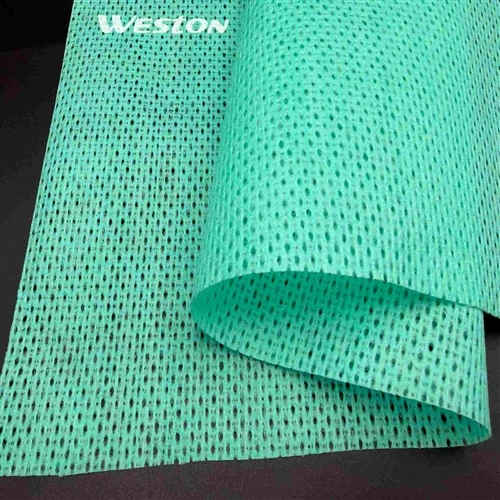
A prime example of wood pulp's synergy with polymer engineering emerges in high-performance nonwoven fabrics. By blending wood pulp fibers with polypropylene or polyester via spunlace hydroentanglement, manufacturers produce fabrics that combine absorbency with strength:
High Friction Composite Wood Pulp PP Spunlace Fabric enhances grip and tactile feedback for industrial wiping tasks.
Pull-Up Dispensing Embossed Spunlace Nonwoven streamlines roll dispensing in high-traffic environments.
Printed Composite Spunlace Fabric For Industrial Use offers customizable branding and functional patterns.
Spunlace Nonwoven Paper Towel For Hand Drying delivers rapid absorbency with a soft hand feel.

Seamlessly free sample: info@westonmanufacturing.com invites partners to test these materials. Weston Nonwoven's facility optimizes fiber blends and hydroentanglement parameters to achieve consistent web strength, uniform embossing, and tailored fluid management.
Responsible Sourcing and Sustainability Metrics
Weston Nonwoven upholds rigorous environmental oversight:
Forest Certification Compliance: Wood chips sourced from sustainably managed suppliers with chain-of-custody tracking.
Energy Recovery Systems: Heat and chemical recovery loops reduce external energy needs by up to 60%.
Effluent Treatment: Advanced biological and physical-chemical processes ensure discharge meets stringent regulatory thresholds.
Life-Cycle Assessment (LCA): Evaluations quantify carbon footprint, water use, and end-of-life impact, guiding continuous improvement.
These measures reflect a commitment to minimize ecological impact without sacrificing product excellence.
Weighing the Evidence: Wood Pulp in a Circular Economy
Prospective stakeholders must consider both the strengths and constraints of wood pulp:
Strengths: Renewable feedstock, high biodegradability, tunable performance, broad application spectrum.
Constraints: Resource variability, process energy and water demands, potential chemical by-products.
Strategic investments in mill modernization, feedstock diversification (e.g., agri-residues), and closed-loop water systems can mitigate drawbacks, positioning wood pulp as a linchpin in sustainable manufacturing.
Future Directions
Anticipated trends point to deeper integration of wood pulp in high-tech sectors:
3D-Printed Fiber Composites: Combining nanocellulose with biopolymers for custom-shaped, lightweight structures.
Functional Textiles: Embedding responsive additives-e.g., phase-change materials, sensors-in pulp-based nonwovens.
Green Hydrogen Production: Utilizing lignin streams as feedstock for catalytic hydrogen generation.
Such innovations will redefine wood pulp's role, expanding its impact across industries.
Bold in its composition and formidable in its applications, wood pulp remains a material of choice for industries seeking a potent blend of performance and sustainability. As research propels new functionalities and production methods evolve, wood pulp will continue to shape the future of materials science-anchored in the resilient fibers of the forest and energized by human ingenuity.