What Do the Colors of Microfiber Cloths Mean?
In professional cleaning, color is not decoration-it is risk control.
Color coding exists to prevent cross-contamination, standardize workflows, and make hygiene rules visible at a glance. Whether in food processing plants, commercial kitchens, healthcare facilities, or industrial maintenance, microfiber cloth colors act as a non-verbal operating system for cleaning.

The basic principle is simple:
one color = one risk boundary.
Once that boundary is defined, materials, performance levels, and replacement cycles can be managed more precisely without slowing down daily operations.
This article explains how color coding works in practice, how it aligns with international hygiene frameworks, where its limitations lie, and how to select microfiber cloths correctly-without confusing color with performance.
Why Color Coding Exists in Cleaning Systems
Color coding emerged from industrial hygiene and food safety management, not consumer marketing. Its purpose is to reduce human error in environments where:
The same worker cleans multiple zones
Surfaces carry different microbiological risks
Visual clarity is faster than written instructions
Across industries, color coding supports three core goals:
Cross-contamination prevention
Task segregation
Auditability
In practice, colors allow supervisors and auditors to verify correct behavior instantly-without stopping work or checking logs.
Alignment with Industry Standards and Hygiene Frameworks
Color coding is indirectly referenced or strongly recommended across multiple global standards.
HACCP & Good Hygiene Practice (GHP)
Under HACCP principles, cross-contamination is a critical control point. While HACCP does not mandate specific colors, it requires:
Physical separation of cleaning tools by risk zone
Clear identification of tools used in food-contact vs non-food areas
Color coding is one of the most widely accepted control measures to meet this requirement.
ISO 22000 & ISO/TS 22002
These food safety management standards emphasize:
Cleaning tool segregation
Visual control systems
Preventive contamination barriers
Color-coded Reusable Microfiber Cloths are commonly cited in compliance documentation as an acceptable implementation method.
NSF (Food Equipment & Sanitation Programs)
NSF guidelines for foodservice sanitation recommend:
Dedicated cleaning tools per area
Clear differentiation to avoid misuse
Many NSF-aligned facilities adopt color coding as part of their standard operating procedures.
Healthcare & Institutional Cleaning (CDC / WHO aligned practices)
Healthcare environments rely on color coding to separate:
Patient areas
Sanitary zones
General touch surfaces
Here, color coding supports infection control rather than food safety, but the logic is identical.

Advantages and Limitations of Color-Coded Microfiber Systems
Advantages
Strong reduction in cross-use errors
Faster onboarding and training
Immediate visual compliance checks
Scales easily from homes to factories
Limitations
Colors are not globally standardized
Fading can reduce clarity over time
Misuse still occurs without discipline
Color alone does not guarantee hygiene
Color coding is a behavioral control, not a material guarantee.
Color Does Not Equal Performance: A Critical Clarification
One of the most common procurement mistakes is assuming that:
different colors = different cloth performance
In reality:
Color does not define absorbency
Color does not determine lint control
Color does not indicate fiber structure
Performance depends on:
Fiber fineness and split quality
GSM and thickness
Weave or spunlace structure
Edge finishing and tensile strength
Two blue cloths can perform completely differently.
Practical Purchasing Guidance Under the Same Color
Professional buyers often need multiple performance levels within one color.
Recommended approach:
Use the same color for one zone
Specify different GSM or fabric constructions for different tasks
Example:
Blue, low-GSM for daily wipe-downs
Blue, high-GSM for grease or moisture-heavy cleaning
Evaluating Consistency Across Batches
For large or repeat orders, verify:
GSM tolerance range
Color fastness after washing
Fiber uniformity under magnification
Absorbency retention after multiple cycles
This is where industrial-scale spunlace manufacturing becomes relevant. Consistent hydroentanglement processes help ensure that Reusable Microfiber Cloths maintain the same performance even when color remains unchanged across batches.
Laundering, Storage, and Control Still Matter
Even the best color system fails if:
Cloths are washed together across zones
Storage bins are not color-separated
Labels or signage are missing
Best practice includes:
Washing by color and zone
Dedicated storage containers
Periodic visual audits
Replacement rules independent of appearance

Material Choice Within Color Systems
Many professional environments now favor spunlace-based reusable microfiber alternatives for their balance of:
Uniform fiber distribution
Low lint release
High liquid management
Surface safety
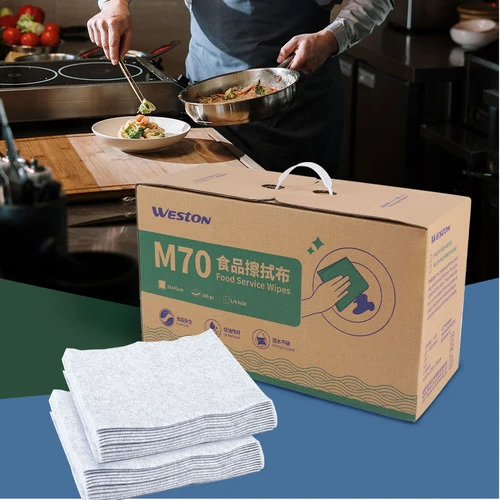
Manufacturers such as Weston Nonwoven, specializing in hydroentangled spunlace materials, supply Reusable Microfiber Cloths designed to support color-coded hygiene systems while maintaining consistent mechanical performance-especially important in food, healthcare, and industrial cleaning contexts.
Understanding microfiber cloth colors is not about memorizing shades. It is about designing cleaning systems that are visible, repeatable, and auditable. When color coding is paired with the right material selection, disciplined handling, and performance-based procurement, it becomes a simple but powerful tool for modern hygiene management.