The global crisis of plastic pollution-from ocean microplastics to landfill accumulation-has driven demand for "eco-friendly alternatives." Polylactic Acid (PLA) has emerged as a leading candidate, hailed by many as a "plastic replacement." Yet a critical question lingers: Is PLA actually plastic? To answer this, we must move beyond surface-level labels and examine PLA through the lenses of chemistry, sustainability, and performance-uncovering both its similarities to traditional plastics and its unique characteristics.
Chemical Nature: Unpacking Polymer Structures
To define whether PLA qualifies as "plastic," we first need a scientific understanding of what "plastic" is. By definition, plastics are synthetic or semi-synthetic polymeric materials with malleability, allowing them to be molded into shapes under heat or pressure. They are typically derived from polymers with repeating monomer units, forming long molecular chains that confer durability and flexibility.
PLA fits this broad polymeric framework-but with critical chemical differences from traditional petroleum-based plastics (e.g., polyethylene/PE, polypropylene/PP).
Monomer and Bond Structure
Traditional plastics like PE are formed by polymerizing ethylene monomers (C₂H₄), creating long chains of carbon-carbon (C-C) bonds. These non-polar C-C bonds are highly stable, resisting breakdown by microbes or environmental factors. In contrast, PLA is a polyester made by polymerizing lactic acid monomers (C₃H₆O₃), which link via ester bonds (-COO-). Ester bonds are polar and inherently more susceptible to hydrolysis (breakdown by water) and microbial degradation-a defining chemical distinction.
Polymerization Pathway
PE forms via "addition polymerization," where ethylene monomers link without byproducts. PLA forms via "condensation polymerization," where lactic acid molecules lose water molecules as they chain together. This process creates a polymer with a lower molecular weight than PE, affecting properties like heat resistance (PLA's glass transition temperature is ~55°C, compared to PE's ~-120°C).
Chemically, PLA is a synthetic polymer with plastic-like malleability-so it meets the technical definition of a plastic. However, its ester-bond structure and plant-derived monomers set it apart from fossil fuel-based plastics, laying the groundwork for its unique sustainability profile.
Origin and Sustainability: Breaking the Fossil Fuel Link

The most striking difference between PLA and traditional plastics lies in their origins-a factor that redefines their environmental impact.
Traditional plastics are derived from petroleum or natural gas, finite fossil fuels. Extracting and refining these resources releases greenhouse gases (GHGs), and their non-renewable nature means plastic production perpetuates dependence on dwindling energy sources.
PLA, by contrast, is made from renewable plant starch (typically corn, sugarcane, or cassava). The process begins with fermenting starch into lactic acid, which is then polymerized into PLA. This creates a "carbon cycle": plants absorb CO₂ from the atmosphere during growth, and when PLA degrades, it releases CO₂ back into the environment-resulting in near-net-zero GHG emissions over its lifecycle (unlike traditional plastics, which add new CO₂ to the atmosphere).
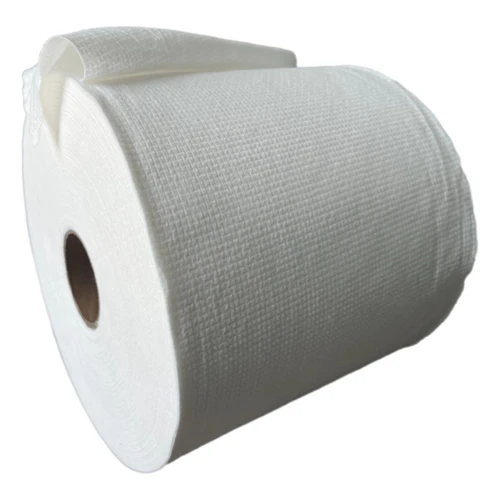
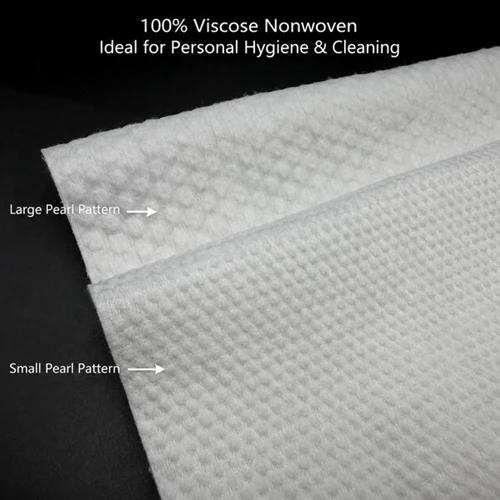
Weston Nonwoven leverages this sustainability by developing materials like Woodpulp PLA Spunlace-a hybrid of natural wood pulp fibers and PLA. This product combines the softness of wood pulp with the strength of PLA, creating a nonwoven fabric suitable for hygiene or industrial applications while reducing fossil fuel reliance.
Yet PLA's sustainability is not without caveats:
Agricultural Resource Use: Growing starch crops for PLA requires land, water, and potentially fertilizers. In regions with water scarcity or food insecurity, prioritizing crops for PLA may raise ethical concerns.
Production Energy: Converting starch to lactic acid and PLA requires heat and chemicals, leading to higher energy use than PE production in some cases. Advanced manufacturing (like Weston's optimized processes) can mitigate this, but it remains a tradeoff.
Degradation Mechanisms: The Critical Distinction
If PLA is technically a plastic, why is it marketed as "eco-friendly"? The answer lies in its degradation behavior-a make-or-break factor for environmental impact.
Traditional plastics (e.g., PE, PP) are "persistent." Their stable C-C bonds resist microbial breakdown, so they persist in landfills, oceans, and soil for centuries. Even when they fragment into microplastics, they do not fully decompose, accumulating in ecosystems and food chains.
PLA's ester bonds, however, enable controlled degradation-but only under specific conditions:
Industrial Composting
The gold standard for PLA degradation is industrial composting facilities, where temperatures reach 58–70°C, relative humidity exceeds 60%, and specialized microbes (e.g., Rhodococcus ruber, Bacillus subtilis) break down ester bonds. Over 8–12 weeks, PLA is converted into lactic acid, then into CO₂, water, and biomass-leaving no toxic residues. Weston Nonwoven's 75% PLA Packaging Materials are designed for this scenario, offering a compostable alternative to PE packaging for industries like food or cosmetics.
Natural Environments
PLA degrades far more slowly in home compost piles, soil, or oceans. Ambient temperatures (below 50°C) slow microbial activity, and limited moisture or oxygen can halt degradation entirely. In seawater, PLA may take 10–100 years to decompose-better than PE (centuries) but not the "quick fix" many assume.
This distinction is critical: PLA's environmental benefit depends on proper end-of-life management. Without access to industrial composting, PLA risks becoming just another persistent plastic.
Performance and Application: Where PLA Stands Out
For PLA to replace traditional plastics, it must match or exceed their performance in real-world use. Its unique properties make it suitable for specific applications-while limiting its use in others.
Key Performance Traits of PLA
Mechanical Strength: PLA has a tensile strength of 40–60 MPa (similar to PP), making it rigid enough for packaging or nonwoven fabrics. However, it is brittle at low temperatures and softens above 60°C, so it is not ideal for hot-filled containers or outdoor products exposed to extreme weather.
Barrier Properties: PLA offers moderate resistance to oxygen and moisture, suitable for short-shelf-life products (e.g., fresh produce packaging) but less so for items requiring long-term preservation (e.g., canned goods).
Processability: Like traditional plastics, PLA can be extruded, injection-molded, or spun into nonwoven fabrics-enabling seamless integration into existing manufacturing lines.
Industrial Applications by Weston Nonwoven
Weston Nonwoven has tailored PLA-based and plant-based materials to address niche needs, demonstrating how PLA complements (rather than replaces) traditional plastics:
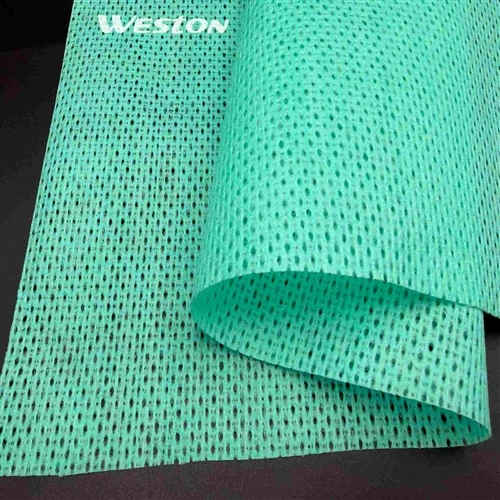
Abrasive Spunlace With Plastic Dots: This nonwoven fabric uses PLA as the base material, reinforced with plastic dots for enhanced durability. It is designed for industrial cleaning (e.g., removing grease from machinery) where strength and reusability are critical-outperforming disposable paper wipes while reducing fossil plastic use.
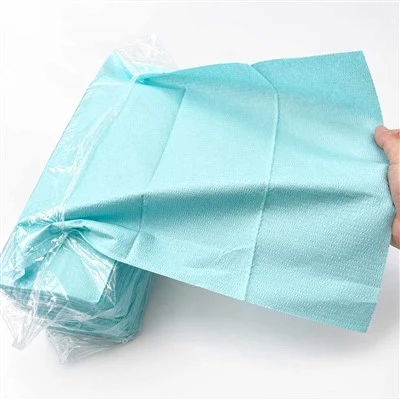
Plant-Based Flushable Spunlace Fabric: Unlike PLA (a synthetic polyester), this fabric is made from 100% natural plant fibers (e.g., cotton, bamboo). It is flushable and biodegradable in wastewater systems, making it ideal for personal care products (e.g., facial wipes) where PLA's slow natural degradation would be a drawback.
100% Natural Plant Fiber Masks: Another plant-based alternative to PLA, these masks use breathable, hypoallergenic plant fibers. They are compostable in home or industrial settings, catering to consumers seeking plastic-free protection without compromising comfort.
Compostable Baby Wipes: Importantly, these wipes use a different material blend than Weston's PLA or plant-fiber products (e.g., a combination of cellulose and bio-based binders). They are designed for industrial composting, meeting strict safety standards for infant skin while minimizing environmental impact.
Notably, 100% Natural Plant Fiber Masks and Plant-Based Flushable Spunlace Fabric are not PLA-based-highlighting Weston's commitment to offering diverse sustainable solutions, each optimized for its end use.
Myths and Facts: Debunking Common Misconceptions
Misinformation about PLA has led to unrealistic expectations. Below, we clarify key myths to provide a balanced view:
Myth 1: "PLA is completely biodegradable anywhere."
Fact: PLA only fully degrades in industrial composting facilities. In home compost piles, soil, or oceans, it may take decades to break down-similar to some "biodegradable" petroleum plastics. Always check product labels for compostability certifications (e.g., ASTM D6400) to ensure proper disposal.
Myth 2: "PLA is always more eco-friendly than traditional plastic."
Fact: PLA's sustainability depends on its lifecycle. For example, a PLA water bottle made from corn grown with synthetic fertilizers may have a higher carbon footprint than a recycled PE bottle. Weston Nonwoven mitigates this by sourcing starch from organic or low-fertilizer crops for its 75% PLA Packaging Materials, reducing overall environmental impact.
Myth 3: "PLA can be recycled with traditional plastics."
Fact: PLA is chemically incompatible with PE, PP, or PET. Mixing PLA into traditional plastic recycling streams contaminates the batch, reducing the quality of recycled products. PLA requires separate recycling or composting-so proper sorting is essential.
Weston Nonwoven: Balancing Performance and Sustainability
While PLA is technically a plastic, its plant origin and controlled degradation make it a critical tool for reducing fossil fuel reliance. Weston Nonwoven's expertise in nonwoven manufacturing has led to innovations that maximize PLA's strengths (e.g., Woodpulp PLA Spunlace, 75% PLA Packaging Materials) while offering plant-based alternatives (e.g., Plant-Based Flushable Spunlace Fabric, 100% Natural Plant Fiber Masks) for applications where PLA is less suitable.
For businesses exploring sustainable material solutions, Weston Nonwoven provides free samples of its Woodpulp PLA Spunlace, 75% PLA Packaging Materials, Abrasive Spunlace With Plastic Dots, Plant-Based Flushable Spunlace Fabric, and 100% Natural Plant Fiber Masks (note: material differs from Compostable Baby Wipes). To request samples, contact info@westonmanufacturing.com.

Rethinking "Plastic": Beyond Labels
The question "Is PLA actually plastic?" reveals a limitation of labels: "plastic" has become synonymous with "harmful" or "persistent," but PLA challenges this stereotype. PLA is a plastic in the technical sense-a synthetic polymer with moldable properties-but it is a different kind of plastic: one that breaks the fossil fuel chain and can return to the environment without long-term harm when managed properly.
The future of sustainable materials lies not in rejecting "plastic" outright, but in redefining it-prioritizing polymers that balance performance, renewability, and degradability. PLA, alongside plant-based alternatives like those developed by Weston Nonwoven, represents this shift. By understanding its science, embracing its strengths, and addressing its limitations, we can harness PLA's potential to build a less wasteful, more circular economy.