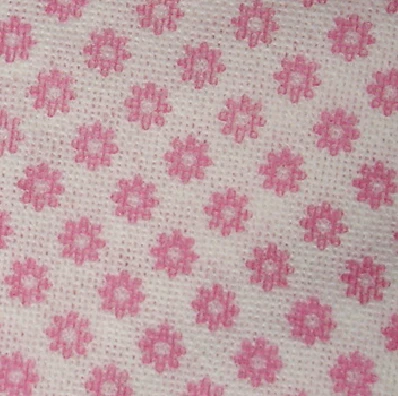
There is no single best nonwoven fabric for every agricultural application - the right choice depends on what you're protecting against, for how long, and what happens to the material once the season ends. Spunbond polypropylene remains the most widely used, cost-effective option for frost protection, insect exclusion, and general row covers. Needle-punched nonwovens suit heavy-duty, long-term ground cover and erosion control. Spunlace (hydroentangled) nonwovens - particularly those made from viscose or cotton fiber - offer a softer, biodegradable alternative that's gaining ground for nursery fabric, seedling and root-ball protection, and eco-conscious mulching as regulations and buyers increasingly favor materials that break down safely in soil.
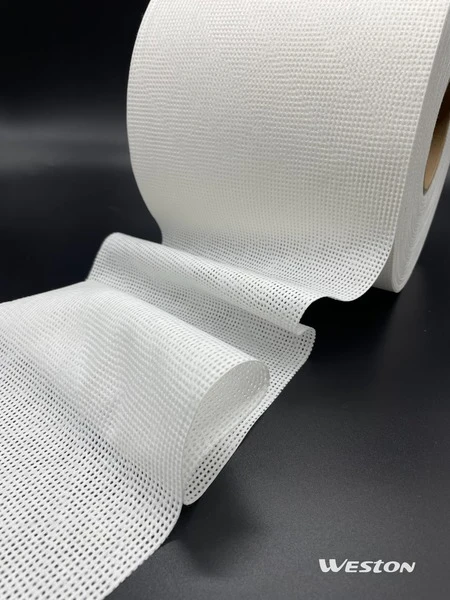
Modern growers are managing a longer list of threats than a generation ago: unpredictable frost, resurgent pest pressure, herbicide-resistant weeds, drying wind, and UV exposure that shortens the productive life of every crop cycle. Nonwoven fabric - engineered sheets of bonded fiber rather than woven or knitted cloth - has become one of the standard tools growers use to manage several of these at once, either replacing plastic film outright or working alongside it.
But "nonwoven" isn't one material. It's a manufacturing category covering several distinct fabric types, each built through a different bonding process and suited to different jobs in the field. Choosing the wrong one doesn't just waste budget - it can mean a cover that tears mid-season, lets frost through anyway, or fails to break down the way a compostability claim promised. This guide walks through the main nonwoven types used in agriculture today, matches each to the application it actually performs best in, and lays out what procurement teams should check before placing an order.
What Is Nonwoven Fabric and Why Does It Matter in Agriculture?
Nonwoven fabric is made by bonding fibers together - thermally, mechanically, or with high-pressure water jets - rather than weaving or knitting them. That construction gives nonwovens a combination that woven fabric and solid plastic film both struggle to match: breathable enough to let air, moisture, and light through in controlled amounts, yet dense enough to block frost, insects, and weed growth.
In practice, growers rely on nonwoven fabric for:
Frost and cold protection - floating row covers laid directly over crops or over hoops
Insect and pest exclusion - fine mesh that keeps flying pests off young plants
Weed suppression - ground cover that blocks light without blocking water
Windbreak protection - reducing wind stress on young or exposed plants
Moisture and UV regulation - shading beds and reducing evaporation
The shift toward nonwovens, and away from solid plastic sheeting, is also being pushed by sustainability pressure. Regulators and retailers are scrutinizing what happens to agricultural plastic after the season ends more closely than ever, which is reshaping demand across the whole category - more on that in the trends section below.
The Main Types of Nonwoven Fabric Used in Agriculture
Spunbond Nonwoven (PP)
Spunbond fabric is made by extruding continuous polypropylene filaments and thermally bonding them into a web. It's typically produced in the 17–70 gsm range for agricultural use, UV-stabilized to survive a season or more outdoors, and remains the most cost-effective option for covering large areas. This is the default material behind most commercial frost fleece, floating row covers, and lightweight ground cover.
Needle-Punched Nonwoven
Needle-punched fabric is mechanically bonded: barbed needles repeatedly punch through a fiber web to entangle it into a dense, durable sheet, typically 100–400+ gsm. It costs more per square meter than spunbond but lasts considerably longer, making it the standard choice for erosion control, orchard and vineyard weed mat, and other ground cover expected to stay in place across multiple seasons.
Meltblown Nonwoven
Meltblown fabric uses extremely fine fibers, typically 10–30 gsm, to create a dense filtration barrier. It's rarely used alone in the field; its role in agriculture is usually as one layer inside a composite structure, adding barrier performance that spunbond alone can't provide.
Spunlace (Hydroentangled) Nonwoven
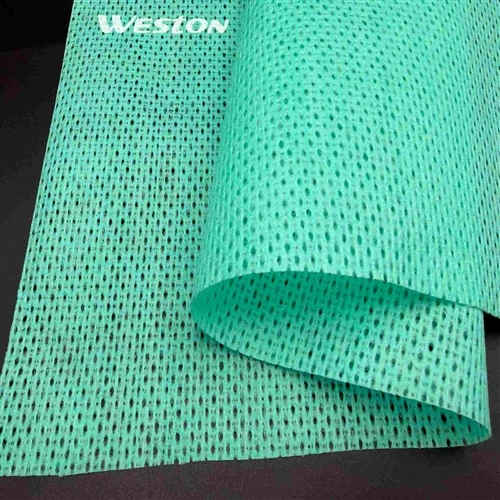
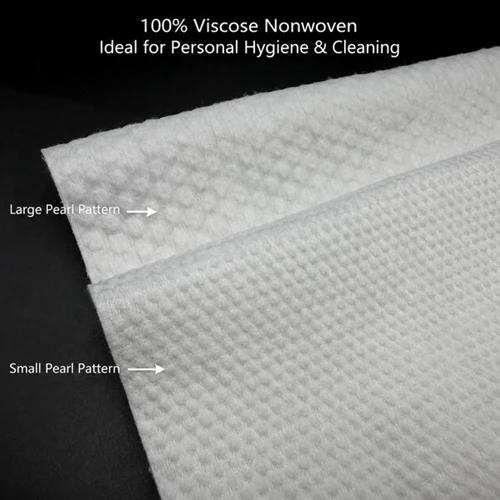
Spunlace fabric is bonded using high-pressure water jets rather than heat or needles, with no chemical binders required. That process is compatible with natural fibers - viscose, cotton, and blends - as well as synthetics, producing a softer, cloth-like material with strong wet tensile strength, typically in the 30–150 gsm range. Spunlace hasn't traditionally been the default choice for large-scale row covers, where spunbond's lower cost per square meter wins out. But it fills a real niche: nursery and seedling wrap, root-ball protection, and - increasingly - biodegradable mulch nonwoven fabrics for agriculture , where softness and natural-fiber biodegradability matter more than covering the largest possible area at the lowest possible cost.
Composite / Laminated Nonwovens
Combining layers - spunbond with film, or spunlace with spunbond - produces fabric that inherits strengths from each layer: waterproofing, softness, and durability in a single sheet. These are typically specified for higher-value or higher-exposure applications where a single-layer fabric can't meet every requirement at once.
|
Type |
Typical Weight |
Key Strength |
Best Agricultural Use |
Biodegradable Option |
|
Spunbond (PP) |
17–70 gsm |
UV-stable, breathable, cost-efficient |
Frost/row covers, insect netting |
Limited |
|
Needle-Punched |
100–400+ gsm |
Heavy-duty, long service life |
Ground cover, erosion control |
With natural-fiber blends |
|
Meltblown |
10–30 gsm |
Fine-fiber barrier |
Composite layers only |
Limited |
|
Spunlace (Hydroentangled) |
30–150 gsm |
Soft, strong wet strength, natural-fiber compatible |
Nursery/seedling wrap, biodegradable mulch |
Yes (viscose/cotton) |
Reference ranges based on common industry practice; request Weston Nonwoven's spec sheet for verified figures on a specific product.
Which Nonwoven Is Best for Your Specific Application?
Frost and cold protection. Lightweight spunbond, typically 17–30 gsm, is the standard choice - light enough to lay directly over crops without crushing them, breathable enough to avoid trapping moisture and encouraging fungal growth, and inexpensive enough to cover large areas.
Insect and pest exclusion. Ultra-light spunbond or fine mesh nonwoven, chosen for pore size as much as weight, keeps flying pests off seedlings without blocking pollinator access once covers are removed at flowering.
Weed control and ground cover. Needle-punched fabric or heavier spunbond both work, with the choice coming down to expected service life: a single-season application favors spunbond's lower cost, while a multi-season vineyard or orchard installation favors needle-punched durability.
Windbreaks. Mid-weight spunbond balances wind reduction against airflow - too dense and it creates its own wind-loading problems; too light and it doesn't slow the wind enough to matter.
Nursery, seedling, and root-ball protection. This is where spunlace earns its place. Its softness reduces stem and leaf abrasion on delicate young plants, and its strong wet tensile strength holds up during transplanting and irrigation.
Biodegradable mulching and eco-conscious farming. Spunlace made from viscose or cotton fiber blends breaks down in soil without leaving microplastic residue behind - a property standard spunbond PP cannot currently match - making it a genuine fit as biodegradable mulch requirements tighten across major export markets.
Key Buying Factors for Agricultural Nonwoven Fabric
Before placing an order, procurement teams should confirm:
GSM vs. light transmission - heavier fabric protects more but blocks more light; match GSM to the crop's light requirements, not just the temperature threat
UV stabilization and service life - ask whether the fabric is rated for a single season or multiple years of outdoor exposure
Air and water permeability - insufficient permeability traps heat and moisture, encouraging rot and fungal disease
Fiber composition - virgin PP, recycled content, or biodegradable natural fiber, depending on end-of-life requirements
Roll width, length, and customization - confirm the supplier can cut, print, or reinforce edges to your specification
Certifications - OEKO-TEX for chemical safety, EN 17033 for compostable mulch film claims, REACH compliance for EU import
Cost per hectare and reusability - a higher per-roll price can still be the lower-cost option if the fabric survives multiple seasons
Supplier reliability - MOQ, lead time, and batch-to-batch consistency matter as much as the spec sheet itself
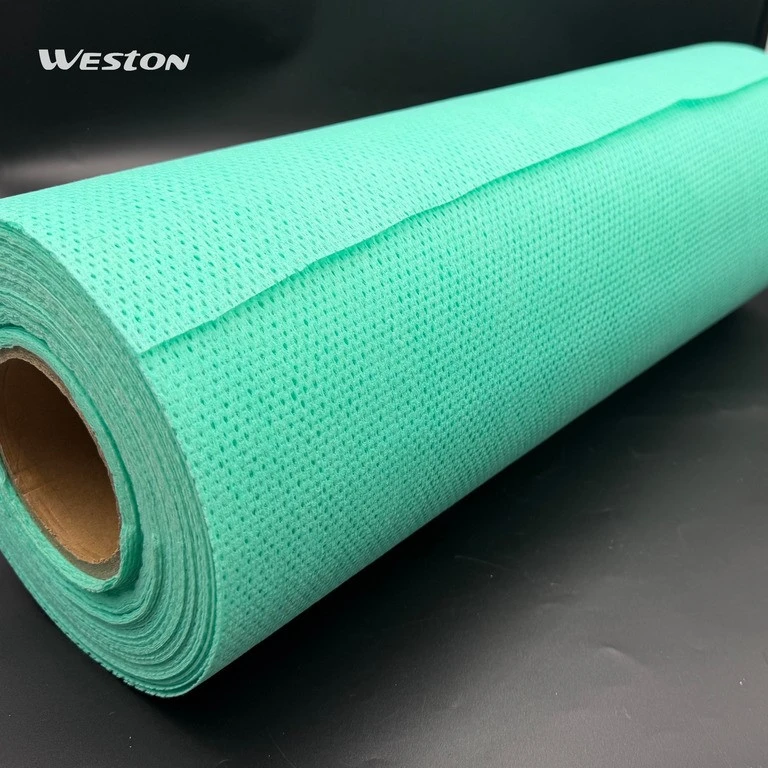
Spunbond vs. Spunlace vs. Needle-Punched: Side-by-Side
|
|
Spunbond (PP) |
Spunlace (Hydroentangled) |
Needle-Punched |
|
Typical use |
Frost covers, insect netting |
Nursery wrap, biodegradable mulch |
Ground cover, erosion control |
|
Feel |
Papery, crisp |
Soft, cloth-like |
Dense, felt-like |
|
Biodegradable option |
Limited |
Yes (viscose/cotton) |
With natural-fiber blends |
|
Relative cost per m² |
Low |
Medium–high |
Medium |
|
Typical service life |
1–2 seasons |
1 season, or compostable end-of-life |
Multiple seasons |
Why Biodegradable Nonwoven Is Gaining Ground in Agriculture
The case for biodegradable agricultural fabric has moved past environmental preference and into regulatory reality. Conventional polyethylene mulch film is now estimated to accumulate in intensively farmed soil at rates of up to 30 kg per hectare, and the collection of non-biodegradable film that isn't left to degrade is estimated to strip roughly 166,000 tonnes of topsoil from European fields every year in the process. That evidence, combined with tightening plastic rules across the EU and China, has compressed the adoption timeline for biodegradable agricultural films through 2026.
The EU has already built the regulatory scaffolding around this shift. Soil-biodegradable mulch films are formally recognized under EU Fertilising Products Regulation (EU) 2019/1009 as Soil Improvers, eligible for CE marking since November 2024, and must meet the EN 17033 standard - including a requirement that at least 90% of the material's organic carbon convert to CO2 during biodegradation. For nonwoven suppliers, that regulatory clarity is turning "biodegradable" from a marketing claim into a certifiable spec that buyers can actually verify before purchase.
Market data points the same direction. Industry research values the global agricultural nonwoven fabric segment at roughly $3.6 billion as of 2024, projected to grow at a 5.5% CAGR through 2033, with sustainability-driven demand cited as one of the clearer growth drivers behind that curve. For growers and distributors exporting into the EU in particular, sourcing nonwoven fabric with a genuine biodegradable fiber option is increasingly a compliance question, not just a sustainability one - and it's the fastest-growing reason buyers are looking at spunlace as more than a niche material.
How Weston Nonwoven Supports Agricultural Protection Projects
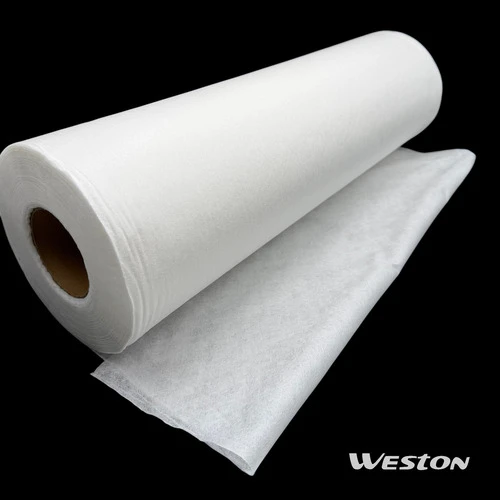
Weston Nonwoven manufactures spunlace (hydroentangled) fabric for hygiene and technical applications, with fiber blends and finishing treatments built to order. For agricultural and horticultural buyers specifically, our most requested line is our 100% Viscose Nonwoven Fabric For Agriculture - a fully viscose-based spunlace fabric built for nursery wrap, seedling protection, and biodegradable mulch applications, with GSM, width, and roll length customized to project specifications and compostability documentation available on request.
We work with importers, distributors, and agricultural brands sourcing at container volumes, with in-house quality control on every production batch. If your project calls for a spunbond, needle-punched, or composite structure instead of spunlace, we're happy to point you toward the right specification even where it falls outside our own production line. Get in touch with our technical team, or request a sample to test the fabric under your own field conditions.
Frequently Asked Questions
What GSM nonwoven fabric is best for frost protection?
Most floating row covers for frost protection use spunbond polypropylene between 20–30 gsm - light enough to lay directly on crops while still trapping several degrees of radiant heat overnight.
Is agricultural nonwoven fabric reusable?
UV-stabilized spunbond and needle-punched fabrics can typically be reused for 2–5 seasons if stored properly between uses; lighter, uncoated fabrics are usually treated as single-season.
What's the difference between spunbond and spunlace nonwoven fabric?
Spunbond is thermally bonded from continuous synthetic filament and optimized for cost-effective coverage of large areas. Spunlace is bonded with water jets, can incorporate natural fibers like viscose or cotton, and has a softer, cloth-like feel.
Are nonwoven crop covers biodegradable?
Standard spunbond PP is not biodegradable. Spunlace fabric made from viscose or cotton fiber blends can be, and can meet compostability standards such as EN 17033 when specified and certified accordingly.
How long does UV-stabilized nonwoven fabric last outdoors?
It depends on treatment and weight - typically a single growing season for light fabrics, up to 3–5 years for heavier, UV-treated ground cover.
Can nonwoven fabric replace plastic mulch film?
In many applications, yes. Nonwoven fabric offers similar weed suppression and soil-temperature benefits while remaining permeable to water and air, and biodegradable versions address end-of-season disposal in a way solid film cannot.
What's the best nonwoven fabric for organic farming?
Organic certification programs generally favor materials free of synthetic residue at end-of-life, which points toward biodegradable spunlace fabric over standard PP - check with your certifying body for specific approved materials.
How do I choose a reliable nonwoven fabric supplier?
Look for consistent batch-to-batch GSM and width tolerance, relevant certifications (OEKO-TEX, EN 17033), transparent MOQ and lead times, and a willingness to provide samples before you commit to a full order.
Conclusion
There's no universal answer to which nonwoven material is best for agricultural protection - the right fabric depends on what you're protecting, for how long, and what happens to the material once the season ends. Spunbond remains the workhorse for frost and pest protection at scale; needle-punched fabric earns its higher cost in multi-season ground cover; and spunlace, particularly in viscose and cotton blends, is carving out a genuine role wherever softness or biodegradability outweighs raw cost-per-square-meter - a role that's only growing as EU and Chinese regulation tightens around what agricultural plastic is allowed to leave behind.
If you're not sure which category fits your project, send us your application details and we'll recommend a specification - including a sample. Just email info@westonmanufacturing.com- before you commit to a full order.