Wood Pulp vs Microfiber Wipes: Which Is Better for Automotive Cleaning?
How to Choose the Right Wipe for Fluid Cleanup, Surface Finishing, and Everyday Repair Work
Neither wood pulp-based wipes nor microfiber wipes is universally better for automotive cleaning. Wood pulp blend wipes are generally better suited to high-volume oil, grease, coolant, and fluid cleanup, where absorbency, wet strength, and disposable cost matter most. Microfiber is usually the better choice for glass, paint, dashboards, and other finish-sensitive surfaces where low lint, particle pickup, and controlled wiping performance are more important.
For most automotive repair shops, the practical answer is not to choose one material for every task. The better approach is to match the wiping material to the fluid, surface, and workflow.
Quick Answer: Wood Pulp or Microfiber?
|
Cleaning requirement |
Better choice |
Why |
|
Oil, grease, and fluid spills |
Wood pulp blend wipe |
High absorbency and disposable convenience |
|
High-volume daily cleanup |
Wood pulp blend wipe |
No laundering required |
|
Reusable wiping |
Microfiber |
Designed for repeated washing and use |
|
Glass and finish work |
Microfiber |
Fine fibers can provide low-lint, streak-resistant wiping |
|
Precision surface cleaning |
Microfiber |
Better particle and residue pickup |
|
General workshop wiping |
Wood pulp blend wipe |
Practical for heavy-duty, everyday cleanup |
|
Best wipes for automotive repair |
Depends on the task |
Different jobs require different wiping properties |
The key is to compare performance by application rather than treating "wood pulp" or "microfiber" as a single product category.

1. What Do "Wood Pulp" and "Microfiber" Actually Mean?
The first mistake in a material comparison is assuming that each term describes one standardized product.
In industrial wiping, wood pulp wipes generally refers to cellulose-rich disposable wiping materials. They are often made from a blend of wood pulp and synthetic fibers, such as polyester, and may be produced using spunlace or other nonwoven processes. The synthetic component can improve wet strength and durability compared with a wipe made from cellulose alone.
Microfiber wipes, by contrast, are made from extremely fine synthetic fibers, commonly polyester and polyamide (nylon). Many industrial microfiber constructions use split fibers to increase the available surface area. This fine structure can improve the ability of the wipe to pick up and retain small particles, dust, and residues.
The difference is important because a wipe's actual performance depends not only on the fiber name, but also on fiber blend, weight, construction, finishing, and manufacturing quality.
In simple terms, cellulose-rich disposable wipes are often optimized for absorbing and containing liquids, while microfiber is often optimized for fine surface wiping and particle pickup.
2. What Happens on the Automotive Shop Floor?
Automotive repair creates a wide variety of cleaning problems. Technicians may deal with engine oil, transmission fluid, coolant, brake fluid, grease, dirty water, brake dust, and other residues within the same shift.
For these applications, a wood pulp blend wipe can be highly practical. Its absorbent fiber structure can take up oil and water-based liquids quickly, making it useful for wiping dipsticks, cleaning greasy components, absorbing spills, and handling general workshop messes.
This is where disposable wipes often have a clear operational advantage. A technician can use the wipe, contain the contamination, and discard it without sending it through a laundering process.
Microfiber becomes more useful when the goal changes from absorbing a mess to finishing a surface.
Glass, painted panels, dashboards, trim, and other visible surfaces require more controlled wiping. A properly constructed microfiber wipe can offer fine fibers, good residue pickup, and low-lint performance, which can help reduce streaking and visible wiping marks.
The distinction can be summarized simply:
Wood pulp-based wipes are often better for heavy contamination and fluid cleanup. Microfiber is often better for controlled surface finishing.
3. Absorbency vs Surface Control
Absorbency is one of the most important reasons automotive shops continue to use disposable nonwoven wipes.
When a spill occurs under a vehicle or a technician needs to remove oil from a component, the primary requirement is not whether the wipe can polish the surface. It is whether the material can absorb the liquid quickly and hold it securely.
Wood pulp contains naturally hydrophilic cellulose fibers, which makes cellulose-rich wiping materials effective for many water-based and oily cleanup applications. Adding synthetic fibers and using an appropriate nonwoven structure can improve the wet strength needed for practical shop use.
Microfiber can also absorb liquids effectively, but its main advantage is often the combination of liquid pickup and fine surface contact. The very fine fibers can reach into small surface irregularities and help capture residue and particles during wiping.
That makes microfiber particularly useful when the cleaning task involves both removing contamination and leaving a visually clean surface.
The better material therefore depends on what matters most:
Maximum practical liquid cleanup → wood pulp blend
Fine residue and surface cleaning → microfiber
4. Why Lint Matters More Than Many Buyers Expect
Lint is easy to overlook when purchasing wiping materials, especially for jobs where the wipe will simply be thrown away.
But lint can become a significant issue when wiping glass, painted surfaces, interior trim, or components that need to remain visually clean.
Wood pulp-based wipes can have very different lint characteristics depending on their fiber blend, web structure, bonding method, and manufacturing process. Some grades are designed for heavy-duty cleanup rather than finish-sensitive work.
Microfiber is often selected for applications where low lint and fine particle pickup are important. However, microfiber should not automatically be considered "lint-free." Product construction and laundering condition matter, and a contaminated or poorly maintained microfiber towel can transfer particles back onto a surface.
For precision applications, the actual product specification matters more than the material name alone.
5. Which Is Better for Glass, Paint, and Sensor-Related Surfaces?
Automotive repair is increasingly connected to electronics and sensor systems. Cameras, radar-related components, displays, and other sensitive surfaces can require more careful cleaning than a conventional engine component.
For any sensor or camera-related application, the vehicle or component manufacturer's cleaning instructions should take priority. Where the instructions call for a clean, non-abrasive, low-lint wiping material, a properly selected microfiber product may be more appropriate than a heavy-duty disposable shop wipe.
The same principle applies to glass and paintwork.
A wipe intended for absorbing oil under a vehicle is not automatically the right wipe for cleaning a windshield immediately before vehicle delivery.
For finish-sensitive surfaces, the condition of the wipe is also critical. Dirt or abrasive particles trapped in any wiping material can increase the risk of surface damage. Clean material, appropriate wiping pressure, and application-specific product selection all matter.
This is why microfiber is commonly preferred for detailing and finish work, while absorbent disposable wipes remain practical for heavy workshop cleanup.
6. What Does Each Option Really Cost?
Purchase price is only part of the calculation.
Disposable wood pulp-based wipes generally have a lower cost per individual wipe and require no laundering. Their operating cost is therefore relatively straightforward:
Purchase cost + disposal
Microfiber has a different cost structure:
Purchase cost + laundering + handling − reuse value
A quality microfiber towel can be washed and reused many times, which can reduce the cost per use over its working life. But that advantage depends on having an effective laundering system.
A shop that uses hundreds of wiping materials every day needs to consider:
- collection and sorting
- washing capacity
- detergent selection
- drying
- labor
- contamination control
- towel replacement
Microfiber should also be washed appropriately to preserve its wiping performance. Fabric softener, for example, can coat the fibers and reduce the surface characteristics that make microfiber effective.
This means microfiber is not automatically the cheaper option just because it is reusable. It becomes economically attractive when the shop can actually manage and reuse it effectively.
For high-volume, contamination-heavy work, disposable wipes can remain the more practical choice even when their unit price is higher or lower than a particular reusable towel.

7. What About Environmental Impact?
It is difficult to declare one material universally more sustainable.
Wood pulp is derived from a renewable biological resource, and cellulose is biodegradable under appropriate conditions. However, a disposable wipe contaminated with oil, chemicals, or other workshop residues cannot simply be treated as compostable material.
Microfiber has a different environmental profile. It is based on synthetic fibers and does not biodegrade in the same way as cellulose. At the same time, a microfiber towel can be reused many times, potentially reducing the number of individual wiping materials that a shop consumes.
The better environmental outcome therefore depends on the complete wiping system, including sourcing, product life, laundering, waste handling, and actual number of uses.
A reusable product is not automatically the lowest-impact option if it requires inefficient washing, while a disposable product is not automatically the worst option if it significantly reduces water, energy, and operational requirements in a high-contamination application.
The most meaningful comparison is the whole-use system, not the fiber type alone.
8. When Should an Automotive Shop Choose Each Material?
Instead of asking which material is "best," it is more useful to assign each one to the jobs where it performs well.
Choose wood pulp blend wipes for:
- Oil and fluid spills
- Engine and transmission work
- Grease removal
- Undercarriage cleanup
- General workshop wiping
- High-volume daily consumption
- Jobs where disposable handling is preferred
Choose microfiber for:
- Glass cleaning
- Vehicle detailing
- Paint and finish work
- Dashboard and interior surfaces
- Final cleaning before vehicle delivery
- Precision wiping
- Applications where low lint and fine particle pickup are important
- Jobs where repeated reuse is practical
This task-based approach is usually more effective than replacing one material with the other across the entire workshop.
9. How to Build a Practical Wiping System
A well-organized automotive shop does not necessarily need dozens of wipe types. A small number of clearly assigned wiping materials can cover most daily requirements.
One practical system is to keep a highly absorbent disposable wipe for contaminated, high-volume work and a dedicated microfiber supply for clean, finish-sensitive applications.
The two materials should also be kept physically and operationally separate where possible. Using the same microfiber towel for greasy engine components and final paint finishing defeats the purpose of having a reusable precision wipe.
Clear task assignment helps prevent cross-contamination:
Dirty and high-fluid work → disposable absorbent wipe
Clean and finish-sensitive work → dedicated microfiber
That simple separation can improve consistency as much as the choice of material itself.
The Bottom Line
So, which is better: wood pulp or microfiber?
The answer depends on the job.
For oil, grease, coolant, spills, and other high-volume workshop cleanup, a well-designed wood pulp blend wipe can offer the absorbency, wet strength, and disposable convenience that automotive repair shops need.
For glass, detailing, dashboards, paintwork, and other finish-sensitive surfaces, microfiber is often the better option because its fine fiber structure can provide low-lint wiping and effective particle and residue pickup.
That is why the best wipes for automotive repair are not necessarily one single material. The most practical wiping system often combines disposable absorbent wipes for heavy contamination with reusable microfiber for precision and finishing work.
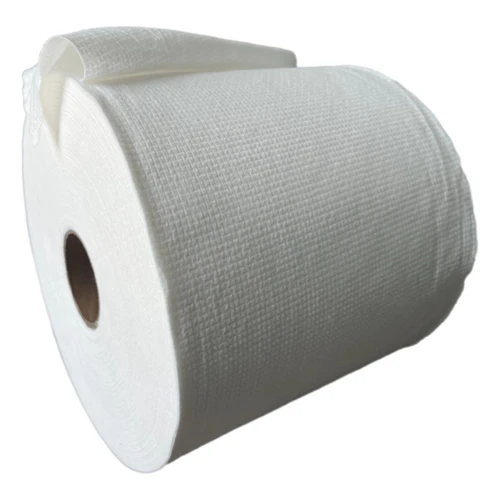
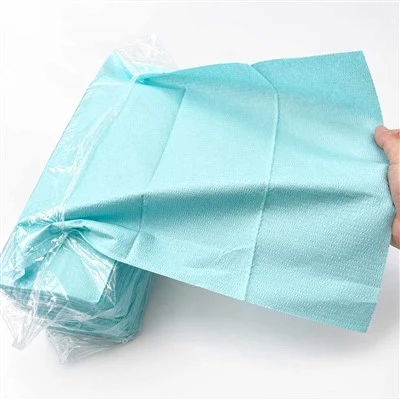
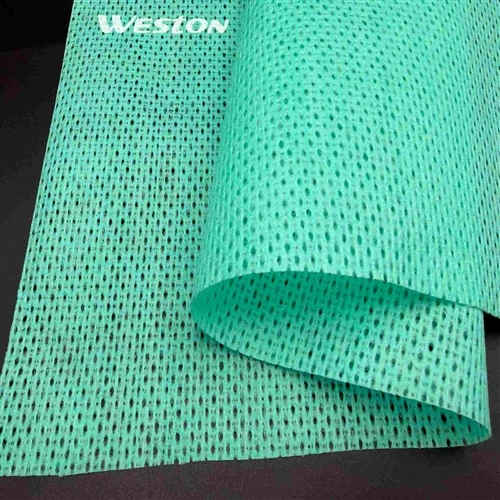
For the heavy-duty side of that system, Weston Nonwoven manufactures Industrial Heavy Duty Oil Wipes using a wood pulp blend and spunlace construction. The material is designed to provide high absorbency together with improved wet strength for demanding oil, grease, and fluid cleanup applications.
The key is not choosing the cheapest wipe or the material with the longest feature list. It is choosing a wipe that matches the contamination, surface, and workflow of the job.