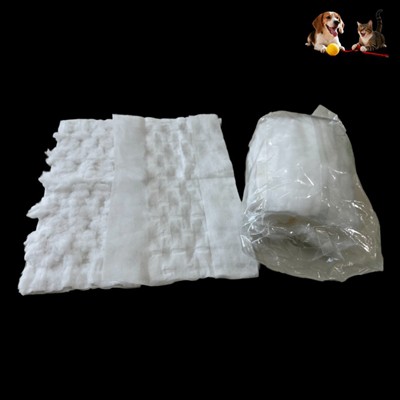
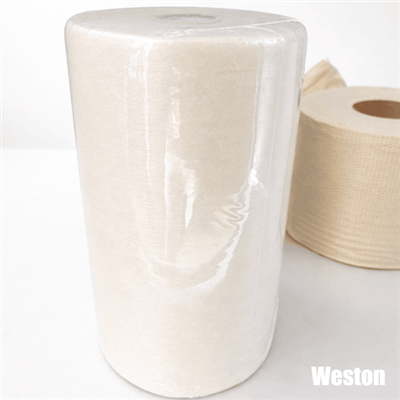
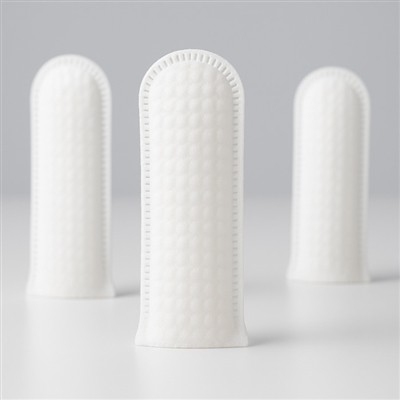
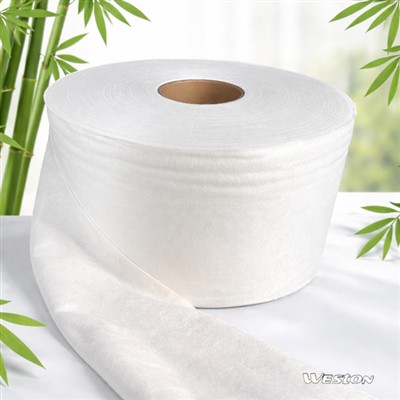
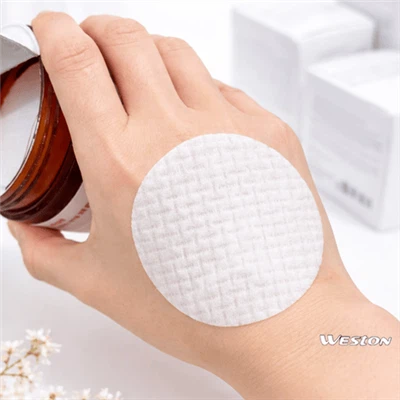
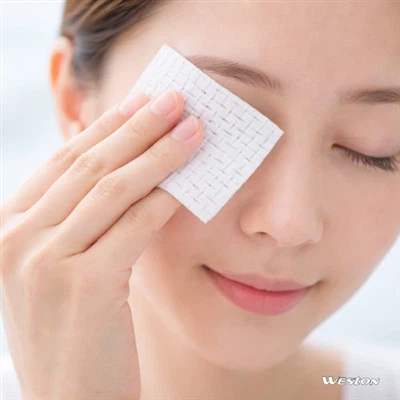
Cotton has been a staple in textiles for centuries, but in the world of modern materials, non-woven fabrics have emerged as a revolutionary category. So, the question arises: Is cotton non-woven fabric possible? The answer is yes-and it is becoming increasingly important across medical, cosmetic, and baby care applications. This article breaks down what cotton non-woven fabric is, how it is made, its advantages, and its real-world uses.
1. Understanding Non-Woven Fabrics
Non-woven fabrics differ fundamentally from traditional woven or knitted textiles. While conventional fabrics rely on interlaced yarns, non-wovens are made by bonding fibers together using mechanical, thermal, or chemical processes. This results in sheets of fabric that can be produced quickly, efficiently, and with unique properties such as high absorbency or softness.
Key processes for creating non-woven fabrics include:
Spunlace (hydroentangling): High-pressure water jets entangle fibers to create strong, soft sheets.
Needle punching: Fibers are mechanically interlocked with needles.
Thermal bonding: Heat and pressure bond fibers, often with bi-component fibers.
Cotton, with its natural softness and absorbency, is perfectly suited for these processes, giving rise to cotton non-woven fabrics that retain many of cotton's desirable characteristics.
2. Cotton Non-Woven vs. Traditional Cotton Fabric
|
Feature |
Woven Cotton |
Cotton Non-Woven Fabric |
|
Structure |
Interlaced yarns |
Fibers bonded directly |
|
Production speed |
Moderate |
Fast, scalable |
|
Absorbency |
Moderate |
High, depending on fiber density |
|
Softness |
Natural |
Ultra-soft, customizable |
|
Applications |
Clothing, home textiles |
Medical pads, makeup removal, baby wipes |
Unlike woven cotton, non-woven cotton doesn't require spinning into yarn, making it faster and more cost-effective to produce in large volumes. Its properties can be engineered precisely for the intended use.
3. Advantages of Cotton Non-Woven Fabric
Cotton non-wovens are increasingly favored for several reasons:
Natural and skin-friendly: Ideal for sensitive applications like Ultra-Soft Cotton Makeup Pads For Sensitive Skin.
High absorbency: Retains liquids efficiently, suitable for medical wipes and cosmetic pads.
Disposable and hygienic: Products such as Baby Wipes 100% Cotton Vacuum Sealed and Cotton Disposable Makeup Remover Pads meet strict hygiene standards.
Biodegradable and eco-conscious: Cotton-based non-wovens reduce reliance on synthetic alternatives.
By adjusting fiber density, bonding method, and thickness, manufacturers can create fabrics that balance softness, strength, and absorbency.

4. Real-World Applications
Cotton non-woven fabrics are widely used across industries:
Medical: Sterile cotton pads and wipes, including Cotton Nonwoven Fabric For Medical Use.
Cosmetic: Ultra-soft makeup pads that are gentle on sensitive skin.
Baby care: Disposable wipes designed for comfort and hygiene, such as vacuum-sealed baby wipes.
Household: Cleaning wipes that are lint-free and absorbent.
These fabrics combine performance, safety, and convenience in a way that traditional woven fabrics cannot.
5. Sustainability Considerations
While cotton is a natural material, not all cotton non-wovens are created equal. Environmental impact depends on:
Farming practices: Organic or responsibly sourced cotton reduces water and chemical usage.
Production processes: Efficient bonding techniques minimize waste.
End-of-life disposal: Fully biodegradable cotton non-wovens are increasingly preferred.
Brands and factories that adopt sustainable production methods can provide high-quality, eco-friendly cotton non-wovens without sacrificing performance.
6. Visual Insight: Applications vs. Fabric Properties
To illustrate, the following chart shows typical cotton non-woven products and the balance between softness, absorbency, and durability:
|
Product |
Softness |
Absorbency |
Durability |
Eco-Friendliness |
|
Cotton Nonwoven Fabric For Medical Use |
Medium |
High |
High |
High |
|
Ultra-Soft Cotton Makeup Pads For Sensitive Skin |
Very High |
Medium |
Medium |
High |
|
Baby Wipes 100% Cotton Vacuum Sealed |
High |
High |
Medium |
Medium |
|
Cotton Disposable Makeup Remover Pads |
Very High |
Medium |
Low |
High |
This visual emphasizes how cotton non-woven fabrics can be engineered for very specific applications, balancing key properties according to user needs.
7. Choosing High-Quality Cotton Non-Woven Fabrics
When selecting cotton non-woven products, consider:
Fiber purity and GSM (grams per square meter)
Absorbency and lint-free performance
Bonding method (spunlace, thermal, needle-punched)
Compliance with medical, cosmetic, or baby-care standards
For example, Weston Nonwoven Factory produces a range of cotton non-woven fabrics that meet rigorous quality standards, including Cotton Nonwoven Fabric For Medical Use and Ultra-Soft Cotton Makeup Pads For Sensitive Skin-offering reliable performance and sustainability.
8. Conclusion
Cotton non-woven fabrics are more than just "another material." They combine the natural benefits of cotton with the engineering advantages of non-woven technology. From medical applications to baby care and cosmetic products, these fabrics provide hygiene, comfort, and sustainability. As demand for plant-based, high-performance disposable materials grows, cotton non-wovens are poised to lead the market, proving that nature and innovation can work hand in hand.