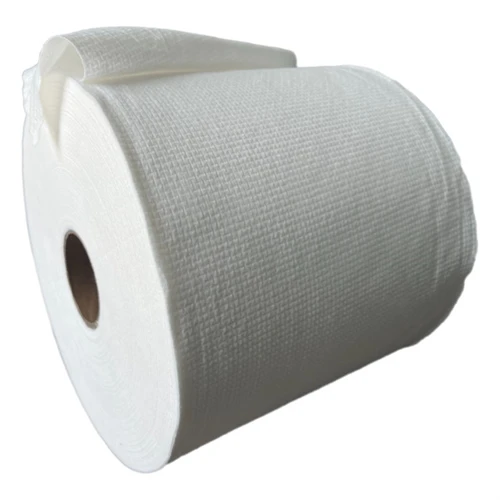
Can Spunlace Nonwoven Fabric Be Customized?
Yes. Spunlace nonwoven fabric can be customized in fiber composition, weight (30–120 gsm), width (up to 3,400 mm), roll length, surface pattern, color, printing and finishing. At Weston Nonwoven, each of these parameters can be tailored to your application, subject to minimum order quantities (MOQ) for custom specifications.
If you buy for wet wipes, facial masks, medical and hygiene products, or household and industrial cleaning, a standard roll rarely fits every need. Buyers of customized spunlace nonwoven fabric can match the material to their product, their converting equipment and their brand, instead of adapting the product to whatever stock is available. This guide walks through what can be changed, how each choice affects performance, and how to start a custom order.

What Can Be Customized in Spunlace Nonwoven Fabric?
Eight parameters can be customized, and together they define how the fabric feels, performs and runs on your line. A reliable spunlace nonwoven manufacturer controls all of them in-house, so changing one does not mean compromising on another. The table summarizes what is available at Weston Nonwoven.
|
Parameter |
Customization range |
What it affects |
|
Fiber composition |
Custom blend ratios, e.g. 70/30 viscose/PET, 100% cotton |
Softness, absorbency, strength, cost |
|
Weight |
30–120 gsm |
Thickness, hand feel, liquid capacity |
|
Width |
Slit to any width up to 3,400 mm |
Fit with converting equipment, material waste |
|
Roll length |
100–3,000 m per roll |
Roll changes, handling, transport |
|
Surface pattern |
Plain, cross-lapping, pearl, diamond, mesh, wood pulp patterns, custom embossing |
Appearance, texture, cleaning action |
|
Color |
White (standard), natural, custom dyed |
Product identity, application fit |
|
Printing |
Custom logo or pattern |
Branding |
|
Finishing |
Anti-bacterial, aloe vera coating, hydrophilic, hydrophobic |
Function and skin feel |
MOQ applies to custom specifications. The sections below explain each option in turn.
Fiber Composition: Choosing the Right Blend
You can choose any blend ratio, such as 70/30 viscose/PET, 100% cotton or a fully custom blend. Fiber choice is the biggest single factor in how a spunlace fabric behaves, so it is usually the first decision to settle.
Viscose is soft and highly absorbent, which suits products that need to hold and release liquid.
PET (polyester) adds strength, dimensional stability and a firmer feel, and it absorbs less than viscose.
Cotton is a natural, skin-friendly option for products where fiber origin matters to the end consumer.
Start from the property that matters most. If absorbency comes first, raise the viscose share. If durability matters more, raise the PET share. If the product is marketed as natural, 100% cotton is the straightforward route. Cost also moves with the blend, so share your target price when you talk to our team and we can suggest a ratio that balances performance and budget.
Weight (GSM): From 30 to 120 gsm
Any weight from 30 to 120 gsm is available. Weight determines how thick the fabric feels, how much liquid it holds and how well it stands up to rubbing, and it also drives material cost per square meter.
Lighter fabrics at the low end of the range feel soft and thin, which suits products used on skin. Heavier fabrics at the upper end are thicker and more durable, which suits scrubbing and heavy-duty wiping. Because weight and fiber blend interact, a custom gsm is best chosen together with the fiber ratio rather than on its own: the same weight in viscose and in PET will not feel or perform the same.
If you are unsure where to land, tell us the product and how it will be used, and we can help narrow the range.
Width and Roll Length
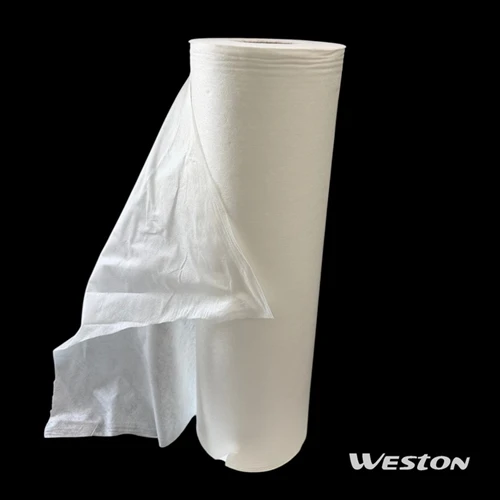
Fabric can be slit to any width up to 3,400 mm, and roll lengths can be wound from 100 m to 3,000 m per roll. Both settings should follow your downstream process, not the other way around.
On width, match your slitting, folding or wipe-making machines. A width that fits your equipment exactly reduces trimming waste and setup time.
On roll length, longer rolls mean fewer roll changes and less downtime on a high-speed line, but they are heavier to handle and need more storage space. Shorter rolls are easier to move and suit smaller machines, trial runs and limited warehouse space. Also consider how the rolls will be shipped, since length and diameter affect how many fit in a container.
Surface Pattern: Plain, Pearl, Diamond, Mesh and More
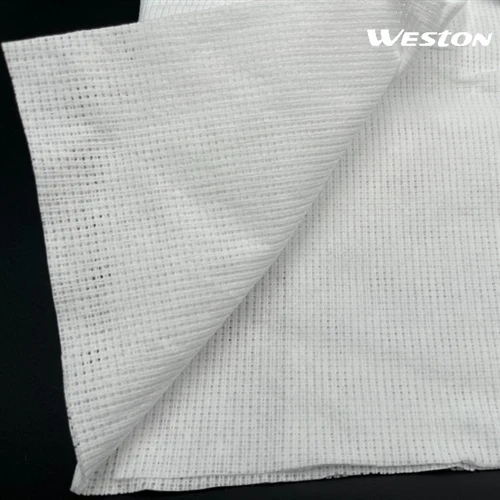
Choose from plain, cross-lapping, pearl, diamond, mesh and wood pulp patterns, or request custom embossing. The pattern changes both how the fabric looks and how it behaves in use.
Plain: a smooth, uniform surface, common for facial masks and general-purpose wipes.
Cross-lapping: the fiber web is laid crosswise, which gives more balanced strength in both directions.
Pearl: a raised, dotted texture that adds a little grip and visual interest.
Diamond: a diamond-shaped texture that gives a more defined surface for cleaning.
Mesh: an open, net-like structure that is light and breathable.
Wood pulp patterns: suited to products where liquid absorption is a priority.
Custom embossing lets you add a pattern of your own, so the fabric can carry a distinctive texture that sets your product apart. Pattern choice is easiest to judge by touch, so discuss sample options with our team before deciding.
Color and Printing
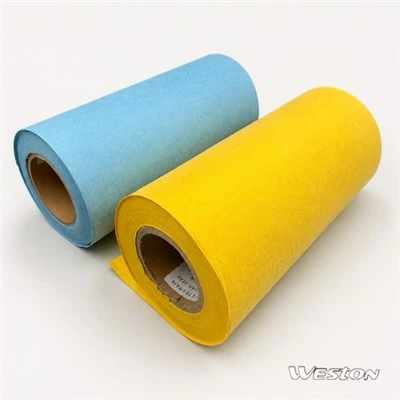
White is the standard color, and natural and custom-dyed colors are also available. Custom logos or patterns can be printed on the fabric as well.
White suits most hygiene, medical and beauty applications where a clean look matters. Natural shades suit products positioned as eco-friendly or minimally processed. Custom dyeing helps a product stand out, or lets you color-code different grades and uses within one product line.
Printing turns the fabric into a branded surface. For private-label wipes and brands that need OEM spunlace with their own logo or pattern, printing and custom embossing can be combined with the fabric choices above to give a finished look that is clearly yours. Share your artwork and color requirements early so feasibility can be confirmed before production.
Finishing Treatments: Adding Functionality
Anti-bacterial, aloe vera coating, hydrophilic and hydrophobic finishes are all available. A finishing treatment is applied to the base fabric to add a function without changing its basic structure.
- Anti-bacterial: for products where limiting bacterial growth on the fabric is a selling point.
- Aloe vera coating: adds a skin-care feel, popular in beauty and personal care products.
- Hydrophilic: the fabric draws in and holds water or lotion readily, the usual choice for wipes and masks.
- Hydrophobic: the fabric resists liquid, which suits uses that need a barrier or must keep surfaces dry.
Choose hydrophilic when the fabric must absorb and hydrophobic when it must repel. If your product needs a specific claim or certification, confirm the requirements with our team before ordering.
Customization by Application
The best specification depends on end use. The table gives typical starting directions rather than fixed recipes, and final values should be confirmed with our technical team for your product.
|
Application |
Suggested direction |
|
Wet wipes |
Viscose-rich or viscose/PET blend, hydrophilic finish, plain or pearl pattern, width matched to your wipe-making line |
|
Facial masks |
Soft, skin-friendly fibers such as viscose or cotton, lighter weight, plain surface, optional aloe vera coating |
|
Medical and hygiene |
White fabric, soft blend, hydrophilic finish, anti-bacterial treatment where required |
|
Household and industrial cleaning |
Heavier weight, a higher PET share for strength, diamond or mesh pattern for cleaning action |
|
Beauty and personal care |
Cotton or viscose, aloe vera coating, custom embossing or printing for branding |
Tell us how the fabric will be used and we will propose a specification for you to test against your requirements.
MOQ and Custom Orders
Yes, minimum order quantities apply to custom specifications. Contact our team for the exact quantity for your combination of fiber, weight, width and finishing.
Minimum quantities exist because a custom run requires setting up the production line, preparing the fiber blend and accepting some start-up material loss. The further a specification departs from standard, the more these factors weigh. To reduce risk on a first order, confirm the specification with our team and ask about sampling before committing to a full run. Starting from a standard color and pattern and customizing only the parameters that matter most is another way to keep a first order manageable.

How to Order Custom Spunlace Nonwoven from Weston Nonwoven
- Share your application: tell us what the fabric is for, your target market and any performance requirements.
- Confirm specifications: agree on fiber blend, gsm, width, roll length, pattern, color, printing and finishing.
- Sample and approve: confirm with our team how sampling works for your specification, and approve before production.
- Quote and production: receive a quote based on your specification and quantity, then production begins.
- Delivery: the rolls are packed and shipped to your location.
Exact steps may vary by specification, so your contact at Weston Nonwoven will confirm the process for your project.
Frequently Asked Questions
Can I order a custom blend that is not listed?
Yes. Fiber blend ratios are customizable, including 70/30 viscose/PET, 100% cotton and fully custom blends. Tell us the properties you need and we will suggest a ratio.
What are the lightest and heaviest weights available?
The range is 30 to 120 gsm, and any weight within it can be specified.
What is the maximum fabric width?
Fabric can be slit to any width up to 3,400 mm, and roll length can be set between 100 m and 3,000 m.
Can you print my logo on the fabric?
Yes. Custom logo or pattern printing is available. Share your artwork and color needs so we can confirm what is feasible.
Is the fabric available in custom colors?
Yes. White is standard, and natural and custom-dyed colors are also available.
Do you offer anti-bacterial or hydrophobic treatment?
Yes. Anti-bacterial, aloe vera coating, hydrophilic and hydrophobic finishes are all available.
What is the MOQ for custom orders?
MOQ applies to custom specifications, and the exact quantity depends on your combination of parameters. Contact our team for a quote.