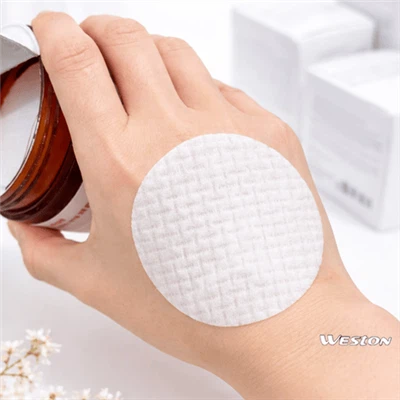
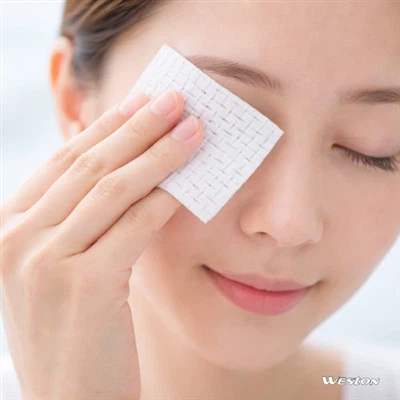
It's a question every eco-conscious beauty lover has asked at some point-how long can reusable makeup remover pads really last before they give up the ghost? Are they a six-month fling, a two-year commitment, or just a clever marketing promise?
Let's peel this back layer by layer, from fiber science to daily habits, and uncover the truth hiding behind those soft, circular heroes in your bathroom drawer.

The Honest Answer: It's All About the Fibers
The lifespan of reusable makeup remover pads isn't set in stone-it's woven into the very fibers that make them. Quite literally.
From a material science point of view, the way fibers interlock, absorb, and resist friction dictates how long they'll serve your skin before thinning out.
Cotton pads are known for their soft touch and breathability. Their natural cellulose fibers absorb moisture efficiently but degrade faster if exposed to hot water and harsh detergents.
Bamboo fibers, on the other hand, are more resilient. Their structure contains lignin and natural silica, which resist microbial growth and make the fabric tougher over repeated washes.
Microfiber pads (though synthetic) excel at oil absorption but can lose their integrity after too many spin cycles.
If you treat them well, these pads can live happily for 6 months to 2 years. But if you treat them like old gym socks-well, you'll be replacing them sooner than you'd like.
The Invisible Science: What's Really Breaking Down Your Pads
Here's what most beauty blogs won't tell you-the enemy isn't just "wear and tear." It's fiber fatigue.
Every time you rub, wash, and wring your reusable pad, microscopic stresses occur in the yarn structure. Over time, cellulose chains break down, fibers lose elasticity, and capillary absorption weakens. That's why even the most premium pad eventually stops holding water like it used to.
Add to that:
Detergent chemistry. Strong alkaline cleaners can damage natural fibers.
Mechanical agitation. Washing machines spin fast enough to stretch and tear fiber bonds.
Thermal degradation. High-temperature drying bakes out the moisture-retaining oils in natural fibers.
This slow decay is what turns your once plush pad into a thin, rough disc that feels like sandpaper on your cheek.
Daily Habits Make or Break Longevity
Science aside, real-life usage is the deciding factor. Most people don't ruin their pads-they overlove them.
Here's how simple habits can either extend or shorten their lifespan dramatically:
|
Habit |
Result |
|
Rinsing immediately after use |
Prevents pigment and oil buildup |
|
Tossing in a hot wash |
Speeds up fiber breakdown |
|
Air-drying flat |
Preserves fiber elasticity |
|
Using fabric softener |
Coats fibers and blocks absorption |
|
Storing damp pads in a closed jar |
Encourages bacteria and mildew |
So yes, your washing routine is almost a relationship test: consistent care equals lasting loyalty.
The Eco Logic: When Replacement Becomes Responsibility
From an environmental perspective, the beauty of reusable pads lies in their long game. A single set can replace hundreds of disposable cotton rounds per year.
But there's a fine line between sustainability and hygiene. Holding on to overused pads "for the planet" can backfire-degraded fibers can trap bacteria, affecting both your skin and your eco intentions.
A smart rule of thumb: if your pad smells off, feels rough, or doesn't clean like before, it's time to part ways. Sustainability doesn't mean keeping everything forever-it means knowing when replacement keeps the cycle clean.
The Material Matters: Not All Pads Are Created Equal
Let's get specific. Material innovation is the unsung hero of reusable beauty tools.
Natural fibers, like cotton and bamboo, biodegrade naturally and feel breathable against the skin. But they absorb water unevenly and may shrink if machine-dried too often.
Engineered nonwovens, however, offer a different kind of magic. By bonding fibers through heat, pressure, or hydroentanglement, manufacturers create cloths that are both soft and durable-without traditional weaving.
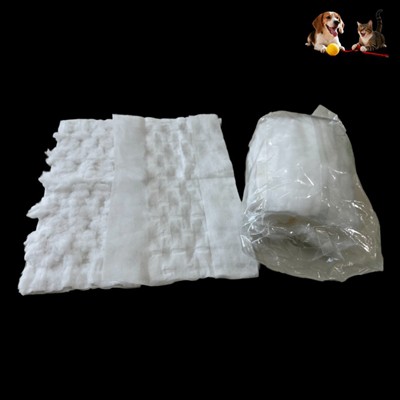
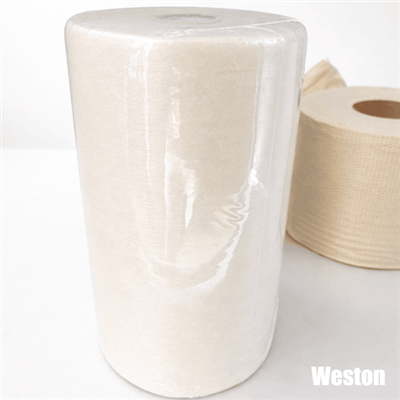
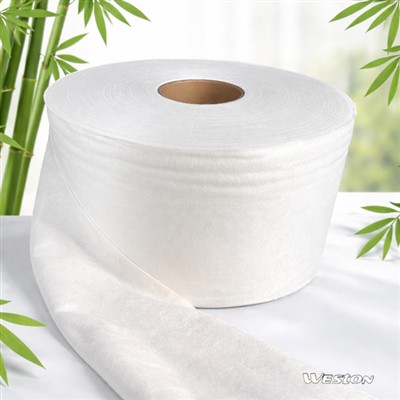
This is where Weston Nonwoven Factory comes in. As a specialist in sustainable, high-performance nonwoven materials, Weston produces a range of textile alternatives like Plant-Based Wipes, Bamboo Face Tissue Wipes, Nonwoven Cotton Soft Tissues, and 100% Natural Plant Fiber Masks-each designed for maximum gentleness and repeat usability.
The result? Materials that look delicate but survive countless wash cycles without losing their touch.
For custom product collaboration or free sample requests, you can reach Weston at info@westonmanufacturing.com.
Let's Talk Lifespan: Numbers with Context
A common claim you'll find online is "Reusable pads last 1000 washes." But let's unpack that.
That number assumes:
Gentle hand washing with mild detergent.
Air drying every time.
A rotation of 10–15 pads used alternately.
Under those conditions, yes-one set could last 2 years or more. But if you use one or two pads every day, toss them in a high-heat wash, and dry them aggressively, expect 4–6 months before they lose shape.
Longevity, then, isn't just about how well they're made-it's about how consciously you use them.

From a Micro View: Why Pads Thin Out Over Time
If we zoom in (literally, under a microscope), worn-out pads reveal flattened fibers and disrupted weave structures. Each wash weakens the hydrogen bonds in cellulose, making the fibers less elastic. When those bonds collapse, your pad stops "grabbing" makeup and starts just smearing it around.
This is why some people think their pads "stop working." It's not magic-it's molecular physics.
Interestingly, bamboo-derived viscose fibers tend to resist this collapse better due to their cross-linked polymer structure. It's one of the reasons bamboo pads are gaining popularity among eco-beauty consumers-and why factories like Weston are investing in bamboo-based nonwovens as next-generation facial cleansing materials.
How to Know When It's Time to Let Go
Think of reusable pads like a trusty pair of sneakers-you don't wait for holes to appear before replacing them.
Here are your warning signs:
The texture feels scratchy instead of silky.
Makeup stains don't wash out anymore.
The pad no longer absorbs water easily.
It leaves residue or lint behind.
It smells musty even after drying.
When two or more of these happen, it's recycling time. Some pads can be repurposed as cleaning cloths or dusting wipes-still saving waste from landfill.
The Beauty of Small, Smart Choices
Reusable makeup remover pads are a small step with a surprisingly large ripple effect. When used properly, they cut down water waste, reduce packaging, and support a circular beauty economy where materials work longer and harder before disposal.
But the real takeaway is this: sustainability doesn't just happen in factories-it happens in your bathroom sink.
Each rinse, each gentle squeeze, each mindful wash adds days-or even months-to your pad's life.
That's the hidden charm of slow beauty. It's not about perfection. It's about participation.
Why Weston Believes in Long-Life Nonwovens
At Weston Nonwoven Factory, research and engineering meet real-world beauty care. The team continuously experiments with plant-derived fibers, biodegradable binders, and innovative hydroentangling methods to produce textiles that balance softness, absorbency, and endurance.
Whether it's the smooth comfort of Nonwoven Cotton Soft Tissues, the fresh simplicity of Plant-Based Wipes, or the eco-luxury of Bamboo Face Tissue Wipes, Weston's focus is the same: creating reusable, sustainable materials that perform beautifully while respecting the planet.
That's not just manufacturing-it's mindful engineering.
A Final Word on Longevity
So, how long do reusable makeup remover pads last?
The real answer: as long as your habits allow them to.
They're not disposable, but they're not immortal either. Their endurance is a reflection of your care, your awareness, and your understanding of the science behind softness.
Use them with intention, wash them with respect, and they'll reward you with not just cleaner skin-but a cleaner conscience.
And if you're curious to explore more about durable nonwoven beauty materials, reach out to Weston Manufacturing at info@westonmanufacturing.com for insights, collaborations, or a free sample of their eco-conscious range.
Because longevity isn't a promise-it's a partnership between you, the planet, and the materials that make both shine.