How Spunlace Technology Enhances Biodegradable Sanitary Napkins
Understanding the Real Challenge Behind "Biodegradable" Sanitary Napkins
Biodegradable sanitary napkins are often presented as a simple upgrade: replace plastic with plant-based materials, and the problem is solved. In reality, it is more complicated.
A sanitary napkin is not just a disposable item. It must manage fluid quickly, stay intact when wet, feel soft on skin, and remain breathable over several hours. Many early "eco" products struggled because they focused on material origin but ignored performance.
This gap-between sustainability and usability-is where material engineering matters. Spunlace technology is one of the few methods that directly addresses both sides without relying on synthetic shortcuts.
What Makes Spunlace Different from Other Nonwoven Technologies
Hydroentanglement Instead of Glue or Heat
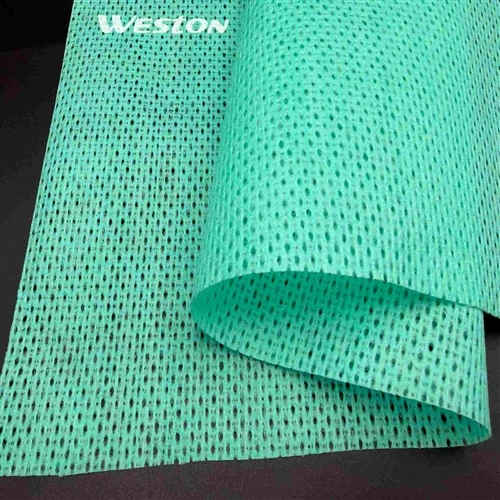
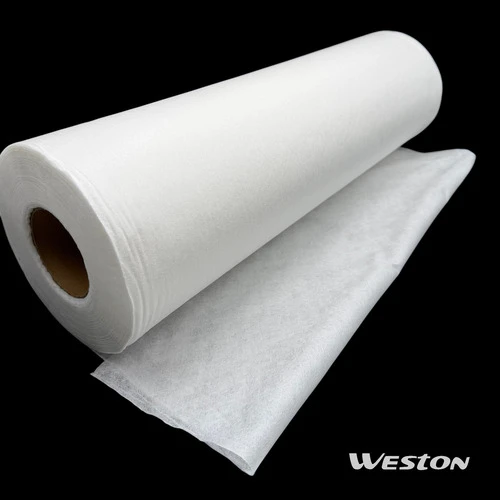
Spunlace, also known as hydroentanglement, uses high-pressure water jets to entangle fibers into a cohesive fabric. No chemical binders. No thermal melting.
This matters for two reasons:
It preserves the natural properties of plant-based fibers
It avoids adding non-biodegradable components into the structure
A Fabric That Behaves Like Fabric
Unlike many nonwovens that feel stiff or paper-like, spunlace creates a structure closer to textile:
Flexible
Drapable
Skin-friendly
For sanitary napkins, especially the top sheet layer, this difference is immediately noticeable.

Why Performance Often Fails in Biodegradable Designs
Weak Wet Strength
Natural fibers absorb water easily. Without proper bonding, the structure can collapse when saturated.
Uneven Fluid Distribution
If liquid is not quickly spread across the surface, it concentrates in one area, increasing leakage risk.
Surface Roughness
Some eco-friendly materials feel coarse due to fiber stiffness or bonding methods, which can cause discomfort over time.
These are not minor flaws-they directly affect whether users trust the product.
How Spunlace Technology Solves These Issues
1. Structural Strength Without Synthetic Reinforcement
The entanglement of fibers creates a stable network. Even when wet, the fabric maintains its integrity.
This reduces the need for plastic-based support layers, which are common in conventional products.
2. Softness That Matches Skin Sensitivity
Because there is no thermal bonding, fibers are not flattened or hardened. The surface remains:
Smooth
Low-irritation
Suitable for prolonged skin contact
This is especially important for sensitive areas where friction matters.
3. Faster Absorption and Better Distribution
Spunlace fabrics have an open, three-dimensional structure. This allows liquid to:
Penetrate quickly
Spread evenly
Reduce localized saturation
The result is a drier surface feel, even under continuous use.
4. Natural Breathability
Airflow is often overlooked, yet it plays a key role in comfort. Spunlace avoids dense, film-like layers, allowing:
Heat to dissipate
Moisture to evaporate
This supports a more balanced microclimate during wear.
Why Spunlace Works Especially Well with Bamboo and Other Plant Fibers
Not all fibers behave the same. The success of spunlace depends heavily on fiber selection.
Bamboo Fiber as a Case Example
Bamboo-based materials are increasingly used in Bamboo Fiber Sanitary Napkins due to their:
High cellulose content (typically around 46%–52%)
Natural softness
Efficient moisture absorption
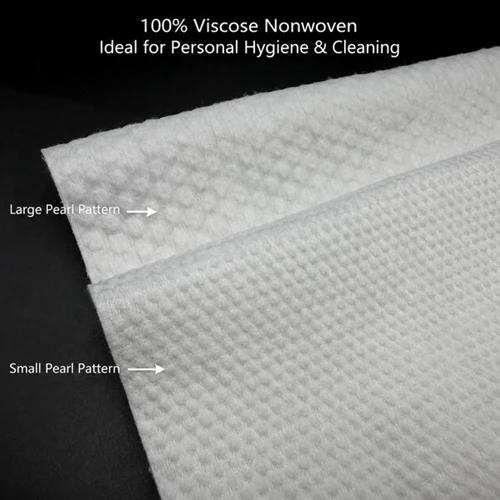
When processed into Bamboo Spunlace Nonwoven Fabrics, these fibers form a uniform, stable web that performs well under wet conditions.
Bamboo used in nonwoven production is typically sourced from mature plants such as Ci bamboo, Dragon bamboo, and Yellow bamboo, known for their fiber quality and renewability.
Other Compatible Biodegradable Fibers
Spunlace technology also supports a range of plant-based options:
100% cotton for familiarity and softness
100% viscose for consistent fiber uniformity
Lyocell for strength and smoothness
PLA for partial bio-based structure
The key advantage is that these fibers can be used without synthetic binders, preserving their biodegradability potential.
Where Spunlace Fits in a Sanitary Napkin Structure
Spunlace is not used everywhere in the product-it plays specific, high-impact roles.
Top Sheet (Skin-Contact Layer)
Provides softness and comfort
Allows quick liquid transfer
Acquisition and Distribution Layer
Spreads fluid before it reaches the absorbent core
Improves overall efficiency
It is typically combined with an absorbent core (such as fluff pulp or SAP), forming a system rather than a single-material solution.

Environmental Impact: A More Practical Perspective
Spunlace itself is not inherently "green." Its sustainability depends on:
Fiber choice
Manufacturing efficiency
End-of-life conditions
However, compared to bonded synthetic nonwovens, it offers clear advantages:
Lower reliance on plastics
No chemical binders
Better compatibility with biodegradable fibers
It is a step toward reduction, not a complete solution.
Manufacturing Considerations That Are Often Overlooked
Water and Energy Use
Spunlace requires significant water pressure, which means:
Efficient water recycling systems are essential
Energy consumption must be managed carefully
Certification and Safety
For hygiene products, material safety matters as much as performance. Some spunlace materials are produced to meet:
Food-contact safety standards
Formaldehyde-free requirements
These factors ensure that the material is safe for prolonged skin contact.
A Quiet Shift in Material Thinking
The evolution of sanitary napkins is not driven by a single breakthrough, but by incremental improvements in material science.
Spunlace technology represents a practical shift:
- From rigid to flexible structures
- From synthetic dependence to fiber-based design
- From surface-level "eco claims" to functional sustainability
In manufacturing, some suppliers have already aligned with this direction. For example, spunlace materials used in Bamboo Fiber Sanitary Napkins and other plant-based formats are being developed with food-contact certifications and formaldehyde-free processing, using fibers sourced from mature bamboo and other renewable plants.
The change is not dramatic on the surface. The product still looks familiar. But the internal structure-how it is made, how it performs, and how it returns to the environment-is gradually being redefined.
What This Means for Everyday Use
For users, the expectation is simple:
No discomfort
No compromise in performance
No added complexity
Spunlace technology does not ask users to adjust their habits. Instead, it improves the material quietly, in the background.
That is where it becomes meaningful-not as a marketing term, but as a material choice that solves real, everyday problems.