What Are the Key Features of Weston's Bamboo Nonwoven Fabric?
If you spend more than five minutes in the textile or hygiene industry, you will hear the word "bamboo" repeatedly. It is often promoted as an all-purpose eco-friendly material that promises everything from lower carbon emissions to ultra-sensitive skin compatibility.
But for professional buyers, OEM brands, and wet wipes distributors, marketing claims are not enough. Material performance is what determines product quality, customer satisfaction, and long-term supply chain reliability.
Weston focus on the engineering and material science behind Bamboo Nonwoven Fabric rather than relying on sustainability buzzwords alone. The real value of bamboo lies in its physical structure, fluid dynamics, and compatibility with advanced spunlace manufacturing technology.
This article explains the key features that make Weston's Bamboo Nonwoven Fabric suitable for wet wipes, personal care, industrial cleaning, and biodegradable hygiene products.

The Engineering Behind Bamboo Nonwoven Fabric
Many people associate softness with weakness. In industrial nonwoven manufacturing, that assumption is inaccurate.
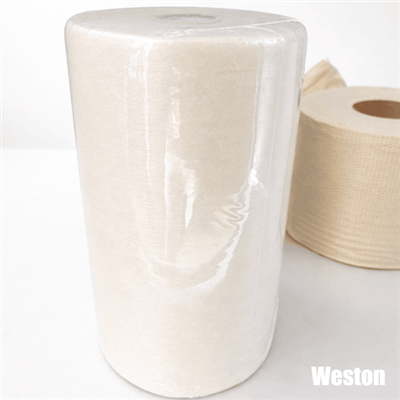
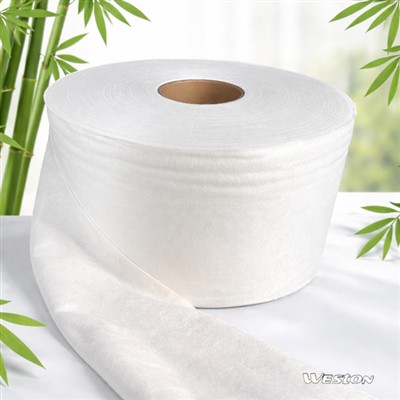
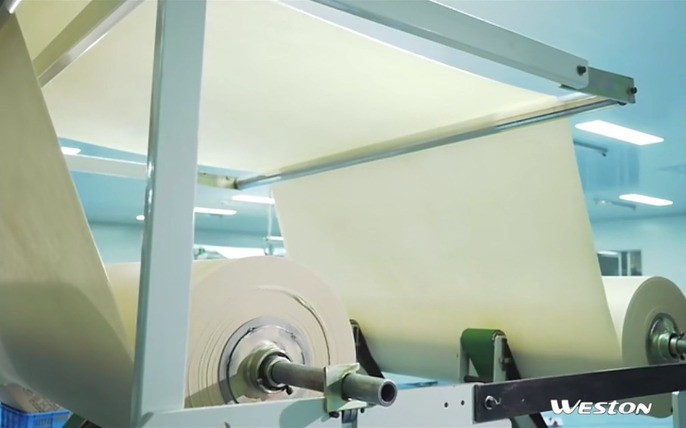
The performance of Weston's Bamboo Nonwoven Fabric comes primarily from Spunlace technology, also known as hydroentanglement. Instead of using chemical adhesives or thermal bonding agents, high-pressure water jets entangle the fibers mechanically to form a durable fabric structure.
This process offers several important advantages:
No chemical binders or glue residue
Better compatibility with wet wipe liquid formulas
Improved softness and flexibility
Higher purity for sensitive applications
Enhanced biodegradability
Because the bamboo fibers remain mechanically bonded rather than chemically fused, the fabric preserves more of the natural cellulose characteristics of bamboo.
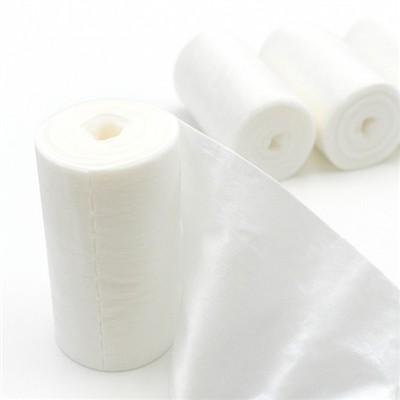
For buyers sourcing 100% Bamboo Fiber Towels or bamboo spunlace substrates, this means cleaner material performance and greater formulation stability.
Feature 1: Ultra-Soft Surface with Low Friction
One of the most noticeable features of Bamboo Nonwoven Fabric is its smooth surface structure.
Under microscopic observation, bamboo fibers appear naturally round and smooth compared to cotton fibers, which tend to have rougher, twisted surfaces. This difference directly affects how the fabric interacts with skin and delicate surfaces.
Key Benefits
Gentle on Sensitive Skin
The low-friction surface helps reduce irritation and micro-abrasions during wiping, making the material suitable for:
Baby wipes
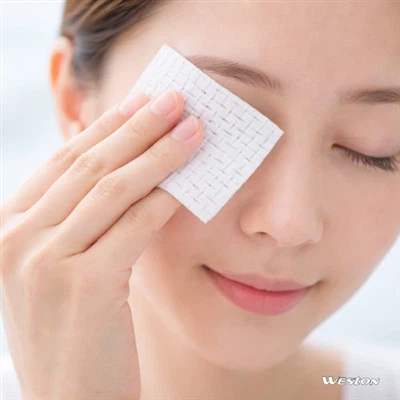
Facial cleansing wipes
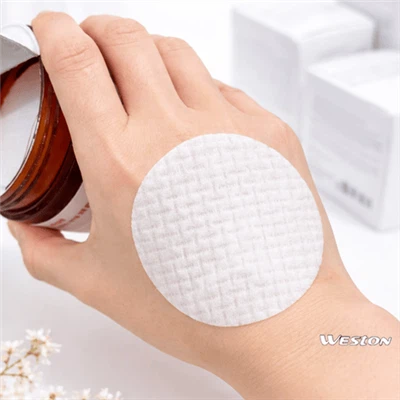
Cosmetic removal pads
Medical wipes
Sensitive skincare products
Low Lint Performance
The long and smooth bamboo fibers are less likely to break during use. This significantly reduces lint generation and fiber shedding.
Low linting is especially important for:
Medical environments
Electronics cleaning
Optical surface cleaning
High-end beauty products
Precision industrial wiping
For converters and wet wipes manufacturers, lower lint also means cleaner filling lines and improved product consistency.
Feature 2: High Absorbency and Fast Liquid Transfer
Another critical feature of Weston's Bamboo Nonwoven Fabric is its absorbency performance.
Bamboo fibers naturally contain micro-gaps within their internal structure. These microscopic channels create a capillary effect that rapidly pulls liquid into the fiber core.
This allows the fabric to absorb and distribute fluids efficiently.
However, different applications require different absorption characteristics. For heavy-duty wiping or industrial cleaning, pure bamboo may feel excessively soft. To optimize performance, Weston developed Pulp Bamboo Fiber Spunlace blends that combine bamboo fiber with high-purity wood pulp.
This blended structure improves both absorption speed and liquid retention capacity.
Technical Performance Comparison
|
Technical Property |
Standard Polyester/Viscose |
Weston Pulp Bamboo Fiber Spunlace |
|
Absorbency Rate |
3–5 Seconds |
< 2 Seconds |
|
Liquid Retention |
6x Its Weight |
9x–11x Its Weight |
|
Surface Friction |
Medium–High |
Very Low |
|
Biodegradability |
Partial / None |
100% Compostable |
|
Chemical Binders |
Often Present |
0% |
The higher absorbency and liquid retention capacity make Weston's bamboo spunlace materials highly suitable for:
- Industrial degreasing wipes
- Baby wipes
- Household cleaning wipes
- Cosmetic wipes
- Sanitizing wipes
- Foodservice cleaning applications
Feature 3: High Tensile Strength and Wet Durability
One of the biggest concerns for wet wipes distributors is wet strength.
Consumers expect wipes to remain intact during use. If a wipe stretches excessively, tears easily, or breaks apart inside the packaging, it negatively affects product perception and increases return rates.
Bamboo fibers are naturally long and durable. During the spunlace hydroentanglement process, these fibers wrap tightly around each other to form a strong fabric network.
This improves tensile strength in both:
Machine Direction (MD)
Cross Direction (CD)
Practical Performance Advantages
Stronger Wipes
The fabric resists tearing during aggressive wiping applications.
Better Dimensional Stability
The wipe maintains its original shape instead of stretching into thin strands.
Reliable Performance in Wet Conditions
The material stays structurally stable even when saturated with:
Alcohol-based sanitizers
Cleaning chemicals
Heavy oils
Water-based cosmetic formulas
This combination of softness and durability is one of the reasons bamboo spunlace materials continue gaining popularity in premium wipe applications.
Chemical Compatibility and Formula Stability
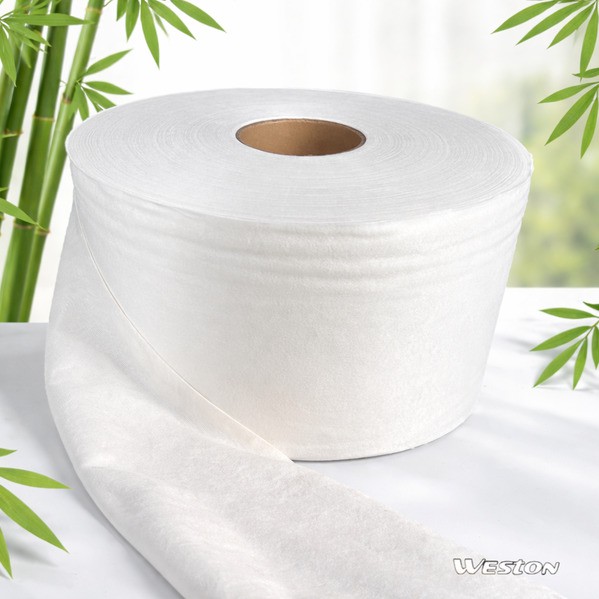
Another major advantage of Weston's Bamboo Nonwoven Fabric is chemical purity.
Because the fabric contains no added binders or glue systems, there is minimal risk of unwanted reactions between the substrate and liquid formulations.
For wet wipes manufacturers, this helps reduce problems such as:
Formula discoloration
Fabric browning
Odor changes
Reduced shelf life
Chemical instability
Improved compatibility also supports more advanced formulations, including:
- Alcohol wipes
- Antibacterial wipes
- Skincare wipes
- Essential oil formulations
- Sensitive-skin cosmetic wipes
Sustainability Without the Marketing Hype
Sustainability claims are common in the nonwoven industry, but buyers increasingly require measurable environmental benefits rather than vague promises.
Bamboo offers several genuine advantages as a renewable raw material:
Bamboo is technically a grass rather than a tree
It regrows from existing root systems
Replanting is generally unnecessary
Growth cycles are significantly shorter than hardwood trees
Many bamboo species mature within 3–5 years
Most importantly, Weston's Bamboo Nonwoven Fabric is fully biodegradable and compostable under proper disposal conditions.
As regulations around plastic-free and biodegradable products continue expanding globally, bamboo-based spunlace materials help brands prepare for evolving compliance requirements and sustainability expectations.
For OEM brands and distributors, transitioning toward biodegradable substrates is increasingly becoming both an environmental strategy and a long-term business decision.
Applications of Weston Bamboo Nonwoven Fabric
Weston's bamboo spunlace materials are widely used in:
Baby wipes
Facial cleansing wipes
Makeup remover wipes
Industrial cleaning wipes
Medical wipes
Household disinfecting wipes
Hospitality wipes
Foodservice wipes
Spa and salon towels
Disposable bamboo towels
The material can also be customized based on:
GSM
Embossing patterns
Roll size
Sheet dimensions
Packaging requirements
Fiber blends
Dry or wet wipe conversion
Why Buyers Choose Weston Nonwoven
Choosing the right Bamboo Nonwoven Fabric supplier is not about chasing trends. It is about sourcing a material that consistently delivers:
Softness
Absorbency
Low linting
Wet strength
Formula compatibility
Biodegradability
Manufacturing stability
At Weston Nonwoven, we focus on engineering performance-driven spunlace materials that help converters, private label brands, and wet wipes distributors build reliable, high-quality products.
The goal is simple: create nonwoven materials that perform better in real-world use, not just in marketing brochures.
The Future of High-Performance Bamboo Nonwoven Materials
The key features of Weston's Bamboo Nonwoven Fabric come from the fiber's natural structure combined with advanced spunlace manufacturing technology.
Its smooth surface profile reduces friction and linting. Its internal capillary structure improves absorbency and liquid retention. Its long fibers provide excellent tensile strength and wet durability. And its biodegradable composition supports the growing demand for sustainable wipe materials.
For brands looking to upgrade product quality while preparing for future environmental regulations, bamboo spunlace fabric offers a practical and performance-driven solution.
If you are looking for reliable 100% Bamboo Fiber Towels or customized Pulp Bamboo Fiber Spunlace materials, Weston Nonwoven can provide the technical support and manufacturing consistency needed for large-scale commercial production.