What Type of Fabric Is Used for Medical Tape?
Medical tape is one of those products people rarely think about-until it fails. When tape won't stick, pulls painfully at removal, or leaves skin red and irritated, the problem is often blamed on the adhesive. In reality, the fabric underneath plays just as important a role.
The fabric decides how the tape feels on skin, how it moves with the body, how it handles moisture, and how cleanly it comes off. Understanding what fabric is used for medical tape helps explain why some tapes feel gentle and reliable while others feel stiff or harsh. This isn't about trends or branding-it's about material science made practical.

Why Fabric Choice Matters More Than You Think
At first glance, medical tape looks simple: a thin strip that sticks. But once it's applied to real skin-skin that sweats, stretches, heals, and reacts-the demands become complex.
The fabric must:
Let air pass through to avoid skin maceration
Bend and stretch with movement
Support adhesive evenly
Stay stable when exposed to moisture
Remove cleanly without tearing skin
If the fabric fails at any of these, no adhesive can fully compensate. That's why modern medical tape development starts with fabric selection, not glue strength.
Skin Comes First, Strength Comes Second
Medical tape is not industrial tape. Its first job is not holding power-it's skin compatibility.
A suitable fabric must be:
Soft against skin
Free from loose fibers
Chemically stable
Consistent across large production batches
Durability matters, but not at the expense of comfort. A tape that holds perfectly but damages skin has failed its purpose.
The Most Common Fabrics Used in Medical Tape
Nonwoven Fabric: The Industry Standard
Today, most medical tapes use nonwoven fabric as their base material.
Nonwoven fabrics are made by bonding fibers together without weaving or knitting. This structure gives manufacturers precise control over thickness, strength, and breathability.
Why nonwoven works so well:
Lightweight and flexible
Naturally breathable
Smooth, low-lint surface
Easy to tear by hand
Performs consistently at scale
Common fiber types include polyester, viscose (rayon), or blends of both. These materials offer stability while remaining soft enough for prolonged skin contact.
Many hospitals rely on nonwoven tape because it balances comfort, reliability, and cost efficiency better than traditional woven fabrics.
Cotton Fabric: Familiar but Less Reliable
Cotton was widely used in medical tapes before nonwoven technology matured.
Its advantages are easy to understand:
Natural fiber
Soft texture
Good air permeability
However, cotton has clear limitations in medical use:
Loses strength when wet
Absorbs moisture rather than managing it
Produces lint over time
Less uniform in large-scale production
Because of these drawbacks, cotton tapes are now used mainly in limited or low-demand applications rather than modern clinical settings.
Spunlace Nonwoven: When Comfort Is Critical
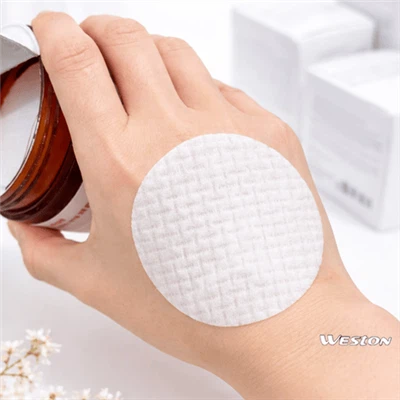
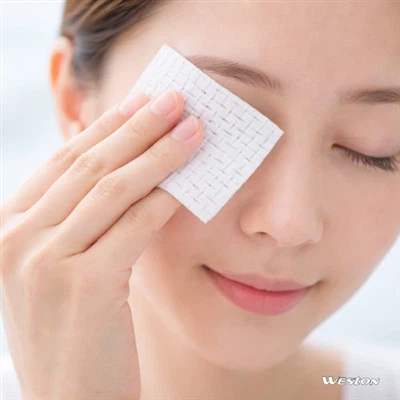
Spunlace nonwoven, also known as hydroentangled nonwoven, is a refined category of nonwoven fabric commonly used in medical and hygiene products.
Unlike some bonded nonwovens, spunlace uses high-pressure water jets to entangle fibers. This creates a fabric that feels closer to cloth while remaining lint-free and stable.
Key benefits:
Extremely soft hand feel
Strong fiber bonding without chemical binders
Excellent drape and skin conformity
Reduced irritation risk
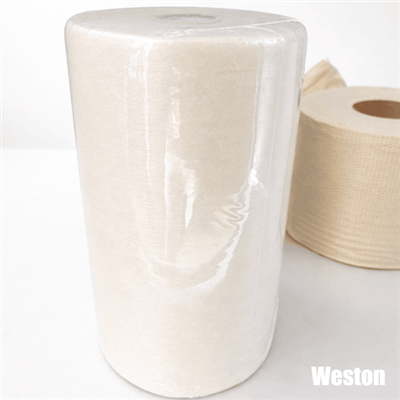
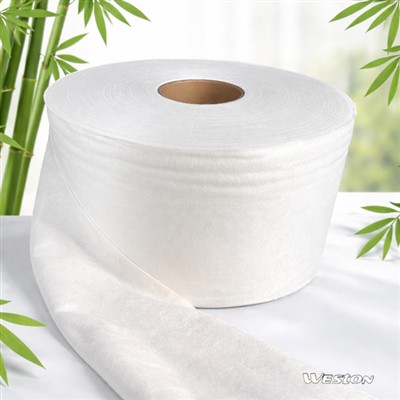
For applications where tape stays on skin longer, or where skin is fragile, spunlace nonwoven is often the preferred choice. This is why many suppliers focusing on Spunlace Nonwoven For Medical Tape Roll emphasize skin contact performance rather than just tensile strength.
Elastic Fabrics and Blends: Designed for Movement
Some medical tapes need to stretch. Joints, muscles, and curved body areas require a fabric that moves without lifting.
These tapes often use:
Elastic nonwoven structures
Fabric blends incorporating stretch fibers
They are commonly used in:
Sports taping
Compression support
Areas with constant motion
Here, flexibility is functional. A rigid fabric would peel away quickly, regardless of adhesive quality.

Fabric and Adhesive Work as a System
It's tempting to think adhesive does all the work. In reality, fabric and adhesive function as a single system.
The fabric controls:
How adhesive spreads
How pressure is distributed on skin
How cleanly the tape peels away
A poor fabric can cause uneven adhesion, painful removal, or skin stripping. A well-designed nonwoven base allows the adhesive to perform as intended-secure, but gentle.
Breathability Is a Real Material Property
Breathability isn't a marketing term. It comes from structure.
Factors that affect airflow include:
Fiber spacing
Fabric density
Thickness and layering
Nonwoven fabrics allow controlled air exchange without sacrificing strength. This balance is difficult to achieve with woven fabrics at medical-grade consistency.
Better airflow helps maintain healthy skin, especially during extended wear or under dressings.
Safety, Skin Tolerance, and Daily Reality
Medical tape fabric must meet strict expectations:
Low allergen risk
Minimal chemical residue
Stable shelf life
Compatibility with sterilization processes
These factors are especially important for neonatal care, elderly patients, and post-surgical wounds. In these cases, the gentlest fabric often produces the best clinical outcome.
There Is No Single "Best" Fabric
No fabric works perfectly for every situation.
The right choice depends on:
How long the tape stays on
Skin sensitivity level
Exposure to moisture
Degree of movement
This is why medical tape comes in so many forms. Each exists because a specific fabric solves a specific problem.
Quiet Progress in Medical Tape Materials
Innovation in medical tape isn't dramatic. It happens quietly-through better fiber blends, cleaner bonding methods, and more precise nonwoven engineering.
Manufacturers like Weston Nonwoven focused on Spunlace Nonwoven For Medical Tape Roll are not chasing louder claims. They're refining comfort, breathability, and consistency so tapes work better in real life, not just in testing labs.
At the end of the day, good medical tape doesn't draw attention to itself. It stays in place, respects the skin, and does its job without being noticed. That reliability starts with the fabric.