Why Are My Floors Sticky After Using Wet Mop Pads?
You finish cleaning the floor, wait a few minutes, and suddenly something feels off. The surface looks shiny, but your shoes stick slightly when you walk. Bare feet feel tacky. In sunlight, the floor even shows streaks or footprints.
This is one of the most common complaints people have after using disposable wet mop pads. The good news is that sticky floors usually do not mean your floor is damaged. In most cases, the problem comes from residue left behind during cleaning.
Understanding why this happens can help you clean more effectively without using harsher chemicals or over-scrubbing the floor.
Sticky Floors Are Usually a Residue Problem
Many people think sticky floors mean the floor is still dirty. That is only partly true.
In reality, stickiness often comes from a thin layer of cleaning residue mixed with dust, grease, or minerals from water. Disposable wet pads clean quickly, but they do not fully rinse the floor like a traditional mop and bucket system.
Once the pad becomes overloaded, it may start spreading dirt and detergent instead of removing it.
Here is a simple comparison:
|
Cleaning Situation |
What Happens on the Floor |
Result |
|
Fresh wet pad on lightly dusty floor |
Dirt is absorbed properly |
Floor feels clean |
|
One pad used for multiple rooms |
Dirt and cleaner begin spreading |
Sticky feeling appears |
|
Too much cleaning solution |
Residue dries on surface |
Tackiness and streaks |
|
Kitchen grease mixed with cleaner |
Thin oily film forms |
Floor grabs dust quickly |
|
Old cleaner buildup over time |
Multiple residue layers remain |
Sticky floors after every mop |
The important detail is this: a shiny floor is not always a clean floor.
Sometimes shine simply means product was left behind.
Kitchens Become Sticky Faster Than Other Rooms
Kitchen floors are different from bedroom or hallway floors.
Cooking releases microscopic grease particles into the air. These particles slowly settle onto cabinets, counters, and floors. Even if the floor looks clean, there is often a thin invisible oil layer sitting on the surface.
When a disposable wet pad passes over greasy areas, three things happen:
- The cleaner loosens grease
- The pad absorbs part of it
- Remaining residue dries back onto the floor
This is why kitchen floors often become sticky again only hours after cleaning.
The issue is not always poor cleaning. Sometimes the pad simply cannot hold all the grease and liquid at the same time.
That is also why many professional cleaning systems use textured or embossed mop materials instead of completely flat sheets.
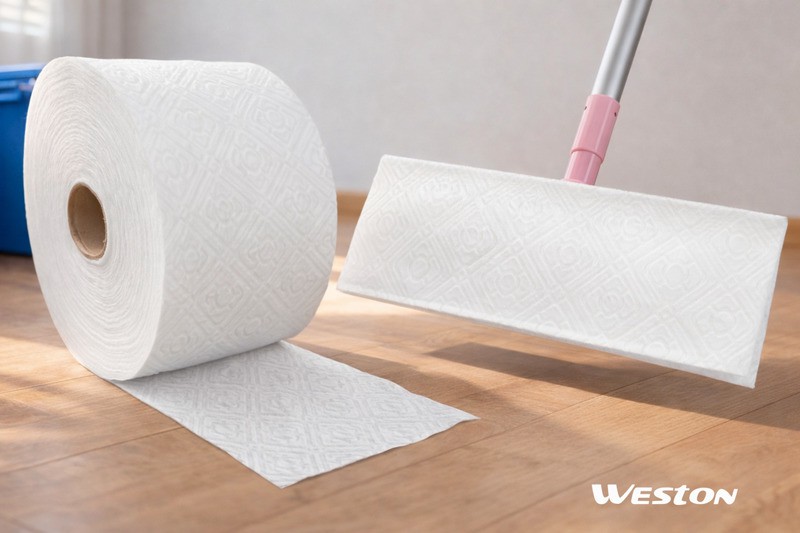
Flat Mop Pads vs Embossed Nonwoven Mop Cloths
The structure of the cleaning cloth matters more than many people realize.
|
Feature |
Flat Disposable Pad |
Nonwoven Embossed Floor Mop Cloths |
|
Surface texture |
Smooth |
Textured embossing |
|
Dirt holding capacity |
Moderate |
Higher |
|
Grease pickup |
Limited |
Improved |
|
Liquid distribution |
Uneven after saturation |
More controlled |
|
Scrubbing performance |
Light-duty |
Better friction and particle capture |
|
Reusability |
Usually disposable |
Can support different OEM formats |
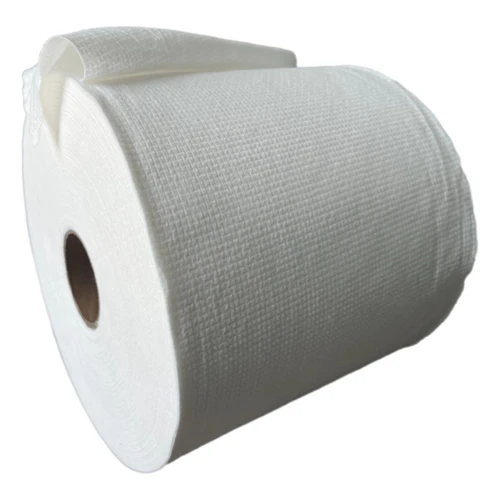
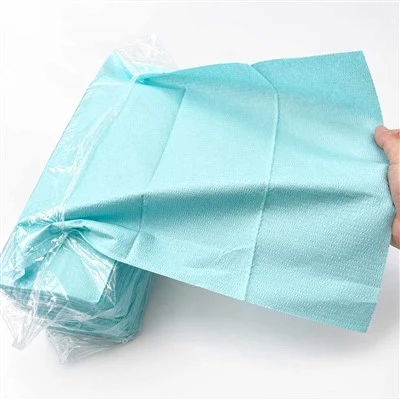
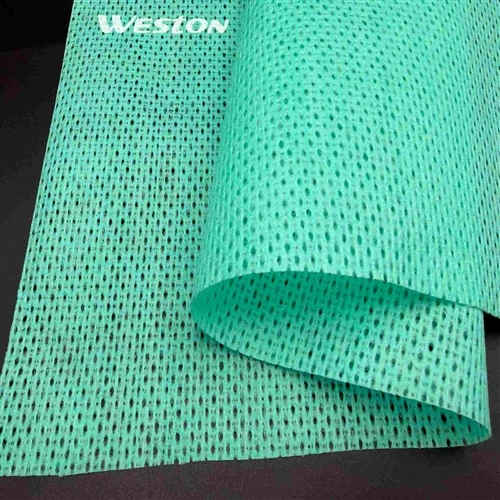
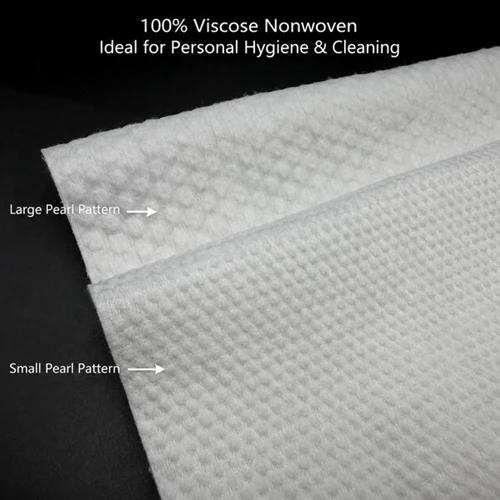
Embossed spunlace nonwoven materials create more surface area and internal space for trapping dirt. This helps reduce the "push-around effect" that often causes sticky residue.
For heavy-use environments like kitchens, textured Kitchen Floor Scrubbing Mop Pads generally perform better than thin flat wipes because they can hold both liquid and loosened debris more efficiently.
One Mistake Almost Everyone Makes
People often try to clean the whole house with one wet pad.
This saves time at first, but after a certain point the pad stops collecting dirt effectively. Instead, it begins redistributing residue across the floor.
A better approach is simple:
- Change pads more frequently
- Vacuum or sweep before mopping
- Use less cleaning liquid, not more
- Rinse the floor occasionally with plain warm water
This last point surprises many people.
Sometimes plain water removes sticky buildup better than another layer of cleaning solution.
Hard Water Can Also Create Sticky Floors
Not all residue comes from detergent.
In areas with hard water, minerals such as calcium and magnesium may stay on the floor after moisture evaporates. Over time, mineral residue mixes with cleaner residue and creates drag or dullness on smooth flooring.
This is especially noticeable on:
- laminate flooring
- glossy tile
- vinyl plank flooring
- sealed hardwood floors
If streaks appear even after careful mopping, hard water may be part of the problem.
The "Too Much Cleaning" Problem
Modern cleaning products are designed for convenience. That convenience sometimes encourages overuse.
Some households use wet mop pads every day without fully rinsing the floor surface. Small residue layers slowly accumulate over weeks or months.
Ironically, floors cleaned too frequently with fast-drying chemical cleaners may feel stickier than floors cleaned less often but rinsed properly.
Clean floors should feel neutral underfoot - not slippery, oily, waxy, or tacky.
That neutral feeling is usually a better sign of cleanliness than fragrance or extra shine.
Why Material Safety Matters for Floor Wipes
Consumers today are paying closer attention to wipe materials, especially in kitchens and homes with children or pets.
Some spunlace nonwoven manufacturers now focus on safer substrate production standards, including:
formaldehyde-free materials
- low-odor processing
- food-contact compliant testing
- reduced lint release
For example, Weston Nonwoven produces spunlace mop fabrics and cleaning substrates designed for household and industrial wiping applications. Some materials are developed with food-contact compliant standards and formaldehyde-free production processes, which are increasingly important in kitchen cleaning environments.
For OEM brands developing Kitchen Floor Scrubbing Mop Pads, the substrate quality often affects not only cleaning performance, but also streaking, residue control, and user experience.
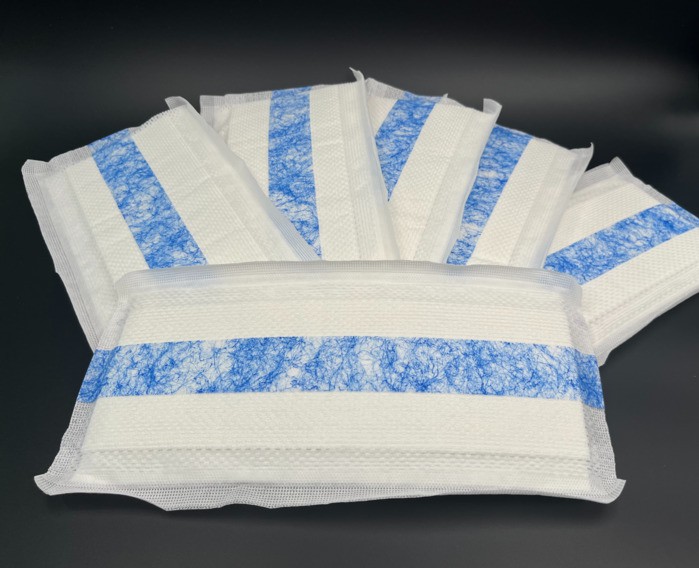
Simple Ways to Prevent Sticky Floors
Most sticky floor problems improve quickly with a few small changes.
|
Better Habit |
Why It Helps |
|
Sweep before mopping |
Prevents dirt paste from forming |
|
Change pads sooner |
Stops residue spreading |
|
Use less cleaner |
Reduces film buildup |
|
Rinse occasionally with water |
Removes old residue layers |
|
Use textured mop cloths |
Improves dirt capture |
|
Focus on kitchens separately |
Grease needs different handling |
Floor cleaning does not need to be complicated. In many homes, the real solution is not stronger chemicals. It is better residue removal.
A floor should not feel sticky after cleaning. If it does, something stayed behind. Once you understand that principle, floor care becomes much easier - and far less frustrating.