The Science Behind Car Paint Vulnerability
Before answering which towels are safe, we must first understand why car paint is so easy to scratch. A typical automotive paint system has three layers: the primer (adheres to the metal body), the base coat (provides color), and the clear coat (a transparent protective layer). The clear coat, often just 20–30 microns thick (thinner than a human hair), is the first line of defense-but it's far from indestructible.
Clear coats are made of polyurethane or acrylic resins, with a hardness rating of 2–3 on the Mohs scale (compared to 2.5 for a human fingernail). This means even tiny, hard particles (like sand, dust, or rough fiber fragments) can create micro-scratches when rubbed against the surface. These scratches may not be visible immediately, but over time, they accumulate, dulling the paint and allowing moisture to seep in, which accelerates oxidation and can aid rust formation on compromised substrates.
The key mistake most car owners make is judging a towel's safety by "softness" alone. A towel that feels soft to the hand might still have microscopic hard fibers or a loose structure that traps debris-turning it into a hidden scratch tool.

Three Scientific Reasons Why Towels Scratch Cars
Not all towels are created equal, and scratch risk boils down to three measurable factors:
Fiber Hardness Exceeds Paint Tolerance
Cotton towels, a common household choice, have a fiber diameter of 10–20 microns and a surface hardness higher than car clear coats. When dry, cotton fibers act like tiny abrading tools; when wet, they swell but still retain enough rigidity to scrape the clear coat. Synthetic towels made from low-quality polyester or nylon can be worse-their fibers may have sharp edges (from poor manufacturing) that cut into the paint.
Loose Weave Traps Debris
Towels with a loose, open structure (e.g., some "fluffy" bath towels) act like a net for dust, sand, or road grit. When you wipe the car, these particles get pressed between the towel and the paint, turning the towel into a makeshift sanding pad. Even a single grain of sand (0.1–0.5 mm) can create a visible scratch if rubbed with force.
Poor Water Absorption Increases Friction
Water acts as a lubricant, reducing friction between the towel and paint. Towels that absorb water slowly (e.g., low-quality microfiber or cotton blends) force you to apply more pressure to dry the surface-amplifying the scratch risk from any trapped debris.
Four Core Scientific Standards for Scratch-Free Towels
To avoid scratches, a towel must meet four non-negotiable scientific criteria-and these are not arbitrary:
Ultra-Fine Fiber Material (≤10 Microns)
The gold standard for safe car towels is microfiber, defined as fibers with a diameter of 10 microns or less. Microfibers are made of split polyester–polyamide blends (typically 80/20), which are softer than silk and have a hardness lower than car clear coats. For example, Microfiber Towels For Cars produced by Weston Nonwoven use fibers with a diameter of 0.3–0.5 microns-1/20 the thickness of a human hair. This ultra-fine structure ensures the towel glides over the paint without applying enough pressure to cause damage.
High-Density Weave (≥300 GSM)
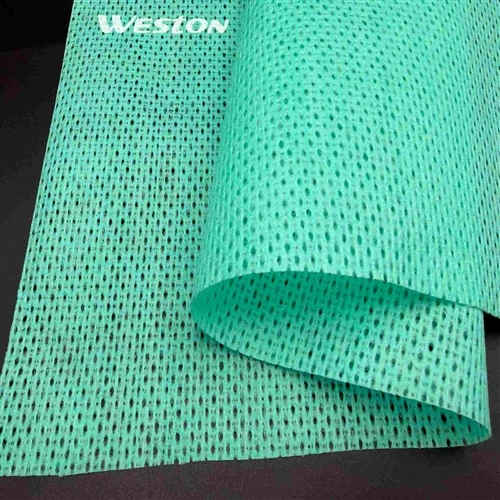
GSM (grams per square meter) measures a towel's thickness and density. A scratch-free towel needs a GSM of at least 300, with a tight, looped weave (not a loose pile). High density prevents debris from embedding in the towel; the loops act as "pockets" to trap dirt without pressing it against the paint. Weston Nonwoven's Soft Multi-Color Microfiber Rags meet this standard-their tight weave locks in dust and grit, keeping the paint contact surface clean.
No Hard Residues from Manufacturing
Cheap towels often have chemical coatings (e.g., fabric softeners, starch) or leftover dye particles that harden on the fibers. These residues act like tiny abrasives. Safe towels undergo a post-production washing process to remove all residues. Weston's microfiber products, including Microfiber Cloth For Phone (which uses the same safe material as car towels), are rinsed with deionized water to eliminate any hard contaminants.
Hydrophilic Modification
Microfibers are naturally hydrophobic (water-repellent), so top-tier towels undergo hydrophilic treatment to boost water absorption. A towel that soaks up water quickly (≥5x its weight) reduces the need for pressure, minimizing friction. Microfiber Towels For Cars from Weston Nonwoven, for instance, absorb water in 2 seconds or less-cutting down on wiping time and scratch risk.
Scientific Usage Tips to Avoid Unnecessary Scratches
Even the best towel can cause scratches if used incorrectly. Follow these evidence-based practices:
Always Wet the Towel First
Dry wiping is the number one cause of avoidable scratches. Wet the towel with clean water (or a pH-neutral car wash solution) to create a lubricating layer. The water lifts debris away from the paint, so the towel doesn't trap it.
Wash Towels Separately
Washing car towels with clothing, especially jeans or socks, transfers lint and tiny fabric fibers. These foreign fibers can harden when dried and scratch the paint. Use a mild detergent (no fabric softener-it coats fibers and reduces absorbency) and wash at 30–40°C. Weston's Soft Multi-Color Microfiber Rags are color-coded, making it easy to separate car towels from household ones.
Avoid High-Temperature Drying
Tumble drying at high heat (over 60°C) can melt the tips of microfibers, creating hard, sharp edges. Air-dry towels or use a low-heat setting. This preserves the towel's softness and scratch-resistant properties for longer.
Use the Two-Bucket or Pre-Rinse Method
Remove as much grit as possible before contact. Pre-rinse thoroughly; use one bucket for soapy water and another for rinse. Grit guards help keep particles at the bottom.

Fold and Rotate
Fold a towel into quarters to create eight clean faces. Flip to a fresh face frequently to avoid dragging trapped particles across paint.
How to Verify a Towel's Scratch-Resistance
Don't just take a manufacturer's word-test the towel yourself with two simple methods:
Microscopic Check (with a Phone)
Use your phone's macro camera to zoom in on the towel's fibers. Safe microfibers will look like thin, smooth strands; unsafe ones will have thick, jagged edges or visible debris. For reference, Microfiber Cloth For Phone from Weston Nonwoven shows uniform, ultra-fine fibers under macro view-same as their car towels.
Paint Test (on a Spare Panel)
If you have a spare piece of painted panel (or an old bumper), wipe the towel over it with light pressure (as you would on your car). After 10 wipes, inspect the panel under bright light. A scratch-free towel will leave no marks; a risky one will show faint micro-scratches.
For those who want to experience safe microfiber towels firsthand, Weston Nonwoven offers free samples of their Microfiber Towels For Cars, Microfiber Cloth For Phone, and Soft Multi-Color Microfiber Rags. To request a sample, contact them at info@westonmanufacturing.com.
Weston Nonwoven Note
If you are sourcing professional-grade materials, Weston Nonwoven develops microfiber systems aligned with the above scientific criteria. Their portfolio includes:
Microfiber Towels For Cars engineered with ultra-fine split fibers and hydrophilic treatment
Soft Multi-Color Microfiber Rags for process control and task separation
Microfiber Cloth For Phone utilizing the same residue-free, low-lint construction ideal for delicate surfaces
For free sample requests or technical specifications, contact info@westonmanufacturing.com.