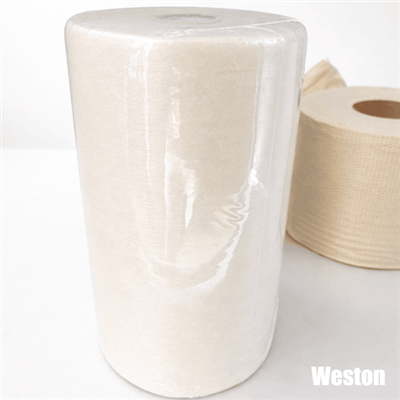
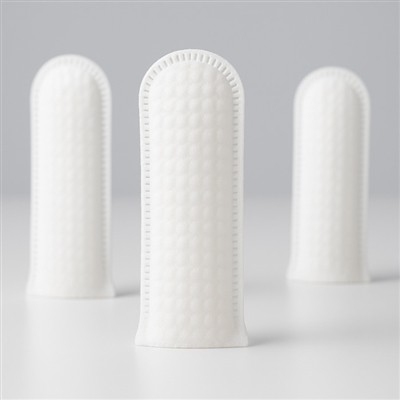
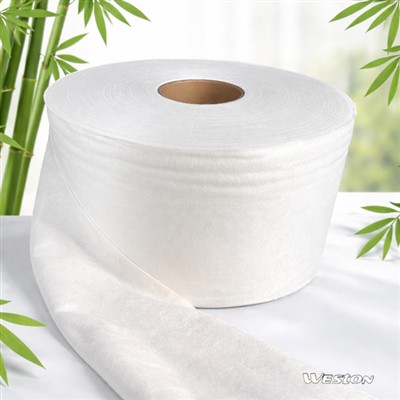
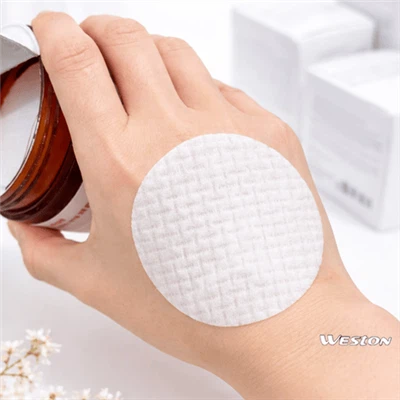
In the dynamic landscape of advanced materials engineering, meltblown production stands as a cornerstone of innovation, driving breakthroughs in filtration, healthcare, and industrial applications. This high-precision manufacturing technique transforms raw polymers into ultra-fine fibers, creating materials like Meltblown Filter Media Material, High-Filtration PP Meltblown Cloth, and Melt Blown For N95 Respirator solutions that redefine performance standards. At Weston Nonwoven, we leverage cutting-edge technology and decades of expertise to engineer meltblown materials that combine durability, efficiency, and sustainability. Below, we delve into the science, stages, and real-world impact of this transformative process.
Core Stages of Meltblown Production

The meltblown process is a symphony of engineering precision, blending thermal, aerodynamic, and material science principles. Let's explore its five foundational phases:
1. Polymer Preparation: The Foundation of Quality
The journey begins with selecting premium Meltblown Filter Media Material, typically polypropylene (PP)-a polymer renowned for its thermal stability, chemical resistance, and cost-effectiveness. Weston Nonwoven sources high-purity PP pellets with tightly controlled melt flow indices (MFI), ensuring uniformity in molecular structure. This meticulous selection is critical, as impurities or inconsistent melting behavior can compromise the final product's strength and filtration efficiency.
Why PP?
Thermal Resilience: PP withstands extrusion temperatures of 240–260°C without degradation.
Hydrophobic Nature: Repels moisture, ideal for medical masks and industrial filters.
Sustainability: Recyclable and lightweight, aligning with Weston's eco-conscious approach.
2. Melting and Extrusion: Transforming Solids into Liquid Precision
The PP pellets enter a screw extruder, where they are heated and kneaded into a molten state. This viscous polymer melt is then forced through a filter pack to remove contaminants, ensuring pristine purity. Weston employs advanced extrusion systems with adaptive temperature controls, optimizing melt viscosity for consistent fiber formation.
Innovation in Action:
Weston's proprietary extrusion technology achieves melt homogeneity within 99.9% precision while minimizing energy consumption. This not only reduces environmental impact but also ensures every batch meets rigorous quality benchmarks.
3. Fiber Formation: The Art of High-Speed Aerodynamics
The molten PP is pumped through a meltblown die-a precision-engineered plate with hundreds of microscale orifices (0.1–0.4mm in diameter). At this stage, high-velocity hot air (up to 550 m/s) blasts through the die, stretching the molten streams into ultrafine fibers (1–5 microns in diameter)-thinner than a human hair.
The Science of Stretch:
Airflow Dynamics: Higher air velocities yield finer fibers, enhancing surface area for filtration.
Jetting Technology: Weston's die design incorporates angled air channels, creating turbulent airflow that disrupts fiber clumping and promotes uniform distribution.
4. Web Formation: Weaving a Protective Network
The airborne fibers are deposited onto a moving conveyor belt or rotating drum, forming a random, three-dimensional web. This web's structure-loose yet interconnected-gives meltblown materials their signature porosity and strength. Weston employs negative pressure systems to stabilize fiber deposition, ensuring consistent thickness and density across the web.
Key Parameter: Basis Weight
The web's weight per unit area (gsm, grams per square meter) dictates its performance:
15–25 gsm: Lightweight for breathable masks.
50–100 gsm: Heavy-duty for industrial filters.
5. Bonding and Post-Processing: Locking in Performance
While fibers fuse naturally during cooling, additional techniques may enhance structural integrity:
Thermal Bonding: Heat and pressure melt fiber intersections, improving durability.
Electret Treatment: A game-changer for filtration, this process charges fibers with static electricity, enabling them to attract and trap particles via electrostatic forces.
Weston's Edge:
Weston's dual-stage electret system combines corona discharge with nano-engineered additives (e.g., tourmaline particles) to maximize charge retention. This results in High-Filtration PP Meltblown Cloth that maintains 95%+ particle capture efficiency even after prolonged use.
The Science Behind High-Filtration PP Meltblown Cloth
High-Filtration PP Meltblown Cloth is the pinnacle of meltblown innovation, engineered to balance filtration efficiency with breathability. Here's what makes it exceptional:
1. Ultra-Fine Fiber Architecture
With diameters as small as 1 micron, these fibers create a dense, tortuous network that physically blocks particles. Their high surface area (up to 30 m²/g) amplifies electrostatic interactions, capturing even submicron contaminants like viruses and allergens.
2. Gradient Density Design
Weston's proprietary layered structure features denser inner layers for filtration and looser outer layers for airflow. This design ensures:
High Filtration Efficiency: >95% particle removal at 0.3 microns.
Low Pressure Drop: Reduced airflow resistance for comfortable wear in masks or energy-efficient industrial systems.
3. Hydrophilic Coatings
Optional coatings enhance liquid repellency, making the material ideal for applications like medical masks (resisting bodily fluids) or industrial filters (repelling oils and chemicals).
Melt Blown For N95 Respirator: A Paradigm of Protection
The N95 respirator sets the gold standard for particulate filtration, and Melt Blown For N95 Respirator materials are its beating heart. Weston's N95-grade meltblown cloth combines:
Electret Technology: Charged fibers attract particles via electrostatic forces, compensating for gaps in the physical structure.
Multi-Layer Construction: Typically three layers-two spunbond outer layers for strength and a central meltblown layer for filtration-create a barrier against 95% of airborne particles ≥0.3 microns.
Performance Metrics:
|
Parameter |
Weston's N95-Grade Meltblown Cloth |
|
Filtration Efficiency |
≥95% (0.3μm particles) |
|
Breathability |
<35 mm H₂O pressure drop |
|
Resistance to Aerosols |
99.97% (viruses like SARS-CoV-2) |
This combination of precision engineering and material science ensures Weston's N95 solutions meet or exceed global standards, providing reliable protection in healthcare, industrial, and public health settings.
Applications Across Industries

Meltblown materials from Weston Nonwoven are transforming industries worldwide:
Healthcare: Surgical masks, respirators, and gown liners.
Industrial Filtration: Air purifiers, HVAC systems, and liquid filtration for food and beverage industries.
Environmental Protection: Oil-absorbent mats, water purification systems, and agricultural mulch.
Personal Care: Baby wipes, hygiene products, and breathable apparel.
Weston Nonwoven: Pioneering Meltblown Excellence
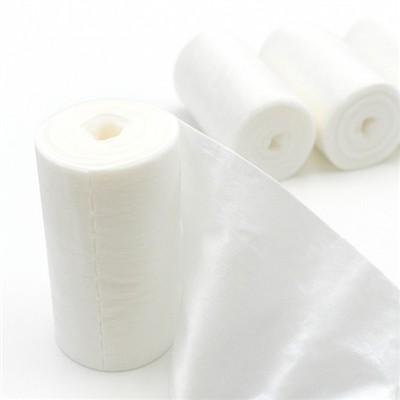
At Weston, innovation is embedded in every stage of production. Our state-of-the-art facilities and proprietary technologies (e.g., dual-stage electret systems, gradient density design) ensure that every roll of meltblown cloth delivers:
Consistent Quality: ISO-certified processes and rigorous testing.
Custom Solutions: Tailored basis weights, coatings, and certifications for unique applications.
Sustainability: Recyclable materials and energy-efficient production.
A Future Shaped by Precision
The meltblown production process is more than a manufacturing technique-it's a gateway to safer, cleaner, and more efficient solutions. From Meltblown Filter Media Material for industrial systems to Melt Blown For N95 Respirator technologies that protect lives, Weston Nonwoven is at the forefront of this revolution.
For partnerships, bulk orders, or technical inquiries, contact us at info@westonmanufacturing.com. Together, we can engineer meltblown materials that redefine what's possible.
Weston Nonwoven – Where Innovation Meets Performance