What Is the Difference Between Surface Wipes and Floor Wipes?
Cleaning wipes may look interchangeable at first glance, but treating surface wipes and floor wipes as the same product is one of the most common-and costly-mistakes in cleaning system design. Behind the similar appearance lies very different engineering logic, material structure, and performance intent.
Understanding these differences is not just academic. It directly affects cleaning efficiency, labor time, hygiene outcomes, and long-term cost control. This article breaks the topic down clearly, practically, and without marketing noise.

Cleaning Objectives Define Everything
The most fundamental difference between surface wipes and floor wipes is what they are designed to clean.
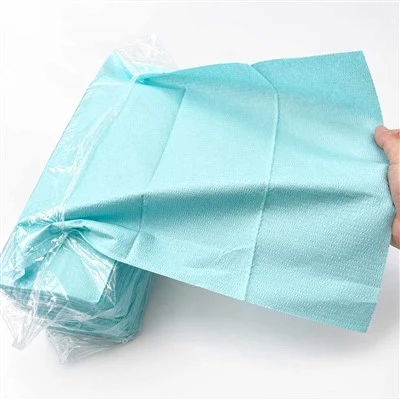
Surface wipes are intended for localized, high-contact areas: countertops, tables, equipment housings, stainless steel surfaces, and food preparation zones. Their mission is precision-removing visible residues, fingerprints, and microorganisms without damaging sensitive surfaces.
Floor wipes, on the other hand, work at scale. They clean large horizontal areas exposed to dust, grit, oil, moisture, and continuous foot traffic. Their primary goal is soil removal and containment, not visual polishing.
In short:
Surface wipes focus on hygiene at touchpoints.
Floor wipes focus on control of contamination across space.
Fabric Construction: Fine Control vs. Structural Endurance
Fabric structure is where the engineering divergence becomes obvious.
Surface wipes are usually made with lower basis weight spunlace structures, allowing flexibility, softness, and even liquid release. Fibers are distributed to glide smoothly across flat surfaces while minimizing lint and streaking.
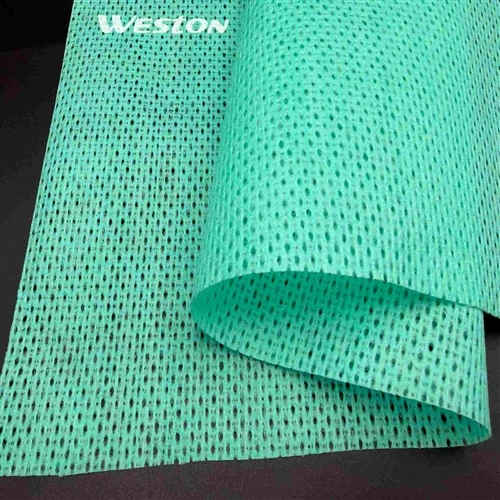
Floor wipes require an entirely different approach. They must tolerate dragging forces, twisting motion, repeated pressure, and extended wet use. This is why they rely on higher-strength fiber entanglement and reinforced bonding.
A properly designed floor wipe doesn't just clean-it survives friction without collapsing or tearing.
Absorption vs. Liquid Management
Absorption is often misunderstood as a single performance metric. In reality, surface wipes and floor wipes manage liquids in very different ways.
Surface wipes require controlled absorption. Too much liquid release leads to over-wetting, streaking, and slow drying-especially problematic on food-contact or electronic-adjacent surfaces.
Floor wipes, by contrast, must handle high liquid volumes. They absorb water, detergents, oils, and suspended dirt while retaining structural integrity. High absorption capacity is critical, but so is liquid retention under pressure.
Using a surface wipe on a floor often results in premature saturation and tearing. Using a floor wipe on a surface often causes excessive wetting and poor control.
Strength Under Mechanical Stress
Another critical distinction lies in how force is applied during use.
Surface wipes are almost exclusively hand-operated. They prioritize softness and flexibility, allowing the user to feel surface resistance and adjust pressure instinctively. Excessive stiffness can actually reduce cleaning effectiveness.
Floor wipes are frequently used with mop systems or frames, where mechanical force is applied indirectly. This demands wet tensile strength, tear resistance, and dimensional stability-even when saturated.
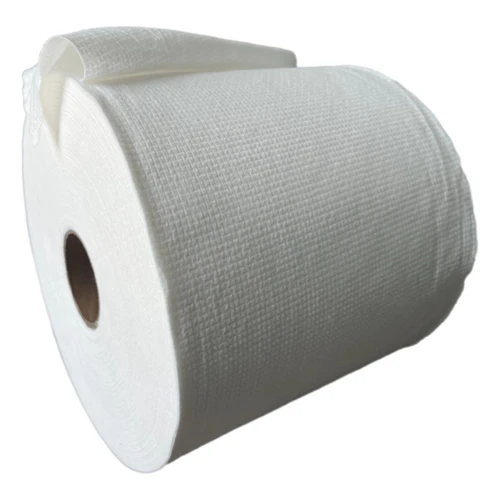
Products such as 100% Polyester Static Embossed Spunlace Floor Wipes are engineered specifically for this environment, where strength is not optional but essential.
Hygiene Control vs. Soil Transport
Surface wipes and floor wipes also differ in what happens after dirt is picked up.
Surface wipes aim to remove and isolate microorganisms and residues, often in combination with disinfectants. Their success is measured by cleanliness at the point of contact.
Floor wipes focus on soil transport-lifting dirt away from the floor and holding it inside the fabric to prevent re-deposition. This function is especially critical in industrial facilities, warehouses, and commercial kitchens.
From a risk-management perspective:
Surface wipes protect people.
Floor wipes protect processes and environments.
Pros and Cons at a Glance
|
Aspect |
Surface Wipes |
Floor Wipes |
|
Cleaning Area |
Small, targeted |
Large, continuous |
|
Fabric Weight |
Light to medium |
Medium to heavy |
|
Liquid Handling |
Controlled release |
High-capacity absorption |
|
Mechanical Strength |
Moderate |
High |
|
Primary Advantage |
Precision hygiene |
Efficient soil removal |
|
Main Limitation |
Not suitable for heavy load |
Overkill for small surfaces |
Choosing the wrong category rarely saves money-it usually increases consumption and labor.
Application-Specific Design Matters
In professional cleaning systems, wipes are rarely standalone products. They work as part of a broader workflow that includes chemicals, tools, and labor patterns.
For example, Kitchen Floor Scrubbing Mop Pads must balance abrasion for grease removal with fiber stability to avoid shedding during aggressive scrubbing. That balance is impossible without deliberate material engineering.
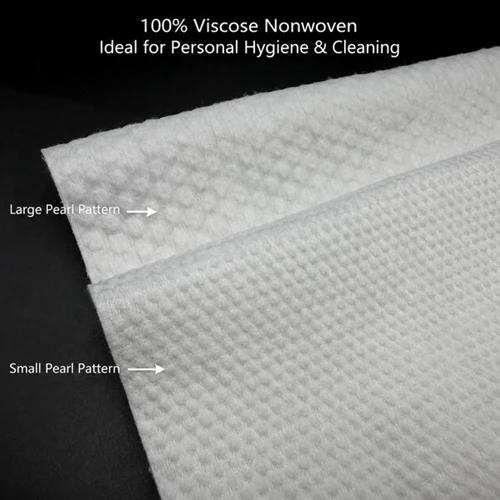
This is where spunlace nonwoven technology shows its value. By adjusting fiber composition, bonding energy, and embossing patterns, manufacturers can tailor wipes to specific operational demands rather than forcing one material to do everything poorly.
Cost Efficiency Is About Performance per Square Meter
Unit price is a misleading metric when evaluating wipes.
A cheaper wipe that tears, oversaturates, or requires frequent replacement often costs more in practice due to increased labor time and higher consumption rates. True cost efficiency comes from coverage area, durability, and task suitability.
In facility trials, switching to correctly specified floor wipes often reduces total wipe usage-even when individual units cost more.
Where Manufacturing Expertise Quietly Makes a Difference
Not all wipes are created equal, even within the same category. Consistent fiber entanglement, stable embossing, and repeatable quality require deep process control at the manufacturing level.
Spunlace-focused producers like Weston Nonwoven specialize in this kind of material tuning, offering application-specific structures rather than generic fabrics. In practice, that means wipes that behave predictably across different cleaning conditions-dry, damp, or fully saturated.
For buyers testing new materials, Weston provides free samples to evaluate performance directly in real-use environments.
Contact: info@westonmanufacturing.com
Choosing the Right Tool Changes the Outcome
Surface wipes and floor wipes are not interchangeable tools-they are the result of different engineering priorities responding to different cleaning realities. When each is used as intended, cleaning becomes faster, more consistent, and more cost-effective.
Understanding these differences empowers better decisions, fewer compromises, and cleaner results that actually last.