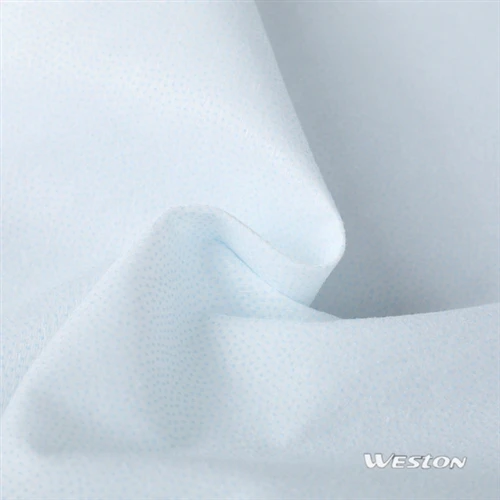
Stitch bond fabric is often misunderstood, yet it occupies a unique position in the broader nonwoven landscape. It is neither a traditional knitted material nor a conventional nonwoven. Instead, it represents a hybrid engineering structure-a fiber web reinforced by a continuous stitching process that binds fibers together through mechanical interlocking. This fusion of web formation and loop-based reinforcement gives stitch bond fabric its recognizable stability, strength, and dimensional precision.

Defining Stitch Bond Fabric Through Its Engineering Principles
At its core, stitch bond fabric is built from three components: a substrate fiber web, a stitching yarn, and a pattern governed by needle movement. The substrate web may be made from polyester, viscose, polypropylene, or blended fibers. What distinguishes stitch bond from classical nonwoven bonding mechanisms is the presence of a binding yarn that penetrates the web and forms loops in repeated sequences.
This loop-anchoring architecture increases the internal cohesion of the material. It distributes tension across reinforced pathways, making the fabric more stable than standard mechanically bonded nonwovens. Because the yarn acts as a controlled skeleton, the resulting fabric maintains uniform thickness, excellent handling stability, and minimal shrink or distortion even under stress.
How Stitch Bonding Technology Works: The Science Behind the Process
The manufacturing process begins with forming a consistent, well-distributed fiber web. This web is then moved through a stitch-bonding machine equipped with guide bars, needle arrays, and controlled yarn feeders. Each needle drives the yarn through the web, forming a series of interlocked loops that anchor the fibers at a microscopic level.
The physics behind its strength lies in how these loops disperse stress. When tension is applied, forces are transmitted along the yarn grid instead of concentrating at weak points. Fiber slippage is significantly reduced, which enhances durability and tear resistance. Stitch density, yarn thickness, and web weight all influence mechanical behavior. Small variations in these parameters can produce fabrics tailored for cushioning, reinforcement, acoustics, or dimensional rigidity.
Performance Characteristics Explained by Material Physics
Several distinctive performance attributes set stitch bond fabric apart:
Dimensional Stability: The yarn grid restrains uncontrolled expansion or contraction, making the material ideal for applications that require precision.
High Tensile and Tear Strength: The structural loops form a reinforcement network that behaves like an internal scaffold.
Abrasion Resistance: Since the yarn stabilizes the fiber matrix, the surface resists pilling and deformation.
Moisture Management: Porosity is controlled by stitch spacing and fiber type, allowing calibrated liquid absorption or breathability.
Thermal and UV Response: Performance depends largely on polymer chemistry-polyester substrates withstand heat and UV exposure well, while viscose improves moisture interaction.
These characteristics give stitch bond fabrics a unique balance rarely found in single-process nonwovens.

Key Advantages Supported by Engineering Logic
From an engineering perspective, the structure provides clear advantages:
High strength-to-weight efficiency
Superb stability for lamination, coating, or printing processes
Compatibility with diverse fibers and finishing technologies
Predictable, repeatable performance across large-scale industrial runs
Opportunities to integrate specialty yarns for enhanced properties
Stitch bonding is especially valuable where precision, flatness, and long-term durability are required.
Limitations and Technical Considerations
While technically strong, stitch bond fabric is not without constraints:
Visible stitching lines may not suit ultra-smooth aesthetic applications
Lower elasticity compared with knitted materials due to its reinforced grid
Performance varies depending on yarn selection and substrate uniformity
Production requires specialized equipment with strict tension and synchronization control
These are engineering trade-offs rather than shortcomings. Correct parameter control typically resolves all performance concerns.
Industrial Applications Viewed Through Functional Requirements
Industries adopt stitch bond fabrics because they meet demanding functional criteria. Common uses include:
Carpet and flooring underlays
Furniture padding and upholstery layers
Composite reinforcement fabrics
Automotive interior components
Insulation and protective wraps
Packaging or industrial liners
Its ability to maintain shape, resist deformation, and endure mechanical load makes it suitable for environments where reliability is critical.
In some contexts, related materials-such as Heavy Duty Stitch Bonded Nonwoven Fabric or Industrial Creped Spunlace Material-may be used alongside stitch bond fabrics for cleaning, reinforcement, or industrial wiping applications.
What Weston Nonwoven Provides in Stitch Bond and Advanced Nonwovens
Weston Nonwoven specializes in producing stitch bond fabric with controlled stitch density, uniform substrate formation, and engineered yarn patterns. The company maintains robust quality control focused on stability, repeatability, and industrial-scale reliability.
Beyond stitch bond materials, Weston Nonwoven also manufactures premium nonwoven substrates including 100% Lyocell, mugwort fiber, seaweed fiber, and bamboo charcoal fiber, supporting high-end personal care, hygiene, and specialty industrial applications.
Weston also provides integrated B2B solutions such as customized logo printing, tailored packaging design strategies, and professional container-loading optimization to maximize shipment efficiency.
Common Questions and Clarifications
Is stitch bond fabric the same as knitted fabric?
No. While both use loops, stitching reinforces an existing web instead of forming a continuous knitted textile.
Can stitch bond materials replace woven fabrics?
In many reinforcement or support applications, yes-its dimensional stability offers advantages. But woven fabrics may still be preferred where high directional strength or smooth aesthetics are required.
Does the grid-like texture affect performance?
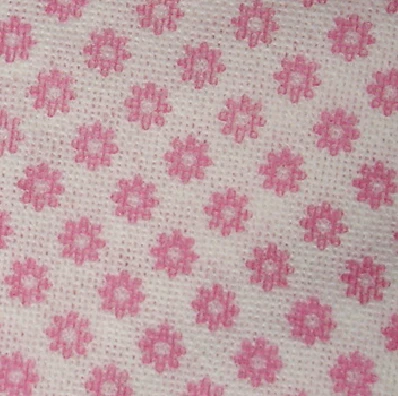
Not negatively. It represents the yarn pattern, which contributes to stability and strength.
Is it suitable for high-temperature or chemical environments?
This depends on the polymer type used in both the yarn and substrate.
Final Insights for Decision-Makers
Stitch bond fabric occupies a distinct space in modern material engineering. Its hybrid structure delivers stability, strength, and predictable performance, making it a powerful solution across industrial sectors. When paired with advanced fiber options and precision manufacturing-as offered by Weston Nonwoven-it becomes a versatile foundation for both technical and high-value applications.