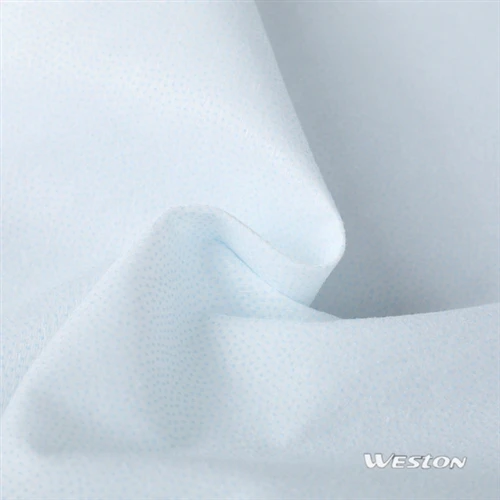
The Invisible Architecture of Modern Cleanliness
Clean isn't just a sparkle or a smell; it's a structure-an engineered defense against the microscopic chaos threatening sterile labs, spotless assembly lines, and surgical suites. Every fiber in a wipe, every thread in a filter, either holds the line against contamination or becomes part of the problem.
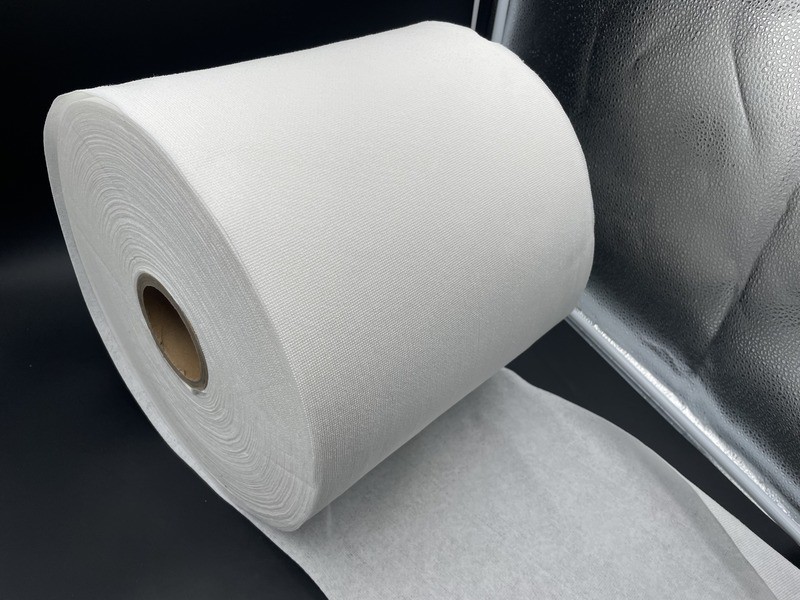
Bonded non-woven fabric is that line. Unlike woven textiles, where threads interlace in predictable grids or knitted loops that stretch and snag, non-wovens are functional webs-fibers deliberately arranged and locked into place. At Weston Nonwoven, we specialize in hydroentanglement (spunlace), but we study every bonding method because understanding the full toolbox makes us better at engineering cleanliness. Today, we're pulling back the curtain on the most mechanically honest method: Stitched Non-Woven Fabric.
Stitch Bonding vs. Spunlace: Let's End the Confusion
If you've ever grabbed a spunlace wipe and felt that soft, cloth-like drape, you've experienced water's brute force. High-pressure jets tangle fibers randomly-fast, flexible, and fantastic for skincare. But random isn't always ideal when you're cleaning a $50,000 camera sensor or mopping up toxic solvents in a chip fabrication plant.
Stitch bonding (specifically the Maliwatt system) doesn't tangle; it sews. Picture thousands of compound needles punching through a loose fiber batt at 2,200 revolutions per minute, lopping yarn through the web and knitting it into a stable, three-dimensional matrix. The result? Deliberate, directional fiber channels that move liquid like a designed irrigation system, not like a spilled bucket. Spunlace is like a forest; stitch bonding is like a grid of aqueducts.
|
Feature |
Stitch Bonded (Maliwatt) |
Spunlace |
|
Bonding Agent |
Mechanical yarn loops |
Water jets + friction |
|
Fiber Control |
Directional channels |
Random entanglement |
|
Shedding Risk |
Near zero (yarn-locked) |
Low, but fiber ends exposed |
|
Tensile Strength |
High, even when saturated |
Moderate, can tear when wet |
|
Cost at Scale |
30-40% cheaper than weaving |
Competitive, material-dependent |
|
Feel |
Structured, papery |
Soft, textile-like |
The trade-off? Stitched Non-Woven Fabric sacrifices some drape and that cottony hand feel. It's not your face wipe; it's your factory floor's secret weapon.
The Maliwatt Revolution: Programming Fibers With Mechanical DNA
Back in 1973, a Czech patent described "knitting without fabric"-the genesis of modern stitch bonding. Today's Maliwatt machines are less knitter and more robotic surgeon. Here's what actually happens inside that 12-meter-long behemoth:
Penetration: Compound needles (14, 18, or 22 gauge) pierce a carded fiber batt like surgical trocars-no mercy, no missed stitches.
Lapping: Yarn guides loop stitching thread around the needles, capturing loose fibers in a mechanical vise.
Closing & Knocking-over: Needles retract, pulling yarn loops through the batt. The stitch closes, forming permanent vertical pillars that lock fibers in X, Y, and Z axes.
Take-down: The fabric emerges at 30+ meters/minute with dimensional stability that woven fabrics envy-no warp, no weft, no bias stretch.
The genius? No chemical binders. No latex and no acrylic resins that can leach into your cleanroom. Just pure mechanical interlock. Think of it as programming fibers with mechanical DNA: the pattern of stitches dictates absorbency, tensile strength, and-most critically-zero shedding even after saturation.
The downside? Tooling a custom stitch pattern incurs upfront costs. At weights below 80 gsm, you might see faint needle marks. But for critical cleaning, that's a feature, not a bug-it proves the lock is working.
5 Data-Backed Reasons Stitched Non-Woven Fabric Dominates in Critical Cleaning
Let's cut the marketing fluff. Here's why facilities managers and OEMs specify Stitched Non-Woven Fabric when failure costs more than the wipe:
1. Zero Shedding Guarantee
In a Class 100 cleanroom, one stray fiber can ruin a microchip. The Maliwatt's yarn-loop lock means fibers physically cannot escape. Independent testing shows fewer than 5 particles ≥25µm per cm² after 100 wipes-spunlace averages around 50+. For sterile environments, that's a matter of life and death.
2. Load-Bearing Absorbency
Absorbency is easy. Absorbency under pressure is another challenge. Spunlace mats collapse when pressed, squeezing liquid back onto the surface. Stitch bonding's vertical yarn pillars act like rebar in concrete, maintaining pore space even at 300 gsm. You can scrub a hydraulic leak with a Heavy-Duty Degreasing Wipe, and it won't disintegrate in your hand.
3. Dimensional Integrity When Wet
Wiping a spill with spunlace causes the fabric to stretch, bunch, and tear. Rag-free, they said. Reality? Try rag-lite. Stitched Non-Woven Fabric maintains ±2% dimensional tolerance even when saturated with acetone. That predictability matters when your wipe is attached to an automated tool in a controlled environment.
4. Cost-Effectiveness at Real Scale
Weaving hits a wall: looms are slow, labor-intensive, and waste 15% of yarn. Stitch bonding runs at 3-4 times the speed, with near-zero waste. For a facility burning through 10,000 wipes daily, that's a 30-40% reduction in unit costs. The catch? You need volume to amortize the setup. Small-batch buyers might find spunlace more accessible.
5. Fiber Versatility Without Compromise
Polyester for chemical resistance. Viscose for hydrophilic properties. Cotton for biodegradability. Even glass fiber for high-temperature applications. Stitch bonding doesn't discriminate-if you can card it, you can stitch it. Plus, because there's no water jet deformation, fiber properties remain intact.
The Weston Benchmark: What Actually Matters in the Spec Sheet
We're primarily a spunlace manufacturer. But when a client in the aerospace sector needed a Heavy Duty Stitch Bonded Nonwoven Fabric for landing gear degreasing, we conducted thorough benchmarking. Here's the honest data-use it to evaluate any supplier:
The 22-gauge needle option is critical. Finer needles create smaller holes, facilitating a smoother surface for delicate optics wiping. Most suppliers only stock 14-gauge for heavy-duty work. We insisted on options because your contamination profile isn't one-size-fits-all.
Yes, lead times are 4–6 weeks for custom patterns. Yes, minimums start at 5,000 linear meters. If that's a dealbreaker, we'll direct you to our spunlace catalog without hard feelings. But if you're deploying Heavy-Duty Degreasing Wipes across multiple plants, that initial tooling cost fades in the first invoice.
Beyond Wipes: Applications You Didn't Consider
Everyone talks about wipes, but let's address the invisible work:
Automotive Cable Harness Tapes
That black fabric tape wrapping your car's wiring? It's likely stitch-bonded polyester. The yarn lock prevents fiber shedding that causes micro-short circuits. Spunlace sheds too much; woven is too bulky.
Food-Grade Liquid Filtration
Stitch-bonded cotton sub-layers in commercial coffee filters. No chemical binders means no leaching into your morning brew-achieving FDA compliance without the plastic feel of meltblown laminates.
Hospital Mattress Covers
Achieving fluid barrier and breathability is challenging. Stitch-bonded PET with a PU coating provides both-plus the quiet dignity of fabric rather than crinkly plastic laminate.
Cleanroom Apparel Interlinings
The stiff collar on a Tyvek suit? Stitch-bonded polypropylene provides dimensional memory, withstanding 50+ autoclave cycles without the bias stretch that alters sizes.
Your Procurement Blueprint: Avoiding Costly Mistakes
Specifying Stitched Non-Woven Fabric without understanding your wipe's stress profile is like buying a race car for grocery runs. Here's a cheat sheet:
For Heavy-Duty Industrial Degreasing
Weight: 180–300 gsm
Needle: 14 gauge (larger loops = more grip)
Blend: 70% polyester / 30% viscose (chemical resistance + absorbency)
Finish: Uncoated, high-loft for solvent retention
For Medical Device Wiping
Weight: 80–120 gsm
Needle: 18 gauge (balance of smoothness and strength)
Blend: 100% polyester (lowest lint)
Finish: Anti-static, pre-washed
For Electronics/Optics
Weight: 65–90 gsm
Needle: 22 gauge (ultra-fine surface)
Blend: 100% microfiber polyester
Finish: Laser-sealed edges, Class 10 packaging
A common mistake? Over-specifying. A 300 gsm wipe may be unnecessary for camera lenses and wasteful at $0.12 per unit. Conversely, a 65 gsm wipe on a hydraulic press might require three instead of one, leading to frustration over lint. Match the tool to the task.
The Cleanliness Litmus Test: 3 Questions for Suppliers
When your QA manager requests test data, here's what separates talk from tech:
"What's your needle penetration depth consistency tolerance?"
Anything looser than ±0.1mm means uneven bonding and weak spots. Demand SPC charts from the production line, not just batch COAs.
"Can you provide shedding test data per ISO 14644-1?"
Not IEST-RP-CC004. Not "internal protocol." ISO 14644 in a certified lab is essential. If they hesitate, they likely haven't tested. Our data shows fewer than 3 particles/cm².
"Do you offer batch-level traceability with needle change logs?"
Needles wear over time. A dull needle doesn't pierce cleanly, creating fiber fragments. Traceability ensures you know which 5,000-meter roll was produced before or after a needle swap.
The Future of Clean is Mechanically Bonded
Woven fabrics had their century. Spunlace is versatile. But when a wipe failure could mean a $2 million tool rebuild or a lawsuit in healthcare, Stitched Non-Woven Fabric is the engineer's quiet rebellion against "good enough."
It's not glamorous. It doesn't drape like silk. But it works-predictably, measurably, and relentlessly.
At Weston, we don't just stitch; we spinlace. But we've learned that humility builds better products. Studying Maliwatt's mechanical lock has helped us redesign our jet patterns to achieve similar directional control. And when you need the real thing-when only yarn-lock zero-shed will do-we'll guide you to the best and value your feedback.
Because clean isn't just a product; it's a partnership.