What Is Polyester Viscose Fabric? The Science, Benefits, and Industrial Power Behind the Blend
Understanding Polyester Viscose Fabric
Polyester viscose fabric is a smart, engineered blend of two worlds - polyester's strength and viscose's softness. This hybrid structure delivers a balance of comfort, durability, and versatility, making it ideal for everything from industrial wipes to technical textiles and everyday clothing.
At Weston Manufacturing, we view this fabric as a cornerstone of modern material science - one that connects innovation, sustainability, and performance in one continuous fiber system.
The Science Behind Polyester Viscose Fabric
Fiber Composition and Molecular Interaction
Polyester is a synthetic polymer derived from petroleum, known for its crystalline molecular regions that give it high tensile strength and wrinkle resistance.
Viscose, on the other hand, is a regenerated cellulose fiber made from natural wood pulp, prized for its softness, breathability, and moisture absorption.
When blended, these fibers form a hybrid matrix that delivers both structure and comfort. Polyester's rigidity balances viscose's fluidity, resulting in a durable yet drapable textile suitable for performance-driven applications.
How It's Made: From Fiber to Fabric
Viscose fibers are created through wet spinning, where dissolved wood pulp is extruded into filaments.
Polyester fibers are formed by melt spinning, extruding molten PET into smooth, continuous strands.
Once produced, the fibers are carded, blended, and drawn into uniform yarns - or directly bonded into nonwoven webs via hydroentanglement (spunlace) or needlepunching.
This process gives manufacturers precise control over basis weight, softness, absorbency, and mechanical strength - key parameters in industrial nonwovens and wipes.
Core Performance Features
Polyester viscose fabrics excel in:
Moisture Management: Viscose absorbs, polyester releases - ensuring dry, breathable comfort.
Strength and Elasticity: Polyester adds resilience; viscose provides flexibility.
Thermal Stability: High melting point and smooth touch enable performance across temperatures.
This synergy explains why polyester viscose is widely used in hygiene, filtration, medical, and cleaning applications.
Key Benefits and Real-World Trade-Offs
Advantages That Matter
✅ Soft Comfort with Structural Support: Viscose provides a skin-friendly feel, while polyester stabilizes the blend.
✅ Long-Lasting Durability: Resistant to tears, abrasion, and deformation - crucial for industrial-grade wipes and filtration media.
✅ Versatile Applications: Suitable for apparel, upholstery, technical filters, and disposable nonwoven products.
Limitations to Consider
⚠️ Environmental Challenges: Viscose involves chemical solvents, and polyester relies on petrochemicals - though recycling and cleaner manufacturing are reducing impact.
⚠️ Pilling Risks: Can occur with high polyester ratios; proper blending mitigates this.
⚠️ Care Sensitivity: Moderate washing temperatures (30–40°C) and gentle detergents extend fabric life.
Industrial Innovations: Where Weston Leads
Nonwoven Textiles: Redefining the Future
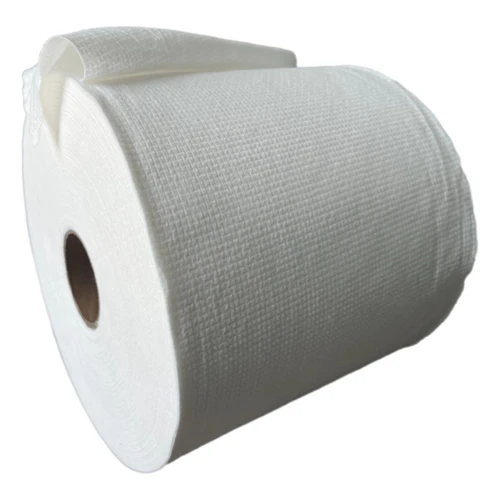
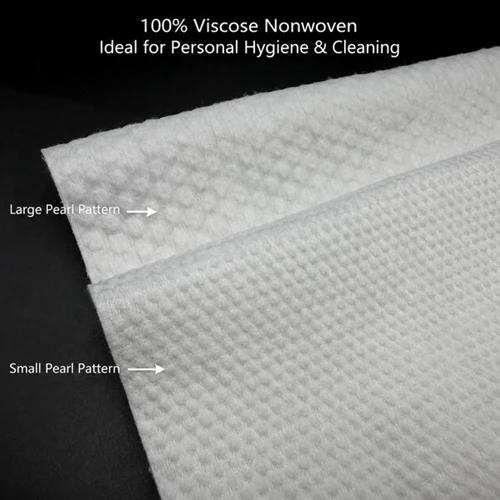
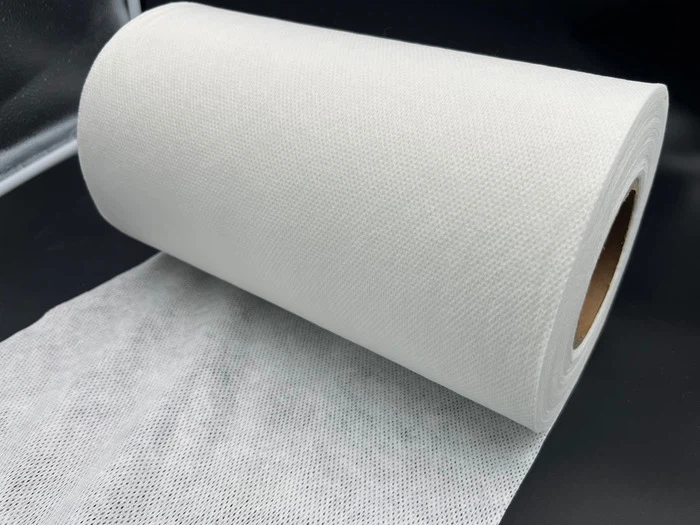
Polyester viscose nonwovens, especially spunlace, are setting new industry benchmarks. Using high-pressure water jets, fibers are entangled to form lint-free, absorbent, and strong webs - ideal for filtration, medical disposables, and industrial cleaning wipes.
Featured Weston Manufacturing Products
1. Industrial-Grade Grey Polyester Spunlace Nonwoven Fabric
Designed for heavy-duty wiping, filtration, and mechanical maintenance. With high wet strength and lint control, it performs reliably in demanding environments.
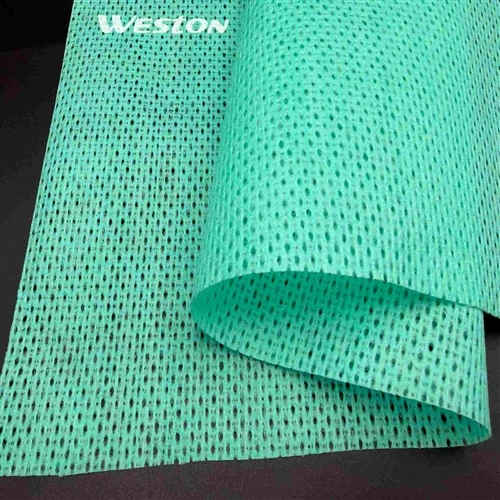
2. 16 Mesh Viscose Polyester Spunlace Nonwoven Roll
Engineered for precision cleaning. The open mesh pattern enhances fluid flow and debris capture, while the viscose component ensures rapid absorbency.
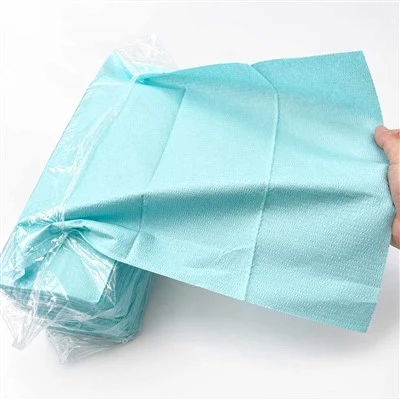
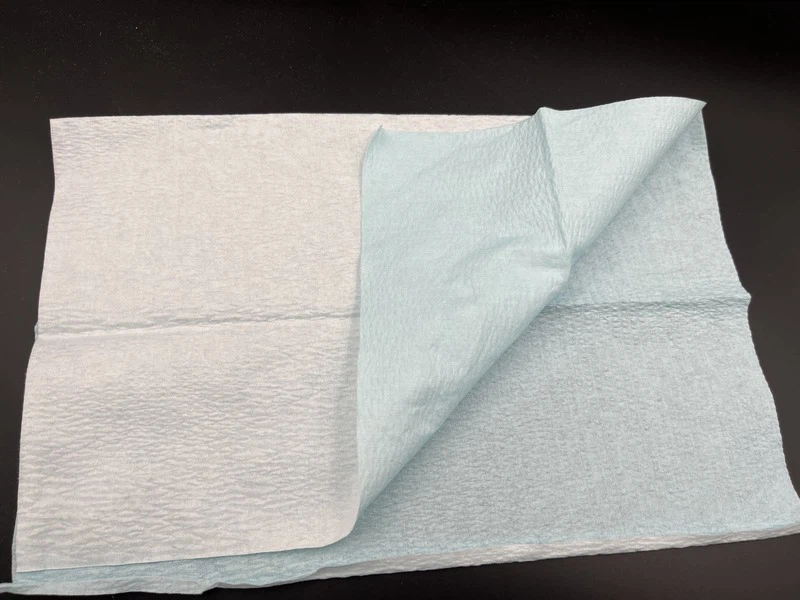
3. Turquoise Bark-Like Texture Crinkled Spunlace
A visually distinctive, high-surface-area material that traps fine dust and particles efficiently. Perfect for premium wipes and specialized cleaning applications.
Factory Integration and Sustainability
Weston's spunlace rolls integrate seamlessly into automated converting lines - compatible with cutting, folding, and wet-wipe filling machinery.
Our manufacturing employs closed-loop water recycling, solvent recovery, and energy-efficient drying systems, ensuring cleaner production with minimal waste.
Sustainability and Health: The Responsible Fabric
Lifecycle Footprint and Eco Performance
Raw Materials: Renewable viscose pulp meets recyclable polyester - a hybrid path toward sustainability.
Production: Modern systems reclaim solvents and optimize water use, lowering energy intensity.
End of Life: Viscose biodegrades; polyester can be recycled into new fibers - enabling dual circularity.
Human and Environmental Safety
Certified polyester viscose nonwovens undergo:
Biocompatibility tests for skin safety.
VOC and chemical residue control to ensure product purity.
Effluent treatment that meets or exceeds environmental discharge standards.
The Future: Smarter, Cleaner, Circular
Next-Gen Fiber Modifications
Emerging research focuses on antimicrobial nano-coatings, self-cleaning finishes, and smart sensors embedded in polyester viscose structures - paving the way for intelligent textiles in healthcare and industrial safety.
Closed-Loop Manufacturing
Viscose: Solvent recovery enables near-total reuse of processing chemicals.
Polyester: Chemical recycling breaks fibers into monomers, regenerating virgin-quality polymer without waste.
Circular Economy and Global Regulations
As global standards tighten around eco-labeling, LCA reporting, and product transparency, polyester viscose fabrics are positioned to meet the next era of green compliance and traceability.
Buyer's Guide: How to Choose and Care for Polyester Viscose Fabric
Selecting the Right Fabric
When sourcing for production or resale, evaluate:
Application type: apparel, wipes, filters, or upholstery.
Performance metrics: basis weight (gsm), tensile strength, absorbency.
Surface texture: smooth, mesh, or crinkled depending on use case.
Care Tips for Longevity
Wash in cool water (30–40°C).
Use mild detergents; avoid bleach.
Air-dry to prevent shrinkage or static.
Store in a clean, dry area away from sunlight.
Troubleshooting Common Issues
Pilling: Common with friction; choose tighter weaves or higher viscose ratios.
Shrinkage: Use gentle drying cycles.
Loss of softness: Refresh with steam or gentle fabric softeners.
Recycling options are expanding - polyester viscose nonwovens can often be repurposed or chemically recycled, reducing landfill impact.
Request Free Samples
Want to evaluate the quality firsthand?
Contact Weston Manufacturing to request free polyester viscose nonwoven samples for lab testing or industrial trials: info@westonmanufacturing.com
Experience the fabric that merges science, sustainability, and superior performance - without sales pressure or gimmicks.
Final Thoughts
Polyester viscose fabric represents the evolution of modern textiles - a perfect fusion of natural comfort and synthetic strength. Its adaptability, eco-potential, and performance consistency make it a material of choice for forward-thinking manufacturers and designers worldwide.
As technology advances, Weston Manufacturing continues to lead with innovation, transparency, and sustainability, driving polyester viscose fabrics toward a smarter, circular, and cleaner future.