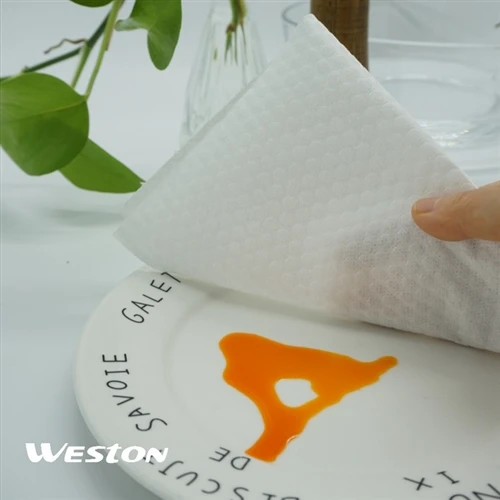
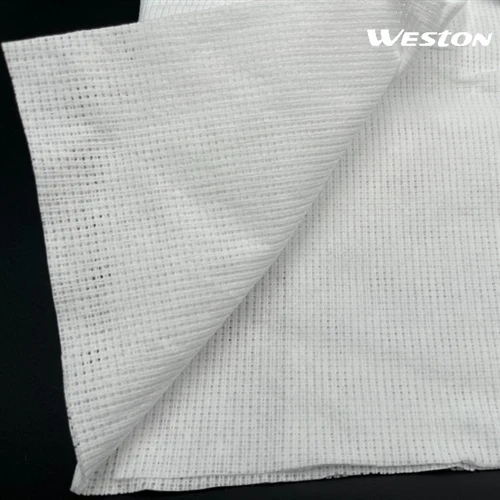
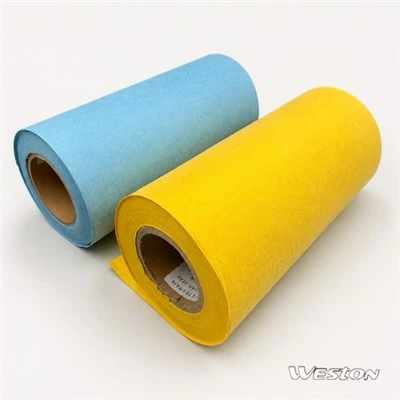
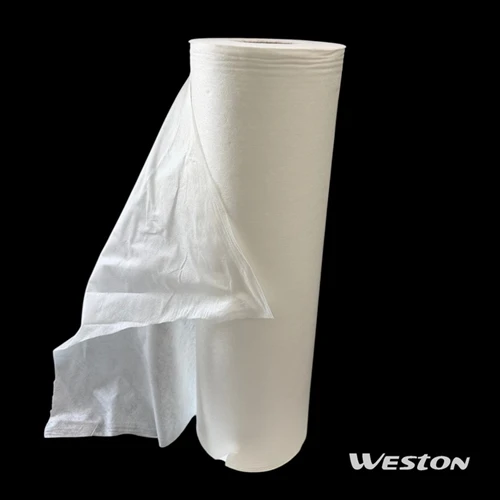
Non-woven geotextile fabric, as a key functional material in engineering, agriculture, environmental protection, and other fields, has gradually become an indispensable part of modern infrastructure construction and ecological management due to its unique material properties and scientific application logic. Unlike traditional woven or knitted fabrics, it is a fibrous structure formed by directly bonding, interlocking, or weaving polymer fibers (such as polypropylene, polyester, and viscose) through physical or chemical methods, which gives it distinctive functional advantages and application scenarios.
1. Scientific Definition and Core Characteristics of Non-Woven Geotextile Fabric
From the perspective of material science, the core value of non-woven geotextile fabric lies in the "functional customization" of its fibrous structure. Its manufacturing process (such as spunlace, needle-punching, spunbonding) can adjust the density, pore size, and fiber arrangement of the fabric according to specific application needs, thereby achieving precise control of key properties such as water permeability, tensile strength, corrosion resistance, and flexibility.
High water permeability: The three-dimensional porous structure formed by interlaced fibers allows water to pass through quickly while blocking soil particles, avoiding the problem of fabric clogging caused by soil particle migration. This characteristic is crucial for scenarios such as soil water conservation and road drainage.
Excellent tensile strength: The cross-directional fiber interlocking structure enables the fabric to bear large horizontal and vertical loads, effectively dispersing stress and preventing deformation or rupture of engineering structures (such as roadbeds and slope protection).
Good corrosion resistance: Most non-woven geotextile fabrics are made of chemically stable polymers or modified natural fibers (such as viscose). They can resist erosion by acid, alkali, salt, and other chemical substances in the soil, and maintain stable performance in harsh environments for a long time.
Flexible adaptability: The fabric can be arbitrarily cut and folded, and can closely fit the irregular surface of the construction site (such as uneven slopes and curved roadbeds), reducing the difficulty of construction and improving the fitting degree of the project.
Diverse Application Scenarios and Scientific Principles of Non-Woven Geotextile Fabric
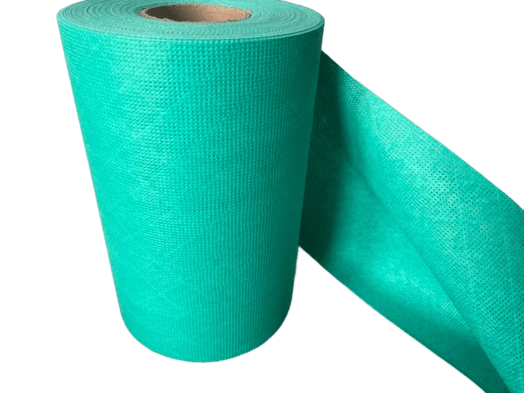
The application of non-woven geotextile fabric is not a simple "material filling," but a scientific matching between its properties and the actual needs of the scene. Its multi-field application is supported by clear engineering mechanics, agronomy, and environmental science principles.
2.1 Civil Engineering: Safeguarding the Stability of Infrastructure
In road, railway, and hydraulic engineering, non-woven geotextile fabric plays the role of "structural buffer" and "functional barrier." Taking road maintenance as an example, the traditional roadbed is prone to uneven settlement due to the mixing of soil and gravel under the action of vehicle loads, leading to road cracking. The Heavy-Duty 100% Viscose Non-Woven Fabric For Road Maintenance can solve this problem through two core principles: on the one hand, its high tensile strength can disperse the local concentrated load of the road surface to a larger area, reducing the pressure on the roadbed; on the other hand, its porous structure blocks the mutual migration of soil particles and gravel, maintaining the integrity of the roadbed structure. At the same time, the 100% viscose fiber material has good moisture absorption and moisture retention. Even in humid environments, it can still maintain stable tensile performance, avoiding the decline of fabric strength caused by water erosion.
In hydraulic engineering (such as river embankments and reservoir banks), non-woven geotextile fabric is used as a "filter layer" between the soil and the revetment. It allows the seepage water in the soil to discharge smoothly, reducing the hydrostatic pressure inside the embankment while preventing the loss of soil particles, thus avoiding embankment collapse caused by "piping" (soil erosion caused by water seepage).
2.2 Agricultural Field: Promoting the Efficient Growth of Crops
In modern agriculture, non-woven geotextile fabric has become an important tool to replace traditional plastic films, realizing the dual goals of "increasing yield" and "environmental protection."
For the problem of crop frost damage in early spring or late autumn, the Spunlace Nonwoven Plant Frost Protection Cover relies on its unique spunlace process to form a loose and dense fibrous network. This structure can form a stable air insulation layer between the cover and the crop surface, reducing the heat loss of the crop at night and raising the local microclimate temperature by 2-5℃, thus avoiding frost damage to the crop. At the same time, the porous structure of the spunlace fabric does not block the penetration of sunlight and air, ensuring the normal photosynthesis and respiration of crops, which is very different from the traditional plastic film that is airtight and easy to cause "high-temperature burning seedlings."
In the whole growth cycle of crops, the Duprotex Nonwoven Fabric For Plant Cultivation plays a comprehensive role in "moisture conservation, weed control, and soil improvement." Its moderate water permeability can reduce the evaporation of soil moisture, maintain the stability of soil moisture content, and reduce the frequency of irrigation; the dense fiber structure can block the sunlight required for weed germination, realizing "physical weeding" without chemical herbicides; in the long-term use process, the fabric can also decompose slowly (for biodegradable types), adding organic matter to the soil and improving the soil structure.
2.3 Environmental Protection: Assisting Ecological Restoration and Pollution Control
In soil and water conservation projects (such as slope greening and mine ecological restoration), non-woven geotextile fabric is used as a "protective base layer." It covers the surface of the bare soil slope to prevent soil erosion caused by rainwater scouring; at the same time, it can fix the seeds and nutrient soil in the greening project, providing a stable growth environment for plants, and promoting the rapid recovery of the ecological vegetation on the slope.
In the construction of garbage landfills, non-woven geotextile fabric is an important auxiliary material for the anti-seepage system. It is laid between the landfill liner (such as HDPE film) and the soil; on the one hand, it protects the liner from being punctured by sharp objects in the garbage; on the other hand, it filters the leachate (the sewage produced by garbage decomposition), reducing the content of impurities in the leachate, and reducing the pressure of subsequent sewage treatment.
2.4 Medical Auxiliary: Extending the Application of Non-Woven Technology
Although medical scenarios are not the traditional main application field of geotextile fabric, the excellent barrier and hygiene performance of non-woven materials have promoted their extension to the medical field. The Professional Disposable Hospital Gowns made of non-woven fabric have two core functions: first, the dense fiber structure can block the penetration of blood, body fluids, and bacteria, preventing cross-infection between medical staff and patients; second, the lightweight and breathable material can reduce the stuffiness of medical staff during long-term work, improving the comfort of wearing. Compared with traditional woven medical gowns, disposable non-woven gowns also avoid the problem of secondary pollution caused by cleaning and disinfection, and are more in line with the hygiene requirements of modern medical scenarios.

3. Advantages and Objective Limitations of Non-Woven Geotextile Fabric
To fully understand the value of non-woven geotextile fabric, it is necessary to view its advantages and limitations objectively.
3.1 Core Advantages
High construction efficiency: Compared with traditional engineering materials (such as concrete, asphalt felt), non-woven geotextile fabric is lightweight (usually 100-500g/m²) and easy to transport and lay. It can be cut into any size according to the construction site, and the laying speed is 3-5 times that of traditional materials, which greatly shortens the construction period.
Long-term economic benefits: Although the initial investment of non-woven geotextile fabric may be higher than that of some low-cost materials (such as straw mats), its long service life (usually 5-15 years, depending on the material) and low maintenance cost can reduce the overall cost of the project. For example, in road maintenance, the use of non-woven geotextile fabric can extend the service life of the road by 3-5 years, reducing the frequency of road reconstruction.
Good environmental compatibility: With the development of material technology, more and more non-woven geotextile fabrics use biodegradable materials (such as polylactic acid, modified viscose). After the end of their service life, they can be decomposed into harmless substances in the natural environment, avoiding the "white pollution" caused by traditional plastic materials.
3.2 Objective Limitations
Limited UV resistance: Most non-woven geotextile fabrics (especially polypropylene-based ones) are prone to aging and brittleness when exposed to strong ultraviolet rays for a long time, resulting in a decline in performance. Therefore, in outdoor scenarios with strong sunlight (such as desert areas), it is necessary to cooperate with UV-resistant coatings or protective layers for use.
Poor resistance to sharp objects: Although the fabric has a certain tensile strength, it is easy to be punctured by sharp objects (such as stones, steel bars) in the construction site, which affects its functional integrity. Therefore, in the construction process, it is necessary to clean the construction site first to avoid the existence of sharp objects.
Reduced flexibility at low temperatures: In low-temperature environments (below -20℃), the polymer fibers of non-woven geotextile fabric will become brittle, and the flexibility will decrease, which may lead to fabric cracking during laying. Therefore, in cold regions, it is necessary to choose low-temperature resistant materials or avoid construction in extremely cold weather.
4. Practical Reference for Non-Woven Geotextile Fabric-Related Products
In the practical application of non-woven geotextile fabric, the product quality and performance matching directly affect the application effect. Weston Nonwoven, as a manufacturer focusing on functional non-woven products, has launched a series of products suitable for different scenarios, such as the Heavy-Duty 100% Viscose Non-Woven Fabric For Road Maintenance for road engineering, the Spunlace Nonwoven Plant Frost Protection Cover and Duprotex Nonwoven Fabric For Plant Cultivation for agricultural production, and the Professional Disposable Hospital Gowns for medical scenarios. These products are designed according to the specific needs of the application scenarios, and their material selection and process design are in line with the scientific application principles of non-woven geotextile fabric, providing reliable material support for practical projects.
If you need to further understand the performance parameters of the above products or obtain free samples to test their applicability in specific scenarios, you can contact Weston Nonwoven through the email address: info@westonmanufacturing.com.
Non-woven geotextile fabric, as a product of the combination of material science and engineering technology, its application value is not only reflected in "replacing traditional materials," but also in "creating new engineering solutions" through functional innovation. With the continuous development of polymer material technology and non-woven manufacturing processes, non-woven geotextile fabric will play a more important role in the fields of green infrastructure, ecological agriculture, and environmental protection, contributing to the sustainable development of human society.