What's Really Inside Your Mask? The Meltblown Story Nobody Talks About
You put on a mask and don't think twice about it. But that thin, papery middle layer? It's doing something genuinely remarkable. Let's break down what's actually happening when you breathe through it.
The Invisible Filter
Meltblown nonwoven is the unsung hero of modern filtration. It starts as simple polypropylene pellets-the same plastic used in everyday packaging. Through a specialized manufacturing process, these pellets are transformed into ultrafine fibers just 1–5 microns in diameter. For perspective, a human hair measures roughly 120 microns.
The result is a material that looks fragile, almost weightless. But under magnification, it reveals a dense, chaotic web of fibers oriented in every direction. This randomness is not accidental. It is engineered to maximize particle capture while maintaining airflow.

How It's Actually Made
Molten polypropylene is extruded through microscopic nozzles and immediately hit with high-velocity hot air. This airflow stretches the molten polymer into extremely fine filaments in a matter of milliseconds.
The fibers land on a moving belt while still warm and bond to each other naturally-no adhesives, no secondary processes. In seconds, liquid plastic becomes a functional filtration fabric.
This one-step efficiency is why meltblown dominates global mask production. There is no spinning, weaving, or chemical bonding. The process is fast, scalable, and cost-effective.
The Three-Layer Mask Structure
A standard surgical mask relies on a precise division of labor across three layers:
Outer layer (spunbond nonwoven)
Repels moisture and provides mechanical strength
Middle layer (meltblown nonwoven)
Performs the actual filtration
Inner layer (soft nonwoven)
Enhances comfort and breathability against the skin
Without the meltblown layer, the mask loses its protective function. The other layers mainly serve structural and comfort purposes.
Why It Captures What You Can't See
At first glance, meltblown seems illogical. Its pore size is much larger than individual virus particles. Yet it performs exceptionally well.
This is because filtration is not based on simple sieving. Multiple physical mechanisms work together:
Larger particles collide directly with fibers
Medium-sized particles follow airflow paths and stick to fibers through interception
Ultrafine particles move randomly due to Brownian motion, eventually contacting and adhering to fibers
Once particles touch a fiber, surface forces prevent them from escaping. They remain trapped.
The Electrostatic Secret
What truly elevates meltblown performance is electret treatment. After formation, the fabric is exposed to a controlled high-voltage electrical field that embeds electrostatic charges deep within the fibers.
Each fiber becomes a microscopic particle attractor. Even neutral particles become polarized as they pass nearby and are drawn in. This dramatically increases capture efficiency without increasing material thickness or airflow resistance.
This is how high-performance masks achieve strong filtration while remaining breathable. The fibers are not thicker-they are smarter.
Beyond Masks: The Broader Picture
Once you know what meltblown is, you start seeing it everywhere: air filtration systems, vacuum cleaner bags, industrial oil filters, and insulation materials. Its value lies in balancing fineness, airflow, strength, and cost.
That said, meltblown is not the only advanced nonwoven technology.
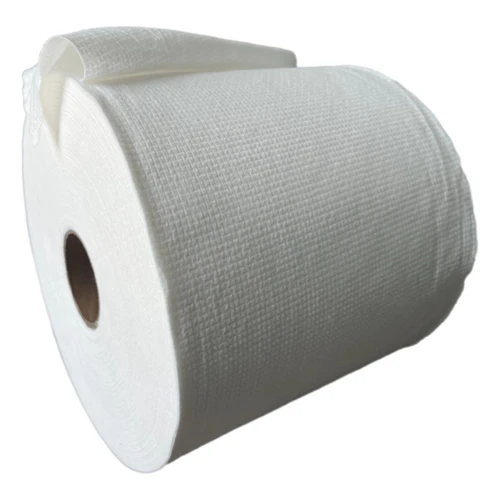
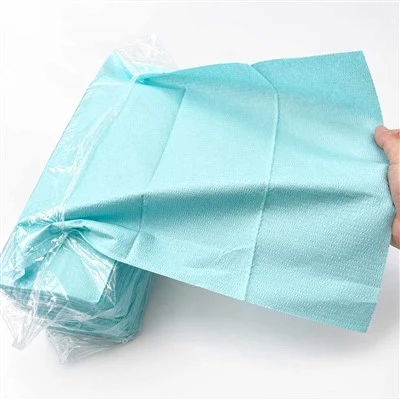
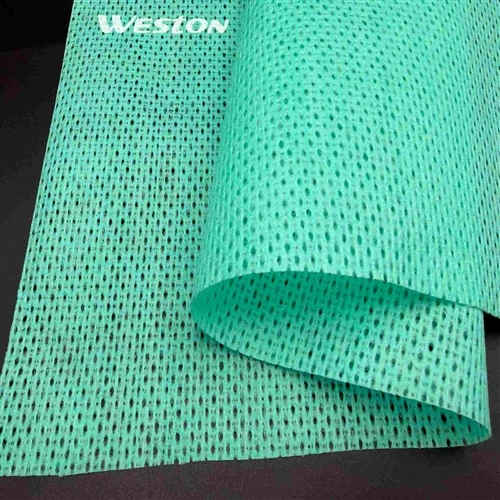
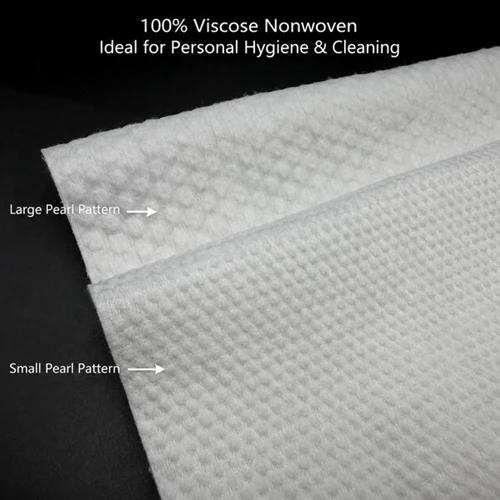
An increasingly important alternative is water-jet nonwoven fabric, also known as spunlace. Instead of heat, this process uses high-pressure water jets to mechanically entangle fibers, creating fabrics with exceptional softness and absorbency-without chemical binders.
Weston Nonwoven's water-jet spunlace manufacturing focuses on this technology to produce high-performance materials for medical wipes, hygiene products, and skin-contact applications, where comfort and liquid handling are critical.
Compared to meltblown, spunlace water-jet technology delivers superior softness, higher absorbency, and excellent lint control. Weston Nonwoven's spunlace nonwoven products are engineered for applications where filtration is not the priority-but touch, strength, and cleanliness are.
If maximum absorbency and user comfort are required, water-jet entangled spunlace offers performance that thermally bonded materials cannot replicate.
The Reality Check
Not all masks are created equal. Meltblown quality varies widely depending on fiber diameter, web uniformity, and electrostatic treatment. These factors directly affect filtration performance.
That is why recognized testing standards exist. A few percentage points in filtration efficiency can mean the difference between meaningful protection and false confidence.
Claims are easy. Verified performance is what matters.

What This Actually Means
That nearly invisible layer inside your mask represents decades of progress in materials science and manufacturing. Precisely melted polymers. Fibers thinner than anything the human eye can see. Electrical charges locked into place at a microscopic level.
It is not flashy. It is not new. But it works-quietly, efficiently, and at scale.
When global demand for masks surged overnight, meltblown was ready. Not because it was experimental, but because it was proven.
And that is worth thinking about the next time you put one on.
Need high-quality nonwoven solutions?
Weston Nonwoven specializes in water-jet spunlace nonwoven fabrics and advanced nonwoven manufacturing.
For free samples and technical specifications, contact us at info@westonmanufacturing.com