Definition and Core Characteristics
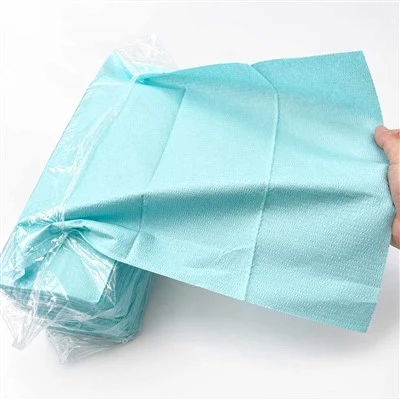
A cleanroom wipe is a specialized textile designed for use in controlled environments (cleanrooms) where the concentration of airborne particles is strictly regulated. Unlike conventional cleaning cloths, its primary function extends beyond surface cleaning: it must remove contaminants without introducing new ones, resist particle shedding, and maintain structural integrity under repeated use or exposure to cleaning agents.
At their core, cleanroom wipes are defined by three non-negotiable attributes: low particle generation, low extractable content, and high absorbency. Low particle generation ensures that as the wipe contacts surfaces, it does not shed fibers, lint, or debris-contaminants that could compromise the cleanroom's classification. Low extractable content refers to the minimal release of chemicals, ions, or residues when the wipe is exposed to solvents or moisture, a critical feature in environments where chemical purity is paramount, such as in pharmaceutical or microelectronics production. High absorbency, meanwhile, enables efficient removal of liquids, oils, and particulate matter, ensuring that contaminants are not just displaced but effectively captured and retained.
These characteristics are not arbitrary; they are tailored to align with cleanroom classification standards, which range from ISO 1 (the most stringent, allowing no more than 10 particles of 0.1μm or larger per cubic meter) to ISO 9 (more permissive). A wipe suitable for an ISO Class 5 environment, for example, must meet far stricter particle shedding limits than one used in an ISO Class 8 space.

Material Composition: Beyond Basic Fibers
The efficacy of a cleanroom wipe begins with its material. Manufacturers select fibers based on the wipe's intended application, balancing factors such as strength, chemical resistance, and particle retention. Two primary categories dominate the market: natural fibers and synthetic fibers, each with distinct advantages and limitations.
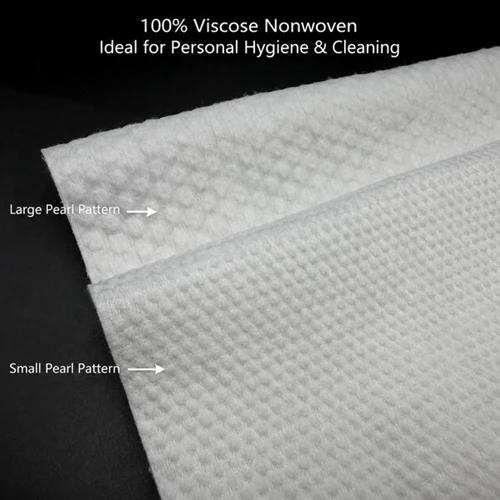
Cellulose-based wipes, derived from wood pulp or cotton, offer exceptional absorbency and compatibility with a wide range of solvents. However, their natural origin means they may contain impurities or residual lignins, which can leach out in sensitive environments. This makes them more suitable for less critical cleanroom classifications or applications where cost is a secondary consideration to absorbency.
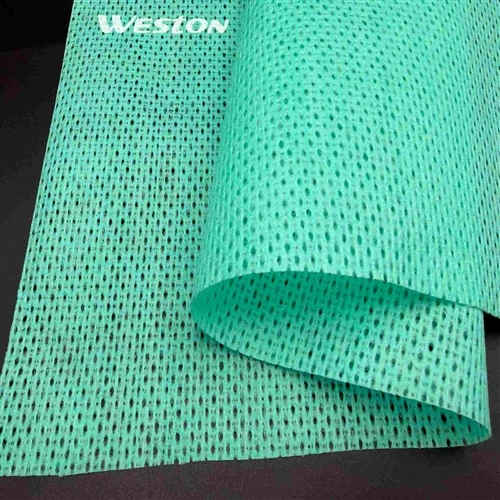
Synthetic fibers, by contrast, are engineered for precision. Polyester, polypropylene, and nylon are common choices, either used alone or in blends. Polyester excels in chemical resistance, making it ideal for use with aggressive solvents like isopropyl alcohol (IPA). Polypropylene offers low extractable content and resistance to moisture, while nylon provides superior strength and abrasion resistance. Blends, such as polyester-polypropylene, combine the absorbency of one fiber with the chemical resistance of another, creating wipes tailored for specific tasks.
Microfiber, a subset of synthetic fibers, has revolutionized cleanroom wipe design. Composed of ultra-fine filaments (typically 0.3 to 5 micrometers in diameter, compared to 10-15 micrometers for conventional fibers), microfiber's structure creates a large surface area and capillary action that enhances both absorbency and particle capture. Microfiber Car Cloths and Microfiber Dusting Cloths leverage this technology in non-cleanroom contexts, but their cleanroom counterparts undergo additional processing to eliminate residual oils, dyes, and contaminants, ensuring they meet the strictest particle and extractable standards.
Performance Parameters and Testing Standards
The performance of a cleanroom wipe is not left to assumption; it is quantified through rigorous testing that mirrors the demands of its operational environment. Key metrics include particle shedding, extractable ions, absorbency rate, and tensile strength.
Particle shedding testing involves subjecting the wipe to agitation (such as rubbing or washing) and measuring the number and size of particles released. This is typically done using laser particle counters in controlled chambers, with results compared against standards set by organizations like IEST (Institute of Environmental Sciences and Technology). For example, a wipe intended for use in an ISO Class 4 cleanroom must release fewer than 100 particles of 0.5μm or larger per square meter during testing-an exceptionally low threshold that underscores the precision required.
Extractable ion testing assesses the release of ions (such as sodium, chloride, or potassium) when the wipe is soaked in deionized water or solvent. This is critical in semiconductor manufacturing, where ionic contamination can disrupt electrical conductivity. Wipes with low extractable ions are often labeled as "high-purity" and are essential for processes involving silicon wafers or microchips.
Absorbency is measured by the volume of liquid a wipe can retain relative to its weight, while tensile strength ensures the wipe does not tear during use, which would release particles. Together, these tests validate that the wipe can perform its intended function without compromising the cleanroom environment.
Application Scenarios: Tailored to Industry Needs
Cleanroom wipes are not one-size-fits-all; their design is dictated by the unique demands of the industries they serve. In semiconductor manufacturing, where even a single particle can ruin a batch of microchips, ISO Class 4 Cleanroom Wipes are the gold standard. These wipes are engineered to release virtually no particles or ions, making them suitable for use in lithography and wafer cleaning processes. Their compatibility with IPA and other solvents ensures that oils and residues from handling are removed without leaving behind contaminants.
In pharmaceutical and biotech environments, the focus shifts to sterility and chemical inertness. Wipes used here are often gamma-irradiated to eliminate microbial contamination and are made from materials that do not react with disinfectants like hydrogen peroxide or bleach. They are used to clean equipment surfaces, workstations, and even packaging materials, ensuring compliance with Good Manufacturing Practices (GMP).
Aerospace and optics industries, which deal with sensitive components like lenses, mirrors, and precision machinery, require wipes that combine low particle shedding with gentle abrasion. Microfiber-based wipes, with their soft texture and high particle capture efficiency, are preferred here, as they can remove fingerprints and dust without scratching delicate surfaces.
In each of these scenarios, the wipe's role is transformative: it is not merely a tool for cleaning but a critical component in maintaining the integrity of processes that rely on absolute precision.
Advantages and Limitations: A Balanced Perspective
The advantages of specialized cleanroom wipes are clear: they enable contamination control in environments where conventional cleaning tools would fail. Their low particle shedding prevents secondary contamination, their high absorbency ensures efficient cleaning, and their chemical resistance allows use with a range of solvents. For industries where failure is costly-whether in terms of financial loss, research setbacks, or safety risks-these advantages are invaluable.
However, cleanroom wipes are not without limitations. Their specialized design comes with a higher production cost compared to conventional wipes, a factor that can impact operational budgets for large-scale cleanrooms. Additionally, their performance is dependent on proper use: using a wipe beyond its recommended lifespan, or with an incompatible solvent, can cause it to shed particles or release extractables, negating its benefits.
Another limitation is material specificity. While microfiber wipes excel in particle capture, they may not be suitable for use with strong acids or bases, which can degrade the fibers. Similarly, cellulose-based wipes, despite their absorbency, may not meet the particle shedding requirements of higher cleanroom classes. This means that selecting the right wipe requires careful consideration of both the environment and the task at hand.
The Evolution of Cleanroom Wipes: Innovation in Action
As cleanroom standards become more stringent, so too does the innovation behind cleanroom wipes. Recent advancements include the development of "nanofiber" wipes, which use fibers smaller than 100 nanometers to capture even smaller particles, and "self-cleaning" wipes treated with antimicrobial agents to prevent microbial growth during storage. These innovations reflect the industry's commitment to staying ahead of emerging contaminants and stricter regulations.
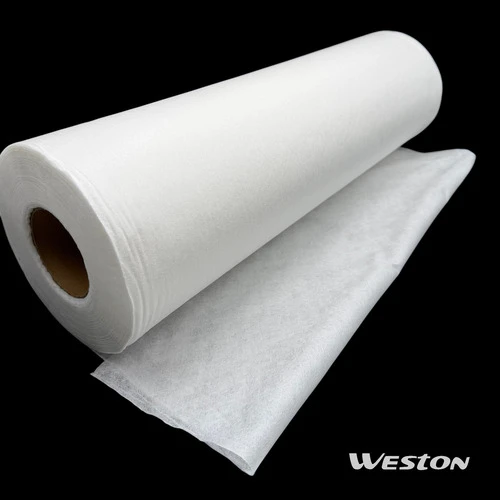
Manufacturers like Weston Nonwoven have played a role in this evolution, leveraging advanced manufacturing processes to produce wipes that meet the most demanding standards. Their Lint-Free Cleanroom Wipes, for example, are designed to eliminate lint and fiber shedding, making them suitable for a range of critical applications. By focusing on material science and precision engineering, such products embody the progress made in balancing cleaning efficacy with contamination control.

Accessing Cleanroom Wipes: A Note on Evaluation
For professionals seeking to integrate cleanroom wipes into their operations, evaluation is key. Testing samples in the actual cleanroom environment-assessing how they perform with specific solvents, on particular surfaces, and under operational conditions-ensures that the wipe aligns with both the cleanroom classification and the task requirements.
Those interested in exploring options can request a free sample from Weston Nonwoven by contacting info@westonmanufacturing.com. This opportunity allows for hands-on assessment, ensuring that the selected wipe meets the unique demands of the controlled environment.
In the end, cleanroom wipes are more than just cleaning tools-they are a testament to the precision and rigor required to operate in environments where the margin for error is zero. Their design, materials, and performance reflect a deep understanding of contamination control, making them an essential component in the pursuit of excellence across critical industries.