Nonwovens are not simply "fabric alternatives." They are engineered platforms that translate fiber science into predictable performance across healthcare, hygiene, filtration, mobility, construction, agriculture, and consumer maintenance. For professional buyers, the relevant question is not whether to use nonwovens, but which architecture, fiber chemistry, and bonding method will de-risk your application while unlocking supply chain, regulatory, and performance advantages. This article presents a rigorous, application-first perspective that moves beyond surface-level lists to the deeper logic of why nonwovens dominate certain use-cases and how to specify them with confidence.
The Strategic Logic of Nonwovens
Performance by design: Nonwovens are assembled from fibers and filaments without weaving or knitting, enabling control over pore size distribution, basis weight, loft, anisotropy, absorbency, and surface energy. This is not a downgraded textile-it is a configurable substrate for function.
Speed to market: Processes like spunlace, meltblown, and spunbond compress development cycles. Iterating emboss patterns, fiber blends, or finishes can be faster than retooling woven/knit constructions.
Cost of function, not just cost per square meter: The value is in delivered function per use or per cycle-pickup rate, filtration efficiency, barrier reliability, or bioburden control-not simply raw square area.
Industrial hygiene and compliance workflows: Single-use controls, lot traceability, and low-lint architectures improve consistency in critical environments.
Where Nonwovens Win: A Domain-by-Domain Map
1) Healthcare and Clinical Hygiene
Patient care surfaces and absorbent management: Underpads, liners, and wipers require tuned absorbency, rapid strike-through, and rewet resistance. Products like Disposable Medical Nursing Pads use multi-layer nonwoven stacks to separate fluid handling (topsheet), distribution (ADL), and retention (core).
Preoperative skin preparation: Substrates must deliver antiseptics uniformly with calibrated friction-enough to mobilize bioburden without excessive abrasion. Spunlace Wipes Used For Surgical Site Preparation leverage hydroentangled webs with controlled emboss to optimize fluid release and mechanical action.
Personal protective systems: Barrier, breathability, and particle shedding define suitability. Nonwoven Medical Protective Clothing Fabric combines spunbond for strength and meltblown for barrier (SMS/SMMS structures), balancing hydrostatic head with water vapor transmission to manage heat stress.
Instrument care and surface control: Low-lint, high-wet-strength wipes support disinfectant delivery with minimal fiber shedding and chemical compatibility across alcohols, quats, and chlorinated chemistries.
Why nonwovens here? They deliver consistent, single-use hygiene with measurable parameters: lint classification, tensile/elongation, repellency/absorbency, and microbial barrier metrics. The substrate can be tailored to the chemistry it carries.

2) Consumer and Professional Wipes
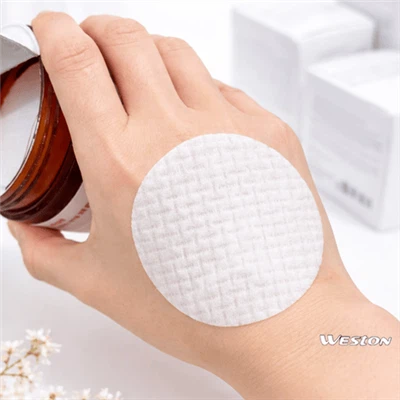
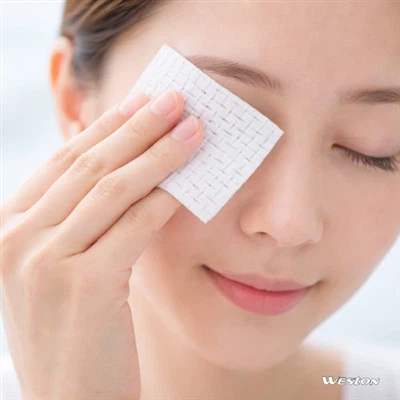
Skin contact wipes: Substrates must combine softness, tear resistance, and fluid management without residue. Disposable Lyocell Spunlace Wipes For Sanitary Use provide high absorbency and smooth handfeel, with cellulose-forward profiles that support environmental end-of-life strategies when properly managed.
Surface and tool maintenance: From foodservice to electronics, low-lint and solvent compatibility are crucial. Nonwovens manage grease pickup, particulates, and chemical delivery. Microfiber splits enhance capillary action for dry and damp dusting.
Optical care: Microfiber Eyeglass Cleaning Cloths utilize split filament microfiber to increase surface area and van der Waals interactions, capturing smudges without scratching, minimizing chemical reliance.
Why nonwovens here? They decouple the liquid from the substrate design. The same product line can support aqueous, solvent, or lotion-based systems by adjusting fiber blend, calendering, and finish.
3) Filtration and Separation
Air filtration: Meltblown nonwovens provide fine fiber diameters (often in the sub-micron range) to create high-efficiency media for HVAC, cabin air, and respirators. Charged (electret) media increase capture efficiency without excessive pressure drop.
Liquid filtration: Depth media and gradient density webs manage particulate loading and service life. Surface energy manipulation and wetting agents influence performance with hydrophobic or hydrophilic targets.
Why nonwovens here? The process allows gradient structures-fine-to-coarse or multi-layer laminates-optimizing both capacity and efficiency while controlling flow resistance.

4) Mobility: Automotive, Aerospace, Rail
Acoustic insulation: Lofted nonwovens decouple structure-borne noise; density gradients tune frequency response.
Cabin hygiene and filtration: Cabin air filters and low-lint wipes enhance occupant comfort and maintenance efficiency.
Lightweight reinforcement: Stabilizers and backing fabrics assist in composite layups and interior trim.
Why nonwovens here? They deliver targeted performance (NVH, filtration, surface prep) with weight and cost advantages, and can be tailored for flame, smoke, and toxicity requirements.
5) Building, Construction, and Geotechnical
Roofing and waterproofing carriers: Dimensional stability plus resin affinity support asphalt saturation and membrane integrity.
Housewrap and vapor barriers: Spunbond laminates manage liquid water exclusion with vapor permeability for moisture control.
Geotextiles and erosion control: Needlepunched nonwovens distribute loads, filter soils, and stabilize subgrades.
Why nonwovens here? High throughput and mechanical property tuning (puncture resistance, elongation, porosity) match field requirements and installation realities.
6) Agriculture and Horticulture
Crop covers and frost protection: Lightweight spunbond manages microclimate and pest exclusion without smothering plants.
Mulch and weed control layers: Permeable yet light-blocking structures reduce herbicide dependency.
Seed germination mats: Moisture retention and root anchoring with biodegradation pathways as required.
Why nonwovens here? Predictable water and gas exchange plus rapid deployment across large areas.
7) Industrial Process and Maintenance
Sorbents: Oleophilic and hydrophobic media selectively capture hydrocarbons in spills; loft provides capacity.
Surface prep: Abrasive and non-abrasive webs interact with coatings and solvents to clean, degloss, or polish.
Cleanroom: Ultra-low lint and high purity nonwovens, often polyester-cellulose blends or continuous filament, manage particle and ionic contamination.
Why nonwovens here? They align with controlled environments, solvent compatibility, and one-way workflows that limit cross-contamination.
The Mechanics Behind Use-Cases
Professional buyers benefit from tracing application needs back to material parameters:
Fiber chemistry: Cellulose (cotton, viscose, lyocell) for absorbency and softness; polypropylene for hydrophobicity and chemical resistance; polyester for strength and heat stability; bicomponents for thermal bonding; microfibers for high surface area and fine particulate capture.
Web formation:
Spunlace (hydroentanglement): Soft hand, tunable drape, strong when wet; ideal for skin and multipurpose wipes.
Spunbond: Continuous filaments for strength and uniformity; base layers in SMS and protective apparel.
Meltblown: Fine fibers for filtration and sorbency; central layer in barrier composites.
Needlepunched: Mechanical entanglement yielding thickness, resilience; used in geotextiles, insulation, abrasive pads.
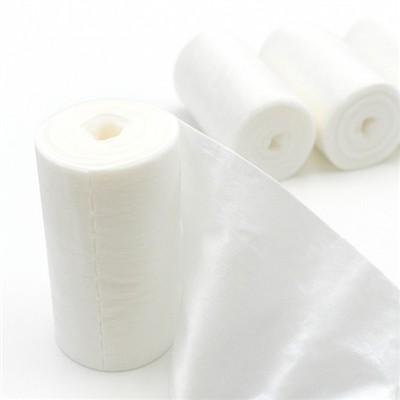
Airlaid: High-bulk cellulose webs for absorbency and fast uptake; cores and towels.
Bonding and finishing: Thermal bonding, latex or hotmelt binders, calendering, embossing, chemical finishes (antistatic, hydrophilic/hydrophobic rebalancing, antimicrobial agents where justified), and charge treatments for filtration.
Structure-property relationships:
Basis weight: Influences tensile strength, absorbency, and tactile feel.
Pore size and distribution: Governs filtration cutoffs, fluid strike-through, and lint.
Surface energy: Dictates wetting, fluid release, and pickup dynamics.
Loft and compressibility: Control acoustic performance, cushioning, and sorbent capacity.
Healthcare Focus: Where Failure Modes Define the Spec
Absorbent underpads: Failure often stems from rewet, edge leakage, and topsheet abrasion. Multilayer nonwovens mitigate these by combining hydrophilic acquisition layers with hydrophobic backings, directing flow and preventing reverse transfer. This is the engineering logic behind high-performing Disposable Medical Nursing Pads.
Preoperative wipes: Non-uniform chemical delivery is a risk. Hydroentangled webs with controlled emboss microtopography help meter solution release and improve bioburden reduction. This underpins Spunlace Wipes Used For Surgical Site Preparation.
Protective clothing: Heat stress is a hidden failure. SMS/SMMS fabrics balance barrier with moisture vapor permeability. Seam integrity (taped or ultrasonic) must match fabric barrier to avoid weak points. Hence the emphasis on correctly engineered Nonwoven Medical Protective Clothing Fabric.
Wipes Portfolio Logic: One Platform, Many Chemistries
Neutral aqueous systems: Cellulose-forward spunlace gives rapid uptake and smooth glide; excellent for skincare and general-purpose wipes.
Solvent-heavy systems: Polyester or polypropylene blends resist swelling and maintain strength; emboss patterns moderate drag and improve pickup.
Lotioned and oil-rich systems: Fiber finishes and pore structure prevent repellency while controlling release rate.
This is why a category like Disposable Lyocell Spunlace Wipes For Sanitary Use can be tuned to personal care, hospitality, or controlled-health settings simply by adjusting finish, emboss, and basis weight-one platform, many chemistries.
Microfiber Precision: Optical and Electronics Care

Split microfiber increases contact points and capillarity, enabling dry removal of lipids and particulates without scratching.
Edge finishing and knit density matter as much as filament fineness for streak-free outcomes.
For optical applications, Microfiber Eyeglass Cleaning Cloths minimize residues; for electronics, antistatic finishes can be integrated where appropriate and compliant.
Sustainability: Systems Over Slogans
Nonwovens occupy a complex sustainability landscape. A professional approach evaluates:
Material selection: Cellulose-based fibers (viscose, lyocell) can support certain end-of-life pathways; polyolefins bring light weight and strength with potential recyclability in controlled streams.
Use-phase versus end-of-life: Single-use may reduce water/energy and bioburden risk compared with reusable systems that demand high-temperature laundering. The correct choice is context-specific.
Source reduction: Right-sizing basis weight, optimizing emboss for fewer passes, and designing for multi-functionality reduce material per effective use.
Emissions and logistics: High throughput production and optimized roll formats reduce transport emissions per function delivered.
Data-driven claims: Anchor sustainability choices in measurable performance (e.g., reduced solvent usage due to superior pickup, fewer passes per task).
Risk Management and Compliance Pathways
Lot traceability and material declarations support quality management and downstream auditing.
Biocompatibility for skin-contact products demands substrate cleanliness, controlled residuals, and finish compatibility; absorbency and lint testing are functional proxies linked to user safety.
For protective apparel and filtration, define barrier and breathability targets early and align seam technologies accordingly.
Chemical compatibility: Verify that substrates do not exhaust actives prematurely or degrade under intended chemistries; pilot stability studies are essential.
Converting and Supply Chain Practicalities
Format flexibility: Rolls, perforated center-pull, interfolded stacks, canister rolls, and pouch formats are all viable with nonwovens, each affecting end-user ergonomics and dosing.
Edge and fold engineering: Fold geometry influences contamination control in clinical wipes; z-folds present clean panels sequentially to users.
Emboss registration and coat weight control: Critical for consistent release profiles in pre-saturated systems.
Storage and shelf life: Moisture-barrier packaging, oxygen control, and material compatibility prevent degradation of lotions or disinfectants.
Weston Nonwoven: Application-Driven Manufacturing
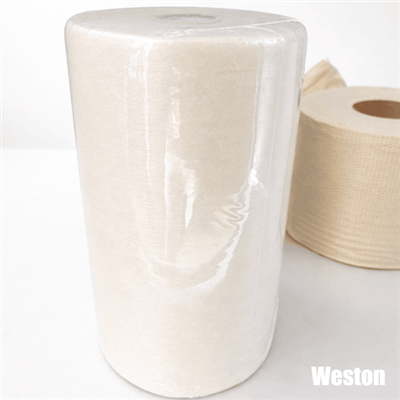
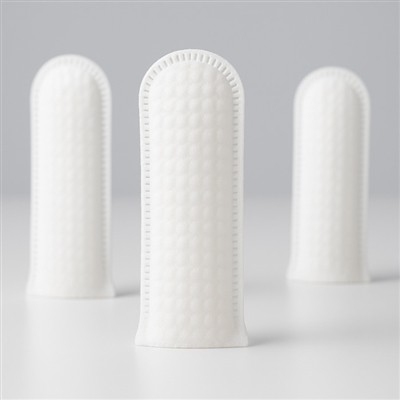
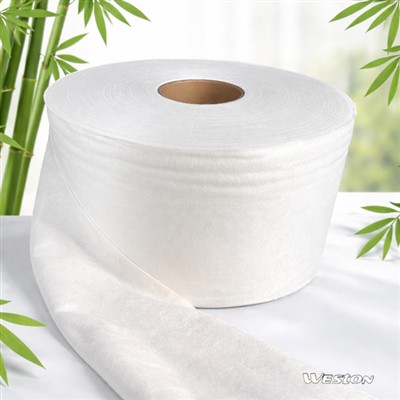
Weston Nonwoven operates with an application-first mindset, matching fiber systems and web architectures to the use-case rather than forcing a stock material into ill-suited roles. Representative categories include:
Disposable Lyocell Spunlace Wipes For Sanitary Use: Cellulose-forward, hydroentangled webs designed for soft hand, strong wet integrity, and balanced fluid release for personal care and hygiene workflows.
Disposable Medical Nursing Pads: Multilayer absorbent composites with engineered strike-through and rewet control for patient care and professional settings.
Spunlace Wipes Used For Surgical Site Preparation: Uniform fluid delivery with calibrated friction via emboss engineering for preoperative protocols.
Microfiber Eyeglass Cleaning Cloths: Split microfiber substrates for residue-free optical maintenance, designed for streak minimization and surface safety.
Nonwoven Medical Protective Clothing Fabric: SMS/SMMS constructions balancing barrier performance with breathability and seam compatibility for protective apparel.
Professional buyers can request a free sample kit and technical consultation by contacting: info@westonmanufacturing.com
Trade-Offs: The Real-World Picture
Advantages:
Tunability: Predictable control over absorbency, pore structure, texture, and strength.
Hygiene: Single-use workflows with low linting and controlled bioburden risks.
Integration: Carrier for actives-disinfectants, skincare lotions, solvents, and coating resins.
Productivity: High-speed manufacturing and converting formats reduce lead times.
Limitations (manageable with correct specification):
Strength vs. softness: Spunlace balances this well, but extreme softness may reduce tensile unless basis weight or bonding is adjusted.
Environmental complexity: Single-use raises end-of-life questions; design must consider material choice and functional efficiency.
Heat and chemical constraints: Some fibers deform or swell under certain solvents or temperatures; choose compatible chemistries and blends.
Breathability vs. barrier: SMS laminates must be tuned to avoid heat burden while maintaining splash and aerosol resistance.
Specification Framework for Buyers
Define the "unit of function": What does success look like per pass, per patient, per shift, or per filtration hour?
Map failure modes first: Rewet, lint, edge leakage, abrasion, breathability shortfall, or chemical incompatibility-engineer against these.
Choose fiber system aligned to chemistry: Hydrophilic for aqueous uptake; hydrophobic for repellency and solvent resistance; microfiber for fine particulate control.
Lock in critical parameters: Basis weight, tensile/elongation (MD/CD), caliper, pore size distribution, surface energy/finish, and emboss pattern.
Validate end-to-end: Convert, saturate (if applicable), package, and test under real use conditions, not just lab benchtops.
Plan for scalability: Ensure that emboss rolls, finishing chemistries, and packaging lines can scale without altering function.

Application Snapshots: Nonwovens in Action
Clinical admission kit: Combine Disposable Medical Nursing Pads for bed surfaces and pre-saturated Spunlace Wipes Used For Surgical Site Preparation in sterile-adjacent workflows, minimizing cross-contamination risk.
Hospitality and travel: Deploy Disposable Lyocell Spunlace Wipes For Sanitary Use for guest amenity programs where soft hand and consistent release matter; pair with appropriate packaging to ensure freshness.
Optical retail and electronics: Standardize on Microfiber Eyeglass Cleaning Cloths for handouts and bench stations, ensuring low lint and high pickup without chemical residues.
Protective apparel programs: Specify Nonwoven Medical Protective Clothing Fabric with clear barrier and WVTR targets; qualify seam technologies early to avoid mismatched protections.
Future Directions: What's Next in Nonwovens
Bio-based and smart finishes: Responsive hydrophilicity, controlled release of actives, and antistatic performance tuned to environment.
Gradient and hybrid webs: Coform and composite approaches that blend meltblown microfibers with cellulose for higher capacity and finer control.
Digital quality control: Inline imaging and porometry to lock down variability, improving lot-to-lot consistency.
Closed-loop and source-reduction strategies: Lighter basis weights with equal function via improved fiber architecture and finish chemistry.
Bringing It Together
Nonwovens succeed when specified as engineered solutions rather than generic "pads" or "wipes." Their power lies in pairing the right fiber chemistry and web architecture with the demands of the task-hygiene control, chemical delivery, filtration precision, barrier reliability, or surface care. Healthcare gains predictable patient outcomes; industrial users gain throughput and cleanliness; consumer brands gain tactile quality with consistent performance.
For professional buyers, the path is clear: define function, map failure modes, and choose a substrate that solves for the system, not just the surface. When you need application-driven development and manufacturing aligned to this logic, Weston Nonwoven's portfolio-including Disposable Lyocell Spunlace Wipes For Sanitary Use, Disposable Medical Nursing Pads, Spunlace Wipes Used For Surgical Site Preparation, Microfiber Eyeglass Cleaning Cloths, and Nonwoven Medical Protective Clothing Fabric-offers targeted starting points that can be tuned to your requirements.