Is Bamboo Fabric 100% Natural?
The idea sounds straightforward: bamboo grows in nature, so bamboo fabric must be natural. This assumption is common, but it does not reflect how the material is actually made. To understand bamboo fabric clearly, it is necessary to separate raw material from manufacturing process. Most confusion comes from mixing these two concepts.
What "Bamboo Fabric" Really Refers To
Bamboo fabric is not produced by directly spinning fibers from the plant in the same way cotton is processed. In most cases, bamboo is first turned into pulp, then transformed into fiber through industrial methods. This means the final fabric is derived from a natural source, but not natural in its finished form.
A simple breakdown helps clarify:
Bamboo plant → natural
Bamboo pulp → processed material
Bamboo fabric → regenerated fiber
The key point is precise: natural origin does not mean natural end product

How Bamboo Fabric Is Manufactured
Different production methods lead to very different results. Understanding these methods is essential.
Bamboo Viscose (Most Widely Used)
This is the standard form found in most products.
Bamboo is broken down into pulp
Chemical solvents dissolve the pulp
The solution is spun into fibers
This process produces a soft and uniform textile, but:
The original bamboo structure is no longer present
The fiber is chemically regenerated
Bamboo Lyocell (More Controlled Process)
A more advanced method improves environmental control.
Uses a closed-loop system
Solvents are recovered and reused
Reduces emissions and waste
Even so, it remains a processed cellulose fiber, not a raw natural one.
Mechanical Bamboo Fiber (Rare in Practice)
This is the closest form to a natural bamboo fiber.
Bamboo is mechanically crushed
Enzymes are used to separate fibers
However:
The texture is rough
Production cost is high
Not suitable for large-scale manufacturing
A Clear Fact Check
To avoid misleading claims, bamboo fabric can be defined using simple, verifiable statements:
Most bamboo fabrics are regenerated cellulose fibers
They are not equivalent to untreated plant fibers
Softness is typically achieved through processing
"100% bamboo" usually describes the source, not the process
These distinctions are often omitted in product descriptions but are critical for accurate understanding.
Is Bamboo Fabric Safe for Skin?
Safety depends on manufacturing quality rather than the plant itself.
Well-produced bamboo fabrics are generally safe when:
Chemical residues are properly controlled
Production follows regulated standards
Materials are tested for contact safety
For example, Weston Nonwoven spunlace products are certified for food-contact use, which indicates a higher level of material safety and process control. This type of certification provides more reliable information than general claims such as "natural" or "green."

Environmental Reality: A Balanced View
Bamboo as a raw material has clear advantages:
Fast-growing resource
Low pesticide requirement
Renewable supply
However, fabric production introduces additional factors:
Water usage during processing
Chemical management systems
Energy consumption
As a result, bamboo fabric is not automatically sustainable. Its environmental profile depends on how it is manufactured, not just where it comes from.
How to Read Bamboo Fabric Labels Accurately
Many labels simplify technical details. A more careful reading helps avoid confusion.
Key distinctions include:
"Bamboo viscose" → chemically processed fiber
"Bamboo lyocell" → improved process, still processed
"100% bamboo" → refers to plant origin
Practical questions for suppliers:
What production method is used?
Are chemicals recovered during processing?
Are there safety or compliance certifications?
Clear answers to these questions are more valuable than marketing language.
The Role of Bamboo in Nonwoven Towels
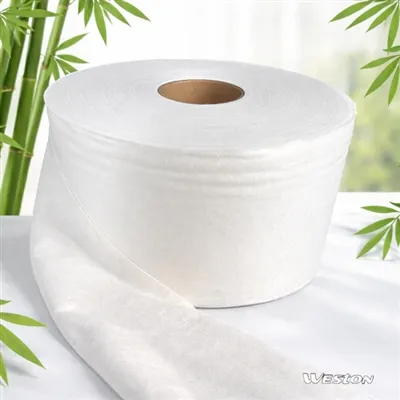
In real-world applications such as hygiene, cleaning, and disposable products, bamboo fibers are often used in nonwoven materials rather than traditional woven textiles.
This approach focuses on performance and consistency.
For instance, Weston Nonwoven offers bamboo fiber nonwoven fabrics in multiple material blends and weight specifications, allowing buyers to select based on:
Absorbency requirements
Softness and skin feel
Strength and durability
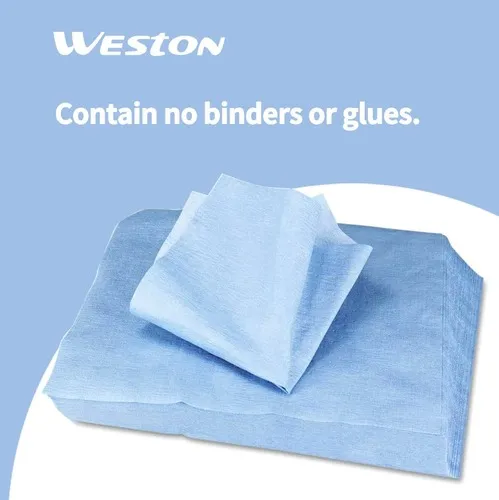
Spunlace (hydroentangling) technology binds fibers using water pressure instead of adhesives. This helps maintain a cleaner structure and makes the material suitable for sensitive applications.
A More Precise Way to Understand Bamboo Fabric
The question "Is bamboo fabric 100% natural?" is not the most useful one. A more accurate approach is to ask:
What is the fiber source?
How is it processed?
Is it safe and suitable for its intended use?
A realistic definition would be:
Bamboo fabric is a plant-based, regenerated cellulose material
Its final properties depend on manufacturing methods, not just raw material
Understanding this distinction removes ambiguity and allows for more informed decisions, whether for product development, sourcing, or everyday use.