A Technical and Commercial Analysis for Professional Buyers
The question of whether bamboo dish cloths represent a viable and superior product category is one that demands a rigorous, multi-faceted investigation. For the professional buyer, moving beyond marketing claims to a grounded understanding of material science, performance metrics, and sustainability credentials is paramount. This analysis delves into the core of bamboo-based textiles to provide a comprehensive evaluation for informed procurement decisions.
The Anatomy of a Bamboo Fiber: Beyond the Surface Hype
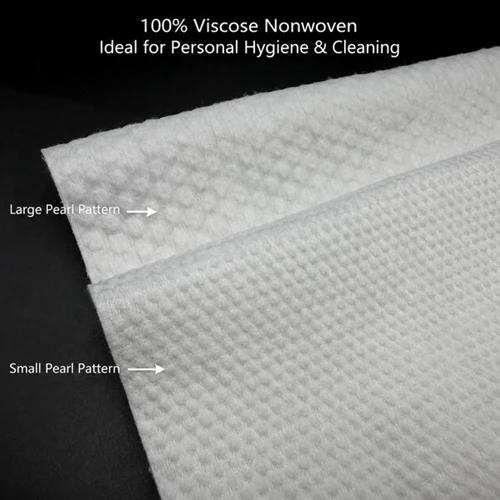
To truly assess the value of a bamboo dish cloth, one must first deconstruct its origin. The term "bamboo" in textiles is often misleading. The raw material is not used in its natural, fibrous state but is processed into a regenerated cellulose fiber, similar to rayon or viscose.
The predominant manufacturing method involves a chemical process where bamboo pulp is dissolved in a solvent and then extruded through fine nozzles to create filaments. This process transforms the raw bamboo into a fiber with a fundamentally different structure. The resulting material inherits some of bamboo's inherent properties while gaining new characteristics from its regenerated form.
Key Attributes of Bamboo Viscose Fiber
Inherently Microbe-Resistant: Bamboo contains a natural antimicrobial agent known as "bamboo kun." This bio-agent survives the processing stage and is retained within the resulting fiber, inhibiting the growth of bacteria and mildew-a critical advantage for a product constantly exposed to moisture and organic matter.
High Porosity and Absorbency: The regenerated bamboo fiber features a micro-porous structure. This creates a vast surface area, granting it exceptional absorbency. A high-quality bamboo dish cloth can absorb many times its weight in liquid, significantly outperforming traditional cotton cloths and reducing water usage during cleaning tasks.
Softness and Durability: The processed fiber is exceptionally soft to the touch, making it safe for use on delicate surfaces like glassware and non-stick coatings without causing scratches. Contrary to intuition regarding softness, when integrated into a robust nonwoven structure, it can exhibit remarkable tensile strength and longevity.

The Sustainability Proposition: A Nuanced Examination
The environmental appeal of bamboo is a powerful driver in today's market, but it requires a clear-eyed assessment.
Renewable Resource: Bamboo is a fast-growing grass, not a tree, requiring no replanting after harvest. It reaches maturity in 3-5 years, compared to decades for hardwoods, and requires minimal pesticides or fertilizers, reducing its agricultural footprint.
Water Efficiency: Bamboo cultivation is notably less water-intensive than cotton farming, a significant consideration in assessing long-term resource sustainability.
The Processing Elephant in the Room: The chemical process used to create bamboo viscose (often employing a carbon disulfide solution) is the subject of environmental scrutiny. The critical differentiator among manufacturers is whether a closed-loop system is employed. In such a system, over 99% of the solvents are captured and recycled repeatedly, virtually eliminating effluent and environmental discharge. Therefore, the sustainability of the end product is inextricably linked to the manufacturer's technological commitment. Weston Nonwoven employs state-of-the-art closed-loop systems, ensuring that the ecological benefits of the raw material are not undone during production.
Performance Benchmarks: Bamboo vs. Conventional Materials
For a buyer, performance is non-negotiable. How does a bamboo-based cloth truly compare?
Absorbency: Bamboo viscose is superior to cotton and many synthetic blends. This translates to faster spill cleanup and more efficient drying of dishes and surfaces.
Hygiene: The natural antimicrobial properties provide a tangible hygienic benefit. A bamboo cloth will resist odor development for longer than a standard cotton cloth, which can develop a mildewy smell if left damp.
Durability and Lint: When constructed using advanced nonwoven techniques like spunlacing, bamboo fibers can be entangled to create a fabric that is both strong and low-linting. This is crucial for cleaning glass and mirrors where lint residue is unacceptable.
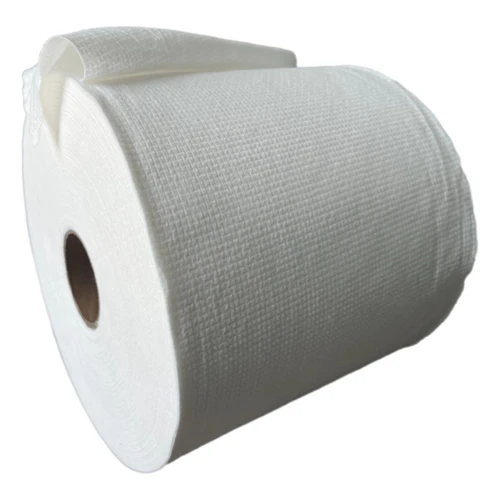
Material Synergy: Pure bamboo viscose, while absorbent and soft, can benefit from enhanced structural integrity. This is where material blending becomes an engineering art. A product like a Kitchen Cleaning Cloth Wood Pulp PP combines the superb absorbency of natural fibers (wood pulp, bamboo) with the strength and quick-drying capabilities of polypropylene (PP). This synergy creates a cloth that is tough, highly absorbent, and less prone to shrinking or warping than all-natural alternatives.
The Evolution of Nonwoven Technology: Unleashing Potential
The base fiber is only half the story. The method by which these fibers are bonded into a fabric defines its ultimate performance. Spunlacing is a premier technology in this field.
This process involves entangling a web of fibers using high-pressure jets of water, creating a strong, coherent fabric without the need for chemical binders. The result is a cloth that is:
Strong yet soft.
Highly absorbent.
Lint-free.
Washable and reusable.
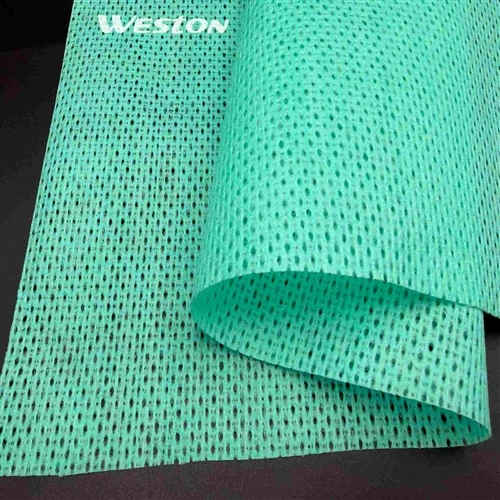
An innovation within this space is the development of a Zigzag Textured Viscose-Polyester Spunlace Nonwoven. This specific structure elevates performance by increasing the surface area and creating a textured pattern that enhances scrubbing power for tougher, dried-on food residues, without the need for abrasive materials that can damage surfaces. The blend of viscose (from bamboo or wood) and polyester offers an optimal balance: the viscose provides absorbency and softness, while the polyester provides durability and structural memory.
Addressing the Product Ecosystem: Wipes and Cloths
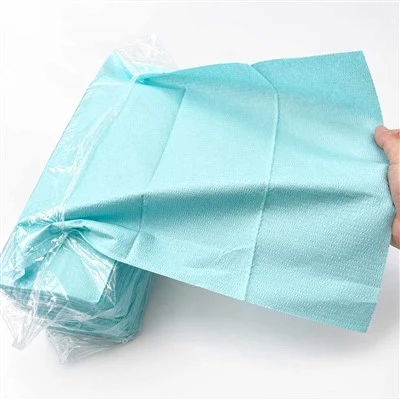
The application of bamboo-based materials extends beyond traditional cloths. The demand for convenience has given rise to pre-moistened options. High-quality Kitchen Wet Wipes designed for serious cleaning, not just light wiping, utilize a strong spunlace substrate often incorporating cellulose fibers for absorbency and softness, paired with effective, food-safe cleaning solutions. The trend is toward robust, reusable-quality wipes for single-use tasks where convenience is paramount, though this remains a different segment from the reusable cloth market.
A Candid Assessment of Limitations
A professional analysis must acknowledge potential drawbacks to build trust and manage expectations.
Long-Term Durability vs. Synthetics: While durable, a cloth made from natural fibers like bamboo viscose may not outlast a heavy-duty polyester scouring cloth in extreme abrasive scenarios. Its advantage lies in being a superior general-purpose cloth that is surface-safe.
Care Requirements: To maximize lifespan, machine washing in cool to warm water and line drying is recommended. High heat in dryers can slightly weaken the fibers over time, though this is true of many textiles.
Cost of Production: The advanced closed-loop processing and quality of raw materials typically command a higher production cost than inferior alternatives, which is reflected in the wholesale price. This is an investment in performance and sustainability.

Weston Nonwoven: A Synthesis of Material Science and Manufacturing Excellence
The question "Are bamboo dish cloths good?" finds its most affirmative answer when the raw material potential is fully realized through expert engineering and manufacturing integrity.
Weston Nonwoven specializes in the precise art of creating high-performance nonwoven fabrics. Our expertise lies in formulating optimal fiber blends-such as bamboo viscose, wood pulp, and polypropylene-and processing them through advanced spunlace lines. We engineer fabrics for specific end-use cases, ensuring that a Bamboo Dish Cloth bearing our name delivers on the promises of absorbency, softness, durability, and hygiene. Our capability to produce specialized textiles like a Zigzag Textured Viscose-Polyester Spunlace Nonwoven demonstrates a commitment to innovation that moves beyond commodity products to offer tangible points of difference for our B2B partners.
The efficacy of a bamboo dish cloth is not a mere given; it is the direct result of scientific material selection, advanced manufacturing processes, and an unwavering commitment to quality control. For the professional buyer, the focus must be on partnering with manufacturers who provide transparency, technical expertise, and a product whose performance and sustainability claims are rooted in verifiable science and engineering.
We invite you to evaluate the data and experience the quality firsthand. To request a free sample and technical datasheet for evaluation, please contact our team at info@westonmanufacturing.com.