Non-woven fabrics have become indispensable in industrial applications, spanning healthcare, automotive, hygiene, and construction. A critical question for professional buyers is their water permeability. The answer depends on material composition, manufacturing processes, and design-far more nuanced than a simple yes or no. This analysis distills key insights into their water-interactive properties, blending scientific precision with practical procurement guidance.

The Science of Water Permeability
Non-wovens differ fundamentally from woven fabrics: instead of interlaced yarns, they consist of fibers bonded mechanically, thermally, or chemically. This structure creates a fibrous matrix with variable porosity-the primary driver of water permeability. Porosity, defined as the volume of voids relative to total fabric volume, creates pathways for water, but its impact is modulated by three factors:
Pore characteristics: Size and distribution determine flow resistance; uneven pores can cause unpredictable permeability.
Fiber properties: Hydrophilic fibers (e.g., cellulose) attract water, enhancing absorption, while hydrophobic ones (e.g., polyester) repel it, restricting flow.
Manufacturing methods: Mechanical bonding like needle punching may create open structures, while thermal bonding fuses fibers, reducing pore size.
Fiber diameter also plays a role: fine fibers create tortuous paths that slow water flow, even in high-porosity fabrics, whereas coarser fibers enable freer movement.
Permeability Across Non-Woven Varieties
Colored Spunlace Nonwoven
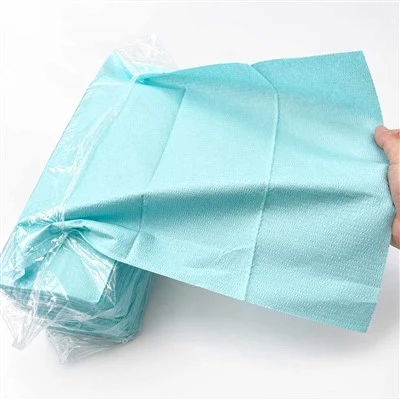
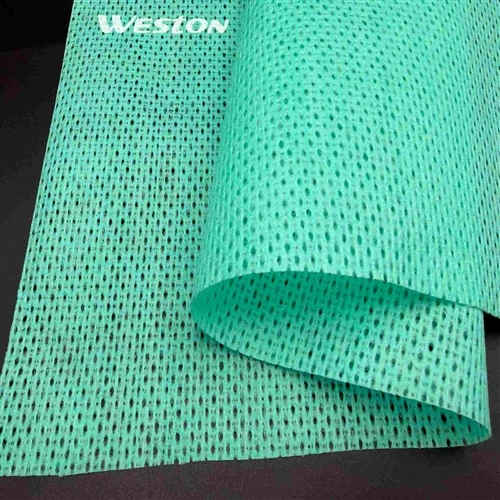
Colored Spunlace Nonwoven uses high-pressure water jets to entangle fibers, producing a porous, flexible structure. Typically made with cellulose or cellulose-synthetic blends, its hydrophilic fibers and open matrix deliver exceptional water absorbency and controlled permeability. This makes it ideal for hygiene products like wet wipes, where even water release is critical, and cosmetic applications-its colored variants add aesthetic value to pads and packaging without compromising functionality.
Needle Punched Laminated Polyester Nonwoven Wholesale
Needle Punched Laminated Polyester Nonwoven Wholesale combines mechanical interlocking (via barbed needles) with lamination, creating a dense, hydrophobic structure. Polyester's inherent water resistance, amplified by lamination, minimizes permeability-a deliberate design for applications requiring moisture barrier properties. Used in geotextiles, it balances drainage and soil stabilization; in automotive interiors, it protects components from liquid damage. Its wholesale availability suits large-scale industrial needs for consistent water resistance.
Biodegradable Viscose Wiping Fabric
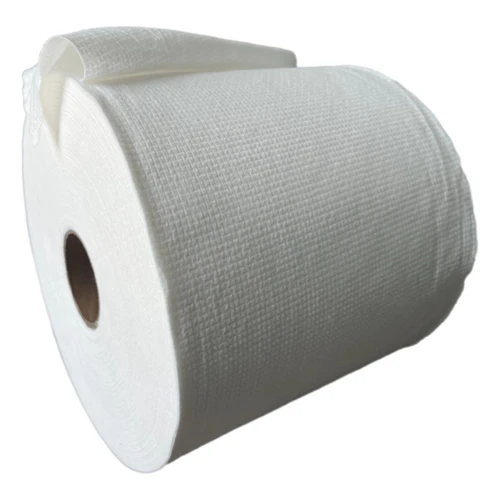
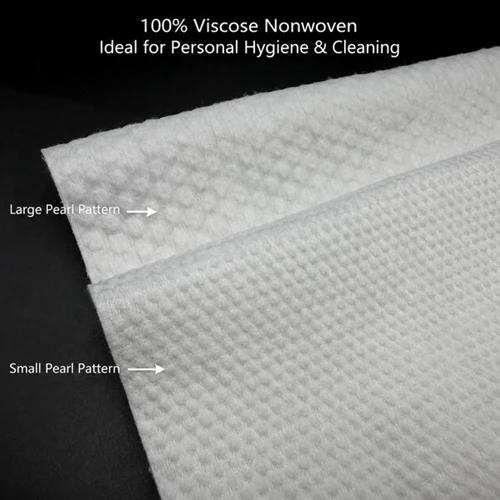
Biodegradable Viscose Wiping Fabric leverages viscose, a regenerated cellulose fiber with strong hydrophilicity. Its structure prioritizes rapid liquid absorption, making it highly permeable-ideal for wiping applications. It efficiently soaks up water, cleaning solutions, and spills while trapping debris, serving both household and industrial cleaning needs. Its biodegradability aligns with sustainability goals, appealing to eco-conscious sectors.
Balancing Advantages and Drawbacks

Benefits of Permeability
Hygiene products: Controlled permeability in diaper topsheets allows liquid transfer to absorbent cores while preventing rewetting.
Medical textiles: Permeable surgical drapes enable air/moisture vapor exchange, reducing condensation without compromising pathogen barriers.
Filtration: Precisely sized pores in water filters trap contaminants while allowing clean water passage.
Limitations of Permeability
Protective gear: Excessive permeability undermines rainwear or covers; hydrophobic treatments or coatings resolve this.
Moisture-sensitive packaging: Impermeable non-wovens (or those with barriers) protect electronics and food from water damage.
Industry Applications
Agriculture: Permeable crop covers balance water, air, and sunlight access, boosting growth.
Construction: Needle Punched Laminated Polyester Nonwoven Wholesale products manage subsurface moisture in foundations.
Beauty: Colored Spunlace Nonwoven ensures even distribution of serums in facial masks.
Sustainability-focused cleaning: Biodegradable Viscose Wiping Fabric meets demands for effective, eco-friendly sanitation.
Weston Nonwoven: Precision in Permeability Engineering
Weston Nonwoven engineers its products to target specific permeability needs, ensuring performance across applications. Our Colored Spunlace Nonwoven line uses advanced jet entanglement for optimal porosity and colorfastness. Needle Punched Laminated Polyester Nonwoven Wholesale offerings deliver consistent water resistance for industrial scales. Biodegradable Viscose Wiping Fabric combines absorbency with environmental responsibility.
For tailored solutions to your permeability requirements, contact us at info@westonmanufacturing.com. Our expertise ensures you select non-wovens that align with functional needs, whether enhancing flow or restricting moisture.
Non-woven fabrics' water permeability is a spectrum, not a binary-shaped by design to meet diverse needs. Understanding this spectrum empowers buyers to choose materials that optimize performance, efficiency, and cost-effectiveness. Weston Nonwoven remains committed to advancing this versatility, delivering innovative, application-specific solutions.