Can You Reuse Microfiber Towels?
Yes, microfiber towels can be reused, and proper care can significantly extend their useful life. However, reuse is not unlimited. Repeated washing, excessive heat, detergent residue, fabric softeners, and contamination from other materials can gradually reduce absorbency, softness, and cleaning performance.
For households, professional cleaners, automotive detailing operations, and industrial facilities, understanding how to maintain reusable microfiber towels can reduce unnecessary waste while keeping cleaning performance consistent.
This guide explains how long microfiber towels can typically last, what damages them, how to wash them correctly, and when reusable towels should be replaced.
Quick Answer: Can Microfiber Towels Be Reused?
Yes. High-quality microfiber towels can normally be washed and reused many times when they are properly maintained.
The actual lifespan depends on the microfiber construction, polyester/polyamide ratio, fabric weight, cleaning application, soil level, washing temperature, detergent, and drying method.
In general:
Well-maintained microfiber towels can remain useful through many dozens of wash cycles.
Higher-quality microfiber constructions may withstand substantially more cycles.
Heavy grease, wax, coatings, and industrial contamination can shorten useful life.
Fabric softeners and high heat can reduce performance much faster than normal washing.
A towel should be retired when it no longer absorbs efficiently, begins shedding excessively, develops persistent odors, or becomes visibly damaged.
The important point is that wash count alone does not determine whether a microfiber towel is still usable. Performance is the better indicator.

What Is Microfiber and Why Does It Work?
Ultra-Fine Synthetic Filaments
Microfiber is generally produced from extremely fine synthetic filaments, commonly polyester and polyamide. During manufacturing, the fibers can be split into finer filaments, creating a large effective surface area.
This structure helps microfiber capture and hold:
- Dust
- Fine particles
- Oils
- Moisture
- Dirt
- Residual contaminants
Instead of simply pushing dirt across a surface, properly manufactured microfiber can trap contaminants within its fiber structure.
Why Fiber Condition Matters
The cleaning performance of microfiber depends heavily on keeping the fiber structure open and clean.
When detergent residue, fabric softener, wax, oil, or other substances coat the fibers, the effective surface area and capillary behavior can decrease.
Excessive heat can also affect synthetic fibers, particularly when towels are repeatedly exposed to inappropriate drying temperatures.
That is why microfiber towel care is just as important as microfiber quality.
How Long Can Microfiber Towels Be Reused?
There is no single universal wash-cycle limit for every microfiber towel.
A premium detailing towel used only for light dusting may remain functional for considerably longer than a low-grade towel repeatedly exposed to heavy grease or chemical residues.
A practical way to think about microfiber lifespan is through performance stages.
Early Use: Near-Peak Performance
During the early part of a towel's service life, the fibers are generally soft, clean, and highly effective.
Absorbency and particle capture are typically strongest when the towel has been properly washed and dried.
Mid-Life: Gradual Wear
After repeated washing and use, small changes may become visible.
Edges may begin to fray, the surface may become slightly less uniform, and absorbency may gradually decline.
However, the towel may still perform very well for many applications.
Later Life: Performance-Based Retirement
Eventually, repeated mechanical action, contamination, and thermal exposure can cause more obvious degradation.
Signs may include:
- Reduced water absorption
- Increased lint release
- Matted or clumped fibers
- Increased streaking
- Persistent odors
- Loss of softness
- Visible fabric damage
At this point, the towel may still be useful for low-risk or dirty tasks, but it may no longer be suitable for precision cleaning.
The 5 Biggest Threats to Microfiber Performance
1. Fabric Softener and Dryer Sheets
Fabric softeners are among the biggest enemies of microfiber.
They can leave a coating on synthetic fibers, reducing their ability to absorb water and capture particles.
Avoid fabric softeners and dryer sheets when washing microfiber.
2. Excessive Heat
Microfiber is synthetic, so repeated exposure to excessive heat can affect the physical properties of the fibers.
Use lower-temperature washing and drying whenever possible.
For machine drying, an air-only or low-heat setting is generally preferable.
3. Excessive Detergent
More detergent does not necessarily mean cleaner towels.
Excess detergent can remain trapped in the fabric and interfere with absorbency.
A small amount of suitable liquid detergent is generally preferable to overloading the wash with cleaning products.
4. Washing With Lint-Producing Fabrics
Microfiber should ideally be washed separately from cotton towels, terry cloth, and other lint-producing textiles.
Loose cotton fibers can become trapped in microfiber and compromise its clean, low-lint performance.
5. Wax, Sealant, and Coating Residues
Microfiber towels used with automotive coatings, waxes, sealants, or similar products require special handling.
Once a towel becomes heavily saturated with a coating material, restoring its original performance may be difficult.
For critical applications, it is often better to segregate these towels and use them only for the same type of task rather than returning them to general-purpose cleaning.
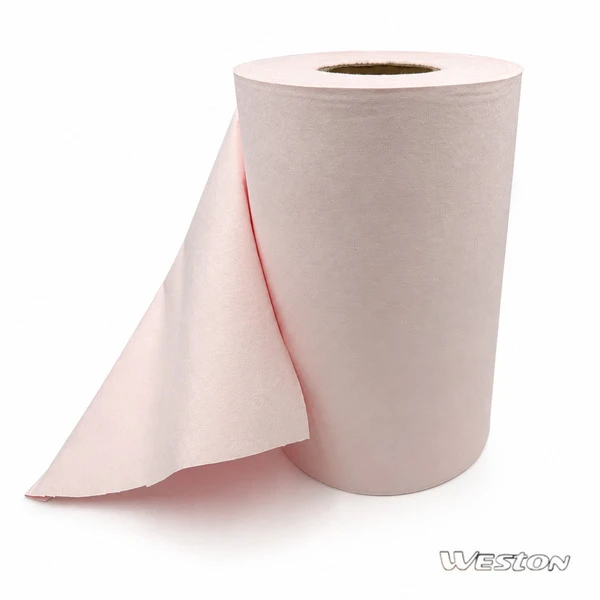
How to Wash Reusable Microfiber Towels
Step 1: Remove Loose Contamination
Before washing, shake or brush off loose dirt and particles.
For heavily contaminated towels, remove as much solid material as possible before placing them into the washing machine.
Step 2: Sort Towels by Application
Do not treat every microfiber towel as interchangeable.
Consider separating towels used for:
- Glass
- Paint or polished surfaces
- Wheels
- Kitchens
- General cleaning
- Heavy grease
- Chemical applications
Color coding can also make task separation easier in professional cleaning operations.
Step 3: Wash Separately
Whenever possible, wash microfiber separately from cotton and other lint-producing fabrics.
Use a gentle or normal wash cycle according to the towel manufacturer's recommendations.
Cool to warm water is generally appropriate, while excessively hot washing should be avoided unless specifically permitted by the manufacturer.
Step 4: Use an Appropriate Detergent
A mild liquid detergent is generally a better choice than heavily fragranced formulas or products containing fabric-softening additives.
Avoid fabric softener, dryer sheets, and unnecessary detergent additives.
The goal is to remove contamination without leaving another coating behind.
Step 5: Rinse Thoroughly
A thorough rinse helps remove remaining detergent and contaminants.
For heavily soiled loads, an additional rinse can be useful.
Step 6: Dry Carefully
Air drying is a simple option when practical.
If using a tumble dryer, choose a low-temperature or air-only setting where appropriate.
Avoid dryer sheets.
When Should You Replace a Microfiber Towel?
Wash count is only one part of the equation.
A microfiber towel should be considered for retirement when you notice significant changes in performance.
Slower Absorption
If water remains on the surface instead of being absorbed efficiently, the fiber structure may be contaminated or degraded.
Fiber Matting
Visible clumping, flattening, or matting can indicate that the original fiber structure is no longer functioning as intended.
Excessive Lint
If the towel begins leaving lint or fibers behind, it may no longer be suitable for glass, electronics, polished surfaces, or other low-lint applications.
Persistent Odor
A strong odor that remains after proper washing and rinsing may indicate trapped contamination or degradation.
Task-Specific Retirement
A towel that has been used with coatings, sealants, aggressive chemicals, or heavy industrial contamination may be better designated for secondary applications rather than returned to precision cleaning.
This does not necessarily mean the material has become useless. It simply means the towel should be matched to a less demanding task.
Reuse and Sustainability: What About Microplastics?
Reusable microfiber products can reduce the amount of disposable textile waste generated by repeated cleaning operations.
However, microfiber is synthetic, so washing can release small quantities of synthetic fibers into wastewater. The amount varies according to the material, construction, washing machine, detergent, load size, and washing conditions.
A more sustainable approach therefore involves balancing long service life with responsible washing practices.
Useful strategies include:
Avoid unnecessary washing when spot cleaning is sufficient.
Do not wash lightly contaminated towels more frequently than necessary.
Use appropriate washing loads.
Keep microfiber separated from lint-producing textiles.
Consider microfiber-catching laundry bags or filtration systems where appropriate.
Reassign worn towels to less critical cleaning tasks.
Investigate textile recycling options where available.
The goal is not simply to maximize the number of wash cycles. It is to maximize the useful service life of the material while maintaining appropriate cleaning performance.
Reusable Microfiber vs. Disposable Nonwoven Wipes
For some applications, reusable microfiber is an excellent choice.
| Use Reusable Microfiber When | Use Disposable Nonwoven Wipes When |
|---|---|
| Washing infrastructure is available | Cross-contamination must be minimized |
| Contamination can be controlled | Consistent wipe performance is required |
| Long-term reuse is desirable | Cleaning operations involve heavy contamination |
| The same cleaning textile can be safely returned to service | Used material must be removed from the process |
| Labor and laundry costs are manageable | A controlled single-use workflow is more efficient |
Where Weston Nonwoven Fits In
For manufacturers, professional cleaning companies, contract cleaners, and institutional buyers, textile consistency can be just as important as individual wipe durability.
Weston Nonwoven focuses on nonwoven materials designed for consistent production performance, including controlled basis weight, tensile strength, absorbency, and fluid handling characteristics.
For high-volume cleaning and wet-wipe programs, consistent nonwoven substrates can help manufacturers maintain predictable product specifications from one production batch to another.
Depending on the application, nonwoven materials can be engineered for requirements such as:
Controlled absorbency
Consistent basis weight
High tensile strength
Low-lint performance
Uniform fiber distribution
Efficient fluid retention
High-volume manufacturing
Customized converting requirements
For B2B buyers sourcing nonwoven wipes, industrial cleaning wipes, or bulk wipe substrates, material consistency and supply reliability can have a direct impact on production efficiency.
Rather than focusing only on the number of times a cleaning cloth can be washed, purchasing teams should evaluate the complete lifecycle of the product-including cleaning performance, contamination control, labor requirements, disposal, and supply consistency.
FAQ
Can you reuse microfiber towels?
Yes. Microfiber towels are designed to be reusable when properly maintained. Their actual lifespan depends on material quality, construction, cleaning conditions, and the type of work they perform.
How often should microfiber towels be washed?
Heavily contaminated or greasy towels should generally be washed after use. Lightly contaminated towels may sometimes be spot-cleaned or rinsed, depending on the application.
Can you use fabric softener on microfiber towels?
No. Fabric softeners can coat microfiber and reduce absorbency and cleaning performance.
What temperature should microfiber towels be washed at?
Cool to warm water is generally suitable for many microfiber products. Always follow the manufacturer's care instructions, especially for specialized microfiber constructions.
Can microfiber towels go in the dryer?
Yes, but excessive heat should be avoided. Low-temperature or air-only drying is generally preferable.
Do microfiber towels eventually wear out?
Yes. Repeated washing and use can gradually reduce fiber performance. When absorbency, lint control, softness, or cleaning effectiveness has declined significantly, the towel should be replaced or reassigned to a less demanding task.
Final Thoughts
Reusable microfiber towels can be a practical and sustainable cleaning solution when they are properly maintained. The key is not simply maximizing the number of wash cycles but preserving fiber performance for as long as possible.
Avoid fabric softeners, excessive detergent, high heat, and cross-contamination. Separate towels according to their applications and retire them when their performance no longer meets the requirements of the job.
For industrial and institutional operations, reusable microfiber is only one part of the cleaning-material equation. In applications where consistent specifications, controlled contamination, or single-use convenience are more important, nonwoven wipes can provide an effective alternative.
Fact: Spunlace technology uses 40% less energy than traditional weaving.
2. The Spunlace Nonwovens Breakthrough: Where Physics Meets Grit
Let's demystify spunlace nonwovens-the unsung hero of durability. Imagine high-pressure water jets (think: 600 bar) blasting fibers into a 3D mesh, bonding them without glue or heat. This isn't manufacturing; it's textile warfare.
Why Spunlace Dominates:
Zero Chemical Binders: Unlike meltblown alternatives, spunlace fabrics are sterile-ideal for hospitals and labs.
Lint-Free Fury: Perfect for wiping optical lenses, surgical tools, or your vintage vinyl collection.
Eco-Edge: Biodegradable when blended with plant-based fibers (Weston's patent-pending BioSpun™).
Weston Innovation: Our Spunlace Nonwovens line integrates silver ions for antimicrobial resistance, outlasting competitors by 3x.
3. The Reusability Myth: Why Most "Eco" Towels Fail
"Reusable" is a buzzword, not a guarantee. Let's dissect the betrayal of low-grade microfiber:
The 3 Killers of Reusability:
Heat Dementia: Tumble-drying above 60°C melts fibers, turning towels into limp rags.
Detergent Sabotage: Harsh chemicals clog microfiber's pores, slashing absorbency by 50% in 20 washes.
Microplastic Betrayal: A single wash sheds 700,000 microplastics-enough to circle the Earth twice.
Weston's Counterstrike: Our Reusable Microfiber Cloths are pre-treated with NanoGuard™, a polymer shield that reduces microfiber shedding by 80%.
4. The Dirty Secret of "Biodegradable" Microfiber
Beware of hollow claims. "Biodegradable" microfiber often means:
Partial Degradation: Only 30% breaks down in 5 years, leaving toxic polyester fragments.
Landfill Lies: Without industrial composting, biodegradation is a fairy tale.
The Weston Standard: Our BioSpun™ blends combine spunlace nonwovens with polylactic acid (PLA), achieving 94% decomposition in 12 months under composting conditions.
5. Microfiber vs. the World: A Performance Cage Match
Let's end the debate with cold, hard data:
|
Metric |
Cotton Towels |
Cheap Microfiber |
Weston's Spunlace Cloths |
|
Absorbency (g water/g) |
3x |
5x |
7x |
|
Wash Cycles to Failure |
50 |
30 |
500+ |
|
Microplastic Shedding |
None |
High |
Low (NanoGuard™) |
|
Carbon Footprint (kg CO2) |
2.1 per kg |
3.5 per kg |
1.2 per kg |
Conclusion: Weston's spunlace-engineered cloths aren't just better-they're obsolete-makers.
6. The Weston Blueprint: How to Extend Microfiber's Lifespan
Maximizing reusability isn't luck-it's science. Follow these commandments:
Wash Like a Pro:
Cold Water Only: Heat is the enemy.
Mild Detergent: pH-neutral formulas preserve electrostatic charge.
Air-Dry Always: Tumble dryers = microfiber murderers.
Repurpose Relentlessly:
Phase 1: Pristine cloths for dishes, glasses, skincare.
Phase 2: Faded cloths for bathrooms, floors, garages.
Phase 3: Retire them as packing material or donate to animal shelters.
Weston's Closed-Loop Program: Send worn-out cloths back; we recycle them into insulation panels.
7. The Future: Microfiber 2.0 and Beyond
The next decade belongs to textiles that think. Weston's R&D lab is pioneering:
Self-Healing Fibers: Microcapsules release lubricants to repair wear.
Smart Textiles: RFID tags track wash cycles, alerting you when to retire a cloth.
Carbon-Negative Production: Algae-based spunlace nonwovens that sequester CO₂.
Reusability Isn't Optional-It's an Obligation
The era of half-measures is over. Reusable Microfiber Cloths built with spunlace nonwovens aren't just products-they're a rebellion against waste, a middle finger to mediocrity.
To consumers: Stop buying trash. Demand transparency, durability, and third-party certifications.
To industry: Innovate or evaporate.
At Weston Manufacturing, we're not here to participate-we're here to dominate. Our Reusable Microfiber Cloths and Spunlace Nonwovens redefine what textiles can achieve: less waste, more grit, uncompromised performance.
Join the revolution. Demand Weston.
Contact us to transform your cleaning paradigm:
info@westonmanufacturing.com