Why Should Mopping Be Done First Before Sweeping?
Most cleaning routines follow a fixed order: sweep first, then mop. This sequence feels logical, but it does not always match how dust and dirt behave on real surfaces. In certain situations, mopping before sweeping can be a more efficient and controlled method. Understanding why requires a closer look at the physical properties of dust, floor residues, and moisture.

Understanding What Actually Sits on Your Floor
Floor dirt is not just loose, dry particles. In most indoor environments, it is a mixture of:
Fine dust (fibers, skin flakes)
Greasy residues (from cooking or foot traffic)
Moisture from the air
Microscopic debris that adheres to surfaces
Because of this composition, a large portion of dirt is not freely movable. It tends to cling lightly to the floor due to static, oil content, or humidity. This means dry sweeping alone often fails to fully detach or capture these particles.
The Limitation of Sweeping First
When sweeping is done on a completely dry surface, several issues can occur:
Fine dust becomes airborne instead of being removed
Particles are pushed into corners or spread across a wider area
Sticky residues remain attached to the floor
As a result, the floor may appear clean but still retain a thin, uneven layer of dirt. This is especially noticeable in kitchens or high-traffic areas where oils and residues are present.
Why Mopping First Can Be More Effective
A light, controlled mopping step changes how dirt behaves. Instead of dispersing particles, moisture helps to:
Bind fine dust together
Reduce static effects
Loosen grease-based residues
Keep particles close to the floor surface
This does not mean soaking the floor. The key is slight dampness, which stabilizes dirt without spreading it. Once particles are lightly bound, they become easier to manage in the next step.
How Sweeping Improves After Mopping
After a light mop pass, the condition of the dirt changes:
Dust clusters become heavier and less likely to float
Residual debris is easier to gather
Movement of particles is more controlled
At this stage, sweeping becomes more precise. Instead of redistributing dust, it functions as a collection step, removing what has already been loosened and stabilized.
Where This Method Works Best
Mopping before sweeping is particularly useful in:
Kitchens with light oil or food residue
Homes with fine dust or textile fibers
Smooth flooring such as tile, vinyl, or sealed wood
However, it is not suitable for every situation. If the floor contains large, dry debris such as sand or crumbs, removing those first is still necessary. The method works best when dealing with fine or slightly adhesive dirt layers.
Practical Application: A Simple Sequence
A balanced cleaning routine can follow these steps:
Use a lightly damp mop to treat the surface
Allow brief air exposure for partial drying
Sweep to collect loosened particles
Optionally finish with a final light mop
This sequence minimizes airborne dust and reduces the need for repeated cleaning.
Material Matters: Why Mop Cloth Choice Is Important
The effectiveness of mopping-first depends heavily on the material used. A suitable mop cloth should:
Retain enough moisture without dripping
Capture fine particles efficiently
Maintain surface contact without leaving residue
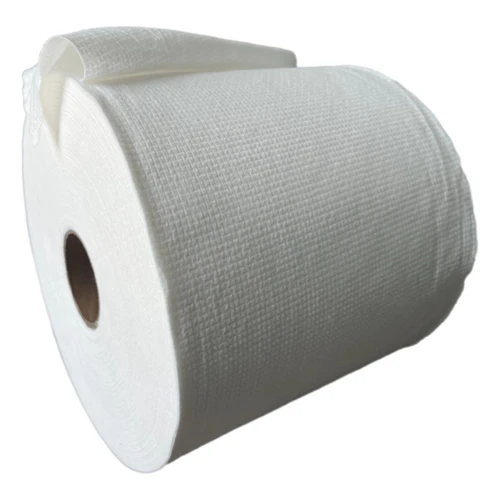
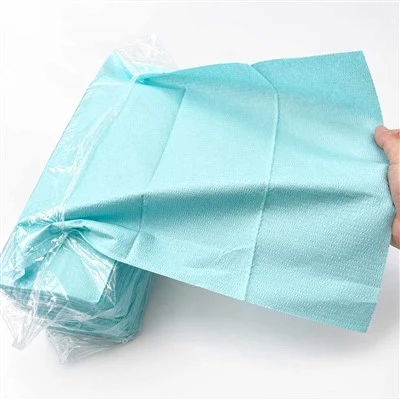
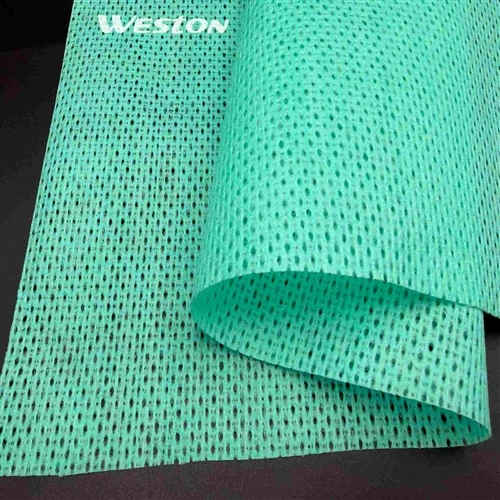
High-quality nonwoven materials are particularly effective in this role. For example, Nonwoven Embossed Floor Mop Cloths and Kitchen Floor Scrubbing Mop Pads offer structured surfaces that improve friction and particle capture.
Subtly, products from Weston Nonwoven demonstrate how spunlace nonwoven technology provides strong absorption, consistent texture, and durability without damaging floor surfaces. These characteristics support the mopping-first method by ensuring that moisture is applied evenly and dirt is effectively lifted rather than spread.
Common Misconceptions
Some concerns about mopping first are based on misunderstanding:
"Water will make dirt harder to clean"
→ Only true if excessive water is used. Controlled dampness improves removal.
"Sweeping first is always cleaner"
→ Not effective for fine or adhesive dust layers.
"Mopping is just a finishing step"
→ It can also act as a pre-treatment process that prepares dirt for removal.

A More Practical Approach to Cleaning
Cleaning should not rely on fixed rules. It should adapt to:
The type of dirt present
The surface condition
The tools and materials used
Mopping before sweeping is not a universal replacement, but it is a useful adjustment when dealing with fine dust and light residues. By aligning cleaning methods with how dirt actually behaves, it is possible to achieve better results with less effort and less repetition.