Why Dermatologists Recommend Next-Gen Solutions for Sensitive Skin
Let's be honest - having sensitive skin can feel like a full-time job. One wrong product, one season change, one stressful week, and suddenly your face is flushed, tight, and fighting back. For a long time, the standard advice was simply to strip everything down: fewer products, milder formulas, and a whole lot of patience. But that era is drawing to a close. Today, dermatologists aren't just telling sensitive-skin patients what to avoid. They're prescribing a smarter, science-forward path - one that actively builds resilience from the inside out.
Sensitive skin isn't broken. It's simply a highly responsive system that's been pushed past its threshold. The good news? With the right materials and the right actives, it can be trained to hold its ground.

From Passive Protection to Active Resilience
For decades, the go-to approach was heavy occlusion - thick creams that put a lid on moisture loss and kept the outside world at bay. Effective, yes. But also a bit of a dead end. Skin that's constantly shielded never learns to protect itself, and patients were often left with routines so stripped-down they missed out entirely on the brightening, anti-aging, and restorative benefits their skin deserved.
The new dermatological thinking flips that model. Rather than building walls around sensitive skin, clinicians are now focused on fortifying the skin itself - so it stops overreacting to everyday triggers like seasonal humidity shifts, urban pollution, or even mild exfoliants. This is the shift from passive protection to active resilience, and it's changing every category of skincare, from serums and treatments to the fabrics and formats we use to apply and remove them.
The Science Behind the Shift: Three Pillars
Pillar One: Microbiome Management. Your skin hosts billions of microorganisms that, when balanced, form a living, breathing defense system. In sensitive skin, that ecosystem is disrupted - and the traditional response of reaching for antibacterial ingredients only makes things worse by flattening both the harmful and the beneficial bacteria. Modern dermatology now favors prebiotics and postbiotics: ingredients that selectively nourish beneficial microbes, crowd out inflammatory strains, and naturally regulate the skin's inflammatory response at its source.
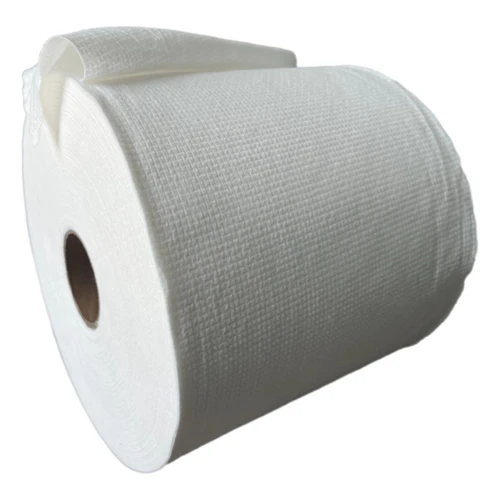
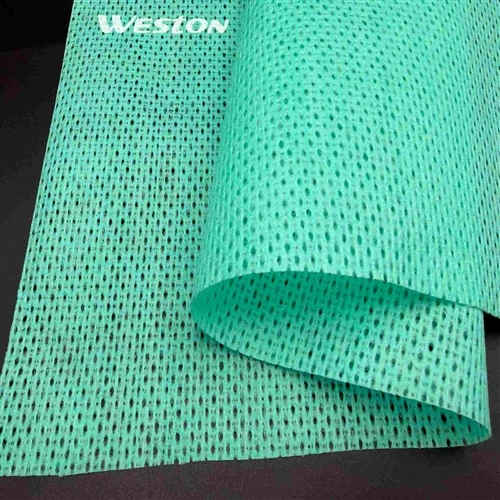
This principle extends to the very materials that touch sensitive skin daily. A 100% Natural Plant Fiber Mask - made from responsibly sourced bamboo fiber, lyocell, or PLA - supports the skin's microbial equilibrium in a way that synthetic substrates simply can't. Plant-based fibers are breathable, gentle, and free from the petrochemical residues that can disrupt sensitive microbiomes over time. Weston Nonwoven, a manufacturer with over 20 years of expertise in spunlace nonwoven fabrics, has built its entire product philosophy around exactly this principle - offering masks and cleansing substrates in 100% viscose, bamboo fiber, bamboo charcoal, cotton, PLA, and lyocell, all engineered to work with the skin rather than against it.
Pillar Two: Barrier Repair 2.0. Think of your skin as a brick wall: the cells are the bricks, and the natural lipid matrix - ceramides, cholesterol, free fatty acids - is the mortar holding everything together. Sensitive skin has compromised mortar. Water escapes freely, irritants slip in, and the result is the chronic cycle of reactivity, redness, and dehydration that so many people know too well.
Basic moisturizers sit on top of this compromised wall and hope for the best. Next-generation formulations go deeper. Bio-mimetic lipids, delivered in ratios that mirror the skin's own natural composition, physically integrate into the barrier and repair it structurally. The right delivery vehicle matters just as much as the actives themselves - which is where material innovation becomes dermatologically relevant.
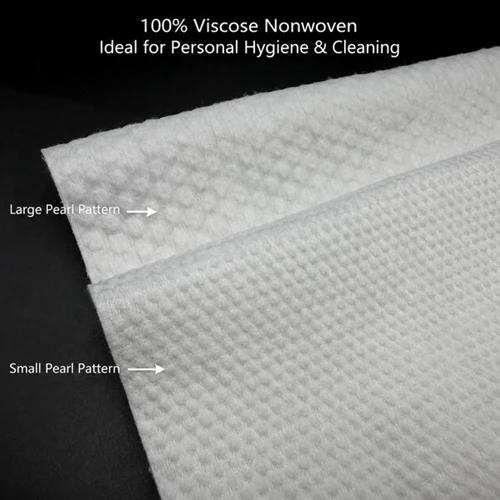
The Floral-Embossed Viscose Cleansing Cloth is a perfect example of material science serving barrier health. Viscose, derived from plant cellulose, has a natural softness and absorbency profile that minimizes mechanical stress on a compromised barrier during cleansing - the step that, done poorly, can undo the entire benefit of whatever treatment follows. Weston's embossed texture is engineered not for aesthetics alone, but for optimal contact and controlled friction, ensuring effective cleansing without stripping the lipid film the skin depends on. For anyone in the process of actively repairing their barrier, the cleansing cloth isn't a footnote - it's a therapeutic tool.
Pillar Three: Smart Delivery Systems. Retinol, Vitamin C, AHAs - these are the workhorses of evidence-based skincare. They are also, historically, the first things sensitive-skin patients are told to give up. The reason is straightforward: delivered in conventional formats, these actives hit the skin in a concentrated surge that triggers inflammation before the skin has time to benefit.
Micro-encapsulation changes the equation entirely. Active ingredients are wrapped in microscopic, skin-compatible carriers that sink past the surface layer and release their payload gradually, in controlled amounts, over hours rather than seconds. The skin receives the full biological benefit - the cell turnover, the collagen stimulation, the brightening - without the inflammatory spike. Sensitive skin can finally participate in the same evidence-based routines that everyone else takes for granted.
The Mind-Skin Axis: A Frontier Dermatologists Are Watching Closely
Perhaps the most surprising development in sensitive skin science is the growing recognition that the skin has a nervous system of its own - one that's in constant dialogue with the brain. When stress levels rise, the skin's nerve endings become hypersensitive, triggering flare-ups, phantom itching, and inflammatory cascades that seem to come from nowhere. This neurological dimension of sensitivity explains why so many patients notice their skin behaving worst precisely when life is most demanding.
A new class of ingredients, broadly termed neurocosmetics, is designed to address this mechanism directly. Peptides that modulate neuropeptide activity, and adaptogens like Ectoin - a natural extremophile molecule that encases skin cells in a protective hydration shell against environmental assault - work at the interface of neurology and dermatology. They don't just soothe the symptoms; they interrupt the signaling pathway that creates them.
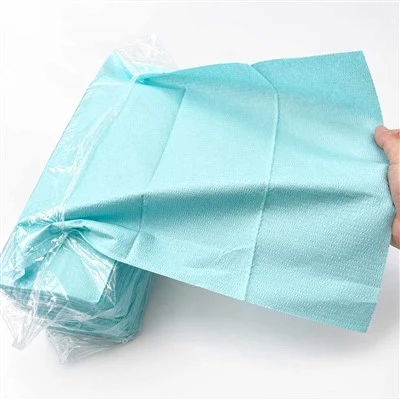
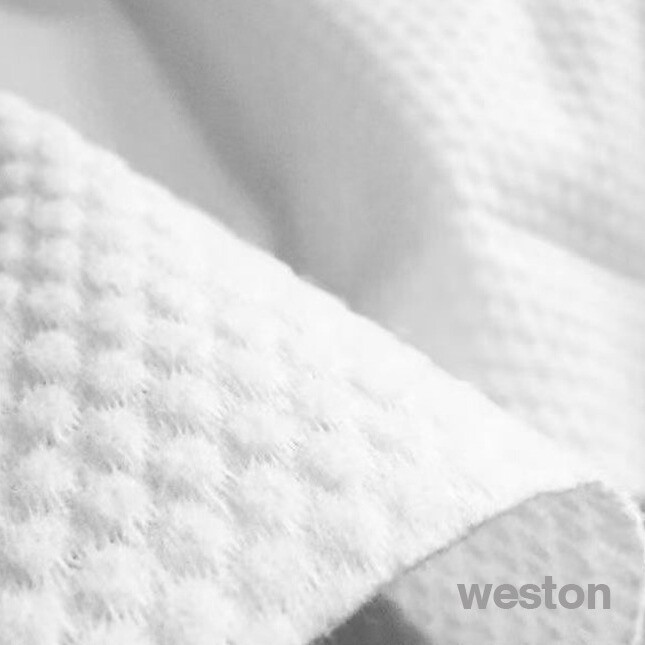
Equally relevant is the format in which these ingredients are delivered. Disposable Hair Wrap Material made from soft, plant-derived nonwoven fabric - rather than the stiff, synthetic alternatives common in many spa and professional settings - reduces the mechanical and sensory stimulation around the hairline and scalp during treatments, an area where sensitive skin patients are disproportionately reactive. Weston's nonwoven hair wrap substrates are available in hydrophilic and water-repellent finishes, with customizable softness profiles, making them appropriate for clinical environments where material sensitivity is taken seriously.
What Dermatologists Actually Look For: A Practical Ingredient Guide
Beyond the broad pillars, clinicians are increasingly specific about which ingredients have the evidence to back their claims for sensitive skin.
Ectoin deserves its growing reputation. This naturally occurring amino acid derivative, originally isolated from bacteria thriving in extreme environments, forms a protective molecular layer around skin cells that buffers against UV radiation, pollution, and osmotic stress - the same stressors that drive sensitive skin reactivity. It is one of the few ingredients that addresses both inflammation and barrier function simultaneously, without any known sensitization risk.
Centella Asiatica has been used in wound healing for centuries, but the modern dermatological endorsement is more specific: isolated compounds like Madecassoside and Asiaticoside, rather than broad-spectrum plant extract, show the most consistent anti-inflammatory and collagen-synthesis activity in peer-reviewed studies. The difference matters, particularly for skin that reacts to botanical complexity.
Oat Beta-Glucan is another ingredient undergoing a quiet upgrade in clinical esteem. While colloidal oatmeal has long been a staple of sensitive-skin recommendations, purified beta-glucan fractions offer a more targeted effect - activating the skin's own repair mechanisms and delivering sustained hydration through the epidermis, rather than simply sitting at the surface.
On the avoidance side, the list hasn't changed much: essential oils remain potent sensitizers regardless of their natural origin, drying alcohols compromise the barrier lipid film, and harsh physical abrasives - regardless of particle shape - generate micro-trauma that leaves reactive skin more vulnerable, not less.
Why Material Choices Matter as Much as Formula Choices
One of the areas where the dermatology conversation is evolving most quickly is the growing recognition that skincare isn't just about what goes into a formula - it's about what that formula touches when it arrives on the skin. Masks, cloths, wraps, and application tools are not neutral delivery mechanisms. They are the first point of contact, and in sensitive skin patients, that contact carries real biological consequence.
Weston Nonwoven has spent over two decades developing spunlace substrates specifically for this category. Their range spans functional performance - hydrophilic for optimal serum uptake, hydrophobic for controlled moisture barriers, antimicrobial for clinical hygiene applications - while keeping material composition rooted in plant-derived, environmentally considered fibers. For brands and professionals building skincare regimens for sensitive populations, material sourcing is no longer a secondary conversation. It belongs at the center of the formulation brief.
The skin that was once labeled as difficult, reactive, or simply too unpredictable to treat is now understood as a system with clear, addressable needs. The science is there. The materials are there. The only shift required is the willingness to move beyond avoidance - and toward something more durable.