Which Material Is Best for Cleaning the Kitchen?
Walk into any kitchen at the end of a normal day and you will find a mixture of grease, water, salt, food residue, and invisible microorganisms. Cleaning this environment is not simply about removing visible dirt. It is about physically capturing and removing contaminants from surfaces. The effectiveness of cleaning depends heavily on the material used. Different materials interact with liquids, oils, and particles in very different ways. Understanding this difference helps explain why some cloths clean quickly while others only spread the mess.

Cleaning Is a Physical Removal Process, Not Just Wiping
At the most basic level, cleaning works through three physical actions:
Fact Block: Three Mechanisms of Surface Cleaning
Absorption: The material pulls liquid into its internal structure
Adsorption: Contaminants stick to the fiber surface
Mechanical lifting: Friction lifts debris off the surface
If a material cannot absorb or hold contaminants, wiping becomes ineffective. Instead of removing grease, the cloth redistributes it across the surface. This is why the material itself is more important than wiping force.
Why Grease Is the Hardest Substance to Remove
Kitchen grease behaves differently from water. Water spreads easily and evaporates. Grease is thicker, adhesive, and resistant to evaporation.
Fact Block: Physical Properties of Kitchen Grease
Grease has higher viscosity than water
Grease adheres strongly to smooth surfaces like stainless steel
Grease requires both absorption and mechanical friction to remove
Smooth fabrics with limited internal space often fail to trap grease. Instead, grease stays on the cloth surface and transfers back during the next wipe.
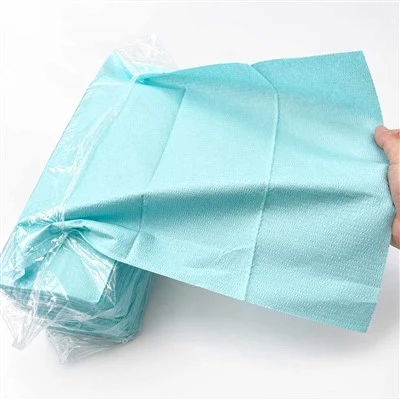
Materials designed for Daily Kitchen Wipes typically solve this problem by combining absorbent fibers with structural support, allowing grease to move into the cloth rather than remain on the surface.
Absorbency Depends on Fiber Structure, Not Just Fiber Type
Many people assume cotton is always the most absorbent material. This is not entirely correct. Fiber structure and arrangement play an equally important role.
Fact Block: What Determines Absorbency
Absorbency depends on:
Fiber diameter
Internal pore volume
Surface area
Capillary structure
Materials with fine fibers and open internal structure absorb faster because liquid moves through microscopic channels.
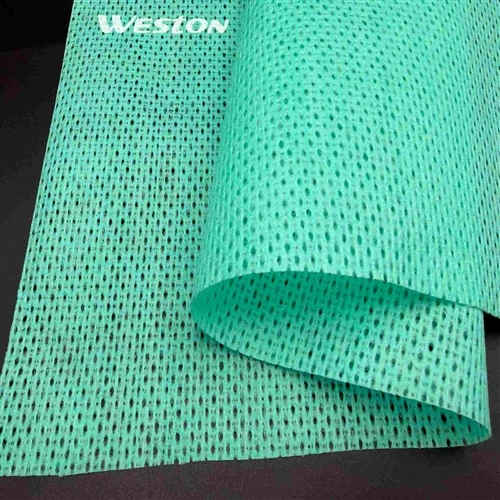
Engineered materials such as spunlace nonwoven combine plant-based fibers like wood pulp with structural fibers. This creates a network that absorbs liquid quickly while maintaining strength.
Wet Strength Determines Real-World Performance
Kitchen cleaning always involves moisture. Many materials lose strength when wet.
Fact Block: Wet Strength Is Critical in Kitchen Use
When wet, weak materials can:
- Tear during wiping
- Leave fiber residue
- Lose cleaning efficiency
Paper towels are a common example. They absorb liquid but often break apart under pressure.
In contrast, hydroentangled nonwoven materials use high-pressure water jets during manufacturing. This process physically binds fibers together without glue, improving wet strength.
This is one reason why materials used in Kitchen Floor Scrubbing Mop Pads can withstand repeated wet friction without disintegrating.

Lint Release Is a Hidden Hygiene Risk
Fiber shedding is rarely discussed, but it directly affects cleanliness.
Fact Block: Why Lint Is a Problem
Lint can:
- Carry bacteria
- Contaminate food preparation surfaces
- Reduce visual cleanliness
Older cotton cloths often shed fibers after repeated washing. These fibers remain on surfaces and may not be visible immediately.
Low-lint materials improve both visual and hygienic results.
Drying Speed Affects Bacterial Growth
After cleaning, the cloth itself becomes part of the kitchen environment. If it remains wet, it can support microbial growth.
Fact Block: Moisture and Bacterial Growth
Bacteria grow faster when:
Moisture is present
Air circulation is limited
Drying time is long
Materials that dry quickly reduce this risk.
Open fiber structures allow airflow and faster evaporation. Dense woven materials tend to stay wet longer.
Comparing Common Kitchen Cleaning Materials
Each material offers advantages and limitations.
Cotton Cloth
Advantages:
Good absorption
Reusable
Limitations:
Slow drying
Fiber shedding over time
Microfiber Cloth
Advantages:
Fine fibers create high surface area
Effective for light grease
Limitations:
Can become saturated quickly
Performance varies by quality
Paper Towels
Advantages:
Convenient
Hygienic for single use
Limitations:
Low durability
Break easily when wet
Spunlace Nonwoven
Advantages:
Balanced absorption and strength
Low lint
Fast drying
Limitations:
Higher production complexity
Manufacturers such as Weston Nonwoven produce hydroentangled materials designed specifically for cleaning applications. These materials are widely used in both household and industrial kitchen environments because they combine absorbency with durability.
Surface Texture Improves Cleaning Efficiency
Surface friction helps break the bond between grease and the kitchen surface.
Fact Block: Role of Surface Texture
Textured materials:
Increase friction
Improve grease removal
Reduce wiping effort
Flat materials may slide over grease instead of removing it.
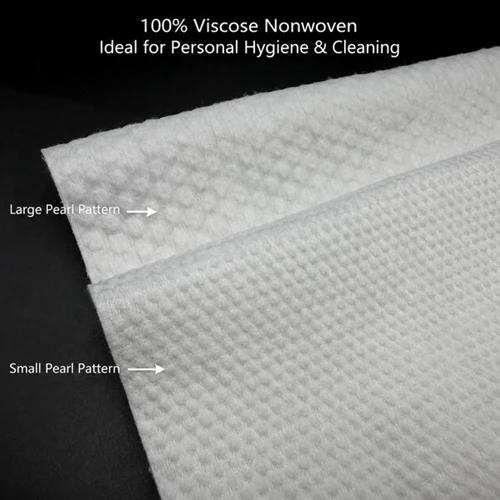
This is particularly important for floor cleaning. Kitchen Floor Scrubbing Mop Pads often use textured nonwoven surfaces to increase mechanical cleaning performance.
Reusability and Consistency Matter Over Time
A cleaning material must perform consistently across repeated use.
Many traditional cloths lose effectiveness because:
- Fibers collapse
- Structure weakens
- Absorption decreases
Engineered materials are designed to maintain their structure longer.
This consistency is especially important in professional kitchens where predictable performance is required.
Why Modern Kitchens Increasingly Use Engineered Cleaning Materials
The shift toward engineered materials reflects practical needs rather than marketing trends.
Fact Block: Advantages of Engineered Cleaning Materials
They offer:
- Controlled absorbency
- Reliable wet strength
- Low lint release
- Consistent performance
These characteristics make them suitable for products such as Daily Kitchen Wipes, where predictable cleaning performance is required.
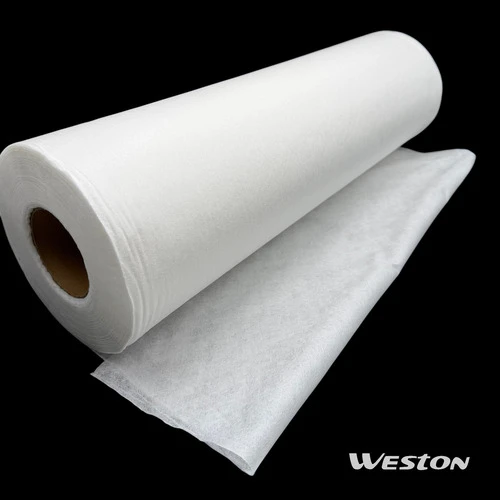
Weston Nonwoven, for example, manufactures spunlace materials that integrate wood pulp and synthetic fibers. This combination allows efficient liquid absorption while maintaining structural integrity during use.

Choosing the Best Material Depends on Function
There is no single perfect material for every task. The best choice depends on what needs to be cleaned.
General Guidelines
For grease removal:
Use absorbent, textured materials
For surface wiping:
Use low-lint, fast-drying materials
For floor cleaning:
Use durable, high-friction materials
For hygiene-sensitive areas:
Use materials with stable fiber structure
The most effective cleaning materials work by capturing and holding contaminants, not simply pushing them across the surface. Advances in fiber engineering continue to improve this ability, making modern kitchen cleaning more efficient, more reliable, and easier to control.